Start with Lawn Reduction
The most labor-intensive element of most American yards is turf grass. Mowing, edging, fertilizing, aerating, and overseeding a large lawn adds up to dozens of hours each year. The simplest structural decision you can make is to reduce how much lawn you're maintaining in the first place.
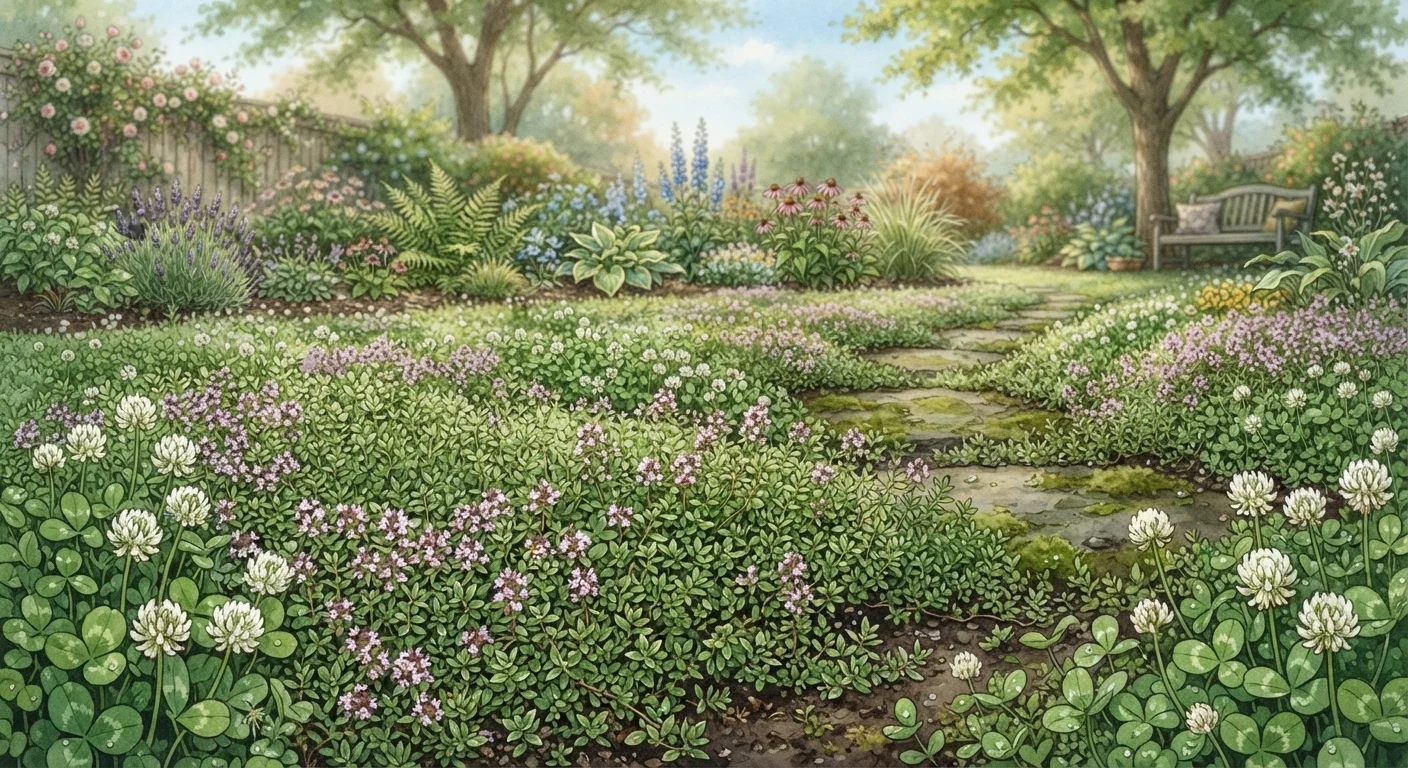
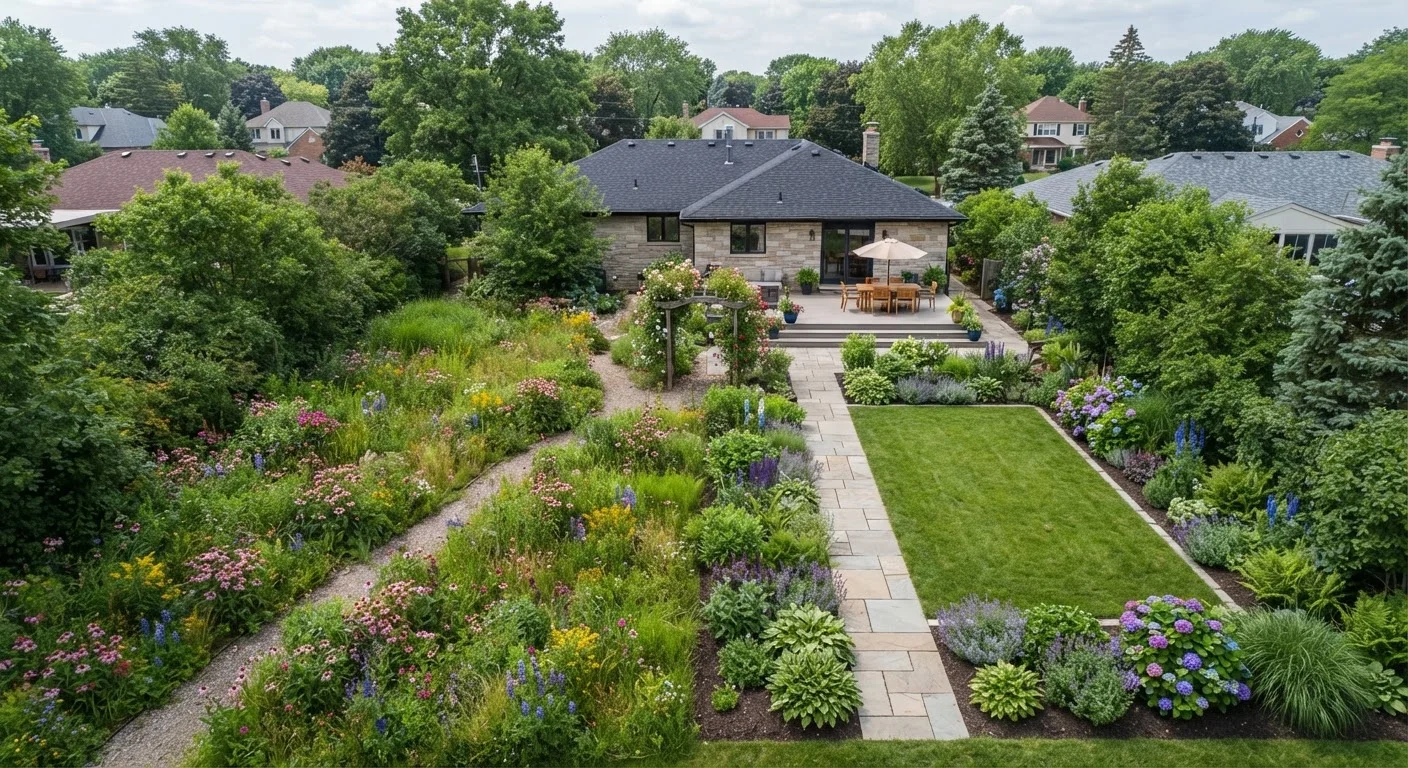
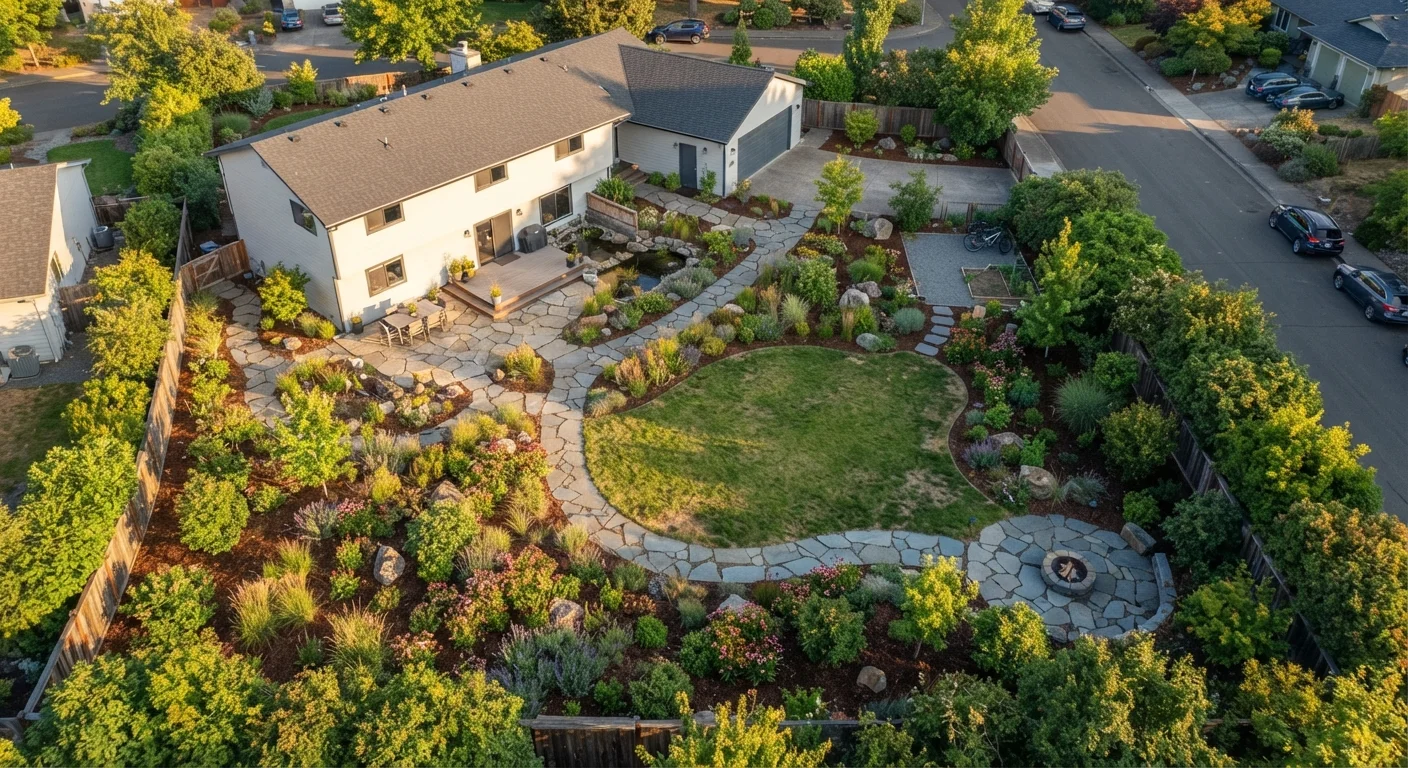
Identify areas of your lawn that are low-traffic, awkward to mow (slopes, narrow strips, corners), or simply decorative. These are prime candidates for conversion. Replacing those zones with mulched planting beds, gravel, pavers, or hardy ground covers eliminates mowing in those areas entirely - permanently.
Even converting 30 to 40 percent of a typical suburban lawn can cut total yard maintenance time noticeably. The remaining lawn is easier to edge, more manageable in dry weather, and faster to mow because the shape is simpler.
Simplify Your Lawn's Shape
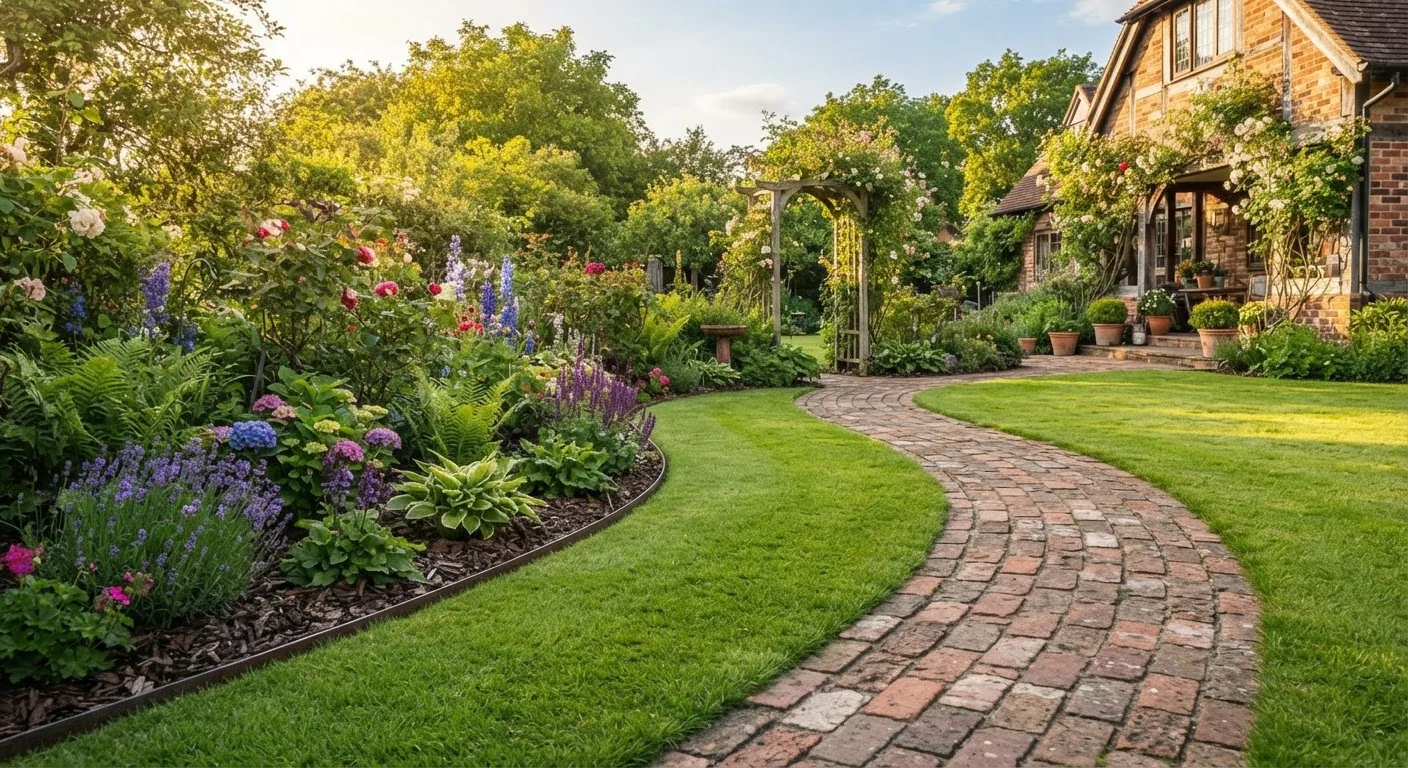
Irregular lawn shapes with tight curves, narrow passages, and awkward corners take far longer to mow and edge than simple, open shapes. When redesigning, aim for broad, sweeping curves or clean straight edges that allow a mower to move efficiently without repeated repositioning. Fewer passes means less time spent every week.
Choose Plants That Work With Your Region
Plant selection is where low-maintenance design either succeeds or fails. A yard full of plants poorly suited to local conditions demands constant intervention - supplemental water, pest treatments, winter protection, and frequent replacement.
The alternative is to choose plants adapted to your regional climate, soil type, and rainfall patterns. Native species are often the strongest performers here. They've evolved alongside local weather extremes and soil conditions, which generally means less watering once established, fewer pest problems, and more predictable growth habits. Our comparison of native plants vs. ornamental imports can help you weigh the trade-offs for your specific situation.
Perennials - plants that return each growing season - also reduce annual replanting labor. Grouping plants with similar water needs together (a practice called hydrozoning) simplifies irrigation and prevents both overwatering and underwatering.
40%
Of US residential water used outdoors
According to the U.S. Environmental Protection Agency, roughly 40 percent of household water use during summer months goes to landscape irrigation, much of which is applied inefficiently.
70 hrs
Average annual lawn care time per homeowner
Industry surveys have estimated that the average American homeowner spends roughly 70 hours per year on lawn and yard maintenance tasks, with mowing accounting for the largest share.
2-4 in
Effective mulch depth for weed suppression
Cooperative Extension programs across the US consistently recommend two to four inches of organic mulch as the practical range for suppressing weed germination while protecting plant roots.
Use Hardscaping Strategically
Hardscaping - stone paths, gravel areas, patios, and edging materials - does something plants can't: it requires almost no recurring maintenance. A well-laid stone path doesn't need watering, fertilizing, or trimming. Gravel or decomposed granite in a side yard eliminates the need to maintain a strip that was probably difficult to mow anyway.
The key is strategic placement. Hardscaping works best in high-traffic areas where plants struggle, transitional zones between features, and spaces where aesthetics matter more than greenery. Well-defined edging, borders, and pathways also create clean separation between beds and lawn, preventing grass from creeping into planted areas - which eliminates a significant source of ongoing trimming work.
Where hardscaping meets planted areas, a solid edging material (steel, stone, or composite) holds the boundary without requiring frequent re-cutting.
Mulch Beds and Automate Watering
Two practices that consistently deliver outsized returns on reduced effort are deep mulching and irrigation automation.
Applied at the correct depth, mulch suppresses weed germination, retains soil moisture, and moderates soil temperature - addressing three common maintenance demands simultaneously. Two to four inches of organic mulch in planted beds can dramatically reduce how often you need to pull weeds or water during dry spells. Our guide to mulching garden beds covers depth, timing, and material selection in detail.
For irrigation, drip systems and soaker hoses deliver water directly to root zones with minimal evaporation and no hands-on time once set up. Paired with a timer, they remove manual watering from your routine entirely. The comparison of drip irrigation vs. sprinkler systems lays out the efficiency and cost differences between approaches.
If your yard has drainage challenges, consider directing runoff productively - a rain garden can capture stormwater, reduce erosion, and support pollinators with minimal ongoing care once plants are established.
Permit Requirements for Hardscaping
Some municipalities require permits for significant hardscaping projects, particularly those that affect drainage or exceed certain square footage thresholds. Before installing large paved or gravel areas, check with your local building or planning department to understand what applies in your jurisdiction. Requirements vary considerably by location.
Plan for Seasonal Simplicity
Even a well-designed low-maintenance yard has a seasonal rhythm - spring cleanup, summer watering adjustments, fall leaf management. The goal of good design isn't to eliminate this rhythm but to make each task predictable, quick, and manageable.
Planting deciduous trees and shrubs away from beds they'd bury in leaves, choosing self-cleaning perennials that don't need deadheading, and keeping lawn edges straight and simple all reduce the accumulation of small seasonal tasks. Understanding what your yard needs across the year - rather than reacting to problems as they appear - is the mindset shift that sustains a low-maintenance approach. A year-round lawn care calendar can help you anticipate what's coming and plan accordingly, rather than scrambling when conditions change.
Low-maintenance yard design isn't a one-time project - it's an evolving system. Plants mature, fill in bare soil, and eventually crowd out weeds on their own. The upfront investment in thoughtful design pays dividends in reclaimed time every single week.