Why Busy Schedules and Good Nutrition Feel at Odds
Most people don't eat poorly because they lack knowledge - they eat poorly because life is demanding. Between work, family, commutes, and everything else, food often becomes an afterthought. The result is reactive eating: grabbing whatever is fast, convenient, or comforting in the moment.
The good news is that eating well doesn't require a perfect meal plan or hours in the kitchen. It requires a handful of repeatable habits that reduce friction and make the nutritious choice the easy choice. If you're just beginning to think about how food fits into your daily life, our introduction to nutrition fundamentals is a useful starting point.
The practices below are grounded in established nutrition science and designed for real schedules - not ideal ones.
This Is General Information, Not Medical Advice
The habits described here are based on broadly established nutrition principles and are intended for healthy adults with no specific medical conditions. Individual needs vary - including for people who are pregnant, managing chronic illness, or taking medications that affect nutrient absorption. Please consult a qualified healthcare professional before making significant changes to your diet.
Core Practices That Make a Real Difference
Rather than overhauling everything at once, focus on a few structural habits that anchor your eating throughout the day. These aren't rules to follow perfectly - they're patterns to return to consistently.
Anchor your day with a protein-forward first meal.
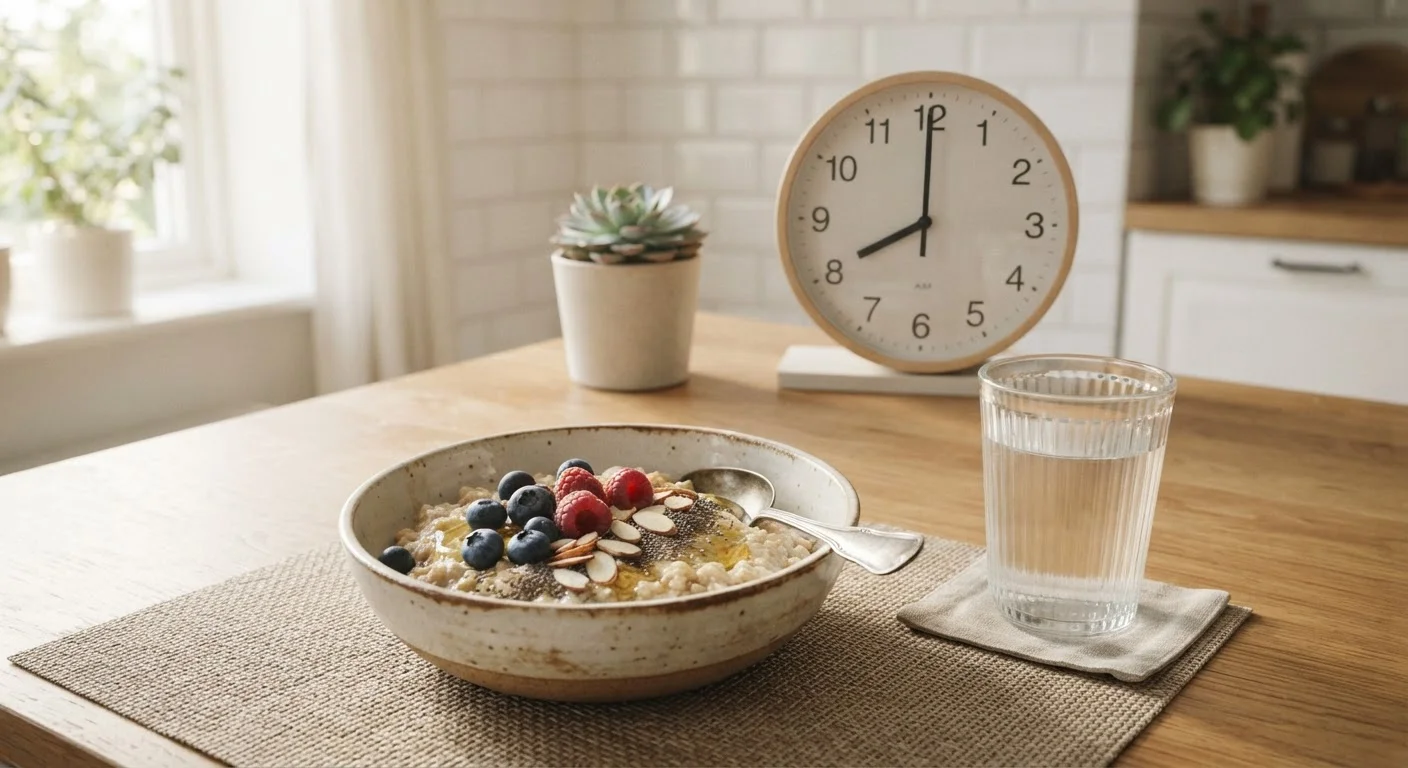
Research consistently links adequate protein early in the day with reduced hunger and more stable energy through the afternoon. Protein slows digestion and helps moderate blood sugar fluctuations - two things that matter when your schedule leaves no room for an energy crash.
Batch-cook a few foundational ingredients once or twice a week.
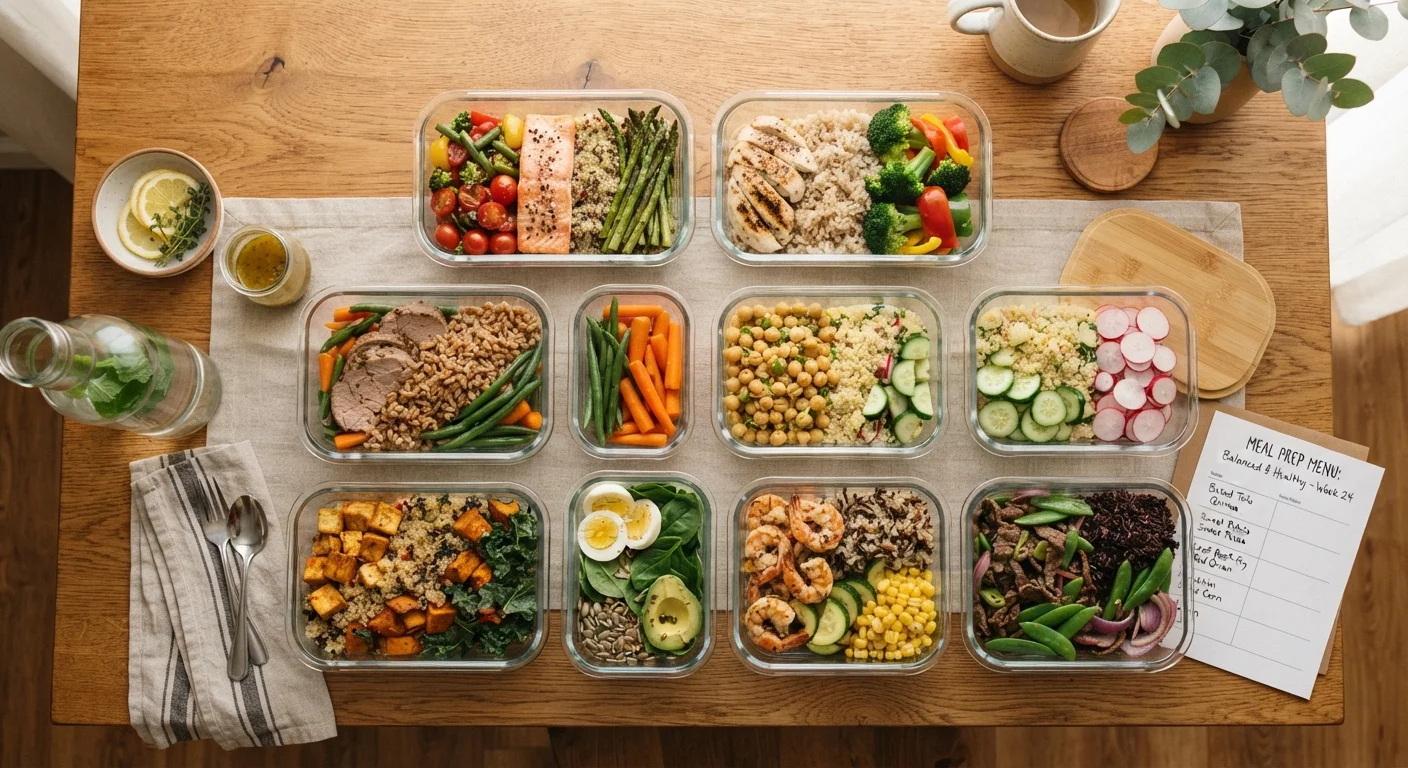
The biggest barrier to eating well on a busy schedule is friction - opening the fridge and having nothing ready. Cooking a batch of grains, roasted vegetables, and a protein source gives you raw material for multiple meals without daily effort.
Pair snacks intentionally - always combine a carbohydrate with protein or healthy fat.
Carbohydrates alone digest quickly and can lead to renewed hunger within an hour or two. Adding protein or fat slows that process, helping you stay focused and satisfied longer between meals.
Keep a water bottle visible and within reach throughout the day.
Mild dehydration is commonly mistaken for hunger and can contribute to fatigue and difficulty concentrating. Having water visible serves as a passive reminder to drink regularly, even when you're deep in work.
Apply a loose 'plate structure' even to quick or takeout meals.
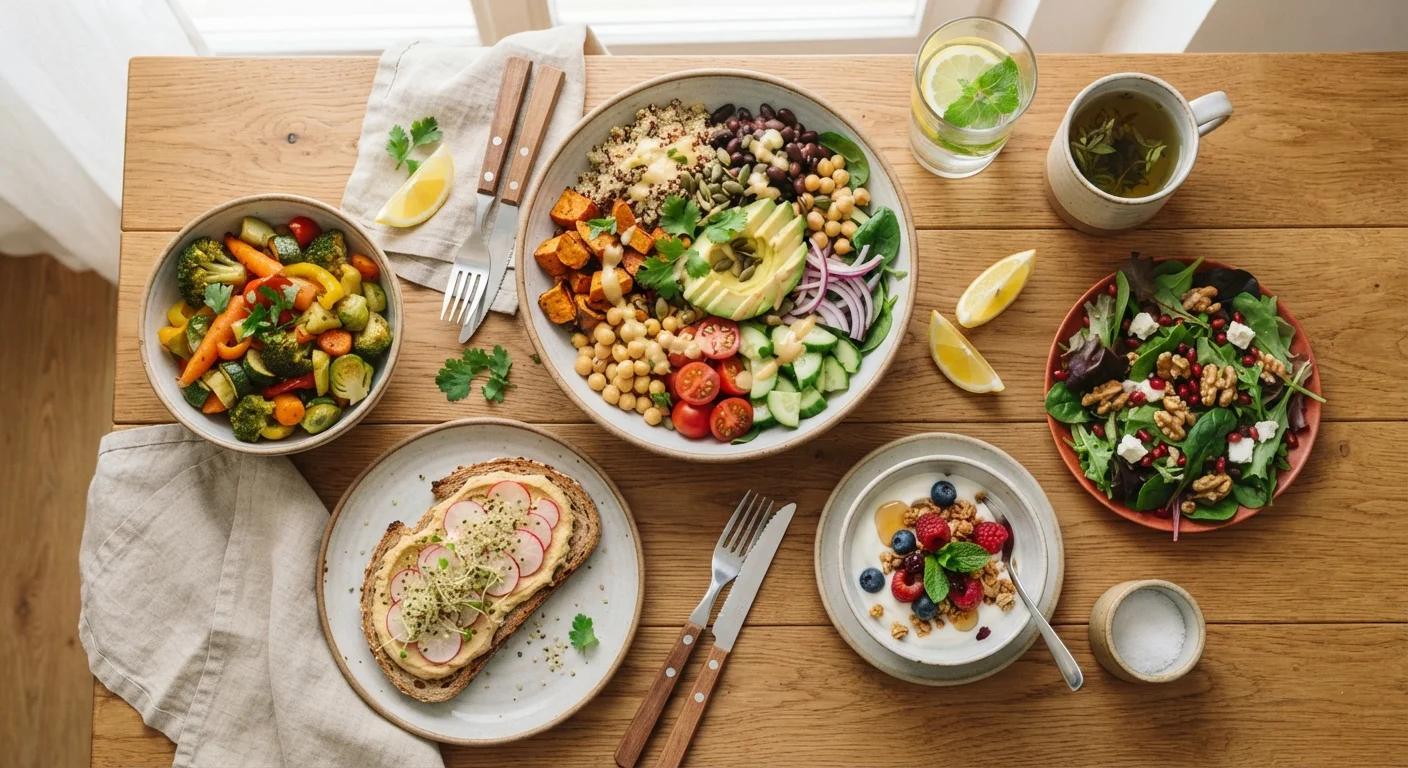
You don't need a rigid meal plan to eat with intention. A simple mental framework - roughly half the plate as vegetables or fruit, a quarter as a protein source, a quarter as a whole grain or starchy vegetable - helps you make better choices without counting anything.
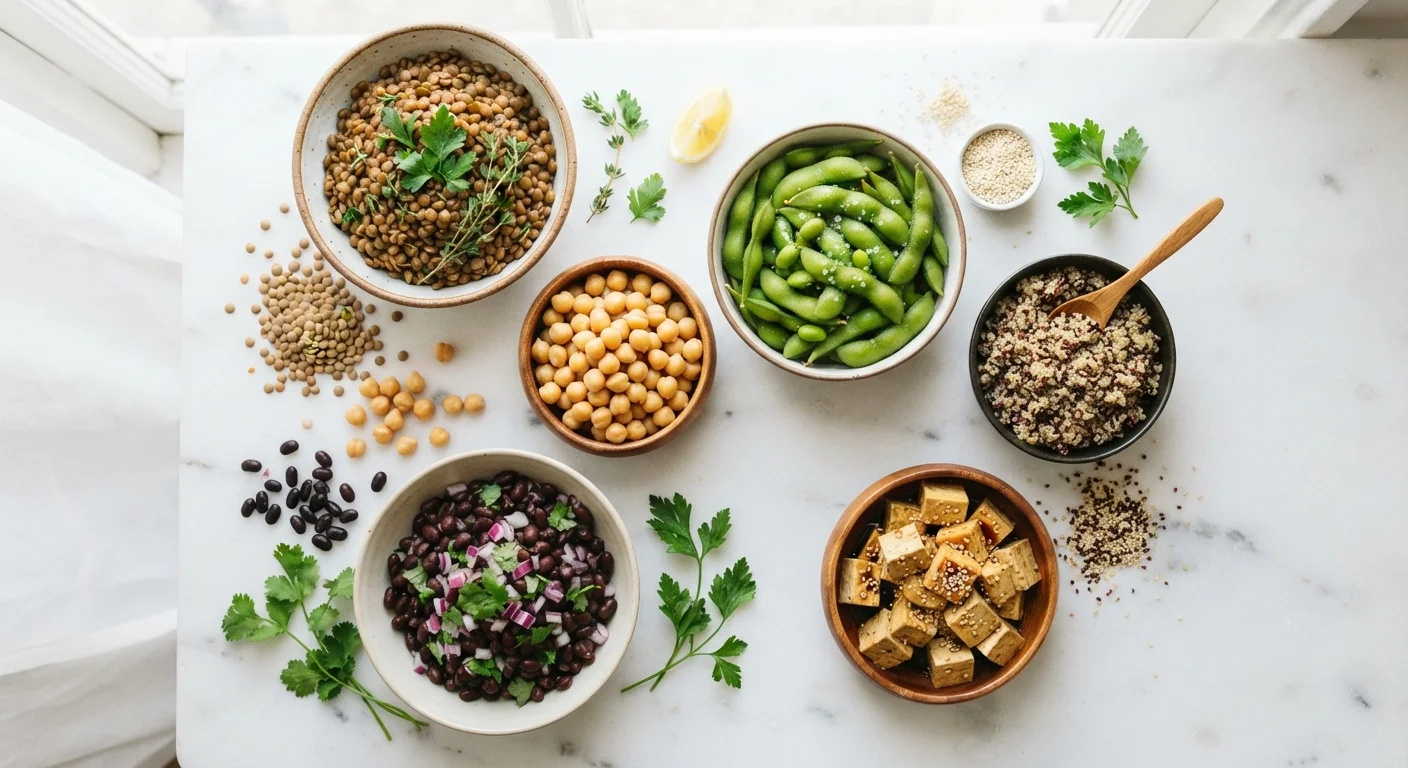
For more on how meal timing approaches like intermittent fasting fit into a busy lifestyle, see our balanced look at intermittent fasting. And if plant-based options are part of your rotation, our practical breakdown of plant-based proteins is a helpful reference.
Small Actions You Can Take Today
Building better nutrition habits doesn't require a fresh start on Monday. The most effective changes are the ones you can actually do right now, with what you already have. Each of the actions below is low-effort with a meaningful payoff.
Freeze It Before You Lose It
Produce about to turn, leftover cooked grains, or extra portions of a meal can almost always be frozen rather than wasted. Keeping a small stock of frozen vegetables and pre-cooked meals means you have a nutritious option available even on your most chaotic days - no fresh prep required.
Once you've started building these habits, a weekly nutrition check-in can help you spot gaps and keep your momentum going without rigid tracking. And if you're looking to pair better eating with more movement, our guide on short exercise bursts throughout the day shows how brief activity can complement your nutrition efforts.
This article is for general informational purposes only and does not constitute medical or dietary advice. Individual nutritional needs vary. Please consult a qualified healthcare professional before making significant changes to your eating habits, especially if you have a medical condition or specific health concerns.