Why Plant Protein Deserves a Closer Look
Protein is essential for muscle repair, immune function, hormone production, and dozens of other processes the body carries out every day. While animal foods have long dominated protein conversations, a wide range of plant foods deliver meaningful amounts - often alongside fiber, vitamins, and minerals that meat lacks.
This reference guide breaks down the most practical plant-based protein sources by protein content, digestibility, and how they fit into everyday eating. It's general nutrition information, not a substitute for personalized advice from a registered dietitian or your healthcare provider.
If understanding how protein and other nutrients appear on packaging is a priority, our guide to reading nutrition labels can help you make sense of the numbers.
| Protein in cooked lentils (per cup) | ~18 grams (USDA FoodData Central) |
| Protein in cooked edamame (per cup) | ~17 grams (USDA FoodData Central) |
| Protein in cooked quinoa (per cup) | ~8 grams (USDA FoodData Central) |
| Protein in firm tofu (per half-cup) | ~10 grams (USDA FoodData Central) |
| Complete plant proteins | Soy, quinoa, hemp seeds |
| Daily protein reference intake (adult) | 0.8 g per kg of body weight (National Academies of Medicine, Dietary Reference Intakes) |
The Core Plant Protein Sources, Explained
Not all plant proteins are equal in concentration or digestibility. Here's a practical breakdown of the most commonly available options:
Legumes
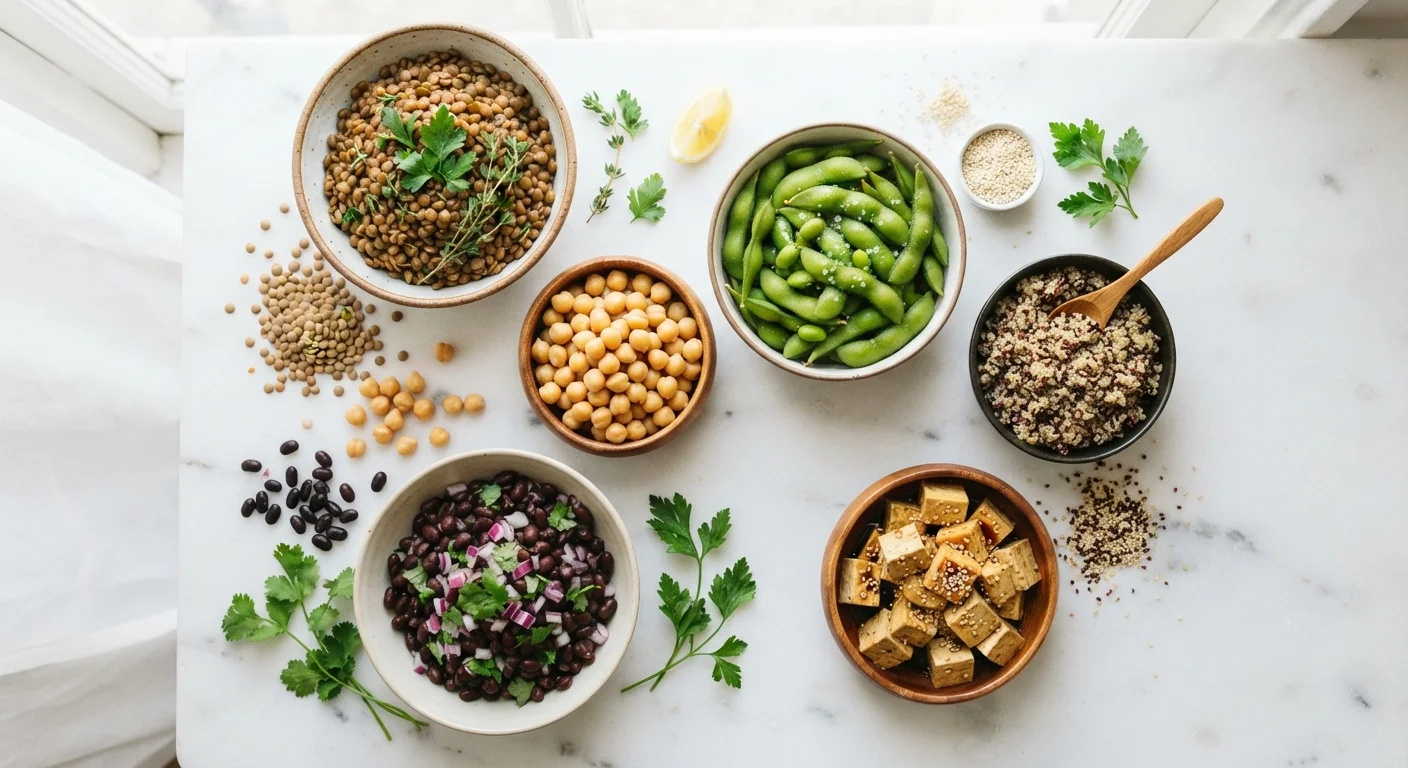
Lentils provide roughly 18 grams of protein per cooked cup and are among the most affordable and versatile options available. Chickpeas (garbanzo beans) offer about 15 grams per cooked cup and work in everything from soups to roasted snacks. Black beans, kidney beans, and edamame fall in a similar range, with edamame being notable for containing all nine essential amino acids.
Soy-Based Foods
Tofu contains roughly 8-10 grams of protein per half-cup serving depending on firmness; firmer varieties are more concentrated. Tempeh, a fermented soybean product, delivers around 15-16 grams per half-cup and has a slightly higher digestibility score than many other plant proteins. Edamame, mentioned above, averages about 17 grams per cooked cup.
Grains and Seeds
Quinoa stands out among grains as a complete protein, offering approximately 8 grams per cooked cup. Hemp seeds provide about 10 grams per three-tablespoon serving and are rich in omega-3 fatty acids. Chia seeds offer around 5 grams per two tablespoons, alongside significant fiber content.
Nuts and Nut Butters
Peanuts deliver about 7 grams per ounce and are among the most protein-dense nuts. Almond butter and peanut butter provide similar amounts per two-tablespoon serving. These are also calorie-dense, so portion awareness matters depending on individual goals.
Complete protein
A protein source that contains all nine essential amino acids in adequate amounts. Most animal proteins are complete; among plants, soy, quinoa, and hemp are notable examples.
Essential amino acids
The nine amino acids the body cannot produce on its own and must obtain through food. They are critical for building and repairing tissues, among other functions.
DIAAS
Digestible Indispensable Amino Acid Score - a method used by nutrition researchers to evaluate how well a protein source meets the body's amino acid needs after digestion.
Legumes
A plant family that includes beans, lentils, chickpeas, and peas. Legumes are among the most protein-rich whole plant foods and are also high in fiber and complex carbohydrates.
Tempeh
A fermented soybean product originating from Indonesia. Fermentation improves digestibility and produces a firm texture with a slightly nutty flavor, making it a versatile high-protein ingredient.
Digestibility and Amino Acid Completeness
One meaningful difference between plant and animal proteins is digestibility - how effectively the body can absorb and use what's consumed. Nutrition researchers use a measure called the Digestible Indispensable Amino Acid Score (DIAAS) to compare protein quality across foods. Animal proteins generally score higher, but several plant sources perform well.
Most plant proteins are considered incomplete - meaning they don't provide all nine essential amino acids in sufficient amounts on their own. Exceptions include soy, quinoa, and hemp. For everyone else, the practical solution is variety: eating a range of plant proteins across the day (not necessarily at every meal) provides the full amino acid profile the body needs.
For people navigating busy lives, building protein variety into meals doesn't have to be complicated. Our article on eating well on any schedule offers realistic strategies for doing exactly that.
This article is for general informational purposes only and is not a substitute for personalized medical or dietary advice. Consult a registered dietitian or qualified healthcare professional for guidance specific to your health needs.