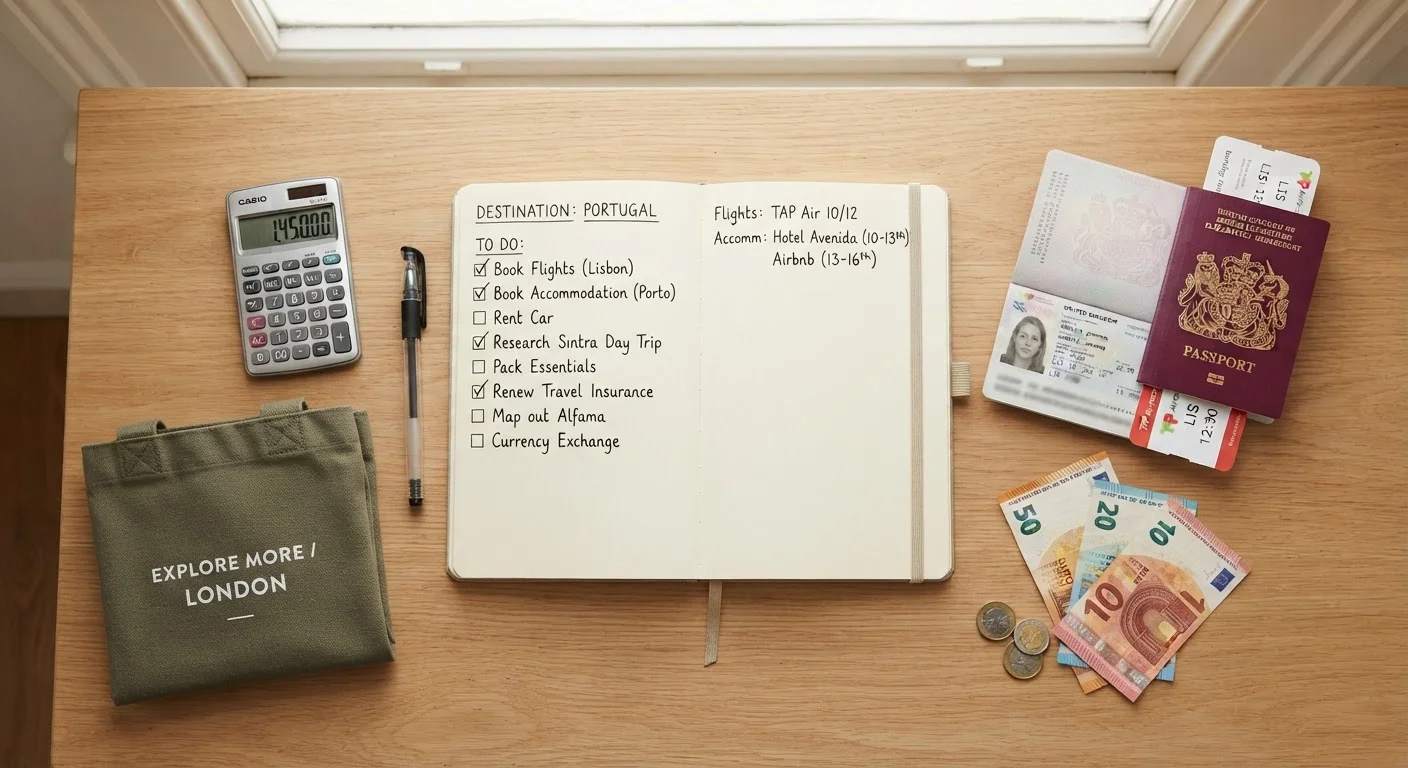
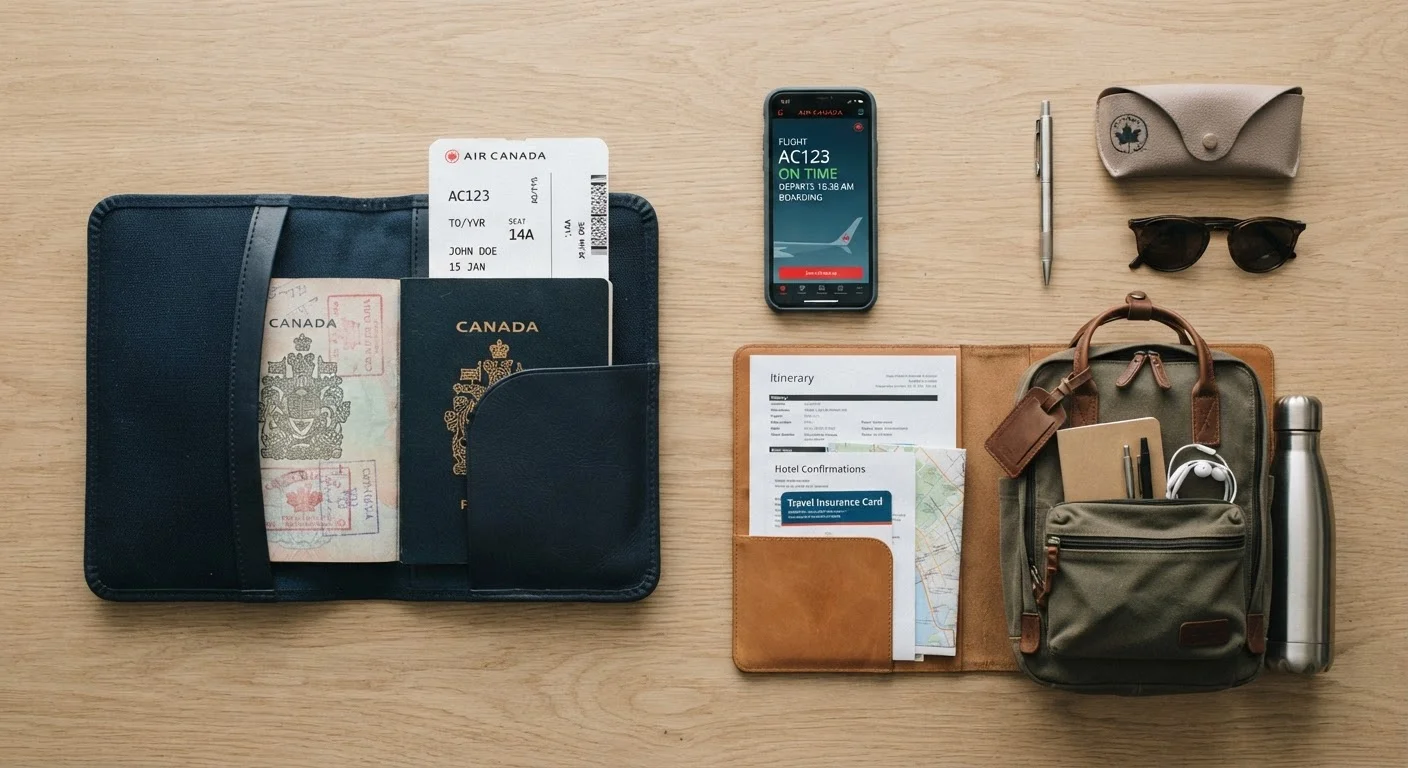
Run through this checklist before departure to catch avoidable fees, currency pitfalls, and planning gaps that quietly inflate travel costs.
Key Takeaways
Most avoidable travel costs are locked in before departure, not during the trip itself.
Foreign transaction fees, checked-bag charges, and airport currency exchange are common budget killers.
Notifying your bank and auditing subscriptions before travel prevents unnecessary charges while you're away.
Travel insurance decisions and coverage gaps should be reviewed before you leave, not after an incident.
Packing light and confirming all reservations in writing can eliminate costly last-minute surprises.
Why Pre-Trip Financial Prep Actually Matters
Most travel overspending isn't a series of impulsive decisions made on the road — it's the result of overlooked details that were already locked in before departure. A fee you didn't know your card charged. A bag you didn't plan to check. A currency exchange rate you accepted at the airport because you had no local cash and no better option.
This checklist is built around one straightforward principle: the cheapest time to fix a travel cost problem is before the trip starts. Running through these items a week or two before you leave gives you enough lead time to act on anything you find.
For a broader framework on how these habits fit into your overall travel planning, see our end-to-end budget travel guide. And if you want to pair this with a full logistics checklist, our booking-to-boarding-pass checklist covers the operational side of departure prep.
Banking and Cards
Notify your bank and every credit card you plan to use about your travel dates and destinations to prevent fraud blocks on your account.Must
Check whether your cards charge foreign transaction fees (typically 1–3% per purchase) and identify which card in your wallet has the lowest or no fee.Must
Confirm your card's ATM withdrawal limits and any associated fees so you can plan cash access without repeated small withdrawals.Should
Research the local currency of your destination and arrange to obtain some before departure — airport exchange kiosks generally offer significantly worse rates than bank branches or ATMs at your destination.Should
Flights and Baggage
Re-read your airline's current baggage policy and confirm exactly what's included in your fare — carry-on allowances, checked-bag fees, and size limits vary widely and change periodically.Must
Weigh your planned luggage at home before departure to avoid overweight bag fees at check-in.Must
Consider whether travelling carry-on only is feasible for your trip length — eliminating checked bags can meaningfully reduce per-leg costs on budget carriers. See our carry-on only packing guide for practical guidance.Should
Check in online as early as the airline allows to avoid any late check-in fees and secure better seat options without paying for seat selection.Nice to have
Accommodation and Bookings
Confirm every accommodation booking directly with the property via email and save or print written confirmation in case of disputes at check-in.Must
Review cancellation and change policies for all bookings so you understand your financial exposure if plans shift.Must
Check whether your accommodation charges resort fees, parking fees, or city taxes that weren't included in the quoted rate — these are sometimes not disclosed until arrival.Should
Travel Insurance and Health
Confirm you have travel insurance in place that covers trip cancellation, medical emergencies, and lost or delayed baggage before departure — not after an incident occurs.Must
Read your policy's exclusions carefully, particularly for pre-existing conditions, adventure activities, and coverage limits for medical evacuation.Must
Check whether your existing health insurance provides any international coverage, and if so, understand the claims reimbursement process — most US plans require you to pay upfront abroad.Should
Carry physical or clearly accessible digital copies of your insurance policy number and the insurer's 24-hour emergency contact line. Our travel documents organisation guide has a simple system for this.Should
Subscriptions and Home Costs
Pause or cancel any subscriptions or services (gym memberships, meal kits, streaming plans billed in foreign currencies) you won't use during your trip to avoid charges while you're away.Should
Put your mail on hold and arrange for plants, pets, or home security to be managed — the cost of scrambling at the last minute is usually higher than planning ahead. See our subscription audit checklist if you haven't recently reviewed your recurring charges.Nice to have
Review your phone plan's international roaming rates and consider whether a local SIM or a short-term international add-on is more cost-effective for your destination.Should
Documents and Entry Requirements
Verify your passport expiry date and confirm your destination's validity requirements — many countries require at least six months of remaining validity beyond your return date.Must
Check current visa requirements for your destination through official government sources and confirm whether an electronic travel authorisation (e.g., ESTA for the US, eTA for Canada) is required.Must
Make digital and physical copies of all key documents — passport, insurance, itinerary, and booking confirmations — and store them separately from the originals.Should
What to Have Ready Before You Run This Checklist
You'll get through this faster — and more accurately — if you gather a few things first. Pull up your current bank and credit card statements, your booking confirmation emails, your itinerary, and any travel insurance documentation you already hold. If you're driving to your destination, add your vehicle records to the stack.
Required
Bank and Credit Card Statements
Used to identify foreign transaction fees, ATM charges, and card limits before deciding which cards to bring.
Required
All Booking Confirmation Emails
Used to verify accommodation, flight, and activity details — and to spot any undisclosed fees or policy terms.
Required
Travel Insurance Policy Documents
Used to review coverage limits, exclusions, and emergency contact information before departure.
Required
Luggage Scale
Used to weigh bags at home and avoid overweight baggage fees at the airport check-in counter.
Required
Your Passport
Used to verify expiry date against destination entry requirements and to make advance copies for safekeeping.
Optional
Phone Plan Details
Used to review international roaming rates and decide whether a temporary plan or local SIM is more practical.
If you're travelling internationally, also have your passport in hand. Many countries require at least six months of validity beyond your travel dates — a detail that catches people off guard more often than you'd expect. Our article on passport expiry date rules explains exactly what to check.
Verify Entry Requirements With Official Sources
Visa rules, vaccination requirements, and passport validity standards change without much notice. Always verify current entry requirements directly through the US State Department's travel website and the official government site of your destination country before you depart. Third-party summaries — including travel blogs and booking platforms — may be outdated or incomplete.
After the Checklist: Staying on Budget on the Road
Completing this checklist doesn't guarantee a perfectly on-budget trip, but it does close the most predictable gaps. Once you're traveling, the next layer of savings comes from on-the-ground habits: using local transit, eating where locals eat, and resisting convenience fees when a little planning could avoid them.
It's also worth knowing what to do when things go sideways — and they sometimes will. See our guide to handling things that go wrong on trips for practical contingency thinking. If you're driving part of your journey, run through the pre-trip vehicle safety checklist as well — breakdowns are among the most expensive and disruptive travel surprises.
Finally, time spent on this checklist is a good prompt to look at your broader spending habits. If you find yourself regularly funding trips on credit without a clear payback plan, our budgeting basics hub is a practical starting point. Traveling more for less works best when it's part of a sustainable financial picture, not a source of post-trip debt.
This article is for general informational purposes only and does not constitute financial or legal advice. Verify fees, terms, and entry requirements directly with your bank, carrier, insurer, and relevant government sources before you travel.
Travel Smarter Editorial Team is the collective byline for our editorial team and contributor network. Articles published under this byline or an editorial pen name are researched, written, and reviewed according to our editorial standards for clarity, consistency, and independence before publication.
The content provided on our blog site traverses numerous categories, offering readers valuable and practical information. Readers can use the editorial team’s research and data to gain more insights into their topics of interest. However, they are requested not to treat the articles as conclusive. The website team cannot be held responsible for differences in data or inaccuracies found across other platforms. Please also note that the site might also miss out on various schemes and offers available that the readers may find more beneficial than the ones we cover.