
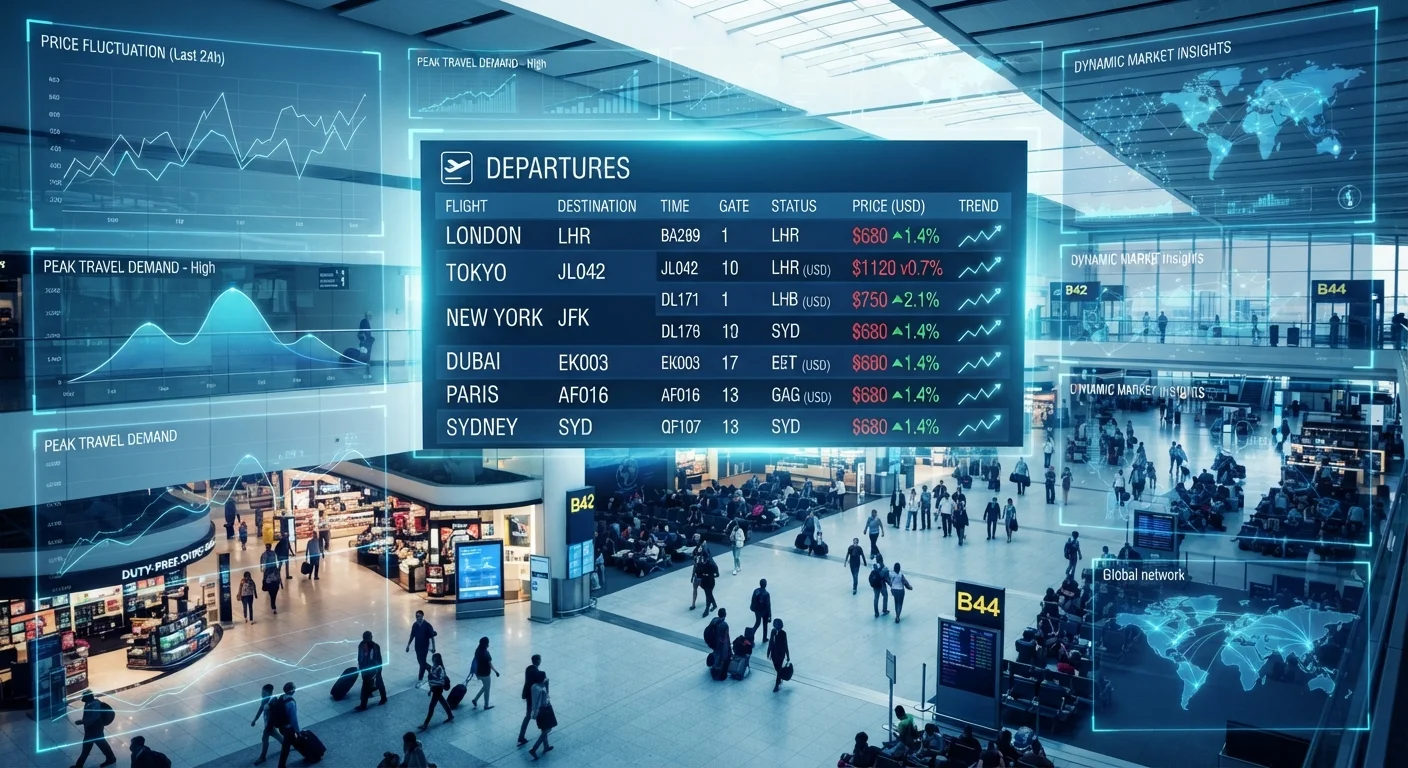
How Prices Are Set: The Algorithm Behind the Number
The fare or rate you see when booking a flight or hotel room is not chosen by a person weighing options at a desk. It is generated automatically by revenue management software that processes enormous amounts of data simultaneously. These systems monitor current booking pace, historical demand for the same period in prior years, competitor pricing, unsold inventory, and dozens of other variables — then price accordingly, often updating multiple times per day.
For airlines, seats are grouped into fare "buckets" — price tiers tied to specific conditions and availability. As the cheaper buckets sell out, travelers shopping the same flight see higher-priced options. This is why a fare that appeared at one price on Monday can look completely different by Wednesday, with no obvious external trigger. The system responded to bookings made in between.
Hotels operate on comparable logic. A property might offer a lower rate for a Tuesday check-in than a Friday, charge more during a local festival, and apply minimum-stay requirements when demand warrants it. These are not arbitrary decisions — they are outputs of models designed to maximize revenue across available room nights.
Hundreds
Times a fare can change in a single day
Airline revenue management systems are designed to update pricing continuously, with some routes seeing fare adjustments hundreds of times within 24 hours depending on booking activity.
26–8 weeks
General advance booking window for domestic fares
Travel industry analysts and academic researchers have observed that domestic U.S. airfares often show more moderate pricing in a window roughly six months to two months before departure, though this varies significantly by route and season.
3–6 months
Common advance window for international flight planning
For international routes, experienced travelers and travel researchers generally recommend beginning price monitoring three to six months out, when a wider spread of fare classes tends to be available.
The Demand Signals That Move Prices
Pricing algorithms are reactive. They respond to measurable signals that indicate how much travelers want a particular option at a given time. The clearest of these signals are:
- Booking velocity: If seats or rooms are selling faster than historical norms suggest they should at this point before travel, the system interprets that as strong demand and may move to higher price points sooner.
- Remaining inventory: Scarcity drives price. When few seats or rooms remain, the system assumes remaining buyers have less flexibility and prices reflect that.
- Calendar proximity: As the travel date approaches, prices for remaining inventory often rise — though last-minute deals do occasionally emerge when inventory hasn't cleared.
- External events: Conferences, major sporting events, concerts, and public holidays create predictable demand surges that providers anticipate well in advance.
Understanding these signals reframes how you interpret price changes. A sudden jump isn't arbitrary — it typically means demand increased, inventory tightened, or both.
What This Means When You're Planning a Trip
Awareness of dynamic pricing doesn't give you a guaranteed formula for lower prices — no such formula exists. But it does help you make more informed decisions and avoid common planning mistakes.
Flexibility is a genuine advantage. Travelers who can shift departure or return dates by even a day or two have access to a wider range of price points. Midweek travel, in particular, tends to face less demand pressure than weekend dates on many domestic routes.
Earlier is generally safer, but not always cheaper. Booking well in advance lets you lock in rates before peak demand materializes, which matters most for high-travel periods. For off-peak or less popular routes, last-minute inventory does sometimes clear at lower prices — but that's a risk, not a strategy to count on when trip logistics are fixed.
Budgeting for volatility is practical. Because prices move, building some buffer into your travel budget accounts for the reality that the fare you researched a week ago may not be what's available when you're ready to book. Our guide to building a realistic travel budget walks through how to factor these kinds of fluctuations into your estimates before committing.
It's also worth reading booking terms carefully before paying. Dynamic pricing sometimes comes paired with non-refundable conditions or change fees that affect the real cost of a ticket or room. See what booking terms actually mean for a breakdown of what to look for.
Track Prices Over Time Before You Commit
Rather than booking the first price you see, spend a few days observing how a fare or hotel rate moves for your specific dates. This gives you a baseline sense of whether what you're looking at is high, low, or typical for that route or property — and helps you make a more grounded decision. Keep in mind that waiting also carries risk if demand is rising.
Hotels vs. Airlines: Key Differences in How Rates Behave
While both industries use revenue management, hotel and airline pricing behave differently in ways worth knowing.
Airline pricing is largely non-negotiable and highly segmented. Once you purchase, the terms are usually fixed unless you pay for a changeable or refundable fare class. Hotel rates, by contrast, are often cancelable up to a defined window — which creates a different planning dynamic. You may be able to book a refundable hotel rate now to hold your position, then rebook if a lower rate appears closer to your travel date. This isn't guaranteed to work, and it requires monitoring, but it's a legitimate consideration that doesn't apply the same way to airline tickets.
Hotels are also more directly influenced by length-of-stay requirements and day-of-week demand patterns. A hotel might price Thursday–Saturday at a premium while Sunday–Tuesday carries lower rates, reflecting the rhythm of business and leisure demand in that market.
For a broader framework on how to integrate these considerations into your overall trip planning, the end-to-end budget travel planning guide covers booking strategy alongside on-the-ground cost management.