Why Maintenance Habits Matter From Day One
Owning a car is one of the largest ongoing financial commitments most people carry. Yet many new drivers inherit a vehicle or drive off a forecourt with little sense of what keeps it running reliably. The gap between a vehicle that lasts 200,000 miles and one that becomes a money pit is often not luck - it's habits.
Neglected maintenance rarely announces itself loudly. A slow coolant leak, gradually low tire pressure, or oil that's been dark for too long each cause wear quietly, compounding over months until a repair bill arrives. The good news: catching these early almost always costs a fraction of the fix. Read our companion piece on habits that quietly shorten engine life to understand what's at stake over the long run.
Good maintenance is also a safety issue. Worn tires, a fading battery, and improperly adjusted mirrors all affect how safely you can respond in an emergency. Before you even focus on under-the-hood checks, make sure you've covered the basics of safer driving from the moment you sit in the seat.
The Weekly Checks Every New Driver Should Know
A brief weekly routine - taking no more than ten minutes - covers most of the conditions that lead to roadside breakdowns or unexpected repair bills. Think of it as a habit stack you attach to fueling up.
Pair Your Checks With a Fuel Stop
Attaching your weekly check routine to filling up the tank makes it easier to stay consistent. Use the few minutes at the pump to walk around the car and look for anything visually off - low tires, a cracked light cover, or fluid spots under the vehicle. Small habits compound into real protection over thousands of miles.
- Tires: Check pressure when tires are cold (before driving more than a mile). The correct pressure is on the sticker inside your driver's door jamb, not on the tire itself. Visually inspect for uneven wear, bulges, or embedded debris.
- Lights: Walk around the car and confirm headlights, brake lights, indicators, and reverse lights all work. A failed brake light is both a hazard and a ticketable offense.
- Windshield and wipers: Clear any debris from the cowl area, and test your washer fluid and wiper blades. Streaky or chattering wipers reduce visibility significantly in rain.
- Oil level: Monthly is fine for most modern cars in good condition; check more often if your vehicle is older or has a known oil consumption issue.
For a full pre-journey routine - including mirrors and cargo - see our pre-trip vehicle safety check.
Key Fluids: What They Do and How to Monitor Them
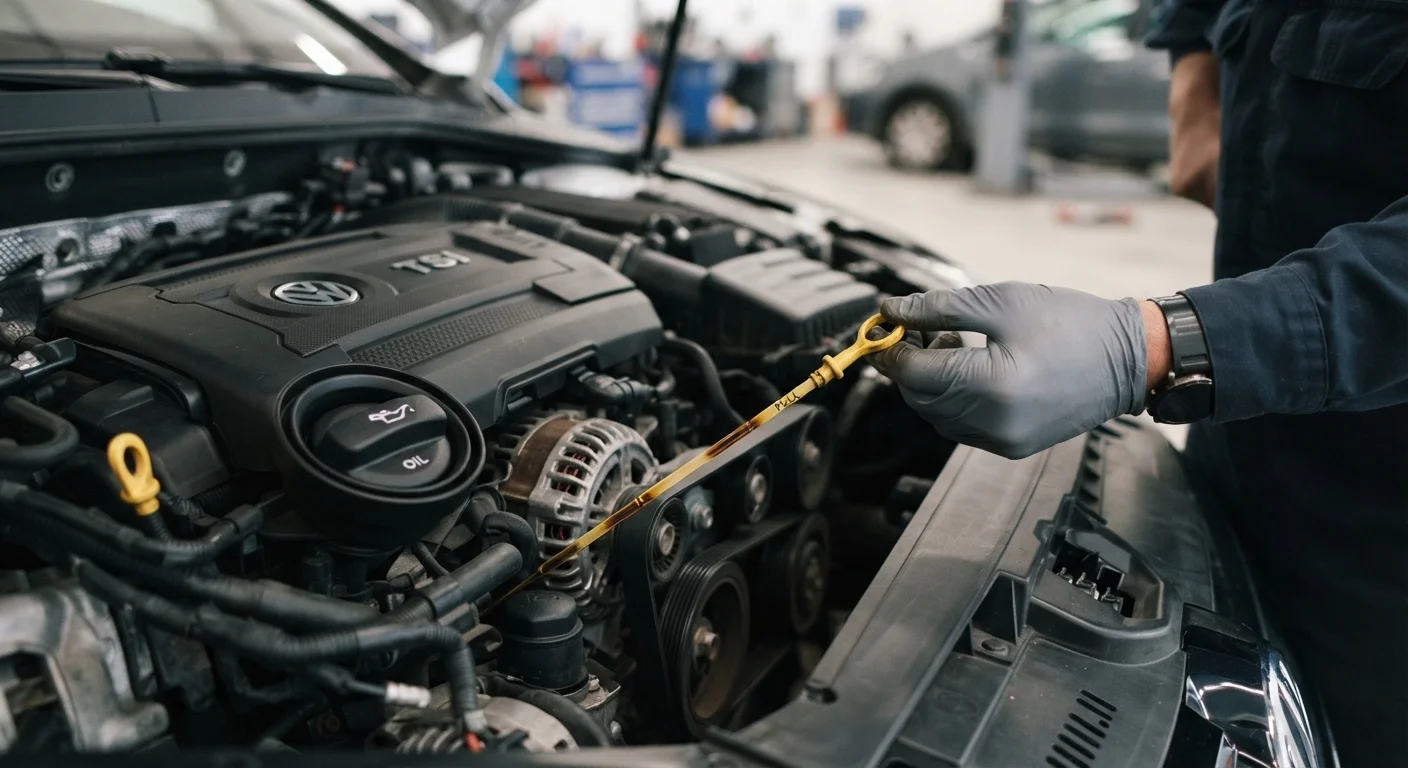
Dipstick
A long metal rod inserted into the engine to measure oil level. You pull it out, wipe it clean, reinsert it, then read the level against marked indicators.
Coolant
A liquid (usually a mixture of antifreeze and water) that circulates through the engine to regulate temperature and prevent overheating or freeze damage.
Brake fluid
A hydraulic fluid that transfers the force from your brake pedal to the brakes at each wheel. It absorbs moisture over time and needs periodic replacement.
Tire pressure (PSI)
The amount of air inside a tire, measured in pounds per square inch. Incorrect pressure affects safety, fuel economy, and how long tires last.
Timing belt
A rubber belt inside the engine that keeps the crankshaft and camshaft synchronized. If it breaks while driving, it can cause severe engine damage.
Service interval
The mileage or time period recommended by the vehicle manufacturer between routine maintenance visits, such as oil changes or filter replacements.
Engine oil gets most of the attention, but several other fluids are equally important. Coolant regulates engine temperature and prevents both overheating and freeze damage. Brake fluid transmits the force from your pedal to your calipers - when it absorbs too much moisture over time, braking performance can degrade. Transmission fluid lubricates the gearbox; in many automatic vehicles it's sealed and checked differently from oil, so consult your manual. Power steering fluid (in vehicles without electric power steering) keeps steering effort manageable.
Most reservoirs are labeled and translucent so you can check levels without opening them. For a thorough walkthrough, see our guide on coolant, transmission fluid, and power steering fluid. Never top up with the wrong fluid type - each reservoir will specify exactly what it takes, as will your owner's manual.
Service Milestones: When to Book a Professional
Some maintenance tasks require tools, expertise, or safety equipment that go beyond what most drivers should attempt at home. Knowing when to hand the keys to a qualified mechanic is just as important as knowing how to check your own oil.
Your owner's manual contains a manufacturer's service schedule - follow it rather than generic rules of thumb. Common milestones to be aware of include:
- Oil and filter changes: Intervals vary widely by vehicle and oil type; many modern engines using full-synthetic oil go 7,500-10,000 miles between changes. Check your manual.
- Brake inspection: Pads typically need replacement every 25,000-70,000 miles depending on driving style and conditions. Squealing or a pulsing pedal are signs to act sooner.
- Tire rotation: Rotating tires every 5,000-7,500 miles promotes even wear and extends tire life.
- Coolant flush, spark plugs, and timing belt/chain: These fall at longer intervals - often 30,000-100,000 miles - but skipping them carries serious consequences. A snapped timing belt, for example, can destroy an engine.
For the full picture, our complete car maintenance schedule maps every major milestone end to end. Unsure which tasks are safe to DIY? Our guide on DIY tasks vs. jobs for a mechanic draws the line clearly.
Building a Record and Staying Ahead of Problems
One of the most underrated maintenance habits costs nothing: writing things down. A service log - whether a dedicated app, a spreadsheet, or a notebook kept in the glove box - tracks what was done, when, and at what mileage. This record makes it easier for any mechanic to diagnose issues quickly, helps you spot patterns (recurring low coolant, for instance, points to a leak rather than simple evaporation), and is a genuine asset when it comes time to sell the vehicle.
Our article on keeping a service record explains exactly what to track and why it matters financially. Alongside your log, pay attention to your car's battery - it's one of the most common causes of unexpected breakdowns. Learn to monitor battery health and recognise early decline before you find yourself stranded.
Finally, remember that maintenance needs shift with the seasons. Heat, cold, and wet conditions each stress different systems. Our guide on seasonal car maintenance helps you adapt your routine as conditions change throughout the year.