Why the DIY vs. Professional Question Matters
Routine car maintenance represents one of the most controllable costs of vehicle ownership. According to AAA, the average American spends hundreds of dollars annually on maintenance and repairs - some of which involves labor charges for tasks a careful owner could reasonably handle. At the same time, attempting the wrong job without proper knowledge creates safety hazards and can lead to repair bills far larger than a professional service would have cost.
The right framework isn't "do as much as possible yourself" - it's understanding which tasks are genuinely low-risk, which require specialist knowledge, and which could put you or other road users in danger if done incorrectly. For a broader picture of what's due and when, see The Complete Car Maintenance Schedule Every Driver Should Know.
DIY Tasks Worth Learning
The following tasks share important characteristics: they require minimal or no specialized tools, carry low safety risk if performed carefully, and are well-documented in most owner's manuals.
Engine and Cabin Air Filter Replacement
Both filters are designed to be accessed without lifting the vehicle. The engine air filter typically sits in a plastic housing secured by clips or a few bolts. The cabin air filter - which keeps dust and allergens out of your interior ventilation - is usually behind the glove box or under the dashboard. Most replacements take under 15 minutes.
Windshield Wiper Blades
Wiper blades degrade faster than many drivers realize, especially in climates with temperature extremes. Replacement requires no tools; the blade clips directly onto the arm. This is arguably the simplest maintenance task on any vehicle and a sensible starting point for new owners. See Car Maintenance for New Drivers for more foundational tasks like this.
Fluid Top-Ups (Checking and Topping)
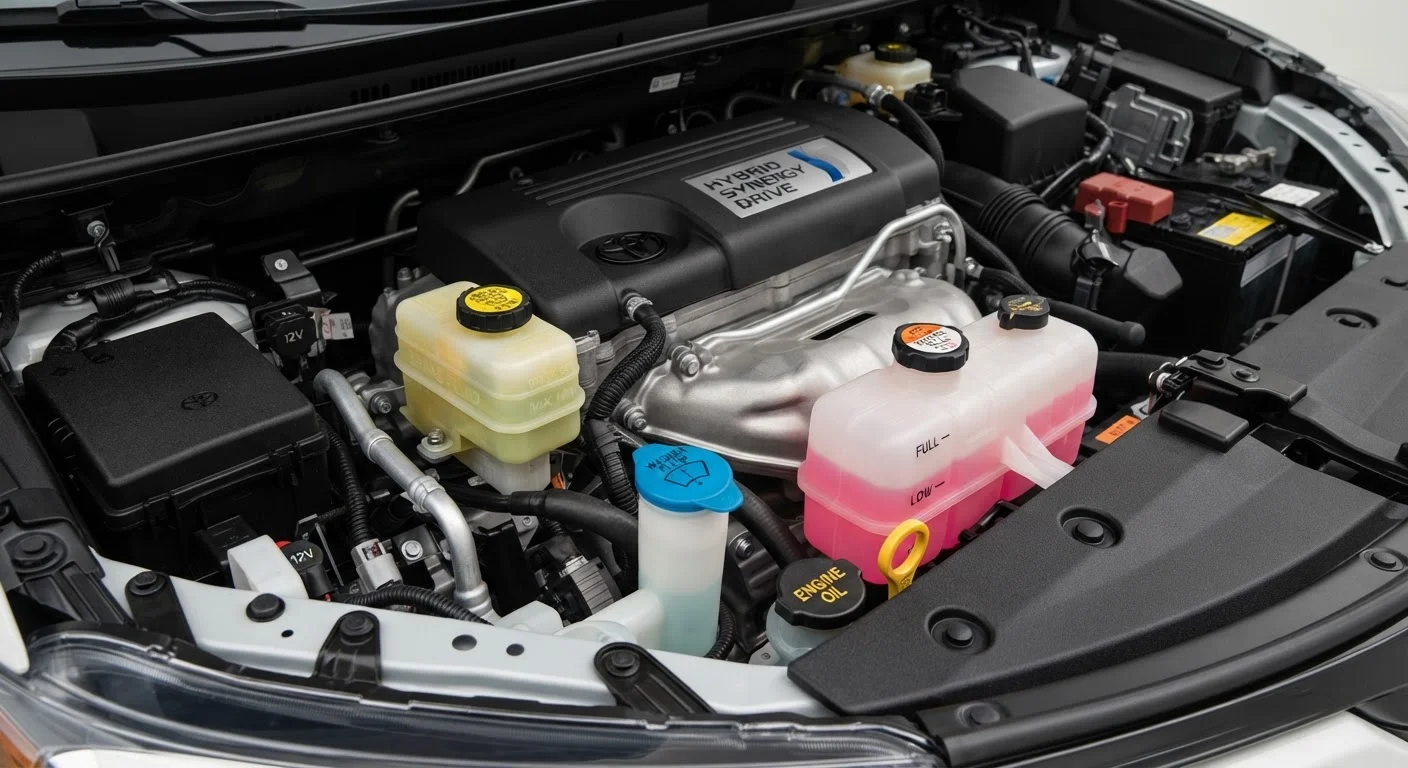
Checking and topping up washer fluid, coolant reservoir levels (when cold), and power steering fluid are straightforward visual checks. Understanding what each fluid does and how to read its dipstick or reservoir markings is a valuable habit. For a full breakdown of the fluids most drivers overlook, see Coolant, Transmission Fluid, and Power Steering Fluid.
Always Start With Your Owner's Manual
Before attempting any maintenance task, consult your vehicle's owner's manual. It specifies the correct fluid types, filter part numbers, and service intervals for your exact make and model. Using the wrong oil viscosity or filter spec - even on a simple oil change - can cause premature wear. The manual is your most reliable first reference.
Battery Terminal Cleaning
Corrosion on battery terminals is common and straightforward to address with a wire brush and a baking soda solution. This is distinct from battery replacement, which carries its own considerations - particularly on newer vehicles where battery disconnection can reset electronic systems. For a full picture of battery health monitoring, see Car Battery Care.
Jobs Best Left to a Qualified Mechanic
Never Compromise on Brake System Work
Brake components - pads, rotors, calipers, brake lines, and ABS sensors - are among the most safety-critical systems on any vehicle. An improperly seated brake pad or a mis-torqued caliper bolt can lead to brake fade or complete failure. Unless you have verified mechanical training and the correct tools, brake work should always be performed by a licensed mechanic.
Certain systems demand professional attention - not because the concepts are impossibly complex, but because the consequences of errors are severe and the required tools are specialized.
| Task | DIY Friendly | Difficulty | Risk if Done Wrong | Tools Needed | Typical Pro Cost | |
|---|---|---|---|---|---|---|
| Engine air filter replacement | Yes | Easy | Low | Basic hand tools | $20-$50 | |
| Windshield wiper blades | Yes | Very easy | Very low | None | $15-$30 | |
| Cabin air filter swap | Yes | Easy | Low | None or screwdriver | $25-$60 | |
| Engine oil & filter change | Sometimes | Moderate | Medium if done poorly | Drain pan, wrench, jack stands | $50-$120 | |
| Brake pad replacement | No (for most) | Advanced | High - safety critical | Specialized tools | $150-$300 per axle | |
| Wheel alignment | No | Expert only | High - tire and handling risk | Alignment rack | $80-$150 | |
| Timing belt/chain service | No | Expert only | Very high - engine damage | Specialized tools | $400-$1,000+ |
Brake System Repairs
Brake pads, rotors, calipers, and hydraulic lines must all work together precisely. While some experienced DIYers do replace brake pads, the task requires proper torque specs, correct bedding-in procedures, and the ability to identify worn or warped rotors. A mistake here doesn't just damage your car - it endangers everyone on the road.
Wheel Alignment and Suspension Work
Alignment requires a calibrated alignment rack - equipment no home garage has. Incorrect alignment accelerates tire wear and compromises vehicle handling. Suspension components like struts, control arms, and tie rod ends involve compressed springs that can release dangerous amounts of stored energy if handled without the right tools. For more on distinguishing alignment from related services, see Tyre Rotation, Balancing, and Alignment.
Timing Belt and Chain Service
On interference engines (where pistons and valves share space in the cylinder), a timing belt that slips or snaps causes catastrophic engine damage. The job involves precise phasing of the camshaft and crankshaft, often requiring engine disassembly and special locking tools. This is one of the most consequential services on a vehicle and should always be performed by a mechanic familiar with your specific engine.
Airbag and Advanced Safety System Components
Airbag modules, sensors, and wiring carry live electrical charges even with the battery disconnected and can deploy unexpectedly. Any work near these systems - including dashboard removal - risks serious injury. Vehicles with advanced driver-assistance systems (ADAS) also require specialized calibration equipment after component replacement or windshield work.
Documenting Whatever You Do
Whether you handle a task yourself or pay a professional, recording the work - date, mileage, parts used, and who performed it - protects your vehicle's resale value and helps future mechanics diagnose problems faster. A well-kept service record is genuinely one of a car's most underrated assets. Learn more in our article on keeping a service record.
Adapting your maintenance habits to seasonal demands is also worth considering - cold weather, heat, and wet conditions each stress different systems. See Seasonal Car Maintenance for a practical overview of what to check and when.
This article is for general informational purposes only. Always consult a qualified mechanic before performing any maintenance task you are uncertain about, particularly work involving safety-critical systems. Follow all manufacturer guidelines in your vehicle's owner's manual.