Why Travel Budgets Break Down
Most people who overspend on a trip didn't blow their budget on flights or hotels — those numbers were locked in before they left home. The real damage usually happens in the daily variable layer: meals that cost more than expected, entry fees nobody looked up in advance, a taxi when the transit app failed, a souvenir impulse buy. These small, unplanned decisions compound across a 10-day trip and quietly add hundreds of dollars to the final tally.
The other common failure is building a single total budget number without breaking it into categories. A lump sum offers no guardrails in the moment. When you're standing at a restaurant deciding whether to order a second course, you need to know what your daily food allowance is — not whether your overall trip fund still has room. Knowing you have $65 left for food today is actionable. Knowing you have $800 left for the whole trip is almost useless.
For a deeper look at how pre-trip cost estimation fits into this process, see our guide to estimating real trip costs before you book. This article focuses on the structure and habits that keep your budget functional once you're actually traveling.
Don't Confuse Available Credit With Available Budget
Having a credit card with room on it is not the same as having money for the expense. Travel budgets should be based on funds you already have set aside, not available credit lines. Mixing the two leads to post-trip debt that can take months to clear and undercuts the financial value of traveling carefully.
What You Need Before You Start
Before laying out your budget categories, gather a few key inputs. You'll need your confirmed fixed costs — flights, accommodation, and any prepaid tours or passes — as a starting point. These are your baseline, and they don't flex.
You also need a realistic daily spending estimate for your destination. Research food costs, local transport averages, and typical activity prices for where you're going. Travel forums, destination travel blogs, and official tourism resources can give you ballpark figures without requiring deep expertise. Be specific: $30/day for food in rural Mexico looks very different from $30/day in Tokyo.
What you will need
How to Structure Your On-the-Road Budget
Break your budget into five practical categories: accommodation (if not prepaid), food and drink, local transport, activities and entrance fees, and a miscellaneous buffer. Assign a daily or per-trip ceiling to each.
For food, it helps to split the daily allowance across meals — for instance, spending more on dinner and keeping breakfast and lunch cheap. This approach mirrors how strategic food choices keep costs manageable without eating poorly.
For accommodation, don't evaluate cost in isolation. A room that's $25 cheaper per night but 40 minutes from the city center can easily cost you more in transport. Our analysis of cheap lodging trade-offs walks through the math in detail. Similarly, choosing between hostel, rental, and hotel options involves more variables than nightly rate alone.
Build in a contingency line of 10–15% of your total variable spending. This isn't a slush fund — it's a defined buffer for medical co-pays, missed transport, a fee you didn't anticipate, or a weather-forced plan change. Having it named prevents you from treating every unexpected cost as a budget failure.
List every confirmed fixed cost
Write down every prepaid or locked-in expense: flights, accommodation deposits, rail passes, prepaid tours, travel insurance. Total these up — this is your immovable baseline that no in-trip decision can change.
Research realistic variable costs for your destination
Look up average meal costs at local restaurants (not tourist-facing prices), typical metro or bus fares, and entry fees for the activities you're planning. Use destination-specific travel forums or tourism authority pages rather than generic travel cost calculators, which often lag behind actual prices.
Assign daily ceilings to each spending category
Divide your variable budget into five categories: food, local transport, activities, accommodation (if not prepaid), and a contingency buffer. Assign a realistic daily or per-trip ceiling to each. Write these numbers down — they are your decision-making anchors on the ground.
Calculate your total trip ceiling and check it against your savings
Add your fixed costs plus your variable daily allowances (multiplied by the number of days) plus your contingency buffer. Compare the total to what you have actually saved for this trip — not what you hope to have. If there's a gap, adjust categories or trip length before you book anything else.
Set up a simple daily tracking method
Choose a tracking tool you will actually use: a notes app, a spreadsheet saved to your phone, or a travel expense app. The format matters less than the consistency. Log every purchase at the moment you make it — not at the end of the day when small amounts get forgotten.
Review your category totals each evening
Spend five minutes each night checking actual spending against your daily ceilings. If a category is trending over, decide now how you'll compensate tomorrow — not in the moment when you're hungry, tired, or tempted. Early course corrections are easy; late ones are stressful.
Tracking Spending While You Travel
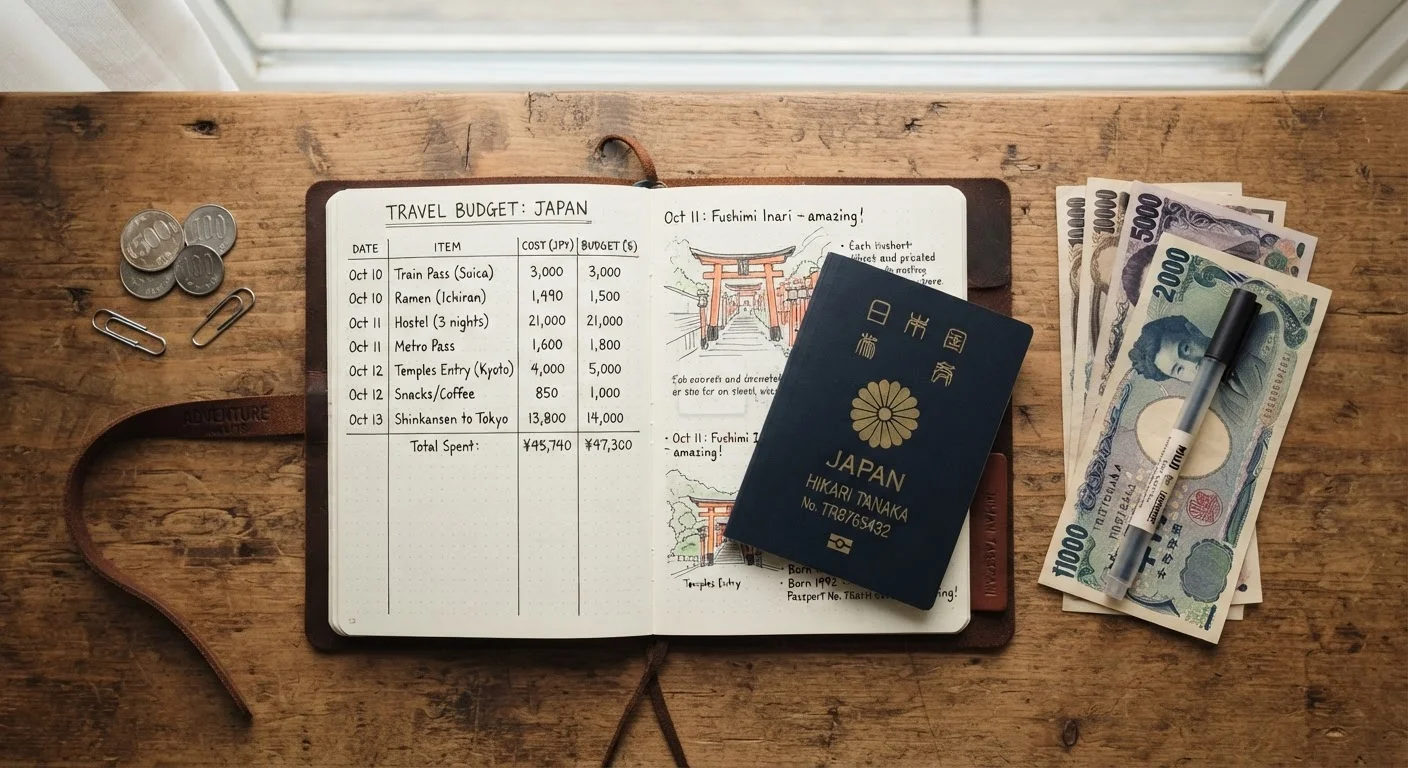
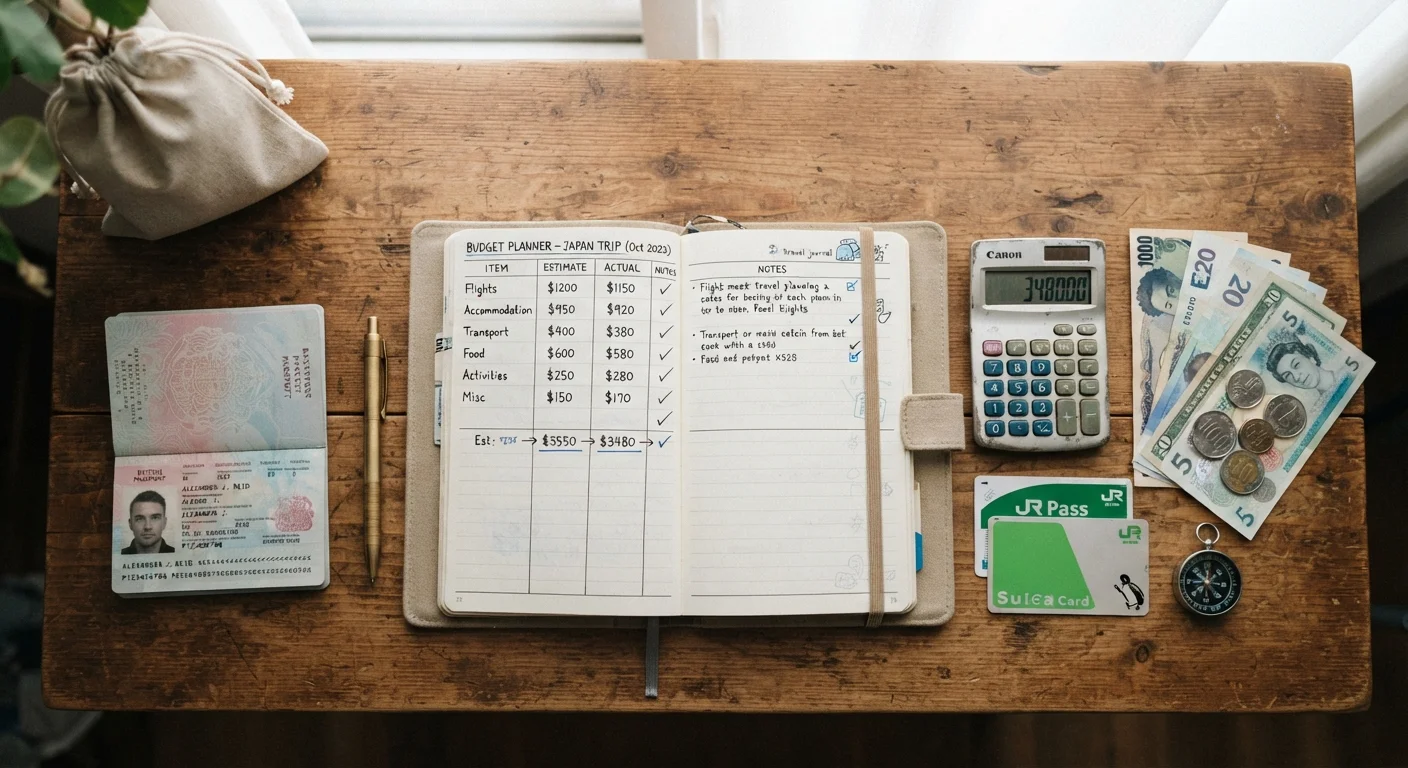
A budget without tracking is just a wish list. The simplest method that works for most travelers: log every expense at the point of spending using a notes app, a spreadsheet, or a dedicated travel expense app. Check your category totals each evening — this nightly review takes under five minutes and gives you a clear picture of where you stand before tomorrow's decisions.
If you find one category running over, adjust proactively — eat cheaper the next day, skip the optional museum, walk instead of taking a taxi. The goal is to catch a drift before it becomes a shortfall, not to punish yourself when things go over by a few dollars.
Travelers who find money management difficult generally struggle with the same patterns in their regular monthly finances. If that resonates, our breakdown of where money actually goes each month offers useful context for building stronger habits at home that carry into travel.
Before you leave, it's also worth running through a pre-departure cost control checklist to catch avoidable fees and currency pitfalls that many travelers miss until it's too late.
The Nightly Five-Minute Review
Set a reminder on your phone for 9 p.m. each evening of your trip. Pull up your expense log, total each category, and note whether you're ahead or behind your daily ceiling. This single habit catches budget drift before it compounds — and takes less time than checking social media.