
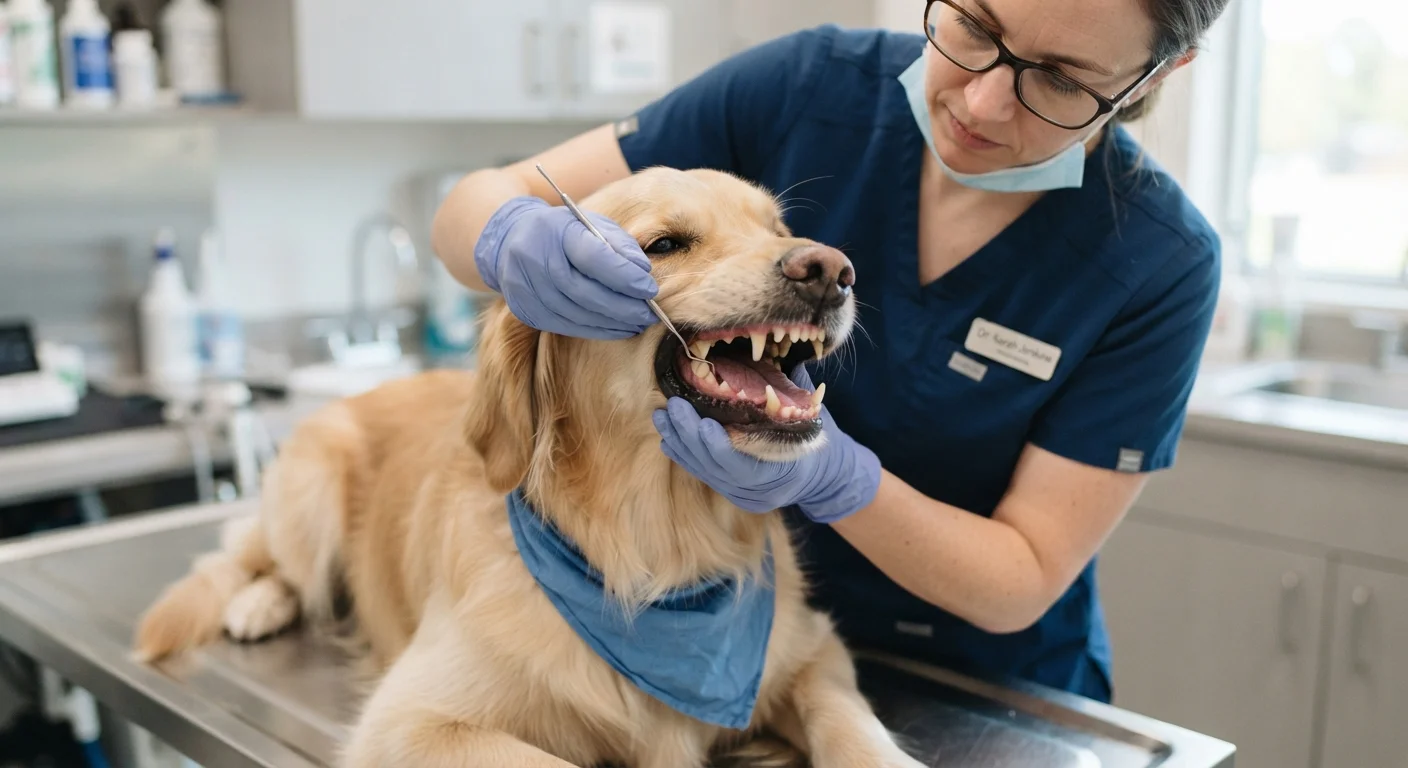
Why Pet Dental Health Is Frequently Overlooked
Dental disease is one of the most commonly diagnosed health problems in companion animals, yet it remains one of the most neglected. According to the American Veterinary Medical Association, most dogs and cats show signs of periodontal disease by the time they reach three years of age. Despite this, many owners don't schedule professional dental evaluations until visible symptoms appear - which, by that point, often means disease is already advanced.
The gap between how common dental disease is and how rarely it's addressed comes down, in large part, to persistent myths. Misunderstandings about what causes plaque, what prevents it, and what pet dental symptoms actually mean lead owners to skip preventive care. Below, we correct the most frequently encountered misconceptions with evidence-aligned facts your veterinarian would recognize.
Myth
Dry kibble keeps my pet's teeth clean, so I don't need to brush.
Fact
Dry kibble provides minimal mechanical cleaning and is not a substitute for active dental hygiene.
The idea that crunchy kibble scrubs teeth is one of the most widespread dental myths in pet care. While some kibble does create minor abrasive contact at the tooth tip, it does little to address the gumline - where plaque accumulates and periodontal disease begins. Most kibble also shatters on contact rather than wrapping around the tooth surface. The dental effects of kibble versus wet food are more nuanced than most packaging suggests. No food format replaces mechanical removal of plaque through brushing.
Myth
Bad breath is just normal for dogs and cats - it's part of having a pet.
Fact
Persistent bad breath (halitosis) in pets is a clinical sign of bacterial buildup and often indicates active dental or gum disease.
A mild, neutral odor from a pet's mouth may be unremarkable, but strong or foul-smelling breath is not something to dismiss. It typically reflects a significant bacterial load on tooth surfaces or under the gumline. In some cases, it can also indicate systemic conditions affecting the kidneys or gastrointestinal tract. If your pet's breath has changed noticeably or is consistently unpleasant, that warrants a veterinary evaluation - not a dental treat. Well-intentioned home remedies won't address the underlying cause; see why certain DIY approaches can backfire.
Myth
My pet isn't showing pain, so their teeth must be fine.
Fact
Pets are highly adept at masking dental pain; absence of obvious distress does not mean absence of disease.
Dogs and cats evolved to conceal signs of weakness, which means dental pain - even when severe - may not manifest as whimpering, pawing at the mouth, or refusing food. Many pets with advanced periodontal disease continue eating normally right up until a tooth is extracted. Owners frequently report that their pet seems more energetic and comfortable after a dental procedure, indicating that pain had been present but hidden. Relying on behavioral cues alone to gauge dental health is not reliable; regular veterinary oral examinations are necessary.
Myth
Anesthesia-free dental cleanings are just as effective as professional veterinary cleanings.
Fact
Anesthesia-free cleanings address only visible tooth surfaces and cannot treat below the gumline, where periodontal disease develops.
Anesthesia-free dental scaling may make teeth look cleaner, but it is primarily cosmetic. The subgingival space - the area beneath the gumline - is where bacteria establish the most damaging infections, and cleaning it requires a cooperative, still patient. General anesthesia also allows the veterinary team to probe each tooth, take dental radiographs, and identify fractured roots or bone loss that would be invisible to a surface examination. Major veterinary organizations, including the American Animal Hospital Association, do not recognize anesthesia-free dentistry as a standard of care for this reason.
Myth
Dental disease only affects the mouth.
Fact
Chronic oral infections can place a burden on the cardiovascular and organ systems over time, though the nature and extent of systemic effects is still being studied.
The mouth is not an isolated system. Bacteria from periodontal disease can enter the bloodstream through inflamed gum tissue, and some research suggests associations between chronic oral disease and changes in heart, kidney, and liver function in pets. The strength of these links continues to be studied, and correlation is not the same as proven causation - but the biological plausibility is sound, and it reinforces the importance of treating dental disease as a genuine health issue rather than a cosmetic concern. Nutrition also plays a supporting role in overall tissue health; foundational pet nutrition concepts are worth understanding alongside dental care.
Building a Real Dental Care Routine
Understanding the myths is only useful if it leads to action. A practical at-home dental routine centers on daily brushing using a soft-bristled toothbrush and toothpaste specifically formulated for pets - human toothpaste contains ingredients, including fluoride and xylitol, that can be harmful to animals. Introduce brushing gradually, starting with just touching the gums and rewarding cooperation, before progressing to full sessions.
Beyond brushing, the Veterinary Oral Health Council (VOHC) maintains a list of products - including certain dental chews and water additives - that have demonstrated measurable plaque or tartar reduction in controlled studies. These can serve as supplements to brushing, not replacements. For a broader look at how food choices interact with dental and overall health, see our comparison of dry and wet food.
Don't Delay if You Notice These Signs
Red or bleeding gums, visible tartar (yellow-brown deposits at the gumline), loose teeth, difficulty chewing, or drooling more than usual are all reasons to contact your veterinarian promptly. These signs suggest active disease that home care alone cannot reverse. Early intervention generally leads to better outcomes and can reduce the extent of treatment needed.
Professional cleanings, performed under general anesthesia by a veterinarian, remain the standard for addressing tartar below the gumline - the area where periodontal disease does its most serious damage. Ask your veterinarian how frequently your individual pet should be seen; breed, age, and dental history all affect the recommended interval.
This article is for general informational and educational purposes only and does not constitute veterinary advice. Always consult a licensed veterinarian regarding your pet's specific dental health needs.