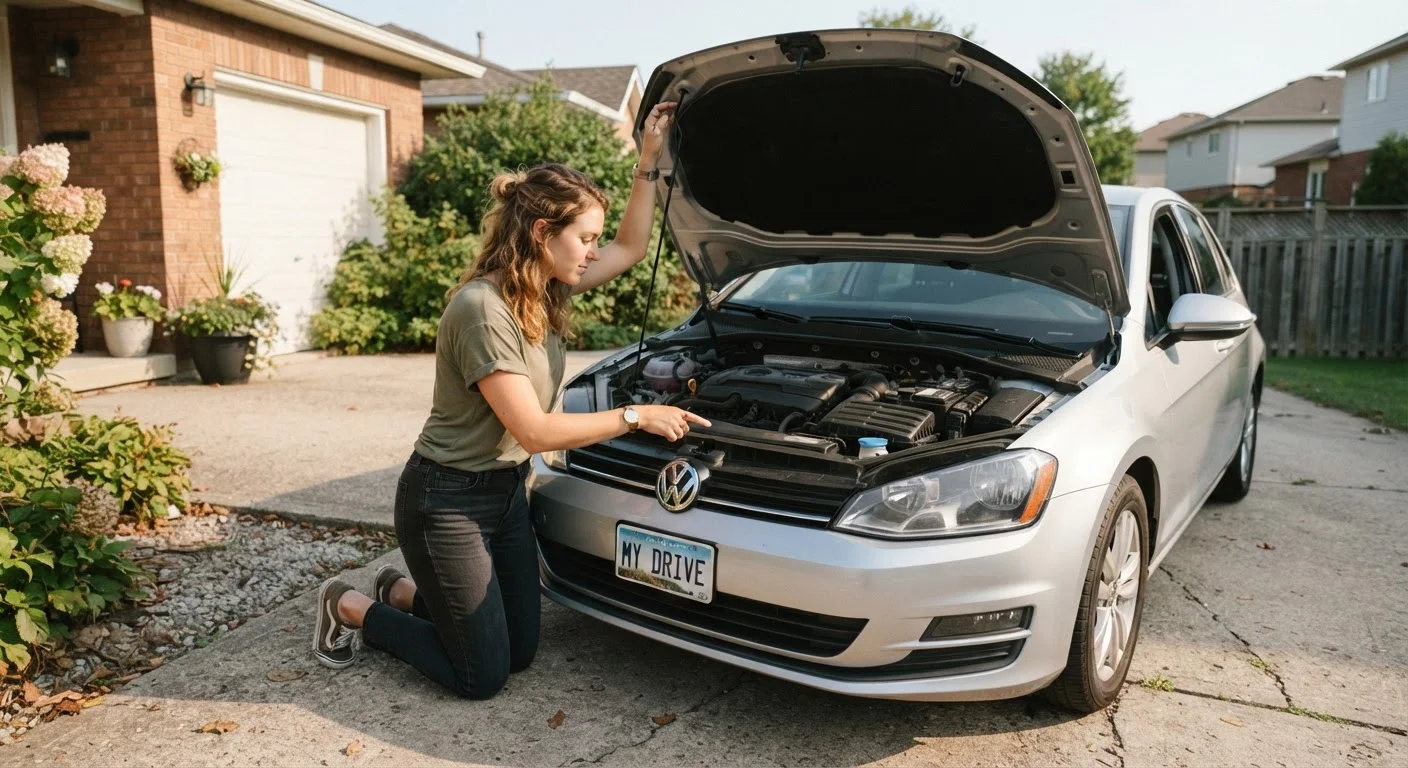
Why Seasonal Maintenance Matters More Than You Think
Most drivers think of car maintenance as a fixed schedule - oil changes every few months, tire rotations at set mileage intervals. That framework is correct, but it misses a critical layer: the way seasonal temperature swings, precipitation, and road conditions create distinct and predictable stress patterns on your vehicle's systems.
Summer heat accelerates rubber degradation, pushes tire pressure above safe limits, and places heavy demand on your cooling system. Winter cold saps battery cranking power, thickens fluids, and leaves road salt attacking exposed metal. Spring and fall serve as transition windows - the ideal moments to assess damage from the season just passed and prepare for the one ahead.
For drivers still building their maintenance routines, our guide to car maintenance for new drivers covers the foundational habits that make seasonal checks easier to stay on top of. And if you want a complete mileage-based maintenance timeline alongside your seasonal work, see the complete car maintenance schedule.
Use the checklist below to work through each seasonal transition systematically. You don't need to be a mechanic - but you do need to know what to look for and when to hand a task off to a professional.
What to Check and When
The four checklist groups below map to each seasonal transition. Work through the relevant group before the season fully arrives - catching a weak battery in October is far preferable to discovering it won't start your car in January.
Spring Preparation
Summer Preparation
Fall Preparation
Winter Preparation
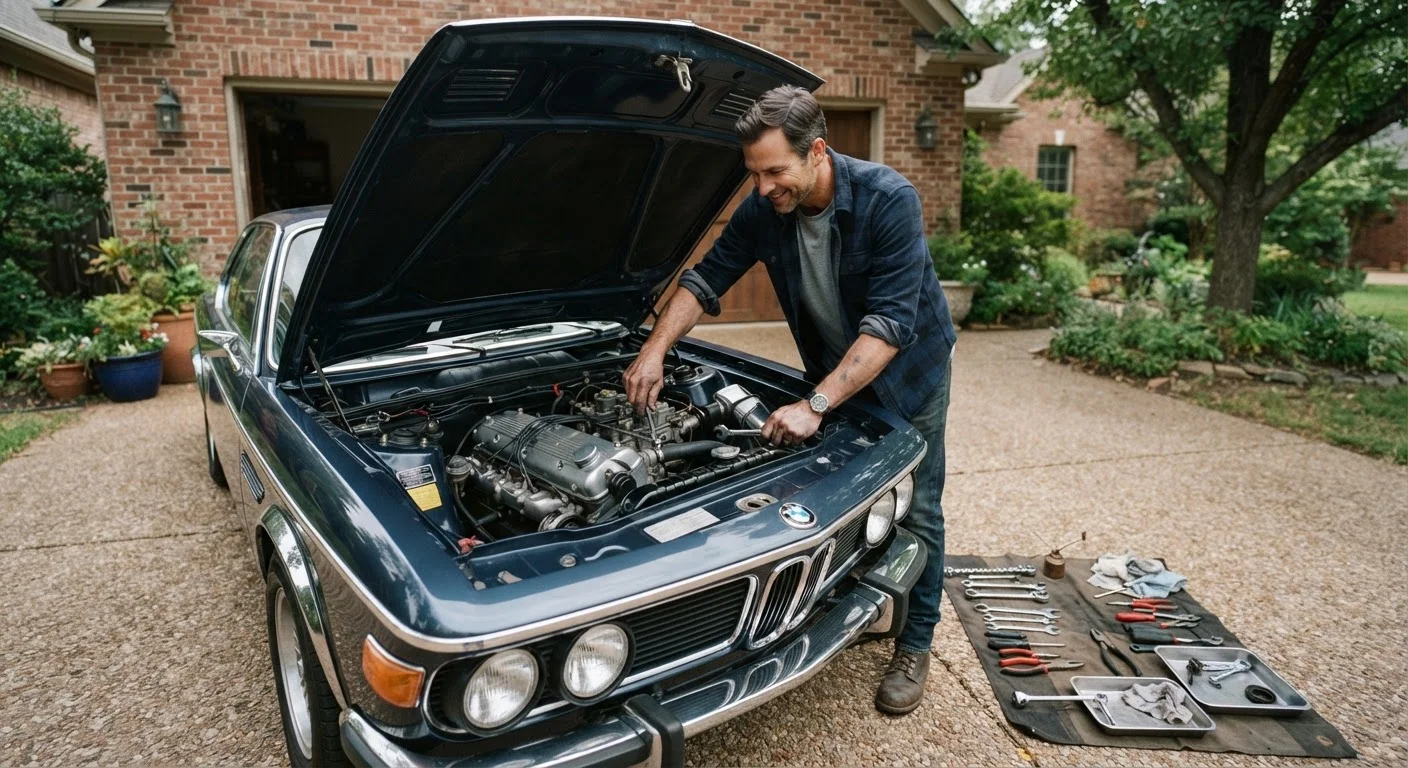
Several of these checks require only basic tools. See the tools section above for what you'll need to get started. For a breakdown of which tasks are genuinely DIY-friendly and which carry real safety risks, our article on DIY car maintenance vs. jobs for a mechanic is a useful companion read.
Don't Skip the Brake Inspection
Brakes are exposed to significant salt, moisture, and temperature cycling during winter months. Corrosion on rotors and brake pads can develop quickly and may not be obvious until you hear grinding or feel pulsation. Have brakes inspected by a qualified mechanic if you notice any change in stopping performance - do not delay this check.
Cooling System Work Carries Burn Risk
Never open a radiator cap or coolant reservoir cap on a hot engine. Pressurized coolant can spray and cause serious burns. Allow the engine to cool fully - typically at least 30 minutes - before inspecting or topping off the cooling system. If you're unsure about any cooling system repair, have a professional handle it.
The Tools You'll Need
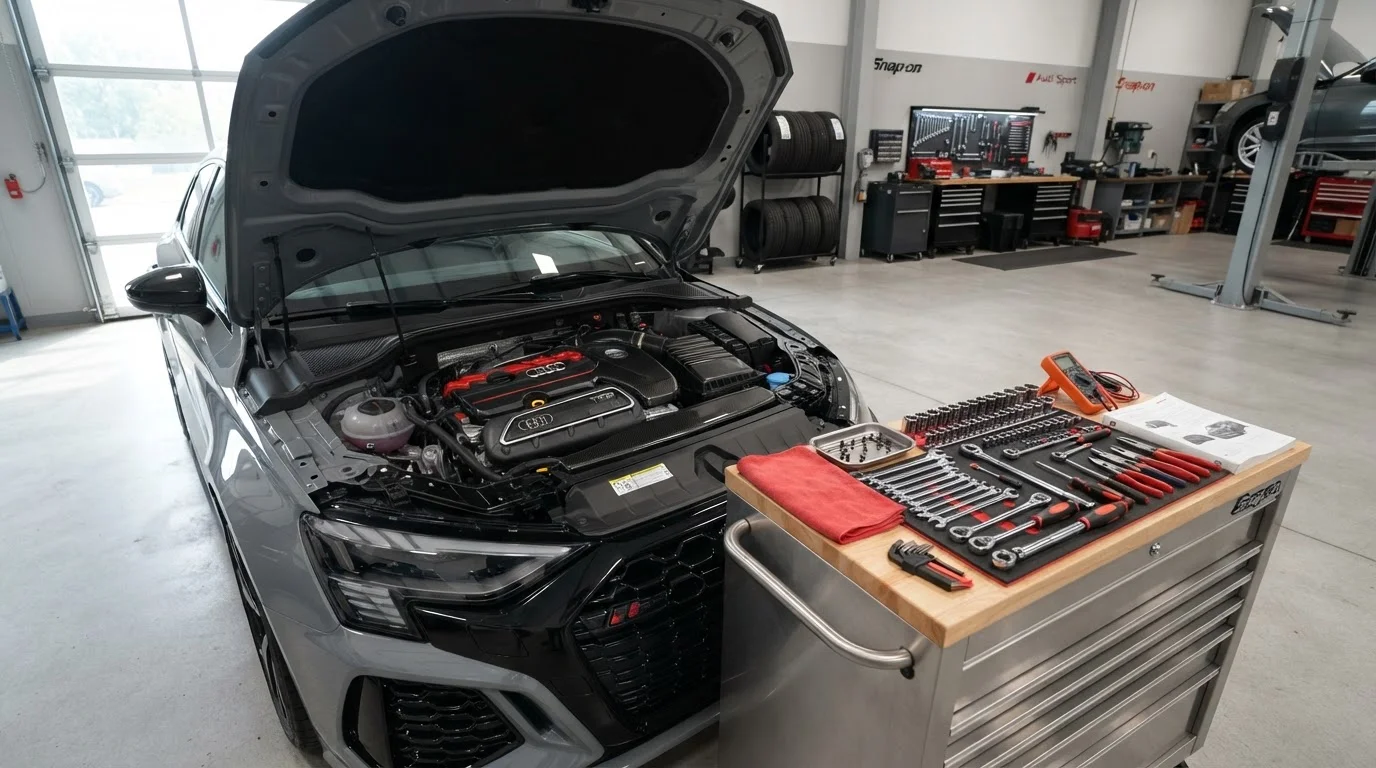
Seasonal vehicle checks don't require a full workshop. A small set of inexpensive, reusable tools covers the vast majority of the items on this checklist.
Tire pressure gauge
Measure tire inflation accurately across all seasons as temperature changes cause pressure to rise and fall.
Tread depth gauge
Measure remaining tire tread to determine whether tires are safe for the coming season's conditions.
Battery load tester
Assess battery health before cold weather to identify failing batteries that perform normally in warm conditions.
Antifreeze test strips or hydrometer
Verify that coolant provides adequate freeze protection for your local winter temperatures.
Flashlight or work light
Inspect undercarriage, engine bay, and dark areas of the vehicle safely and thoroughly.
Silicone-based lubricant spray
Treat door and trunk weatherstripping to prevent freezing and cracking in cold temperatures.
Most auto parts retailers will also test your battery and check tire pressure at no charge - useful if you don't own the equipment yet. For checking fluids beyond engine oil, including coolant, transmission fluid, and power steering fluid, our guide on fluids drivers neglect most explains what to look for and how to check each one correctly.
Battery Failure Is the Leading Cause of Winter Breakdowns
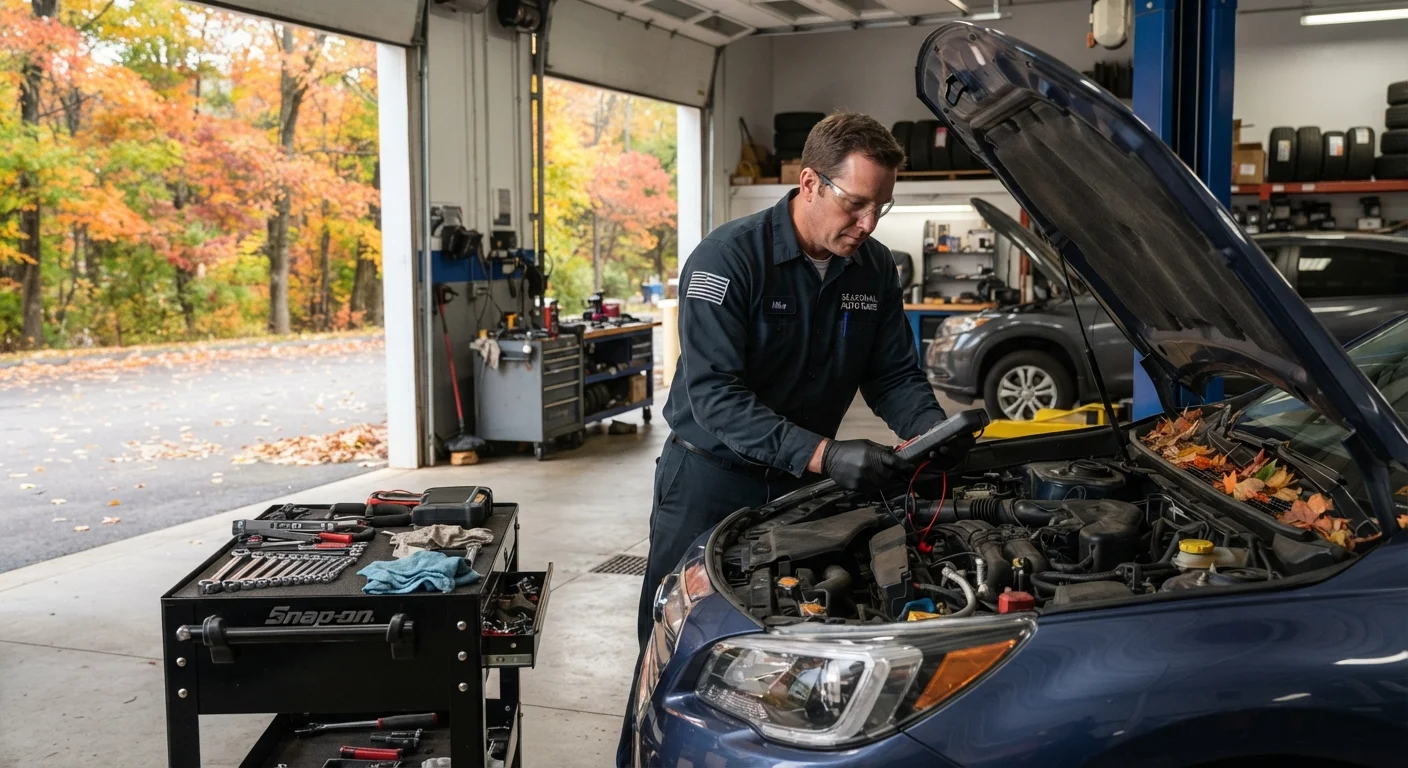
A battery that performs adequately in summer can fail suddenly once temperatures drop below freezing, because cold reduces a battery's available cranking power. Most automotive batteries have a service life of three to five years. If yours is approaching that range, have it tested before fall - replacing it proactively is far less disruptive than a no-start on a cold morning.
Preparing for Wet and Winter Driving Conditions
Vehicle readiness and driving technique go hand in hand. A well-maintained car responds more predictably in rain, fog, and ice - but even a properly serviced vehicle demands adjusted driving behavior when conditions deteriorate. Tires, brakes, and lights are the three systems that matter most in poor visibility and low-traction conditions.
If your tires pass the tread depth check but you're heading into a region with regular winter snowfall, consider whether all-season tires genuinely meet your needs or whether dedicated winter tires are warranted. Winter tires use a different rubber compound that stays pliable below 45°F, offering meaningfully better traction than all-season tires in snow and ice.
For guidance on adapting your behavior behind the wheel when roads become hazardous, see our article on driving in rain, fog, and snow. And if your vehicle develops unusual noises after any seasonal check - squealing brakes, knocking suspension, or grinding when turning - our article on identifying unusual car noises can help you interpret what those sounds likely indicate before your next shop visit.
This article provides general vehicle maintenance information for educational purposes. Always consult your vehicle's owner's manual and a qualified mechanic for guidance specific to your vehicle's make, model, and condition.