The Fluids That Get Forgotten
Ask most drivers when they last changed their oil and they'll have an answer. Ask about their coolant or transmission fluid and you'll often get a blank stare. Engine oil earns the spotlight because it's marketed heavily and tied to a familiar service interval - but it isn't the only fluid standing between your car and a costly breakdown.
Coolant, transmission fluid, and power steering fluid each protect a critical system. When any one of them degrades or runs low, the consequences range from inconvenient to dangerous. The good news is that checking these fluids is well within reach for any driver willing to spend a few minutes under the hood. Our complete car maintenance schedule covers how these checks fit into a broader service routine, but this guide goes deeper on the three fluids most drivers neglect.
When in Doubt, Consult a Professional
Checking fluid levels is a safe, straightforward task for most drivers. However, if you notice a persistent fluid leak, unusual smells, warning lights, or handling changes, have a qualified mechanic inspect the vehicle before driving further. Some issues - particularly internal coolant leaks or transmission problems - require professional diagnosis and should not be left unaddressed.
What Each Fluid Does - and How to Check It
Coolant (Antifreeze): Your Engine's Temperature Manager
Coolant - also called antifreeze - circulates through your engine to absorb heat and carry it to the radiator, where it's released. Without adequate coolant, your engine can overheat within minutes, causing warped cylinder heads or a cracked engine block, both of which are among the most expensive repairs a driver can face.
Coolant also contains corrosion inhibitors that protect metal components inside the cooling system. Over time, those inhibitors break down even if the fluid level stays full, which is why coolant has a service life rather than just a fill-and-forget role.
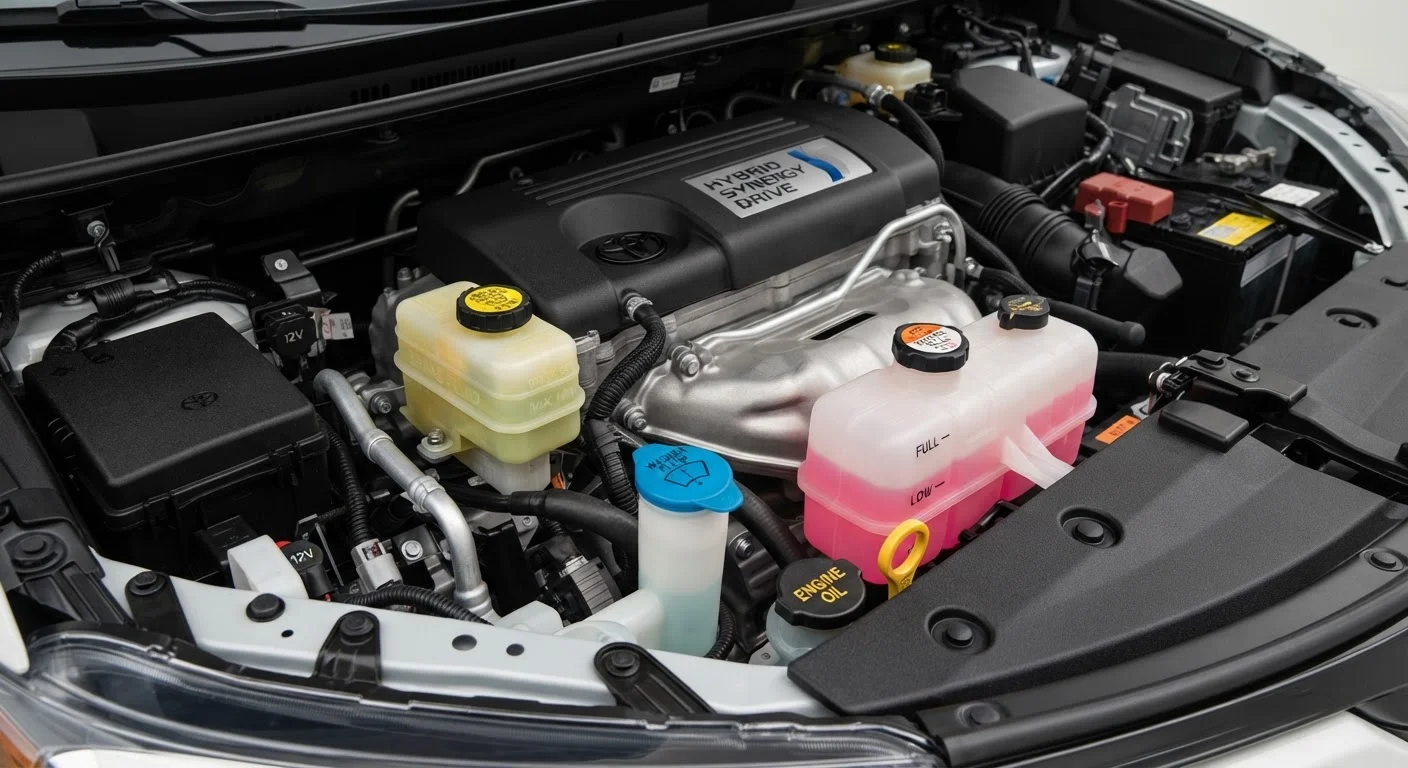
How to check it: Most modern vehicles have a translucent plastic overflow reservoir near the radiator. With the engine cold, look at the MIN and MAX markings on the side - the fluid should fall between them. Do not open the radiator cap on a hot engine; pressurized coolant can cause serious burns. The fluid should appear bright (green, orange, or pink depending on the type your vehicle uses) and not murky or rusty. Consult your owner's manual for the correct coolant type, as mixing different types can reduce effectiveness.
Typical service interval: Many vehicles call for coolant replacement every 30,000 miles or every two to five years, though extended-life coolants may last longer. Verify with your owner's manual. Engine longevity habits often start with keeping this system healthy.
An overheating engine can cause catastrophic damage within minutes - coolant is your first line of defense.
Transmission Fluid: The Gear-Shifting Lifeline
Transmission fluid lubricates the hundreds of moving parts inside your transmission, manages heat, and - in automatic transmissions - serves as the hydraulic fluid that enables gear changes. It does far more work than many drivers realize, and it degrades from heat, friction, and contamination over time.
Neglected transmission fluid turns dark, loses its lubricating properties, and can leave deposits that damage internal components. A transmission rebuild or replacement is one of the most expensive repairs in automotive maintenance, often running into thousands of dollars - most of which is avoidable with timely fluid service.
How to check it: Many automatic transmissions have a dipstick, typically located toward the rear of the engine bay. With the engine warmed up and running (check your manual - procedures vary), pull the dipstick, wipe it clean, reinsert it fully, and pull it again. The fluid should reach the full mark and appear translucent red or pink, not dark brown or black, and should not smell burnt. Some newer vehicles have sealed transmissions with no dipstick; these require professional service.
Typical service interval: Intervals vary widely - from 30,000 to over 100,000 miles depending on vehicle type, driving conditions, and whether you tow or drive in stop-and-go traffic frequently. Severe driving conditions generally call for more frequent changes. Always follow your manufacturer's guidance.
Dark, burnt-smelling transmission fluid is a warning sign that damage may already be underway.
Power Steering Fluid: Keeping Control Effortless
Hydraulic power steering systems use fluid to amplify the force you apply at the steering wheel, making it possible to steer a heavy vehicle with one finger at low speeds. Without adequate fluid - or with degraded fluid - steering becomes heavy, unresponsive, or erratic, which is a direct safety concern.
Power steering fluid also lubricates the pump and steering rack seals. Contaminated or low fluid can accelerate wear on these components, and pump failure is both loud (a distinctive whining noise on turns) and expensive.
How to check it: The power steering reservoir is a small capped container, usually located near the front of the engine bay and often labeled with a steering wheel icon. Most reservoirs have MIN and MAX markings; the fluid level should fall between them when the engine is at operating temperature. The fluid should be clear to light amber - dark, foamy, or milky fluid indicates a problem. Use only the fluid type specified in your owner's manual, as using the wrong type can damage seals.
Note: Many newer vehicles use electric power steering, which has no fluid reservoir. If your vehicle has no reservoir under the hood, it likely uses an electric system that doesn't require this check. Confirm in your owner's manual.
Typical service interval: Power steering fluid is often overlooked entirely, but a fluid inspection at least once a year is reasonable. A full flush is typically recommended every two to three years or when the fluid appears dark or contaminated.
Whining on turns often means your power steering pump is struggling - check the fluid before the pump fails entirely.
Reading Warning Signs Before They Become Breakdowns
Each of these three fluids gives off recognizable signals when something is wrong. Knowing what to look and listen for can help you catch a problem at the inconvenient stage rather than the dangerous or expensive one.
- Coolant warning signs: Temperature gauge climbing higher than normal, sweet smell from the engine bay, visible steam from under the hood, or white residue around the reservoir cap. A persistent low coolant level suggests a leak - either external (visible puddles) or internal (coolant entering the combustion chamber, often evidenced by white exhaust smoke).
- Transmission warning signs: Delayed or rough gear shifts, slipping between gears, unusual noises during acceleration, or the transmission warning light illuminating. Dark or burnt-smelling fluid on the dipstick is a key indicator.
- Power steering warning signs: Increased effort required to turn the wheel, a whining or groaning noise when turning - especially at low speeds - or a vibrating steering wheel. Fluid puddles with a slightly oily, clear-to-amber appearance under the front of the vehicle may indicate a power steering leak.
If you notice any of these symptoms and aren't sure of the cause, having a qualified mechanic inspect the system promptly is the right call. Some repairs are safe to DIY; diagnosing fluid leaks often is not.
Most fluid problems announce themselves with noises, smells, or handling changes long before a breakdown occurs.
Using Your Owner's Manual as Your Primary Reference
Generic service intervals are useful starting points, but your owner's manual is the definitive source for your specific vehicle. Fluid types, capacities, check procedures, and service intervals can vary significantly between makes, models, and model years - and using the wrong fluid or ignoring a manufacturer-specific procedure can cause more harm than good.
If you no longer have a physical copy of your manual, most manufacturers make digital versions available through their websites or dealer networks. The manual will tell you whether your vehicle has a traditional dipstick or a sealed system, which coolant type is compatible, and what driving conditions qualify as severe (which typically means more frequent service).
Drivers who treat the owner's manual as optional often end up paying for repairs that a 10-minute read might have prevented. Keep it in your glove box or save a digital copy on your phone - it's the most vehicle-specific maintenance tool you have.
Your owner's manual specifies the exact fluid types and intervals for your vehicle - generic advice is only a starting point.
Build a Monthly Under-Hood Check Habit
Pick a recurring day each month - like the first of the month or when you pay a regular bill - to do a quick under-hood inspection. Check coolant, transmission fluid (if your vehicle has a dipstick), and power steering fluid levels at the same time. This takes under five minutes and gives you a baseline so you notice if any fluid is dropping between checks.
Keeping Up Without Getting Overwhelmed
Staying on top of three additional fluids doesn't require a mechanical background - it requires a habit. A quick visual check of all three reservoirs once a month takes under five minutes and can catch a developing problem before it becomes an expensive repair. If you notice any fluid dropping repeatedly between checks, that's a signal worth investigating: low fluid usually means a leak or internal consumption issue, not just normal use.
If you're newer to car ownership, our guide on car maintenance for new drivers is a practical starting point for building these habits from day one. For a broader look at which tasks are safe to handle yourself versus when a professional is the right call, see DIY vs. mechanic tasks. Seasonal changes also affect how your fluids perform - cold weather thickens some fluids while heat accelerates degradation - so seasonal maintenance preparation is worth reading alongside this guide.
The vehicles that reach high mileage reliably almost always have owners who pay attention to the small things. Fluid maintenance is one of the smallest things with the largest payoff.