Why Drivers Mix These Up - And Why It Matters
Tyre rotation, wheel balancing, and alignment all involve tyres and wheels, so it's understandable that drivers use the terms interchangeably. But conflating them can lead to the wrong service being requested, the right problem going untreated, and avoidable wear or safety issues developing over time.
Think of it this way: rotation is about position, balancing is about weight distribution, and alignment is about angles. Each targets a separate issue, and performing one does not accomplish what another is designed to do. A shop that balances your wheels when you actually need alignment will send you home with the same pull and the same accelerating tyre wear.
If you're building a solid maintenance routine, this distinction is worth learning early. See our guide for new drivers for a broader look at the service milestones that protect your vehicle and budget.
Tyre Rotation: Evening Out the Wear
Your car's weight is not distributed equally across all four wheels. Front tyres on front-wheel-drive vehicles handle steering, acceleration, and a greater share of braking - making them wear significantly faster than rears. Even on all-wheel-drive vehicles, wear patterns differ by position.
Rotation moves tyres to different corners of the car on a regular schedule so that no single tyre bears a disproportionate burden. Common patterns include front-to-rear swaps and cross-rotational patterns depending on whether your vehicle uses directional tyres or staggered sizes.
Most manufacturers recommend rotation every 5,000 to 7,500 miles - roughly every other oil change. Skipping it means front tyres may wear out thousands of miles sooner than rears, forcing you to replace tyres in pairs rather than sets. That's a real cost. Rotation is one of the simplest and least expensive ways to extend tyre life.
Pair Rotation with Pressure Checks
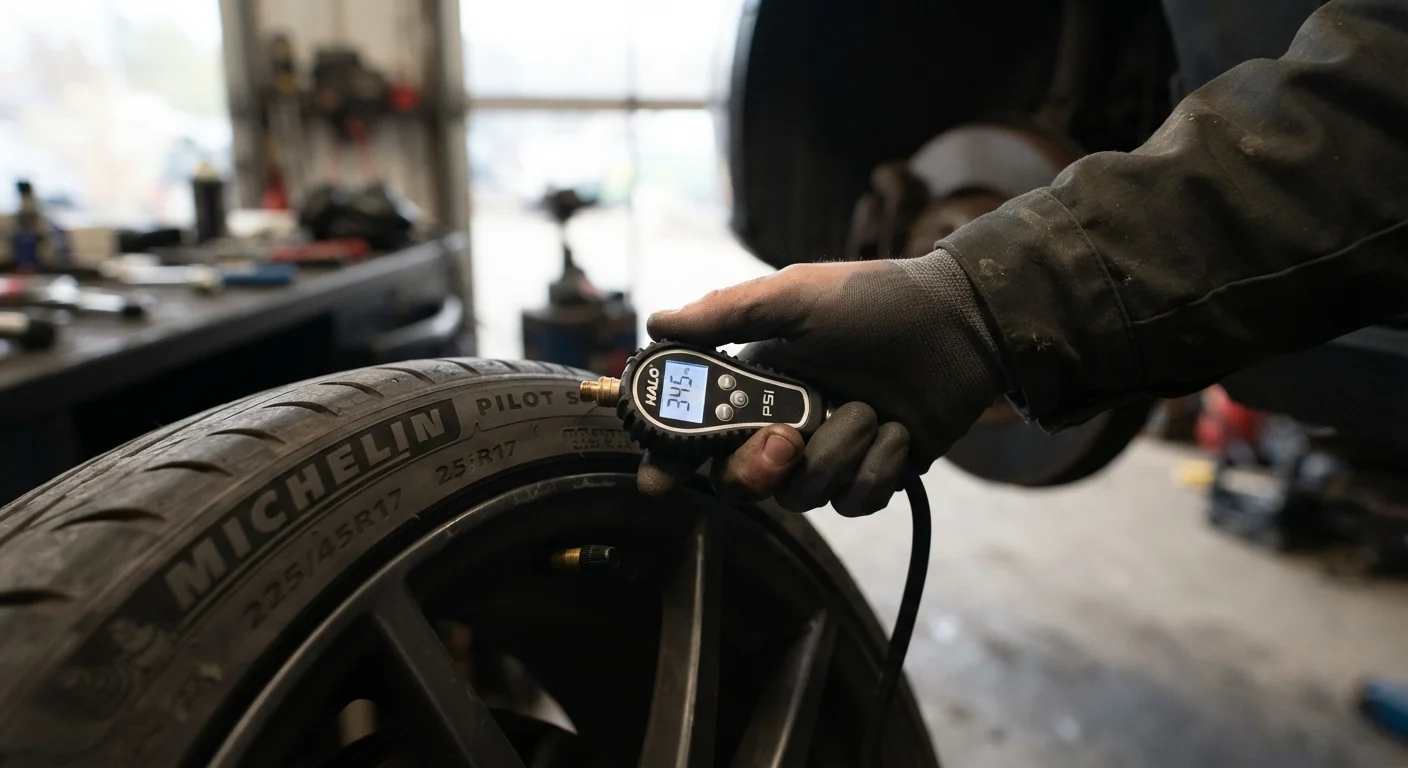
Every time you have your tyres rotated, use the opportunity to verify inflation against the placard in your door jamb - not the maximum pressure printed on the tyre sidewall. Correct pressure and regular rotation together have a compounding effect on tyre longevity and handling.
Tyre pressure is closely linked to how evenly your tyres wear. Consistently under- or over-inflated tyres will develop uneven wear even with regular rotation.
Wheel Balancing: Correcting Weight Imbalances
Even a small weight imbalance in a wheel-and-tyre assembly - sometimes as little as a quarter of an ounce - can cause noticeable vibration at highway speeds. This happens because as the wheel spins, any heavy spot creates a repeating force that resonates through the suspension and into the steering wheel or seat.
During balancing, a technician mounts the wheel on a spin balancer, identifies where the imbalance is, and attaches small adhesive or clip-on weights to the wheel rim to compensate. The process takes only minutes per wheel and is not expensive.
The telltale sign of an imbalance is a vibration that appears at speed - often between 55 and 70 mph - and may dampen at other speeds. It's easy to confuse with alignment problems, but alignment issues typically manifest as pulling to one side rather than vibration. Balancing is also worth checking after a tyre is repaired or replaced, as remounting can disturb the balance.
~25%
Potential tyre life reduction from skipping rotation
Industry estimates from tyre manufacturers suggest irregular or skipped rotation can reduce tyre service life by roughly a quarter compared to properly maintained rotation schedules.
0.25 oz
Weight imbalance enough to cause vibration
Automotive technicians note that an imbalance of as little as a quarter of an ounce on a wheel spinning at highway speed can create perceptible vibration in the cabin.
~10%
Fuel economy loss from severe misalignment
The U.S. Department of Energy has noted that misaligned wheels increase rolling resistance, which can measurably reduce fuel efficiency in everyday driving conditions.
Wheel Alignment: Getting the Angles Right
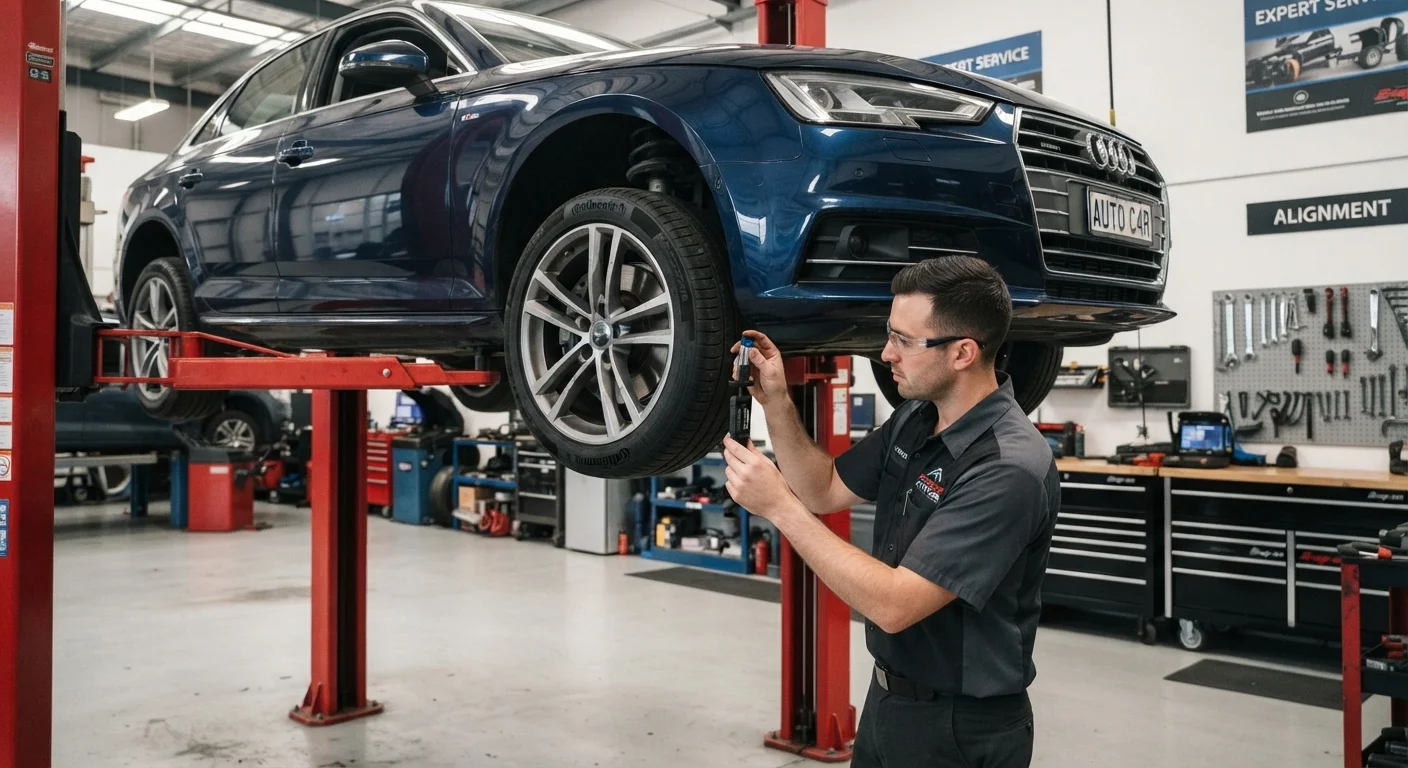
Alignment refers to the geometric angles at which your tyres meet the road. The key angles are camber (inward or outward tilt of the wheel when viewed from the front), toe (whether tyres point inward or outward when viewed from above), and caster (the angle of the steering axis). When these angles drift from manufacturer specifications, tyres scrub against the road at the wrong angle, wearing unevenly and creating handling problems.
Common causes of misalignment include hitting a significant pothole or curb, worn suspension components, and simply the gradual settling of vehicle components over time. A vehicle that pulls consistently to one side, requires constant steering correction on a straight road, or shows tyre wear concentrated on one edge is likely out of alignment.
Alignment is typically recommended annually or after any significant impact. It's also worth checking when fitting new tyres - installing fresh tyres on a misaligned vehicle will accelerate wear from the very first mile. For more on reading tyre wear patterns, see our article on tyre sidewall markings, which also covers how to interpret wear indicators.
When Each Service Is Needed - At a Glance
Knowing which service applies to which symptom saves time and prevents unnecessary spending:
- Rotation: Schedule on mileage intervals regardless of symptoms. Don't wait until wear is visible.
- Balancing: When you feel vibration through the wheel or seat at highway speeds, or after a tyre is removed and remounted.
- Alignment: After hitting a hard object, when the car pulls to one side, when steering feels off-centre, or when you notice edge wear on one or more tyres.
These services are not mutually exclusive - it's common and sensible to have all three performed together when getting new tyres. For context on which tyre-related tasks are DIY-friendly and which call for a professional, our article on DIY versus mechanic tasks offers a useful framework. Balancing and alignment both require specialist equipment and should always be handled by a qualified technician.
“Alignment, rotation, and balance each address a different failure mode. Treating them as interchangeable - or skipping any one routinely - is one of the most common and costly mistakes vehicle owners make when it comes to tyre care.”
— Cars & Driving Editorial Team, Automotive maintenance editors