
Set a Realistic Travel Budget Before You Research Destinations
Most travelers make a costly sequencing mistake: they fall in love with a destination first, then try to make the numbers work. Reversing that order — establishing your total budget before destination research begins — gives you far more control over the outcome.
Start by identifying how much you can genuinely set aside for the trip without compromising other financial obligations. If you need a structured approach to this step, the Budgeting Basics hub covers practical methods for tracking spending and building a realistic personal budget. For a deeper dive, The Complete Guide to Building and Maintaining a Personal Budget walks through the full process.
Once you have a number, divide it across the main cost categories: flights, accommodation, food, local transport, activities, and a contingency reserve of roughly 10–15%. This allocation forces honest trade-offs early — if flights consume half the budget, that shapes every other decision.
Allocate a Contingency Before You Book Anything
Reserve 10–15% of your total trip budget as a contingency before committing to any bookings. Unexpected costs — a delayed connection requiring a night's stay, a medical visit, or a price difference at the destination — are routine, not exceptional. Travelers who plan for variability avoid the stressful choice between cutting experiences or overspending.
Choose Destinations and Dates Strategically
Where and when you go can easily matter more than any deal you hunt down later. Destinations vary enormously in daily cost — not just for accommodation, but for meals, entry fees, and local transit. Choosing a destination whose baseline cost of living aligns with your per-day budget target removes the constant pressure of pinching pennies on everything.
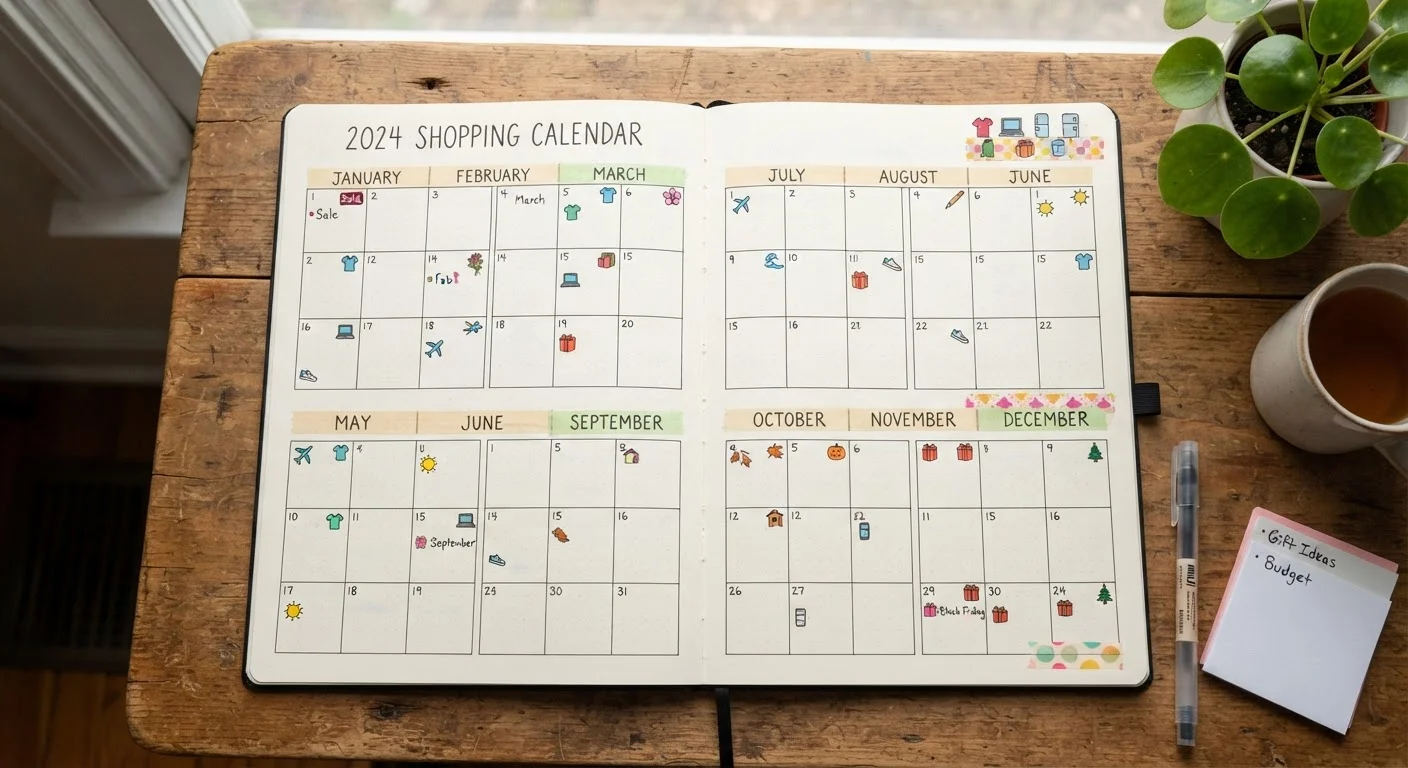
Timing is equally powerful. Shoulder season — the weeks just before or after a destination's peak — typically offers lower accommodation rates, smaller crowds, and comparable (though not guaranteed) weather. Understanding the seasonal patterns in travel pricing can inform your planning; the Seasonal Shopping Calendar provides a useful reference for how pricing tends to shift across categories including travel.
Flexibility on travel dates, even by a few days, can produce meaningful fare differences. Mid-week departures and returns frequently cost less than weekend ones, though this varies by route and demand. Always verify current entry requirements, travel advisories, and health documentation with official government sources before booking — these details change and cannot be relied upon from any third-party source.
30–50%
Typical fare difference between peak and shoulder season
Industry fare analysis consistently finds shoulder-season travel priced meaningfully below peak periods on popular routes, though exact differences vary by destination and year.
~15%
Recommended contingency share of total trip budget
Travel financial planners commonly recommend reserving 10–15% of a trip budget for unplanned expenses to avoid overspending or cutting planned experiences.
4–8 weeks
Commonly cited domestic booking window for lower fares
Fare research studies have suggested this range as generally favorable for domestic U.S. routes, though results vary significantly by carrier, route, and demand.
Book Flights and Accommodation With Intention
Airfares and hotel rates are set by algorithmic, demand-driven pricing systems that update constantly. Understanding how this works — rather than just hoping to stumble on a deal — is the foundation of smarter booking. The article on Dynamic Pricing in Travel explains how these systems work and how that awareness translates into better timing decisions.
For flights, a general principle supported by fare research is that booking too early and too late both tend to produce higher prices, with a window of roughly four to eight weeks before domestic departures and two to five months for international routes often cited as more favorable — though no window guarantees the lowest fare on any given route. Setting up price alerts through travel search tools lets you monitor trends without checking manually every day. The habit of tracking prices over time applies directly to flights and hotels.
For accommodation, weigh the full cost — not just the nightly rate. A cheaper property located far from where you actually want to spend time may generate transport costs and lost hours that erode the savings. The article When Cheap Accommodation Costs You More Than You Saved outlines the common miscalculations travelers make when prioritizing price alone.
When comparing accommodation options, map each property's location against your actual itinerary — not just the city center. A place that's close to where you'll actually spend your time often proves cheaper overall even if the nightly rate is slightly higher.
Transport costs and lost time from a poorly located base can quietly exceed any nightly rate savings, a trade-off that's easy to miss when browsing by price alone.
Set a firm daily spending target for food and incidentals before you land — not a vague intention, but a specific dollar figure you check against each evening. Small daily overruns compound faster than most travelers expect.
Research on travel spending patterns consistently finds that food, drinks, and small purchases are where budgets most frequently exceed plans, often because no daily benchmark was established.
Control Spending Once You're On the Ground
Pre-trip planning determines your ceiling, but on-the-ground decisions determine whether you stay under it. Food and drink are where most travel budgets quietly unravel — restaurants in high-traffic tourist areas typically charge a significant premium over local alternatives a few blocks away. Markets, grocery stores, and neighborhood eateries are nearly always more affordable without sacrificing the experience of eating locally.
For transport, research the local options before arrival rather than defaulting to the most visible ones. In many cities, public transit, ride-share services, and day passes cover most needs at a fraction of taxi or rental-car costs. Walking routes often serve double duty as sightseeing.
Activities and attractions deserve the same scrutiny as flights. Many cities offer free or discounted access to museums, parks, and cultural sites on specific days or for visitors who plan ahead. Booking popular paid attractions in advance frequently costs less than buying at the door and avoids queues.
If you're traveling with others, the coordination challenge multiplies every budget line. Planning a Group Trip Without It Becoming a Logistical Nightmare offers a structured approach to managing shared budgets and expectations.
Review, Learn, and Build Better Habits for Next Time
The travelers who consistently spend less aren't operating on luck — they're refining a process. After every trip, compare what you actually spent against what you planned, category by category. This closes the feedback loop that most people leave open.
Note where you consistently over-spent (often food and incidentals) and where you had room to spare. Adjust your category allocations for the next trip accordingly. Tracking this on paper, a spreadsheet, or an app all work — the comparison of budgeting tools can help you find the method that sticks.
Consider whether a loyalty program makes sense for your travel pattern. For occasional travelers who aren't willing to optimize obsessively, a straightforward approach to earning and redeeming points can still provide genuine value. Travel Rewards Programs Explained for People Who Don't Want to Chase Points Full-Time offers an honest assessment without the hype.
Budget travel isn't about deprivation — it's about directing money toward the experiences that matter and not losing it to friction, inattention, or poor timing. Build the habit of planning deliberately, and each trip becomes a little more efficient than the last.