Why the Tool You Choose Actually Matters
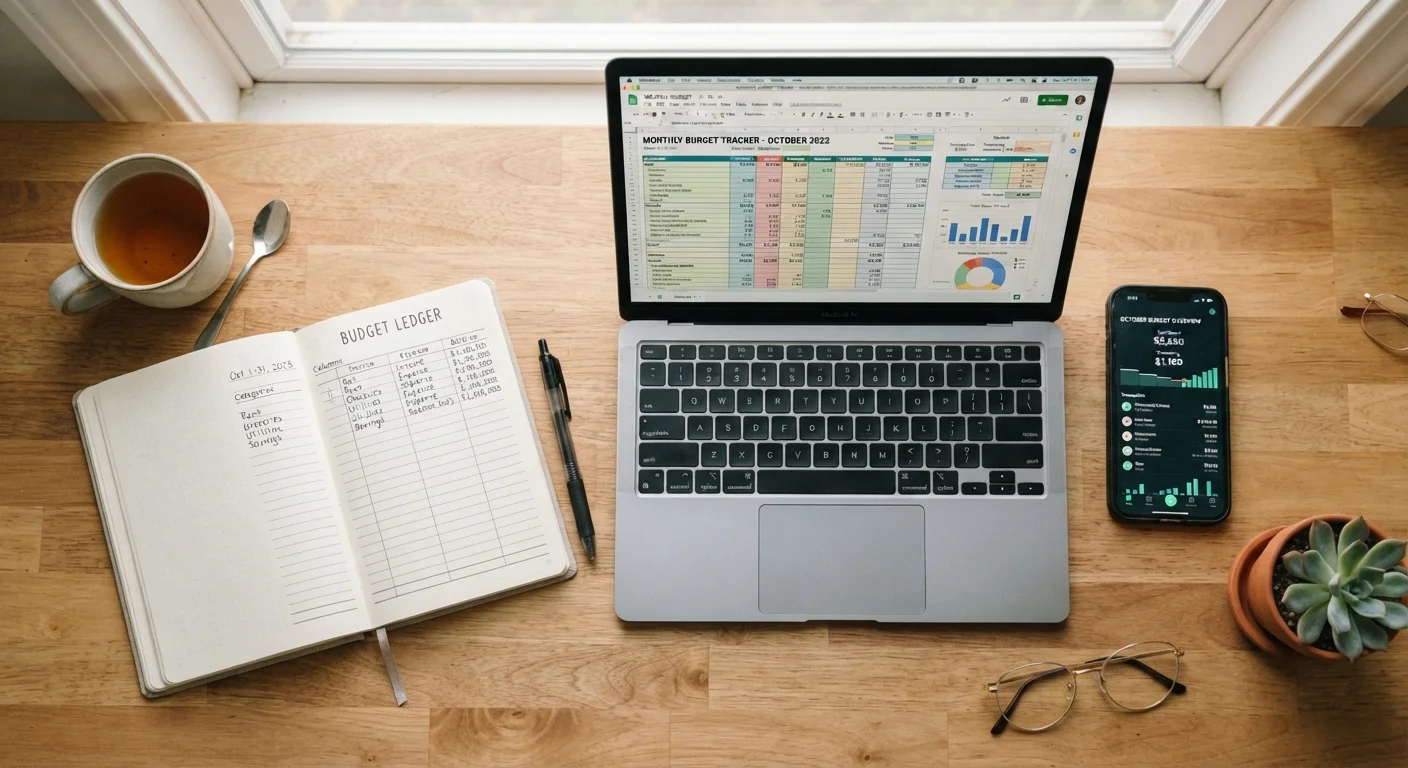
Most people who struggle with budgeting don't have an income problem or a math problem — they have a consistency problem. The method that looks most impressive on paper means nothing if it gets abandoned after two weeks. That's why choosing between pen-and-paper, a spreadsheet, and a budgeting app isn't a trivial decision.
If you're building financial habits from scratch, start with the fundamentals before picking a tool. But if you already understand the basics and want to know which format fits your life, this comparison breaks it down honestly — no hype, no sponsored rankings.
Each approach has real strengths and genuine drawbacks. The goal here is to help you match a method to your habits, not to sell you on any particular one.
Pen-and-Paper: Slow, Deliberate, and Surprisingly Effective
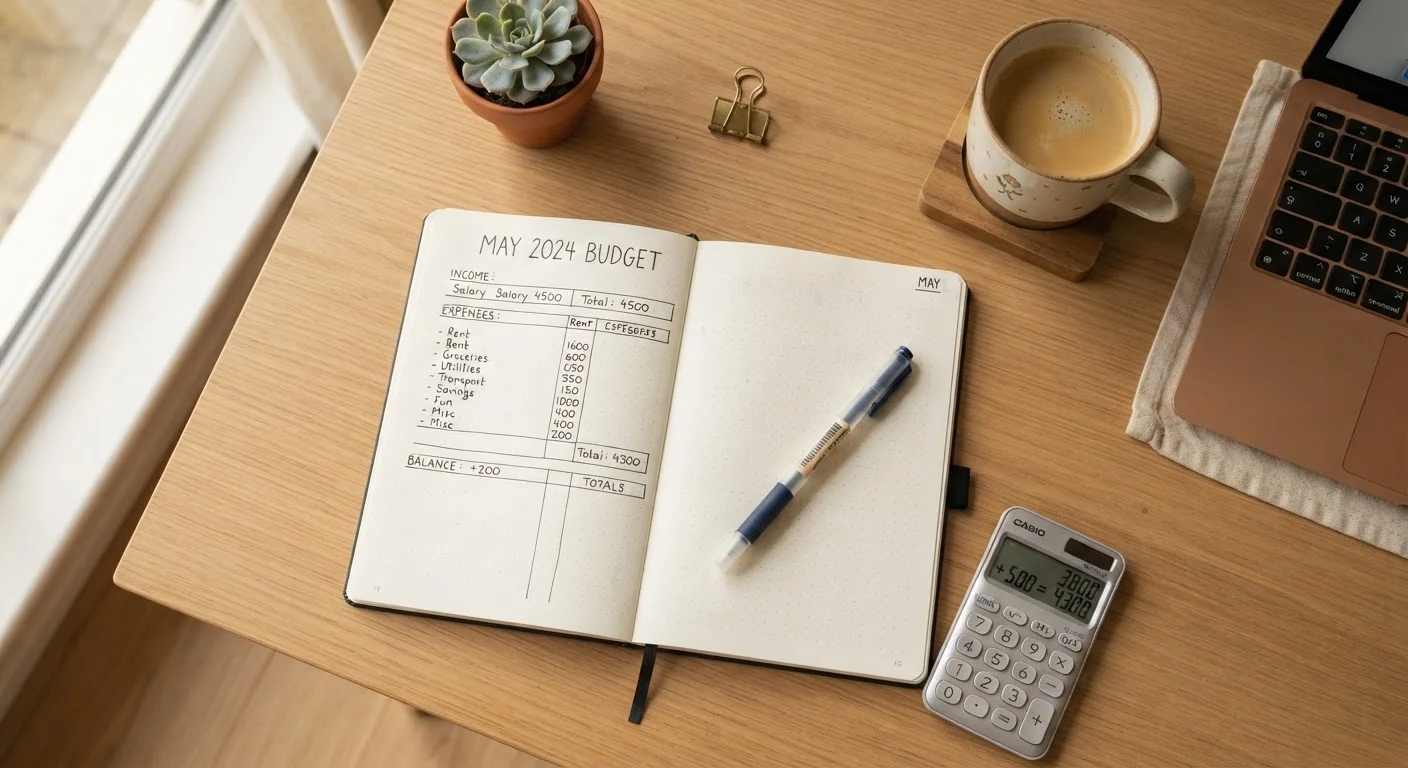
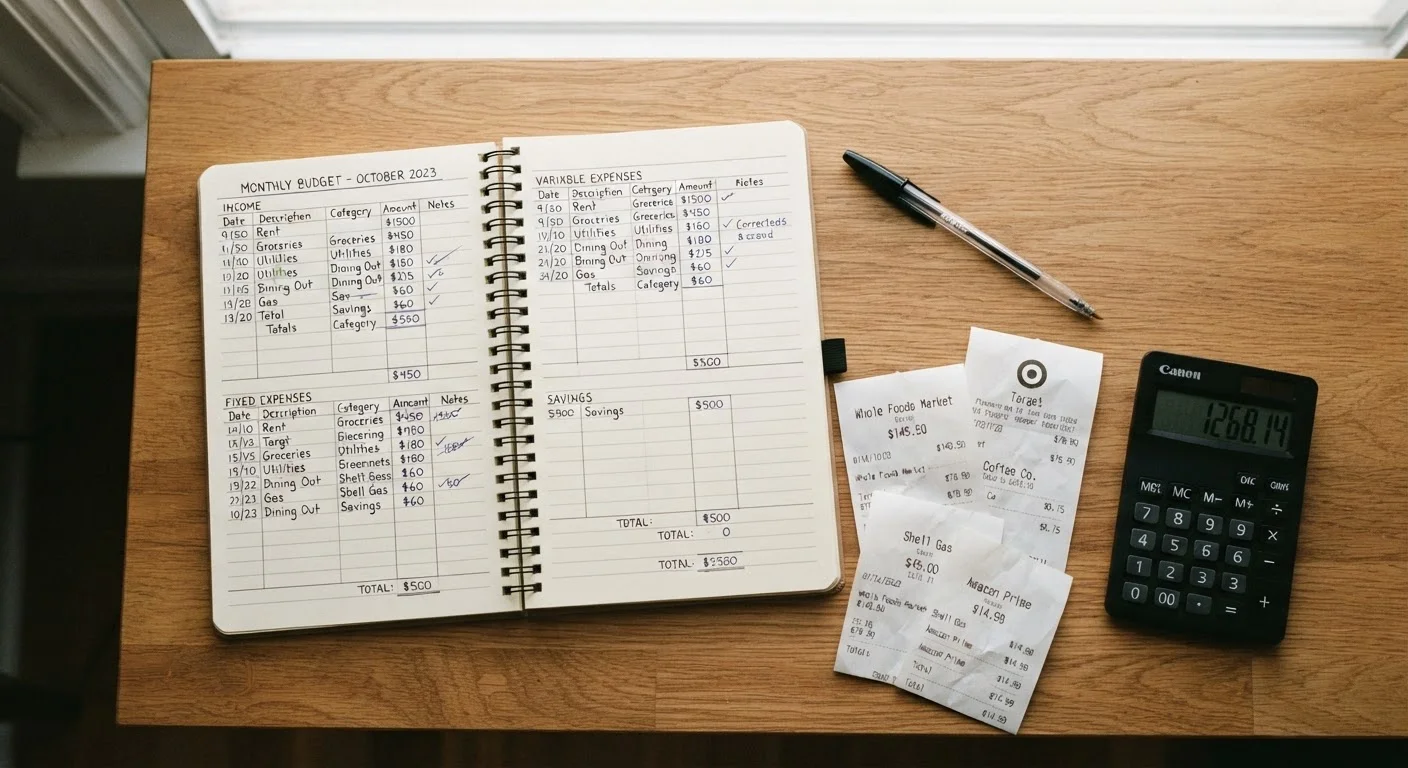
Writing your budget by hand forces you to engage with every number — there's no autofill, no import, no algorithm doing the thinking. Research in cognitive science suggests that handwriting reinforces memory and comprehension more than typing, which may partly explain why some people find manual budgeting unusually effective at curbing impulse spending.
The downsides are real, though. Calculations are error-prone, totaling categories takes time, and a lost notebook means lost data. There's also no built-in way to catch a forgotten transaction or flag an overdraft risk.
For a deeper look at the genuine case for going low-tech, explore what manual tracking actually offers before writing it off.
Start Simple, Then Scale Up
If you're not sure which method to try, spend two weeks with a basic paper ledger first. It costs nothing and forces you to confront real numbers without any learning curve. Once you understand your spending patterns, moving to a spreadsheet or app will feel much more purposeful — and you'll know exactly what you need the tool to do.
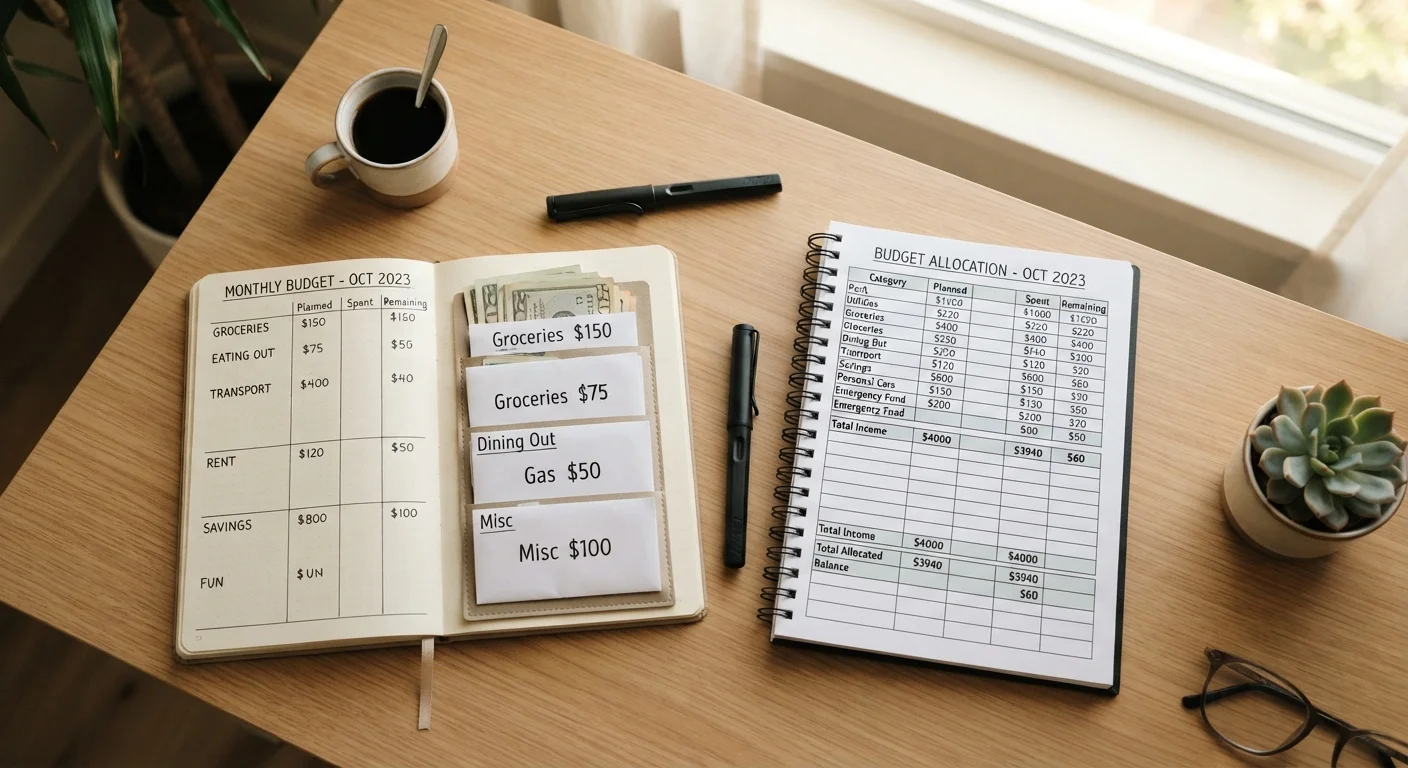
Pen-and-paper works especially well alongside cash-based systems like the envelope method. If you're curious how that pairs with other frameworks, see how zero-based and envelope budgeting compare.
Spreadsheets: Full Control, Full Responsibility
A well-built spreadsheet can replicate almost any budgeting framework — zero-based, percentage-based, pay-period tracking, or something entirely custom. Programs like Google Sheets are free and accessible from any device, and pre-built budget templates are widely available through libraries and nonprofit financial literacy organizations.
The trade-off is setup time and maintenance. You'll need to enter transactions manually (or learn to import bank exports), build your own formulas, and troubleshoot when something breaks. For someone comfortable with basic spreadsheet functions, this is manageable. For someone who finds formulas intimidating, it can feel like a second job.
| Pen-and-Paper | Spreadsheet | Budgeting App | |
|---|---|---|---|
| Cost | Minimal (notebook, pen) | Free to low-cost | Free to $10+/month |
| Setup time | Minutes | Hours (custom) or minutes (template) | Minutes to connect accounts |
| Automation | None — fully manual | Partial (formulas, imports) | High — auto-syncs transactions |
| Customization | Unlimited but unstructured | Highly customizable | Limited to app's framework |
| Privacy | Maximum — no data shared | High — local or personal cloud | Lower — requires account access |
| Error risk | Math errors, lost data | Formula errors, manual entry | Miscategorized transactions |
| Best for habit formation | High mindfulness, tactile | Moderate engagement | Low friction, low engagement |
Spreadsheets sit in a useful middle ground: more powerful than a notebook, more private and customizable than most apps. They're worth considering if you want to apply a specific framework — for example, the 50/30/20 rule or one of its alternatives. Compare popular budgeting frameworks to see which maps cleanly onto a spreadsheet structure.
Budgeting Apps: Automation With Strings Attached
Budgeting apps are appealing because they do the heavy lifting — connecting to your bank accounts, categorizing transactions automatically, and sending alerts when you near a spending limit. For people with unpredictable schedules or a history of forgetting to log purchases, that automation can make the difference between tracking and not tracking.
But automation comes with trade-offs worth understanding. Most apps request read access to your financial accounts, which raises legitimate privacy questions. Subscription fees are common among full-featured options. And automatic categorization makes errors — a restaurant charge miscategorized as groceries is a small annoyance, but it can skew your actual spending picture if left unchecked.
It's also worth noting that app reliance can reduce the mindful engagement that makes budgeting behaviorally effective for some users. If the app handles everything, you may spend less time actually thinking about your money. For a parallel perspective on how app-based tools can both help and hinder in other contexts, this balanced look at wellness apps raises similar questions worth considering.
How to Choose — and What to Do Next
Ask yourself three honest questions: How comfortable am I with technology? How much time can I realistically spend on budgeting each week? And do I need to share this budget with a partner or household?
- Low tech comfort, prefer simplicity: Start with pen-and-paper. A basic two-column ledger — income on one side, expenses on the other — is enough to build real habits.
- Comfortable with computers, want flexibility: A free spreadsheet with a template is a strong starting point. You can always build complexity over time.
- Busy schedule, value automation, comfortable with data sharing: An app may be worth exploring, but read the privacy policy before connecting your accounts.
Whichever method you try first, give it at least 60 days before judging it. Habit formation takes time, and early friction is normal. If you want a comprehensive walkthrough of how to put any of these tools into practice, this end-to-end budgeting guide covers the full process from first income tally to long-term maintenance.
This article is for general informational and educational purposes only and does not constitute personalized financial advice. Readers should consult a qualified financial professional for guidance specific to their circumstances.