What the 50/30/20 Rule Actually Says
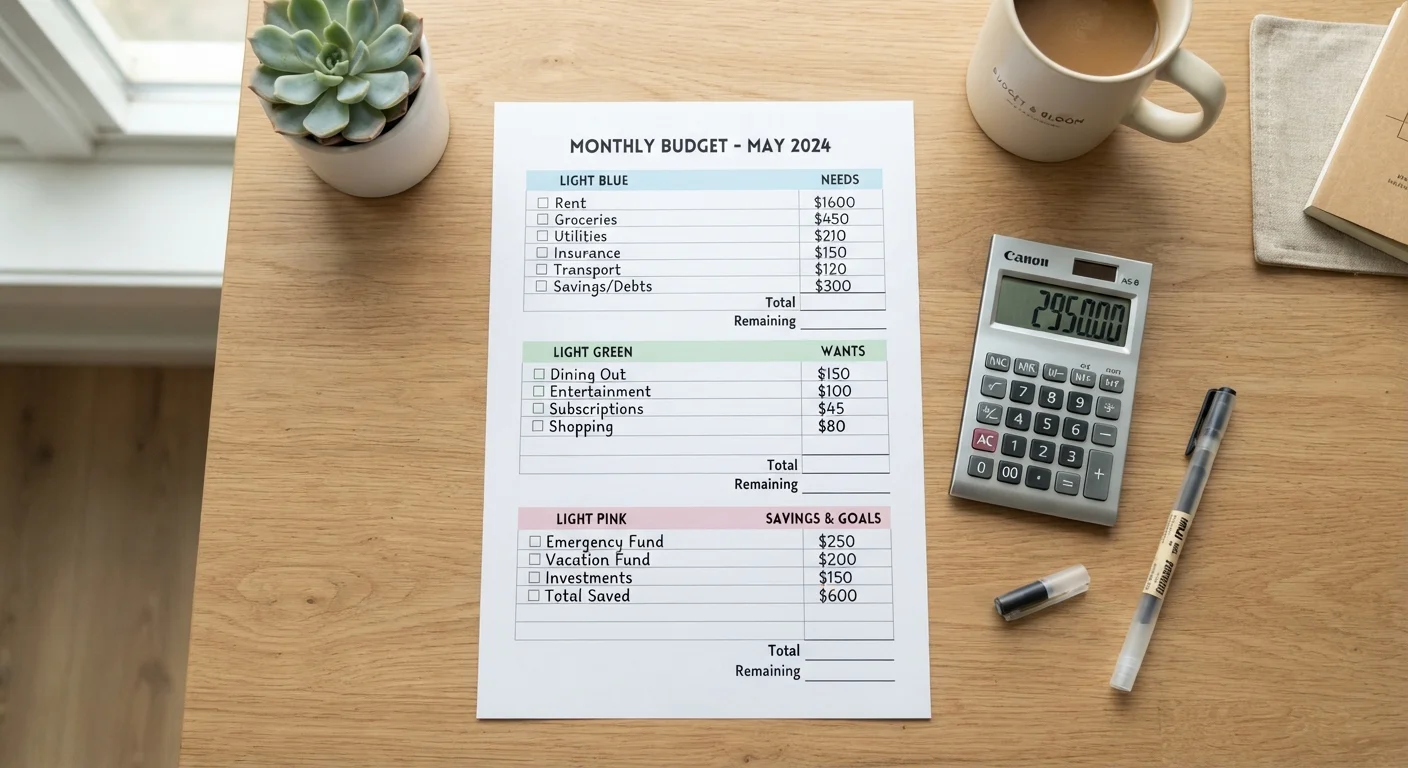
The 50/30/20 rule divides after-tax income into three broad buckets: 50% toward needs (rent, utilities, groceries, insurance), 30% toward wants (dining out, subscriptions, entertainment), and 20% toward savings and debt repayment. It was popularised as a straightforward framework designed to remove decision fatigue from everyday money management.
Its appeal is simplicity. You don't need a spreadsheet with 40 line items — just three categories. For a deeper walkthrough of how the rule works in practice, see our full explanation of the 50/30/20 guideline.
The limitation is equally clear: the percentages assume a specific cost structure. In high-cost cities where rent alone can consume 40–50% of income, the "needs" bucket is blown before groceries are even counted. The framework is a guideline, not a financial law.
| 50/30/20 Rule | Zero-Based Budgeting | Envelope Method | Pay-Yourself-First | |
|---|---|---|---|---|
| Core concept | Split income into 3 broad buckets | Assign every dollar a purpose | Allocate cash into spending envelopes | Save first, spend the rest |
| Setup effort | Low | High | Moderate | Very low |
| Ongoing maintenance | Low | High (monthly rebuild) | Moderate | Very low |
| Best income type | Stable salary | Any, especially variable | Stable or cash-based | Stable salary |
| Spending control precision | Broad | Very detailed | Category-specific | Minimal |
| Savings prioritisation | Built into 20% bucket | Assigned as a category | Depends on setup | Hardwired from payday |
| Suitable for beginners | Yes | Challenging | Moderate | Yes |
Zero-Based Budgeting: Every Dollar Has a Job
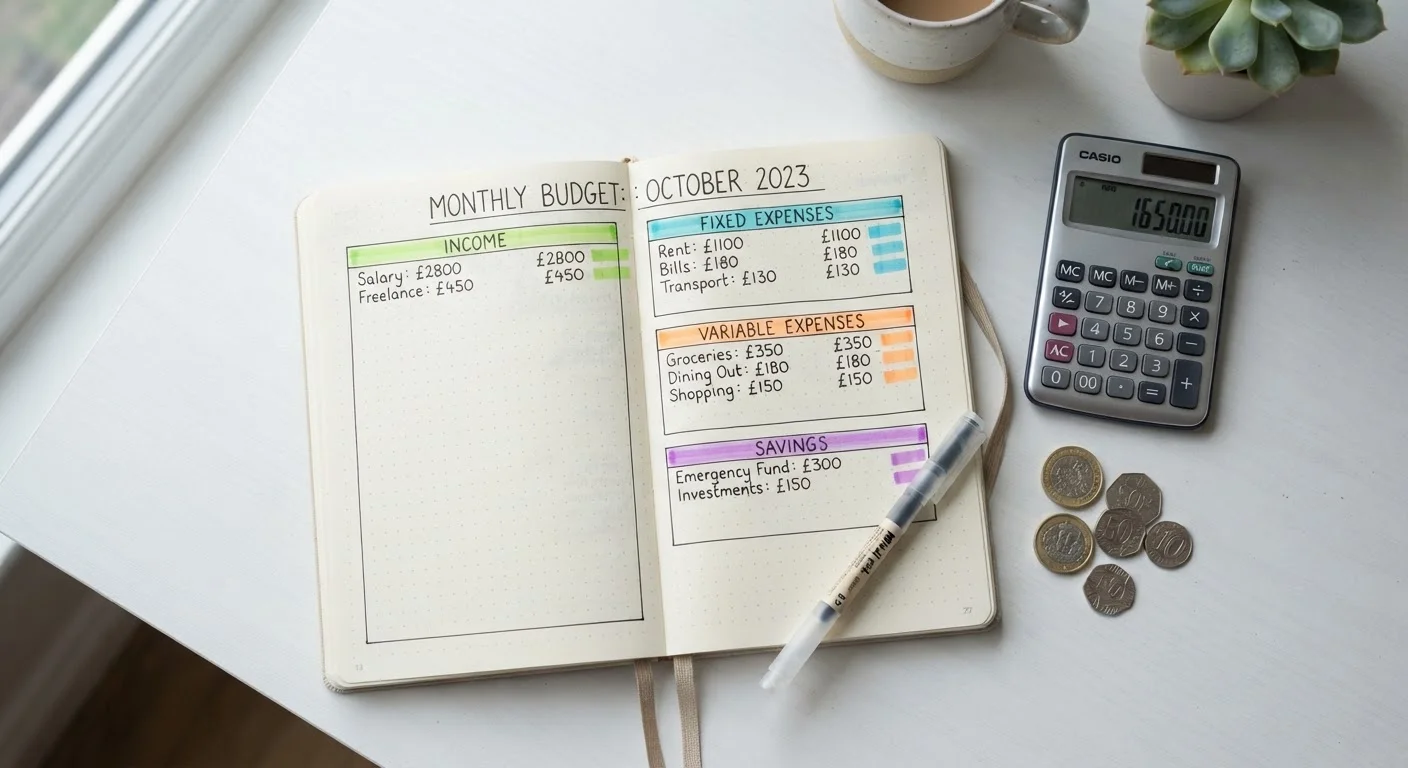
Zero-based budgeting (ZBB) assigns every dollar of income to a specific category until the remaining balance reaches zero. That doesn't mean spending everything — savings and investments are assigned categories too. The goal is deliberate allocation rather than passive spending.
ZBB is powerful for households that feel money "disappears" without explanation. By forcing a monthly reckoning with each spending category, it surfaces patterns that percentage-based rules can obscure. The trade-off is time: ZBB requires a monthly rebuild of your budget from scratch, which demands consistent effort. See how zero-based budgeting compares to the envelope method for a side-by-side look at both approaches.
Start Simple, Then Add Complexity
If zero-based budgeting feels overwhelming at first, try the 50/30/20 rule for two or three months to establish your baseline spending patterns. Once you have real data on where your money actually goes, migrating to a more granular system becomes far less daunting. Most people find that a hybrid approach — broad percentage targets with a few closely watched categories — is more sustainable than any single pure framework.
The Envelope Method and Pay-Yourself-First
The envelope method operates on a physical or digital cash-allocation system. You divide your spending money into labelled envelopes — groceries, gas, dining, entertainment — and stop spending in a category when the envelope is empty. It creates a hard boundary that percentage rules don't enforce. For people who overspend on specific categories (most commonly food and entertainment), the envelope method provides immediate, tangible feedback.
The pay-yourself-first approach flips the standard sequence. Instead of saving what's left over after spending, you automate a savings transfer on payday and build your lifestyle around what remains. This method suits people who find detailed budgeting unsustainable but still want to build financial resilience. It doesn't prevent overspending in real time, so it works best when paired with a basic awareness of monthly fixed costs.
For readers deciding how to track whichever framework they choose, comparing pen-and-paper, spreadsheet, and app-based tools can help match your method to the right tool.
Choosing the Right Framework for Your Situation
No framework is universally superior. The deciding factors are income stability, lifestyle complexity, and your own relationship with financial tracking.
- Variable income (freelancers, gig workers): Zero-based budgeting adapts well to fluctuating months because it's rebuilt from actual income each cycle.
- Steady salary, low bandwidth for tracking: Pay-yourself-first with a rough 50/30/20 awareness strikes a workable balance.
- Overspending on specific categories: The envelope method provides the clearest behavioural guardrail.
- New to budgeting: The 50/30/20 rule lowers the barrier to entry and builds habits before adding complexity.
If you're starting from scratch, our introduction to personal budgeting covers the foundational concepts before you commit to any single framework. Once you've chosen an approach, the monthly budget setup checklist walks you through putting it into practice.
This article is for general informational purposes only and does not constitute personalised financial advice. Consult a qualified financial professional for guidance tailored to your individual situation.