The Core Distinction: Predictability vs. Flexibility
When you sit down to build a budget, every dollar you spend falls into one of two buckets: fixed or variable. Understanding which is which is not an accounting exercise — it's the difference between a budget that reflects your actual financial life and one that falls apart after the first unexpected grocery run.
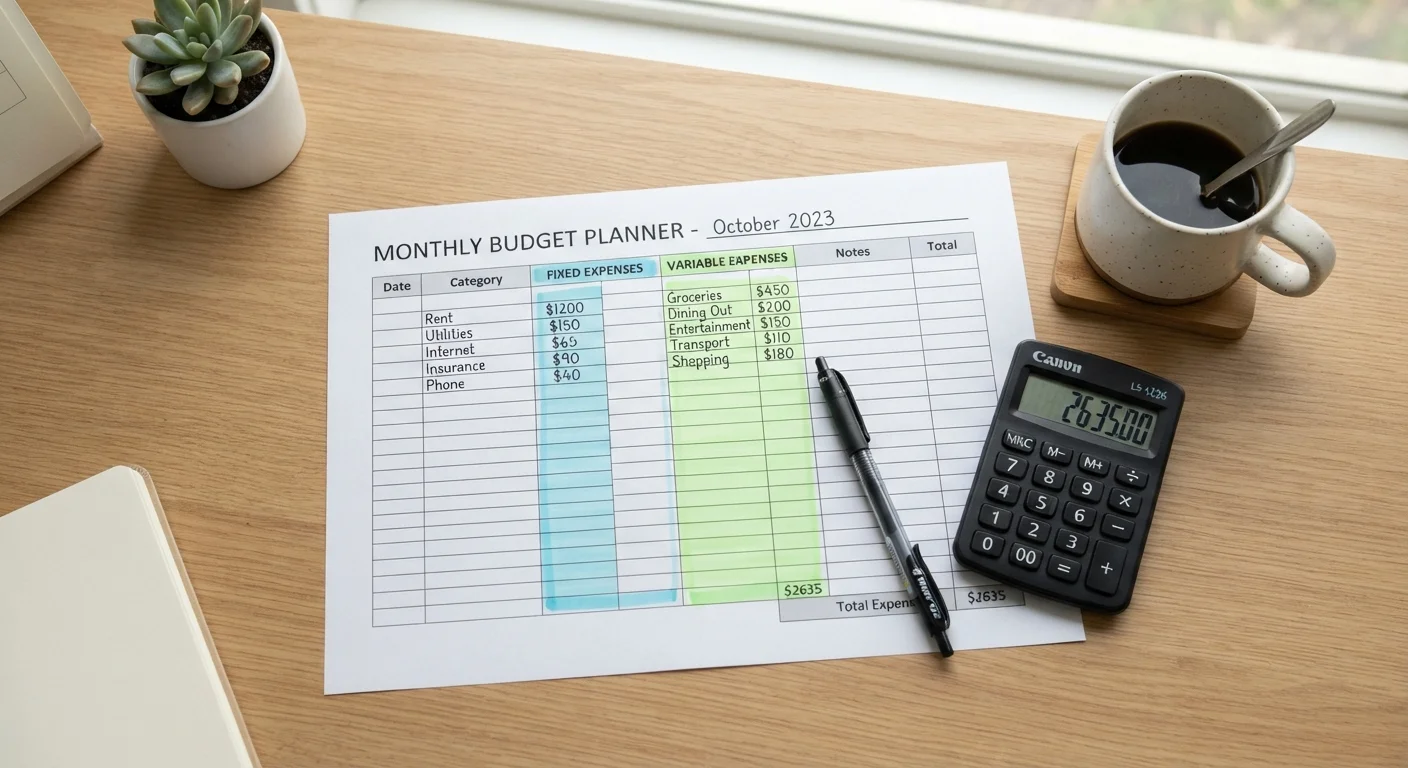
Fixed expenses are costs that stay the same from month to month, regardless of what you do. Your rent or mortgage payment, car loan, student loan installment, and most insurance premiums are classic examples. These amounts are typically set by a contract, and you generally can't change them on short notice. That predictability makes them the easiest part of a budget to map out — but also the hardest to reduce quickly if you're in a financial pinch.
Variable expenses, by contrast, shift based on your behavior, usage, or circumstances. Groceries, gasoline, dining out, utility bills, clothing, and entertainment all fit this description. The amount you spend on any of these can differ substantially from one month to the next. That flexibility is actually useful: it means you have real decision-making power over those categories in a way you simply don't with a lease payment.
See our plain-language budgeting glossary for definitions of related concepts like discretionary spending and net income.
| Criterion | Fixed Expenses | Variable Expenses |
|---|---|---|
| Amount each month | Stays the same | Changes based on usage or choice |
| Examples | Rent, car loan, insurance premium | Groceries, gas, dining out, utilities |
| Your control over it | Low — usually set by contract | High — driven by behavior and habits |
| Ease of budgeting | Easy — enter the number and move on | Requires tracking and estimation |
| Speed to reduce | Slow — requires renegotiation or major change | Fast — adjustments can happen immediately |
| Risk of surprise | Low | Moderate to high without active tracking |
Why the Distinction Matters When You're Budgeting
Most people feel overwhelmed by their finances because they treat all expenses as equally immovable. They're not. Once you categorize costs correctly, you stop feeling stuck.
~33%
Average share of income spent on housing alone
The U.S. Bureau of Labor Statistics Consumer Expenditure Survey consistently finds housing accounts for roughly a third of average household spending — making it the largest fixed expense for most Americans.
~15%
Share of spending on food (at home and out)
The same BLS survey data shows food is typically the second-largest spending category — and unlike rent, the amount is highly adjustable based on shopping habits and dining choices.
If your monthly income barely covers your bills, the first question to ask is: how much of my spending is actually fixed? For many households, fixed obligations — rent, minimum debt payments, car payment — consume 50% or more of take-home pay before a single discretionary dollar is spent. That's the starting point, not a failure.
The variable portion of your budget is where genuine choices live. Groceries are necessary, but the amount you spend on them isn't fixed. Utilities are necessary, but usage habits affect the bill. This is where small, consistent adjustments accumulate into meaningful monthly savings over time.
One important nuance: some expenses are semi-variable — they have a fixed base component plus a usage-driven portion. Your cell phone plan, for example, may have a flat monthly rate plus overage charges. These are worth tracking carefully because the variable element can quietly grow without feeling like a decision.
Irregular but predictable costs — like annual car registration, holiday gifts, or a semi-annual insurance premium — don't fit neatly into either category but are just as real. Our related piece on spending categories most budgets forget covers how to plan for those outliers so they don't ambush your monthly plan.
If you're applying this framework to a specific goal — say, planning a trip — the same logic applies. Fixed travel costs include pre-purchased flights or hotel deposits; variable costs include meals, activities, and local transport. Resources like building a realistic travel budget can help you structure that estimate before you book.
Once you're clear on what's fixed and what's flexible, choosing a method to manage both becomes much simpler. The zero-based budgeting vs. envelope method comparison breaks down two approaches well-suited to different spending personalities.
This article is for general informational and educational purposes only and does not constitute personalized financial advice. Consider consulting a qualified financial professional for guidance specific to your situation.