Where the 50/30/20 Rule Comes From
The 50/30/20 framework was popularized by U.S. Senator and bankruptcy law professor Elizabeth Warren and her daughter Amelia Warren Tyagi in their 2005 book All Your Worth: The Ultimate Lifetime Money Plan. Their research on American household finances led them to argue that a sustainable financial life required balancing three competing demands on income — not just tracking spending line by line.
The appeal was immediate: rather than obsessing over individual categories, households could focus on three broad buckets. It stripped budgeting down to a question almost anyone could answer — am I spending roughly the right share on the right things?
That simplicity is also why the rule has endured. Personal finance tools, apps, and educators have built on it for two decades because it gives beginners a starting point without requiring a spreadsheet or accounting background. For a deeper look at how it compares to other approaches, see budgeting frameworks compared.
Breaking Down Each Bucket
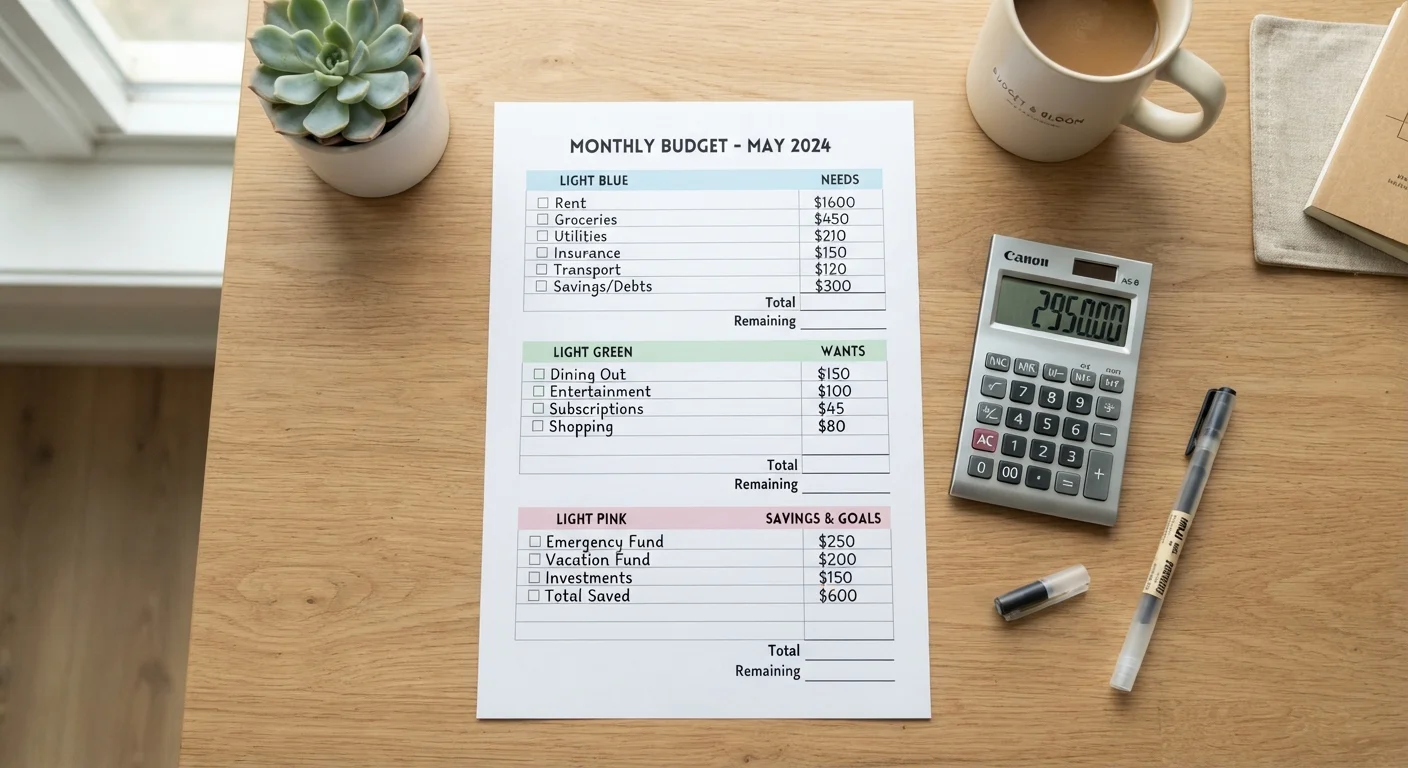
Understanding what belongs in each category is where most people run into confusion. Here's a practical breakdown:
50% — Needs
Needs are non-negotiable expenses: housing (rent or mortgage), utilities, groceries, health insurance, minimum loan and credit card payments, and basic transportation costs. The test is straightforward — if skipping it would cause serious harm or legal consequence, it's a need. Note that "needs" doesn't mean the cheapest possible version, but it does mean the baseline version of essential services.
30% — Wants
Wants include everything discretionary: dining out, entertainment subscriptions, gym memberships, vacations, clothing beyond basics, and hobbies. These improve quality of life but aren't required for survival or financial obligation. The 30% cap isn't meant to eliminate enjoyment — it's meant to keep discretionary spending from crowding out financial progress.
20% — Savings and Debt Repayment
This bucket covers building an emergency fund, contributing to retirement accounts (401(k), IRA), and paying extra toward high-interest debt beyond the minimum. Many financial educators suggest building three to six months of expenses in emergency savings before accelerating other savings goals.
~33%
Share of income Americans spend on housing
The U.S. Bureau of Labor Statistics Consumer Expenditure Survey consistently shows housing absorbs the largest single share of household spending, often exceeding the rule's implied allocation.
4 in 10
Adults who couldn't cover a $400 emergency
Federal Reserve survey data has repeatedly found that a significant share of U.S. adults lack readily available funds for unexpected expenses, underscoring the importance of the savings bucket.
~5%
U.S. personal saving rate in recent years
The U.S. Bureau of Economic Analysis tracks the personal saving rate; it has historically run well below the 20% target the rule recommends, highlighting the gap between the guideline and typical behavior.
Where the Rule Gets Complicated in Real Life
In theory, the math is tidy. In practice, several factors make it challenging for many Americans:
- Housing costs: In major metro areas, rent alone can consume 40–50% of a moderate income, leaving little room for other needs before the bucket is already full.
- Lower incomes: Fixed costs like utilities and groceries represent a much higher share of a smaller paycheck, making the 50% ceiling nearly impossible without significant lifestyle changes or income growth.
- Irregular income: Freelancers, gig workers, and seasonal employees have to average income over time rather than apply the rule to a single paycheck.
- Existing debt loads: High student loan or medical debt payments can push the needs or savings buckets well past their targets simultaneously.
The honest answer is that the 50/30/20 rule works best as a diagnostic tool. If your needs are consuming 65% of income, that tells you something important — even if you can't fix it immediately. Use that information to set a direction rather than judge yourself against an arbitrary benchmark.
Start with One Bucket at a Time
If the full framework feels overwhelming, focus on a single category first. Most financial educators suggest starting with the savings bucket — set up an automatic transfer on payday before any spending decisions are made. Even a small, consistent amount builds the habit and momentum needed to tackle the other two buckets over time.
How to Apply It to Your Own Finances
Getting started takes three steps. First, calculate your monthly net income — every reliable source of take-home pay. Second, add up what you currently spend in each category (needs, wants, savings). Banking apps and credit card statements make this easier than it used to be. Third, compare your actual percentages to the 50/30/20 targets.
What you find will likely fall into one of three situations: your needs are too high (focus on reducing fixed costs over time), your wants are too high (reduce discretionary spending and redirect to savings), or your savings rate is too low (increase automatic transfers to retirement or savings accounts before spending on wants).
The monthly budget setup checklist can walk you through this process step by step. And if you're ready for a more comprehensive approach, the complete guide to building a personal budget covers everything from income tallying to long-term habits.
This article is for general informational purposes only and does not constitute personalized financial advice. Consult a qualified financial professional for guidance specific to your situation.