
Why an Emergency Fund Exists
Most people encounter a financial emergency at some point — an unexpected car repair, a sudden medical expense, or a layoff that arrives without warning. Without a dedicated cash reserve, the instinctive response is to reach for a credit card or a short-term loan. That often turns a one-time shock into an ongoing debt problem.
An emergency fund breaks that cycle. By keeping a reserve of accessible cash earmarked for true emergencies, you absorb the cost of the unexpected without derailing your broader financial goals. It is one of the most straightforward protective tools in personal finance, yet surveys consistently show that a significant share of American households lack the savings to cover even a moderate unexpected expense.
~57%
Americans unable to cover a $1,000 emergency from savings
According to Bankrate's annual emergency savings report, a majority of U.S. adults would need to borrow or charge an unexpected $1,000 expense rather than pay it from savings.
3–6 months
Essential expenses: commonly cited emergency fund target
This range appears across major consumer financial education resources, including those published by U.S. federal financial literacy programs, as a general starting guideline.
This article is for general informational purposes and does not constitute personalised financial advice. For guidance specific to your situation, consult a licensed financial professional.
The Three-to-Six Month Guideline — and What It Actually Means
The most widely cited rule of thumb is to save three to six months of essential living expenses — not your full take-home pay, but the costs you genuinely cannot avoid: housing, utilities, groceries, insurance, and minimum debt payments. This distinction matters. For many households, essential expenses are meaningfully lower than total monthly spending.
The range itself reflects real differences in personal circumstances:
- Closer to three months is often cited as reasonable for people with stable salaried employment, dual household incomes, and no dependents.
- Closer to six months or more is often suggested for freelancers, self-employed individuals, single-income households, or anyone whose income can fluctuate significantly.
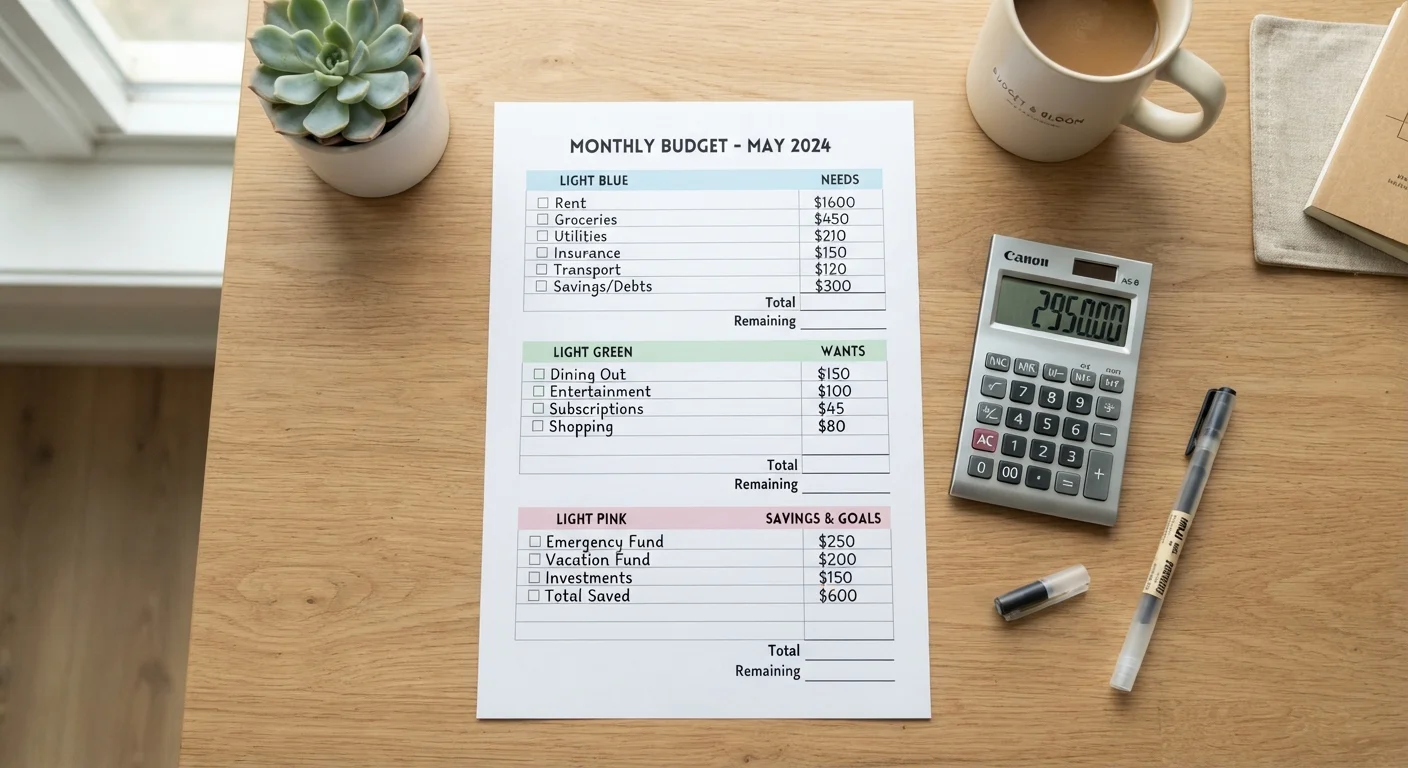
Neither end of that range is a universal prescription. It is a starting framework, not a precise formula. See how an emergency fund fits within a broader spending plan by reviewing how the 50/30/20 rule works.
Separate Account, Separate Mindset
Keeping your emergency fund in a dedicated account — distinct from your everyday checking or spending accounts — makes it significantly easier to leave the money alone. Out of sight is genuinely out of mind. Many people find that a high-yield savings account at a different institution than their primary bank adds one more small friction point that discourages casual spending.
Key Trade-Offs to Understand
Building an emergency fund involves real trade-offs, and it helps to understand them honestly.
Liquidity vs. Growth
Money sitting in a savings account earns modest interest and is available when you need it. Money invested in the market may grow faster over time, but its value can fall sharply at exactly the moment a financial emergency strikes — which is precisely when you would need to withdraw it. Emergency funds prioritise stability and access over growth.
Saving vs. Debt Repayment
If you carry high-interest debt, every dollar directed to savings rather than debt repayment has an opportunity cost. There is no single right answer here; many financial educators suggest a small starter fund first, then an aggressive debt payoff, then building the full reserve. What works depends on your interest rates, income stability, and risk tolerance — a licensed financial adviser can help you weigh the specifics.
Too Little vs. Too Much
An undersized fund may leave you relying on debt when costs exceed what you've saved. But holding far more than you need in low-yield savings indefinitely has its own cost. Finding a level that genuinely covers your risk — and reassessing it when your circumstances change — is more useful than chasing a specific number indefinitely.
For a broader look at budgeting vocabulary, including terms like discretionary income and net income that factor into fund sizing, visit our plain-language budgeting glossary.
How to Start Building One
The mechanics are simple even when the discipline is hard. Open a dedicated savings account — separate from your checking account so the balance isn't visible every time you pay a bill. Set up an automatic transfer from each paycheck, even if the amount is small. Automating the transfer removes the decision point and makes saving the default rather than the afterthought.
If three to six months of expenses feels distant, set a near-term milestone: $500, then $1,000, then one month of expenses. Incremental targets are easier to sustain than a single abstract goal.
Once your fund is built, the job is maintenance: replenish it after you draw on it, and revisit the target amount when your income or expenses change significantly — a new child, a job change, a move to a higher cost-of-living area all affect what an adequate reserve looks like.
You might also explore how different budgeting frameworks — including zero-based budgeting and the envelope method — can help you carve out room in your monthly cash flow to fund your savings goals.