Why People Are Returning to Pen and Paper
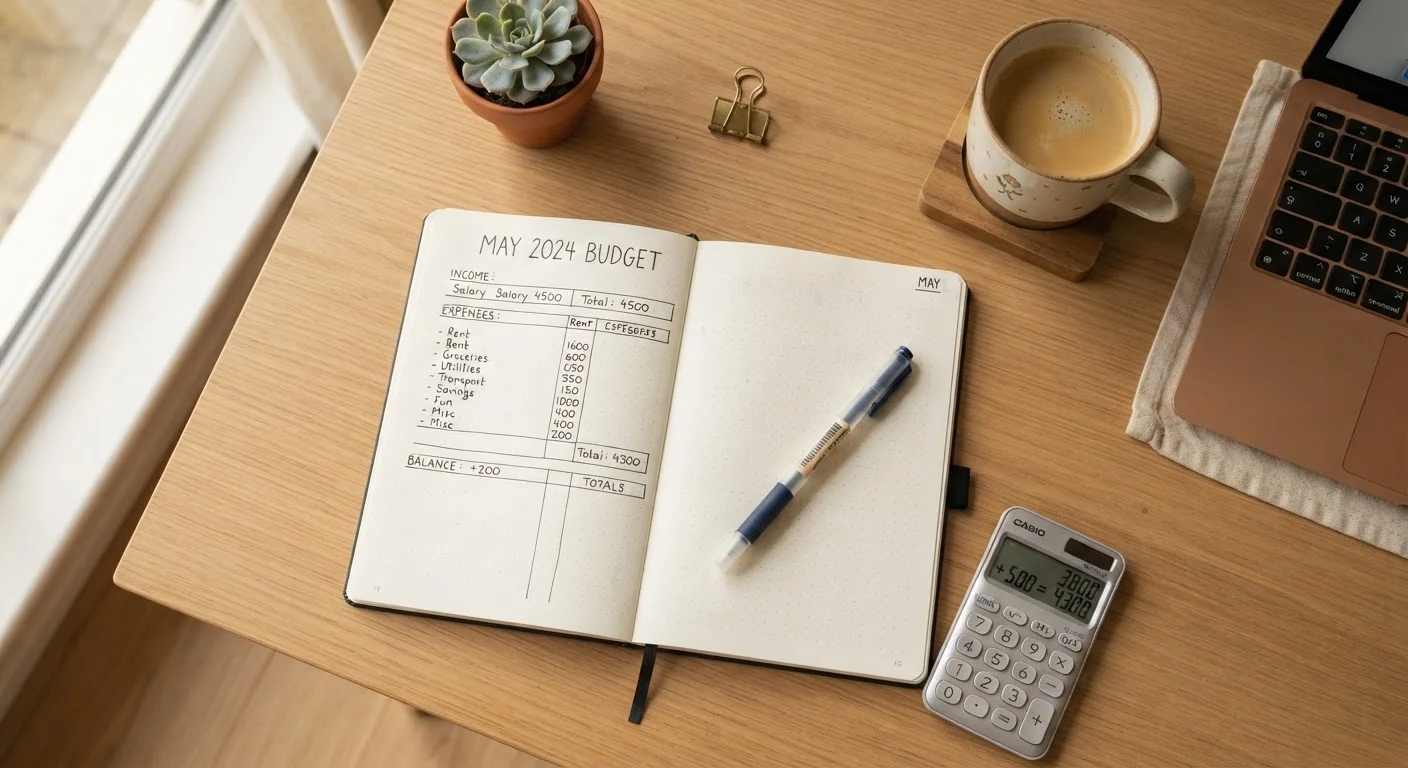
Digital budgeting apps have never been more capable — and yet a meaningful share of Americans still reach for a notebook. That's not nostalgia. For many people, handwriting spending creates a psychological engagement that scrolling through a dashboard simply doesn't replicate.
If you're just getting started, see our introduction to personal budgeting for a foundation before choosing any tracking method. The method matters less than having one — but the method you choose will shape whether the habit sticks.
Builds genuine awareness of daily spending patterns
Writing a number down requires active recall and attention. Research in behavioral economics suggests that manual recording increases the psychological salience of spending in ways that automated tracking does not.
No accounts, subscriptions, or data sharing required
A notebook costs next to nothing and requires no login credentials, bank account linking, or privacy trade-offs — a legitimate concern for people wary of financial data aggregators.
Works anywhere, including offline environments
Paper functions without Wi-Fi, a charged phone, or a functioning app. For frequent travelers or people in areas with unreliable connectivity, this is a practical advantage.
Highly customisable to your actual categories
You design the layout, the categories, and the cadence. There's no algorithm deciding how to bucket a pet supply purchase or a home repair, and no template forcing your life into someone else's framework.
Low barrier to starting immediately
There's nothing to download, configure, or learn. You can start tracking the next transaction you make with whatever paper is nearest — which means fewer reasons to delay.
The Real Drawbacks You Should Weigh
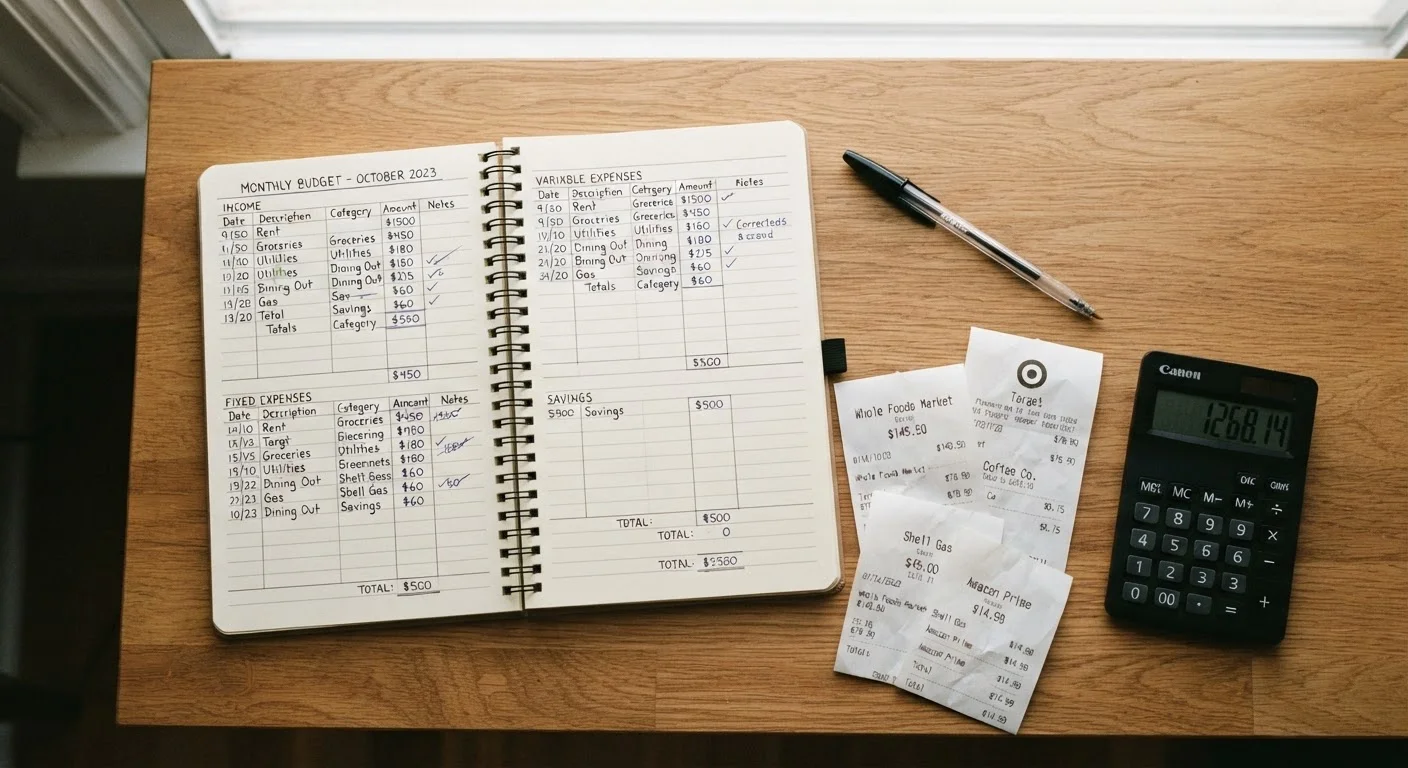
Manual tracking isn't romantic once reality sets in. Missing a week of entries — say, during a busy travel stretch or an illness — can make the whole ledger feel pointless. Unlike an app that pulls bank transactions automatically, a paper system only reflects what you remember to write down.
There's also no built-in analysis. A notebook won't flag that you've overspent on dining three months in a row, or calculate your savings rate automatically. If you want those insights, you're doing that math yourself.
Time-consuming and easy to abandon under pressure
Manual entry takes consistent daily effort. Busy periods — travel, illness, stressful work weeks — are precisely when tracking lapses, and gaps make the whole record less useful.
No automatic calculations or trend analysis
Every total, percentage, and month-over-month comparison requires manual arithmetic. Errors accumulate, and insights that an app surfaces in seconds can take significant time to derive from a handwritten ledger.
Relies entirely on memory and discipline
Transactions made hours or days before entry are easy to forget or mis-remember. Unlike bank-linked tools, a paper system is only as accurate as your recall and your commitment to recording promptly.
Difficult to scale across complex financial lives
Managing multiple income streams, shared household finances, or irregular expenses becomes genuinely cumbersome in a paper format. Coordination between partners is especially hard without a shared digital system.
No alerts, reminders, or automated safeguards
Paper won't notify you when you're approaching a category limit or when a large charge posts unexpectedly. You bear the full responsibility for monitoring without any system prompts.
When Manual and Digital Work Together
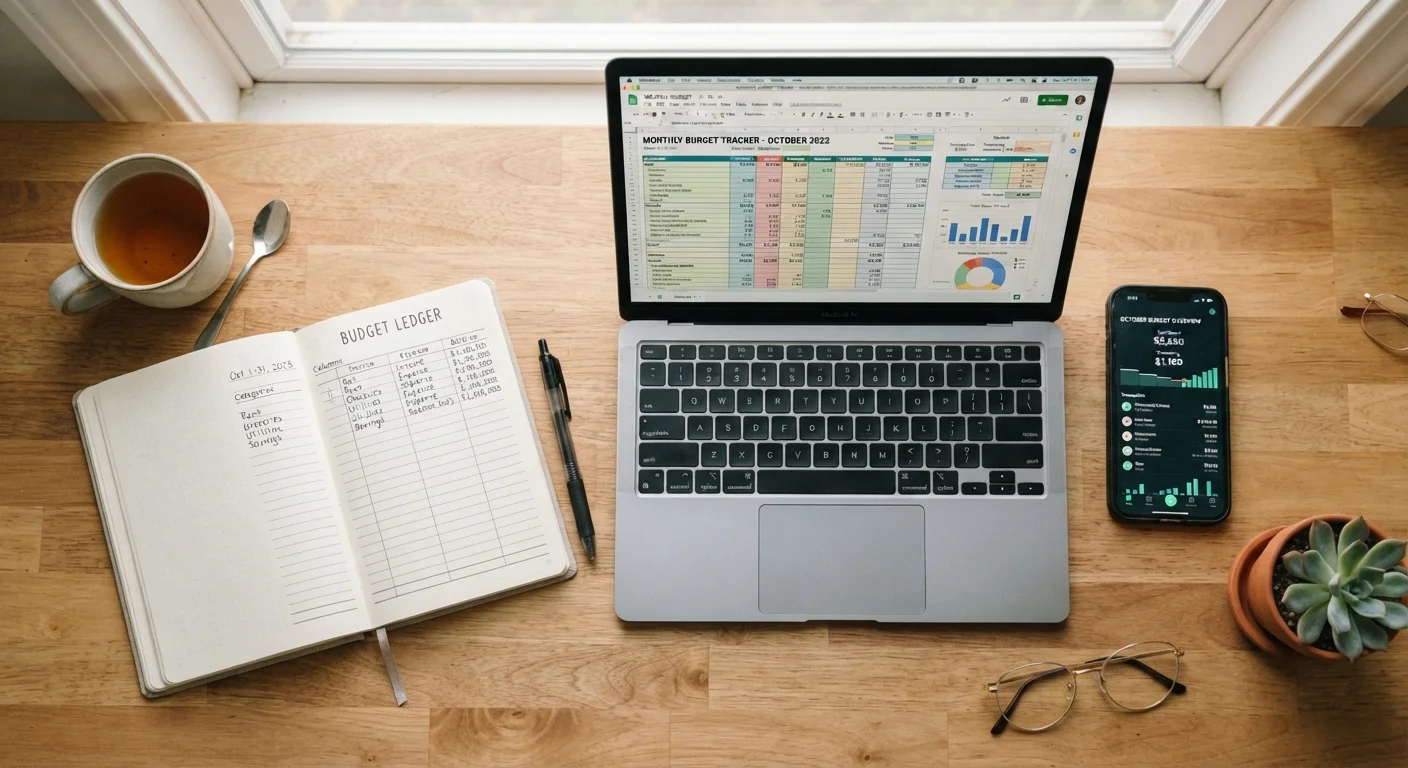
You don't have to choose exclusively between paper and apps. Some people use a notebook for daily spending awareness and a spreadsheet or app for monthly summaries and longer-term tracking. Hybrid approaches can capture the psychological benefits of handwriting without giving up the analytical power of digital tools. The key is designing a system you'll actually use rather than one that looks ideal on paper — figuratively speaking.
How Manual Tracking Compares to Other Methods
Manual tracking sits at one end of a spectrum. Spreadsheets add calculation power without the full automation of an app. Dedicated budgeting apps sit at the other end, handling categorisation and syncing in real time. Each trade-off is real. Our comparison of pen-and-paper, spreadsheets, and apps breaks down how each workflow fits different habits.
The core distinction with manual tracking is intent. You're choosing friction deliberately. Every entry is a small, conscious acknowledgment: I spent this money today. For people who feel their finances are happening to them rather than being directed by them, that friction is often the intervention they needed.
~40%
Americans without a working monthly budget
Surveys conducted by the National Foundation for Credit Counseling have consistently found that a substantial share of U.S. adults report not following any regular budget.
1 in 3
Adults who prefer non-digital financial tools
Consumer research from the American Bankers Association and related studies suggests a persistent minority prefers physical records for personal finance management.
Making a Paper System Work in Practice
A common reason manual budgets fail isn't laziness — it's poor structure. A few practices improve the odds considerably. Track daily, not weekly; waiting lets purchases blur together. Keep the notebook somewhere visible, not buried in a drawer. Use simple categories that match your actual spending patterns rather than an idealized list borrowed from a finance blog.
Consistency matters more than perfection. Missing a day isn't failure; abandoning the habit entirely is. The habits that make budgeting stick long-term apply to paper systems just as much as digital ones — anchor your tracking to an existing daily routine, like morning coffee or the end of a lunch break.
Manual tracking also transfers naturally into adjacent habits. If you're working toward a large purchase, the same attention you apply to daily spending can support a price-tracking habit for major buys.
This article is for general informational and educational purposes only and does not constitute personalised financial advice. Consider speaking with a qualified financial professional about your specific circumstances.