
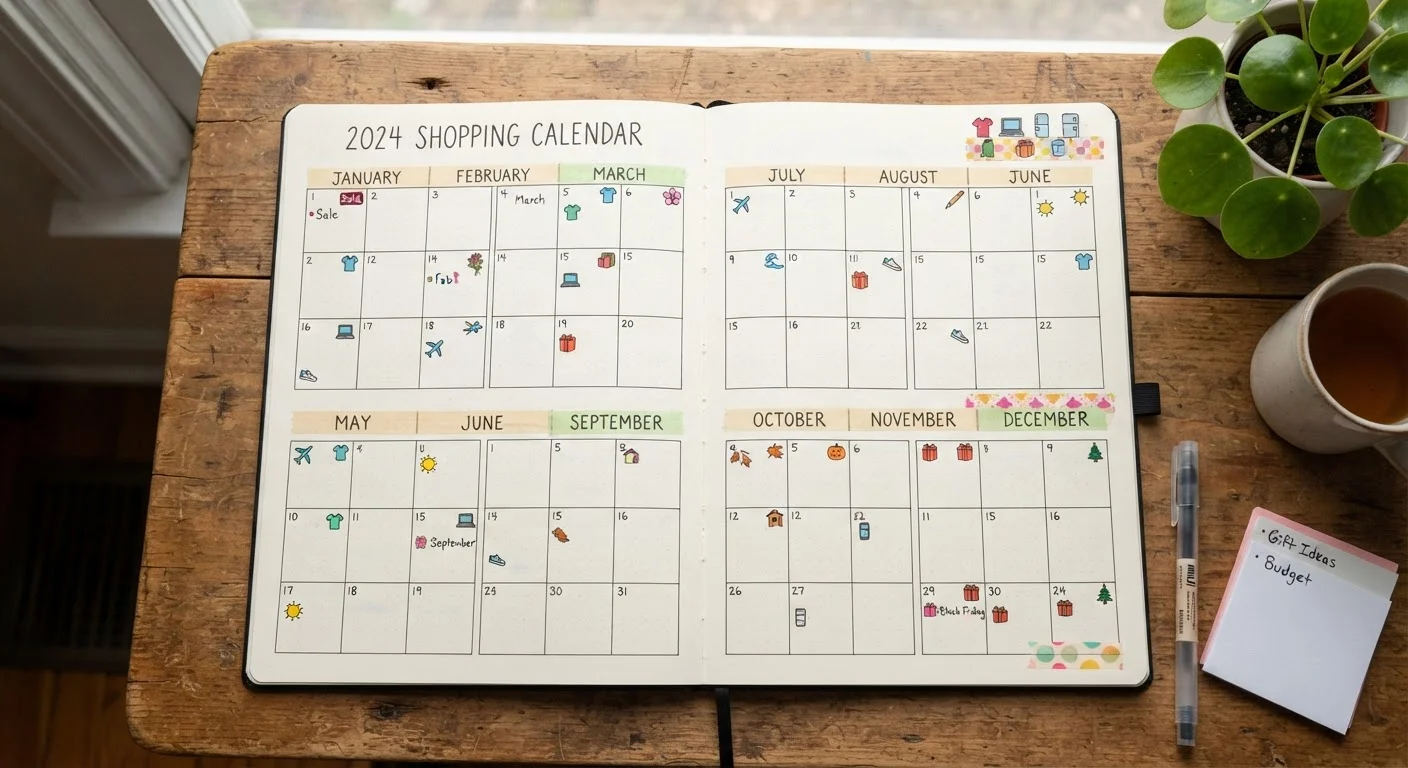
How Retail Pricing Cycles Actually Work
Retailers don't lower prices randomly. Markdowns follow predictable patterns tied to inventory turnover, model-year transitions, and promotional calendars. When a store needs to clear shelf space for incoming stock — new appliance lines in fall, swimwear in late summer, holiday decor in January — prices on outgoing merchandise tend to drop. Understanding this rhythm doesn't guarantee savings, but it gives you a structural advantage when planning larger purchases.
This guide is a general reference. Actual discounts vary by retailer, region, and year. For decisions involving significant sums, pairing this calendar with active price monitoring pays off — see our price-tracking guide for a practical system.
Category-by-Category Seasonal Patterns
Major Appliances
Large appliances — refrigerators, ranges, dishwashers — tend to see price softening in September and October, when manufacturers release new models and retailers discount prior-year inventory. A secondary window often appears in January and February after the holiday rush. Holiday weekend sales (Labor Day, Memorial Day) are frequently cited by industry observers as additional soft spots, though markdowns vary widely by product and store.
Consumer Electronics
The period around late November through early January is the most concentrated promotional window for electronics, driven by holiday competition. Televisions specifically often see additional discounts in late January and February ahead of major sporting events. New product launches — typically spring for smartphones, fall for laptops — can push prior-generation prices down.
Clothing and Apparel
Apparel pricing follows a clear seasonal clearance pattern. End-of-season sales are the most reliable: late winter (February–March) for cold-weather clothing, and late summer (August–September) for warm-weather items. Post-holiday weeks in January are consistently strong for winter clearance. Buying a season ahead — purchasing winter coats in March, for example — is a time-tested approach to paying clearance rather than peak prices.
Furniture and Bedding
Furniture retailers historically run significant promotions in February, May, and August, loosely tied to major holidays and model refreshes. Mattress prices tend to follow a similar cadence, with Memorial Day and Labor Day weekends traditionally among the more active promotional periods in the US market.
Outdoor and Garden Equipment
Lawn mowers, grills, and patio furniture typically reach their lowest seasonal prices in late summer and fall — August through October — as retailers clear space for fall and winter inventory. Buying a gas grill in September rather than May can mean paying significantly less for the same model. For how seasonal timing connects to home upkeep, the seasonal home maintenance checklist offers useful context on when different systems need attention.
Seasonal clearance
Markdowns retailers apply to end-of-season inventory to free shelf space for incoming stock. Clearance prices are typically lower than standard sale prices.
Model-year transition
The period when manufacturers release updated product versions, prompting retailers to discount prior-year models. Common in appliances, electronics, and vehicles.
Shoulder season
The travel period just before or after peak tourist season. Prices for flights and lodging tend to be lower while destinations remain accessible and enjoyable.
Inventory turnover
The rate at which a retailer sells through its stock. When turnover slows, retailers discount to move product and recover shelf space for higher-margin items.
Travel and Airfare
Travel pricing is dynamic and algorithm-driven, making it harder to pin to a fixed calendar. That said, broad patterns hold: flying on Tuesdays, Wednesdays, and Saturdays is generally cheaper than peak travel days, and booking during so-called shoulder seasons — the weeks just before or after peak tourist periods — tends to yield lower fares and accommodation rates. Our shoulder season guide covers this in detail, and this end-to-end budget travel framework walks through the full booking strategy.
Making the Calendar Work for You
A seasonal calendar is only useful if you plan ahead. The core discipline is simple: identify your anticipated purchases three to six months out, note which seasonal window aligns with each category, and resist impulse buying outside those windows when timing is flexible. For recurring needs — clothing, home goods — building a short wishlist and revisiting it at season's end is a low-effort habit that pays off consistently.
Combining seasonal awareness with digital couponing can compound the effect. The modern couponing landscape has shifted significantly, with cash-back apps and browser extensions now doing much of the work that required clipping and organizing in earlier decades.
Promotional Calendars Shift Year to Year
The seasonal windows described here reflect general historical patterns in US retail, not guarantees for any specific year or retailer. Promotional timing can shift based on economic conditions, supply chain dynamics, and competitive pressures. Always verify current pricing directly with retailers before making a purchase based on seasonal expectations.
Finally, keep perspective: a 15% discount on something you don't need isn't savings — it's spending. The seasonal calendar is a tool for purchases already on your list, not a reason to add new ones. For a broader framework on making spending decisions that align with your goals, the budgeting basics hub is a practical starting point.
This article is for general informational purposes only. Pricing patterns are generalizations based on historical retail trends and do not guarantee specific savings at any retailer. Verify current prices and promotions independently before making any purchase decision.