Why a Pre-Trip Checklist Actually Matters
Most travel stress is manufactured in the final 48 hours before departure — and most of it is avoidable. A structured checklist lets you front-load the work so that by the time you're heading to the airport, the only thing left to do is show up. This guide follows the logic of a well-planned trip: each phase builds on the last, and skipping steps early creates compounding problems later.
The items below are grouped by category and roughly ordered by when you should tackle them — starting weeks out and ending the morning you leave. Not every item will apply to every trip. Use the checklist as an audit: tick what's done, flag what needs attention, and skip what genuinely doesn't apply.
Always Verify Entry Requirements Officially
Visa rules, health declarations, and entry conditions change without much warning. Do not rely solely on travel forums or third-party sites — check directly with the official government website of your destination country and your own country's foreign affairs or state department. Arriving without the correct documentation can result in denied boarding or entry with no compensation.
Tools You'll Need
Before you start, gather the following. Having everything in one place makes the process faster and reduces the chance of missing something critical.
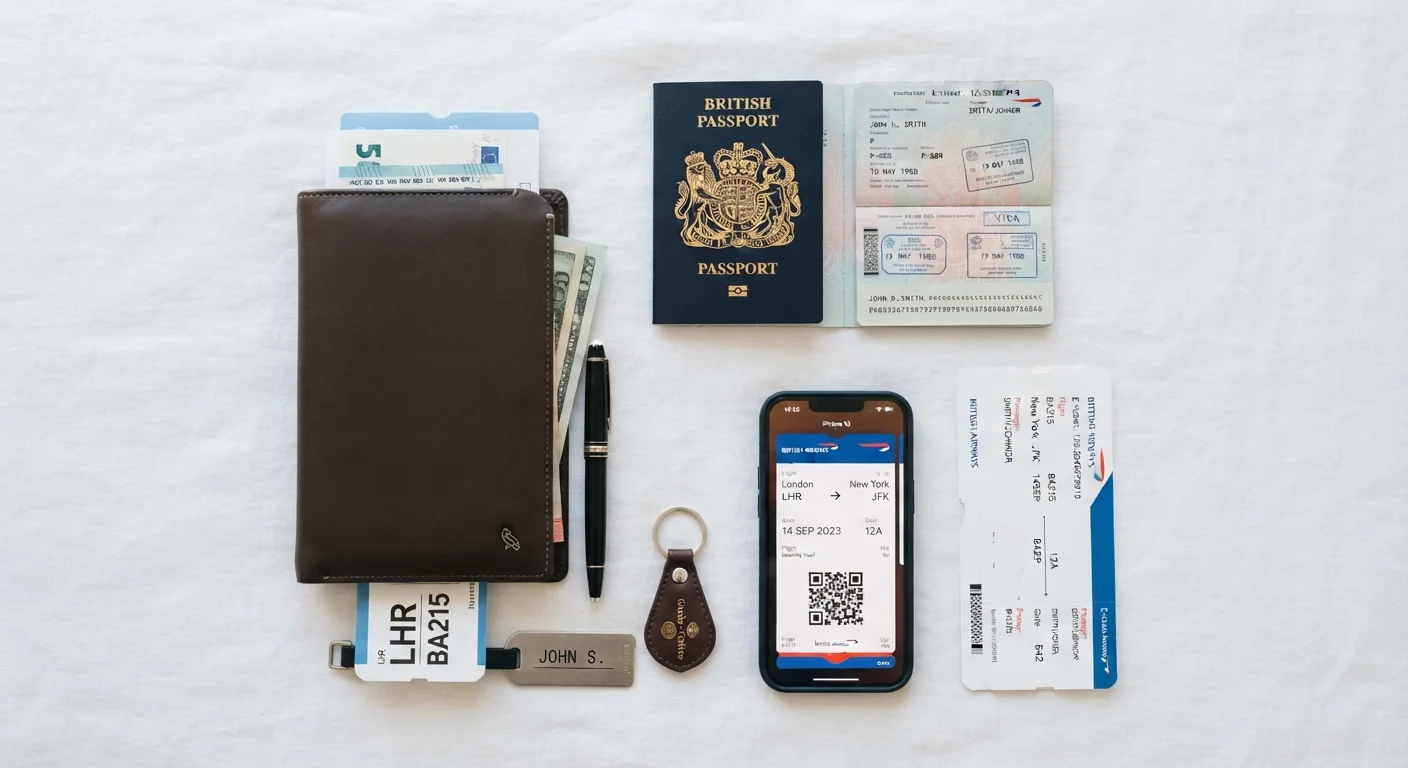
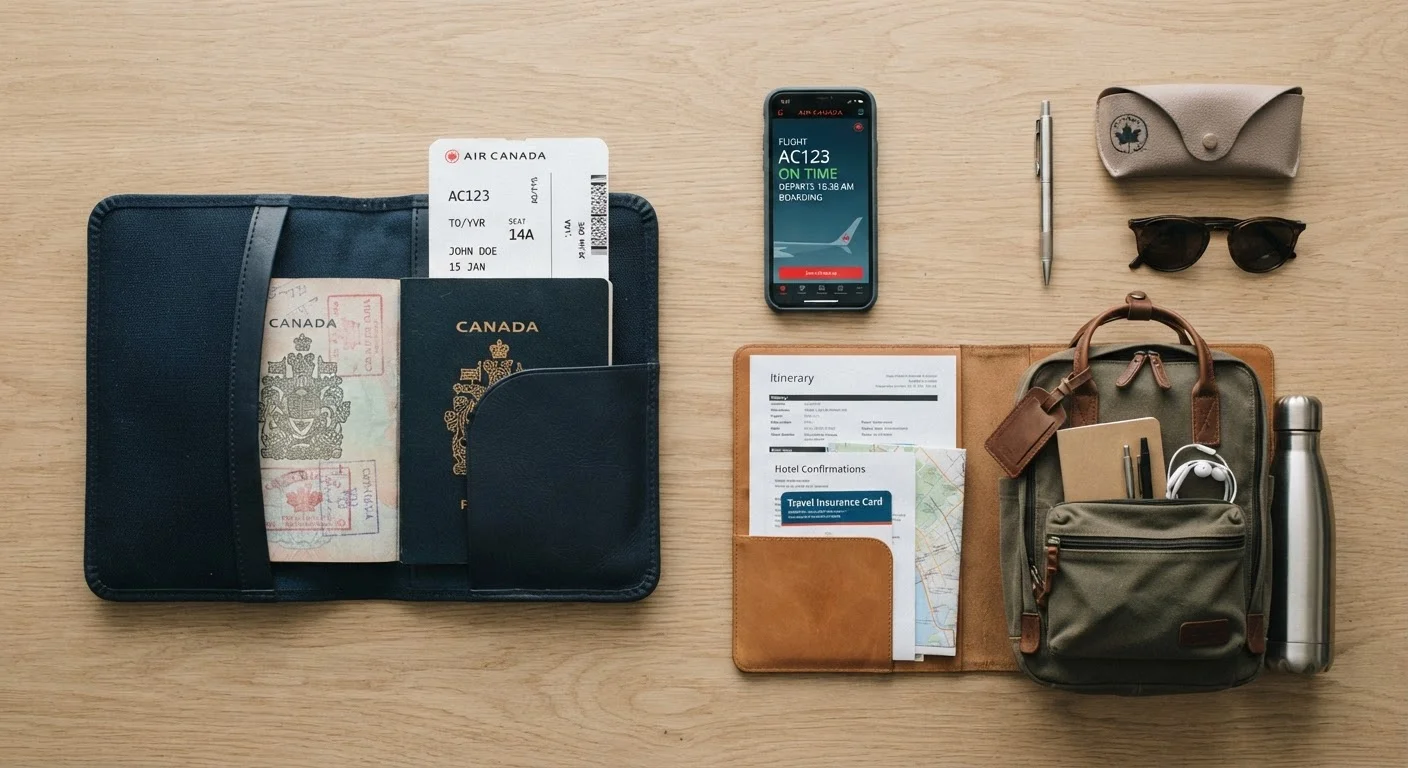
Passport and travel documents folder
Keeps physical copies of your passport, visa approvals, insurance, and confirmations in one portable place.
Smartphone with airline and booking apps
Stores digital boarding passes, confirmation numbers, and real-time flight status alerts.
Secure cloud storage or email folder
Holds scanned copies of all critical documents so they're accessible even if your bag or phone is lost.
Luggage scale
Lets you verify checked bag weight at home and avoid overweight baggage fees at the airport.
Universal travel adapter
Powers your devices in countries with different plug types — essential for international travel.
If you're still figuring out how to keep everything organised, a document organisation system built around print-and-digital redundancy is worth reading before you dive in.
The Full Pre-Trip Checklist
Work through these groups in sequence. Items marked must are non-negotiable for a smooth trip. Should items are strongly recommended and prevent common problems. Nice to have items add comfort or contingency without being essential.
Bookings & Confirmations (2–4 weeks out)
Documents & Entry Requirements (3–6 weeks out)
Health & Insurance (2–4 weeks out)
Finances & Payments (1–2 weeks out)
Packing & Baggage (3–5 days out)
Home & Logistics (1–2 days out)
Day-of Departure
For travellers driving part of the journey, don't overlook your vehicle — a pre-trip vehicle safety check covering tyres, fluids, and lights is a separate but equally important step.
Cutting Costs While You Prep
Preparation isn't just about avoiding disasters — it's also one of the most effective points in the travel cycle to catch avoidable costs. Fees for checked bags, foreign transaction charges, and last-minute upgrades are almost always cheaper to avoid than to pay. Run through the cost-control pre-trip checklist alongside this one to make sure you're not leaving money on the table before you even board.
Packing strategy is another underrated cost lever. If you can travel carry-on only, you sidestep checked bag fees entirely — see what it actually takes to pack light for a two-week trip for a realistic breakdown. More general strategies are collected in the Budget Travel Tips hub.
Don't Leave Travel Insurance to the Last Minute
Many travel insurance policies only cover pre-trip cancellation if the policy was purchased before the triggering event occurred. Buying coverage after you've already booked and then experiencing a disruption may leave you without a claim. Review policy terms carefully and purchase as soon as your trip is confirmed rather than the week before departure.
Finally, even the best preparation doesn't guarantee everything goes to plan. Understanding what typically goes wrong — and what experienced travellers do about it — is the last piece of the puzzle before you leave home.