How Each System Works
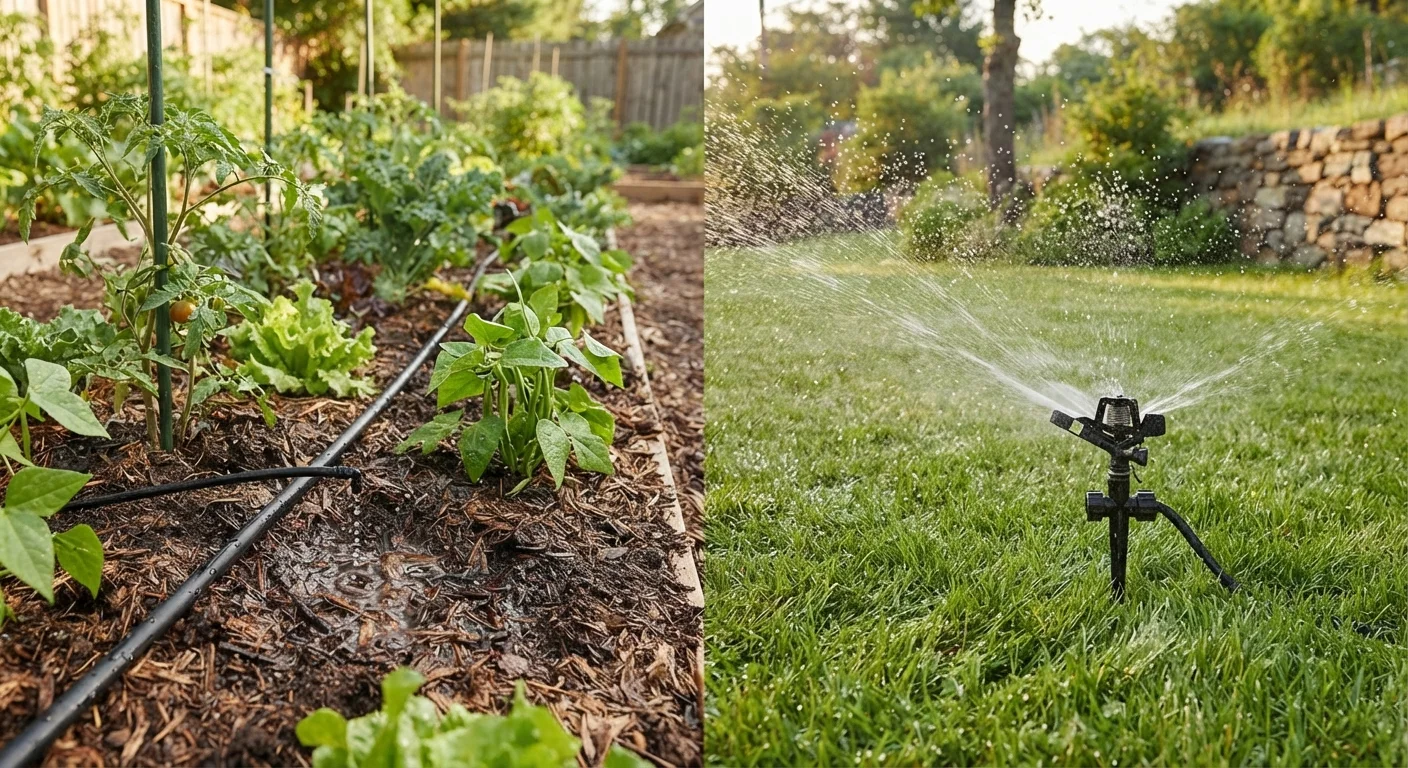
Understanding the mechanics of each system makes the choice much clearer. Drip irrigation uses a network of flexible tubing and small emitters placed at or just below the soil surface. Water trickles out slowly - typically at a rate of 0.5 to 2 gallons per hour - directly at the base of plants. Almost no water lands on leaves or open soil, which cuts down on evaporation and reduces conditions that encourage foliar disease.
Sprinkler systems work by distributing pressurized water through rotating heads or fixed nozzles positioned above the soil. They're designed to cover broad areas uniformly, making them well-matched to grass where every square foot needs moisture. Pop-up in-ground systems stay hidden when not in use; above-ground oscillating sprinklers are a portable, lower-cost alternative.
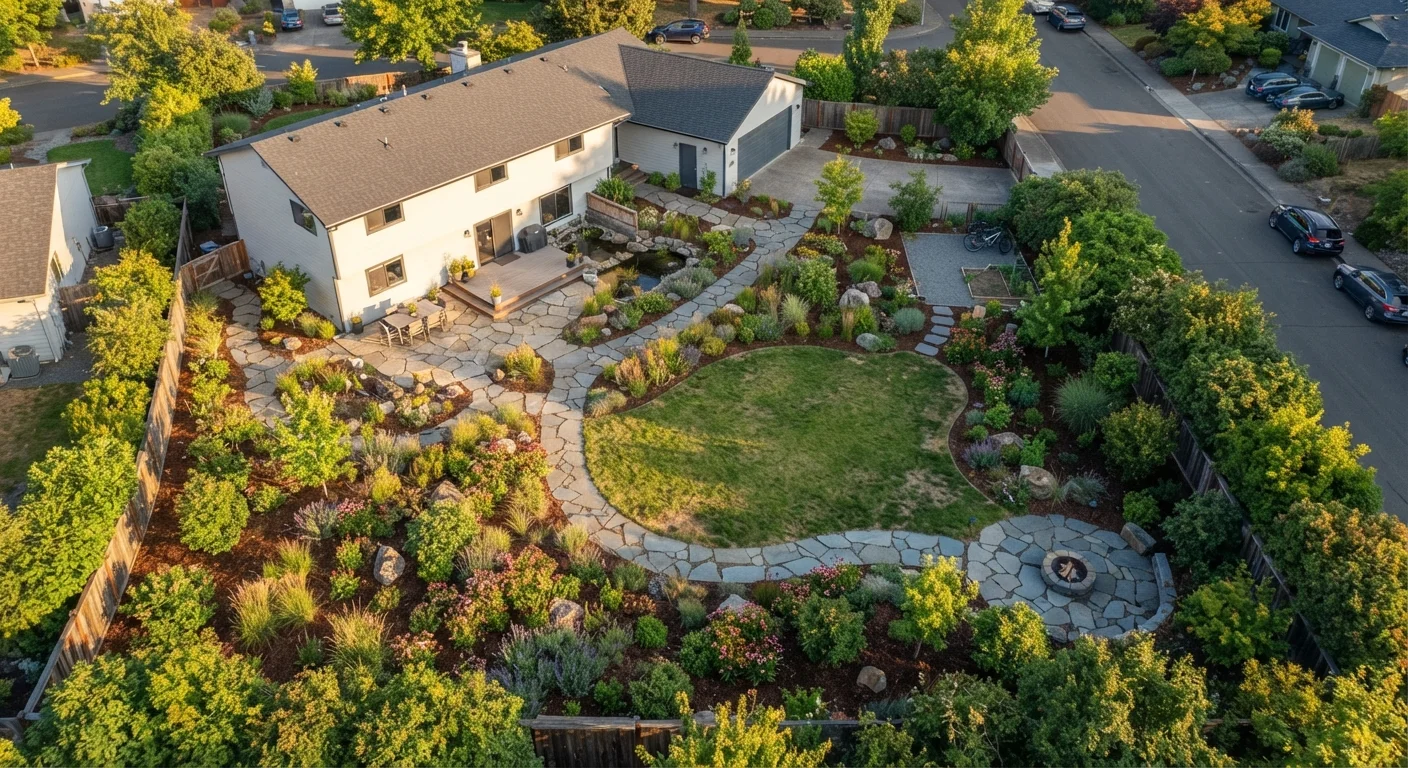
Neither method is universally superior - they simply solve different problems. For a yard with both a lawn and planting beds, many homeowners use a combination of both, as explored in our guide to designing a low-maintenance yard.
| Criterion | Drip Irrigation | Sprinkler Systems |
|---|---|---|
| Best application | Beds, borders, vegetables, shrubs | Lawns, large open areas |
| Water efficiency | High - minimal evaporation and runoff | Moderate - losses from wind and evaporation |
| Upfront cost (basic) | Lower for small areas | Higher for in-ground systems |
| DIY-friendly | Yes, for most garden applications | Above-ground only; in-ground needs pro install |
| Foliage wetting | None - targets root zone only | Yes - wets leaves and soil surface |
| Coverage area | Best for defined planting zones | Covers broad, open spaces efficiently |
| Automation potential | Yes, with timer and controller | Yes, with timer and smart controller |
| Maintenance demand | Emitter checks; clog prevention | Head alignment; winterization in cold climates |
Water Efficiency and Plant Health
Water efficiency is one of the most significant factors separating these two systems. Drip irrigation is widely recognized by irrigation specialists as one of the most efficient delivery methods available for garden beds - studies from university extension programs have consistently found that drip systems can use substantially less water than overhead irrigation for the same planting area, primarily because less is lost to evaporation and overspray.
Sprinklers, by contrast, are vulnerable to wind drift and midday evaporation when run at the wrong time. Watering in the early morning reduces - but doesn't eliminate - those losses. That said, no drip system realistically replaces sprinklers for watering a dense lawn, where even coverage across millions of grass blades is the goal.
Up to 50%
Water savings over sprinklers in garden beds
University cooperative extension programs commonly cite drip systems saving 30-50% more water than overhead irrigation in planted bed applications.
30-50%
Typical sprinkler water lost to evaporation and wind
The EPA's WaterSense program notes that conventional irrigation systems can waste significant water through evaporation, wind drift, and runoff.
~1 GPH
Typical drip emitter flow rate
Standard drip emitters deliver water at roughly 0.5-2 gallons per hour, enabling slow, deep soil penetration without surface runoff.
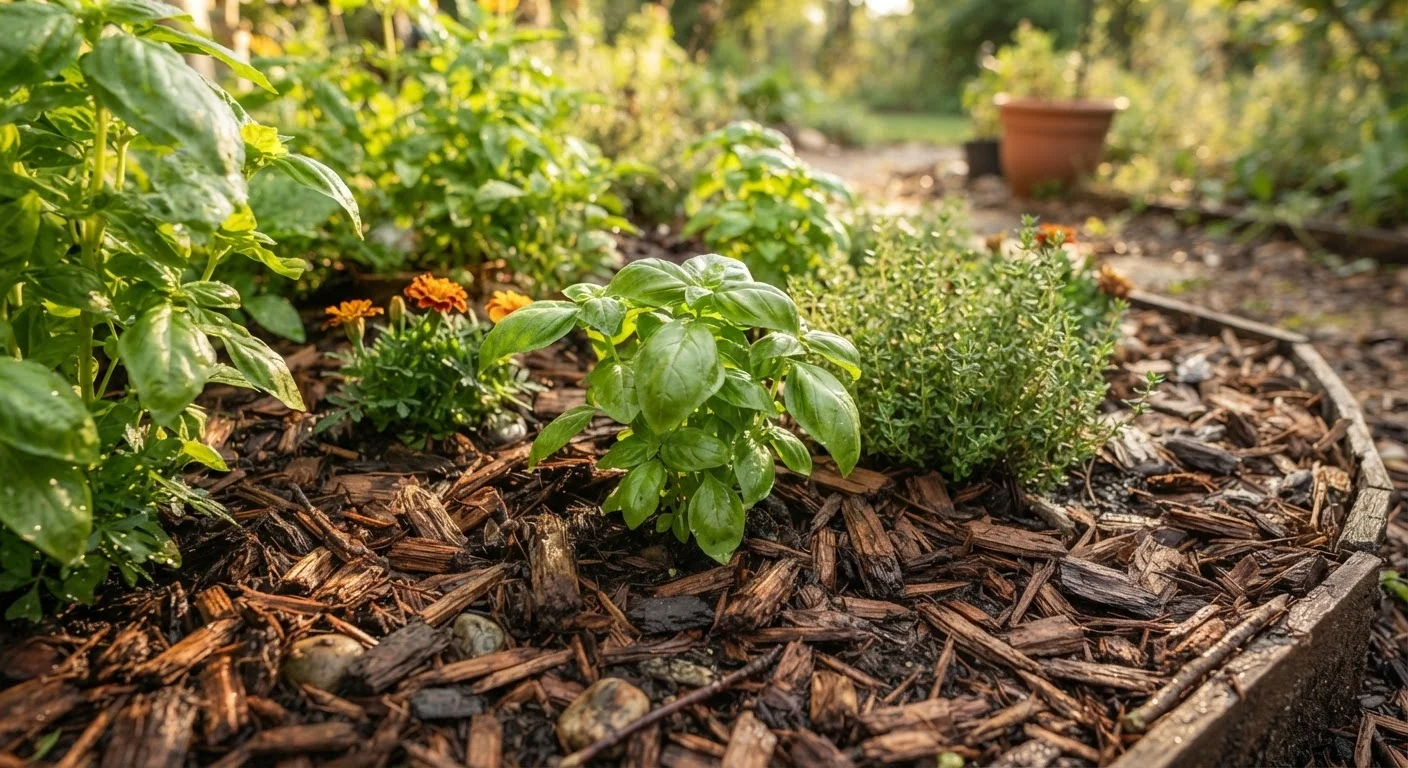
Plant health considerations also differ. Keeping foliage dry, as drip does, can limit certain fungal and bacterial diseases - a meaningful advantage in humid climates or densely planted vegetable gardens. This works especially well alongside good mulching practices; see our article on mulching your garden beds for how moisture retention and drip irrigation complement each other.
Cost, Installation, and Maintenance
For small garden beds, a basic drip kit is an accessible DIY project. Starter kits typically include tubing, emitters, a filter, and a pressure regulator. Costs vary depending on kit size and quality, but entry-level setups for a modest bed are generally affordable without professional help. Scaling up to a whole-property drip network - with multiple zones and an automated controller - raises costs considerably.
In-ground sprinkler systems almost always require professional installation because they involve trenching, connecting to a main water supply, and navigating local codes. This makes them a more significant upfront investment. Above-ground hose-end sprinklers are much cheaper but offer no automation and require you to move them manually.
Maintenance needs differ too. Drip emitters can clog with mineral deposits or debris, especially if you have hard water or run untreated sources. Flushing lines and inspecting emitters each season helps prevent this. Sprinkler heads can be knocked out of alignment or damaged by lawn equipment, but in-ground systems are otherwise fairly low-effort once installed. Both benefit from smart timers that adjust run times based on weather - a worthwhile upgrade for either approach.
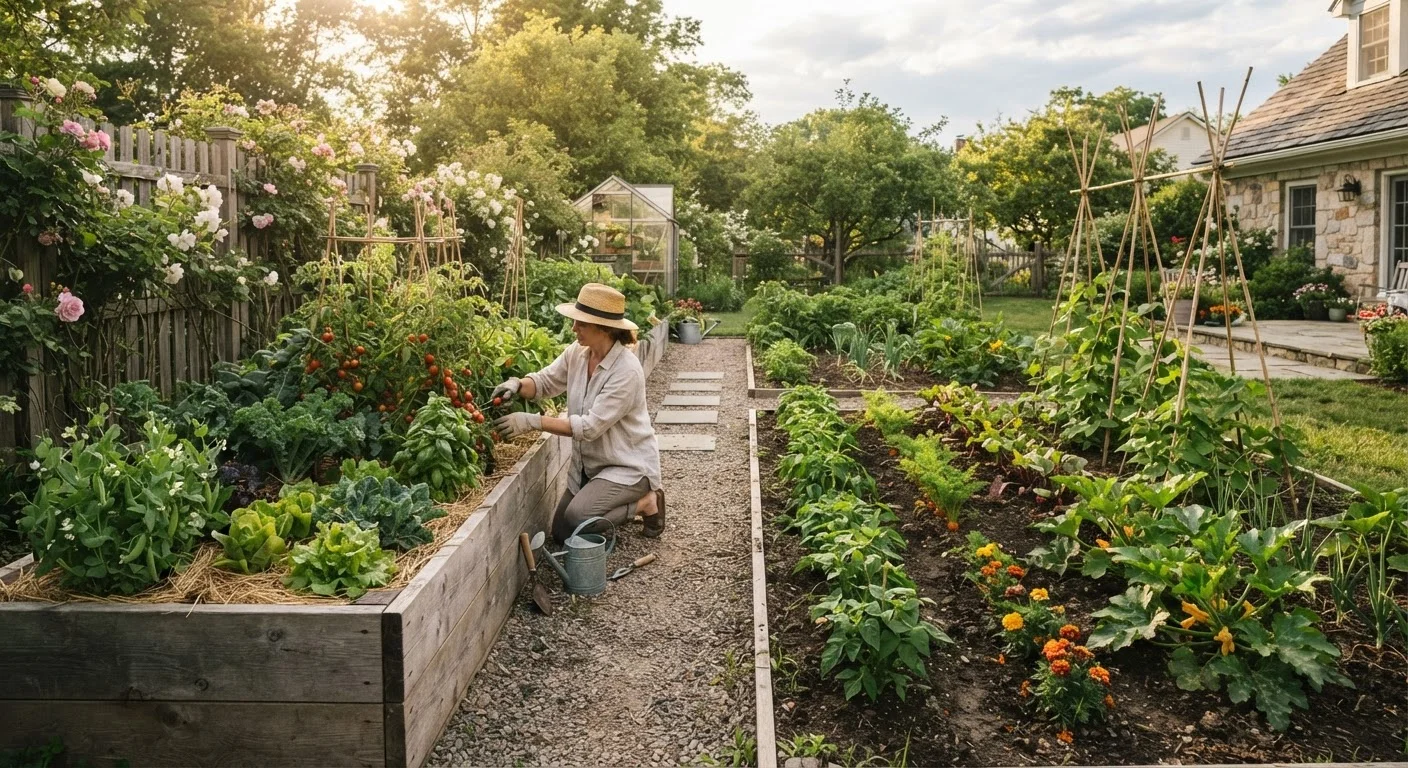
If you're evaluating watering options alongside a larger garden redesign, our comparison of raised beds vs. in-ground planting is a useful companion read, since your bed type affects how practical drip installation becomes.
Permits and Local Water Rules
Some municipalities regulate irrigation system installation, particularly when connecting to a main water line. In-ground sprinkler systems often require a permit and backflow prevention device to protect the potable water supply. Before beginning any in-ground installation, check with your local building department and water utility. Drip systems connected to an outdoor spigot typically face fewer restrictions, but local rules vary.