Why Flooring Choice Matters by Room
Not every floor is built for every environment. A material that looks beautiful in a showroom can buckle, stain, or degrade quickly if it's placed in the wrong conditions. Before evaluating options, consider three room-level factors: moisture exposure, foot traffic volume, and subfloor condition. These variables will narrow your choices faster than any design preference.
Flooring is also a significant long-term investment. According to widely cited remodeling data, flooring upgrades - particularly hardwood - tend to hold value well. As we note in our coverage of projects that tend to add long-term value, not every renovation pays off equally, and flooring is one area where material selection directly affects resale appeal.
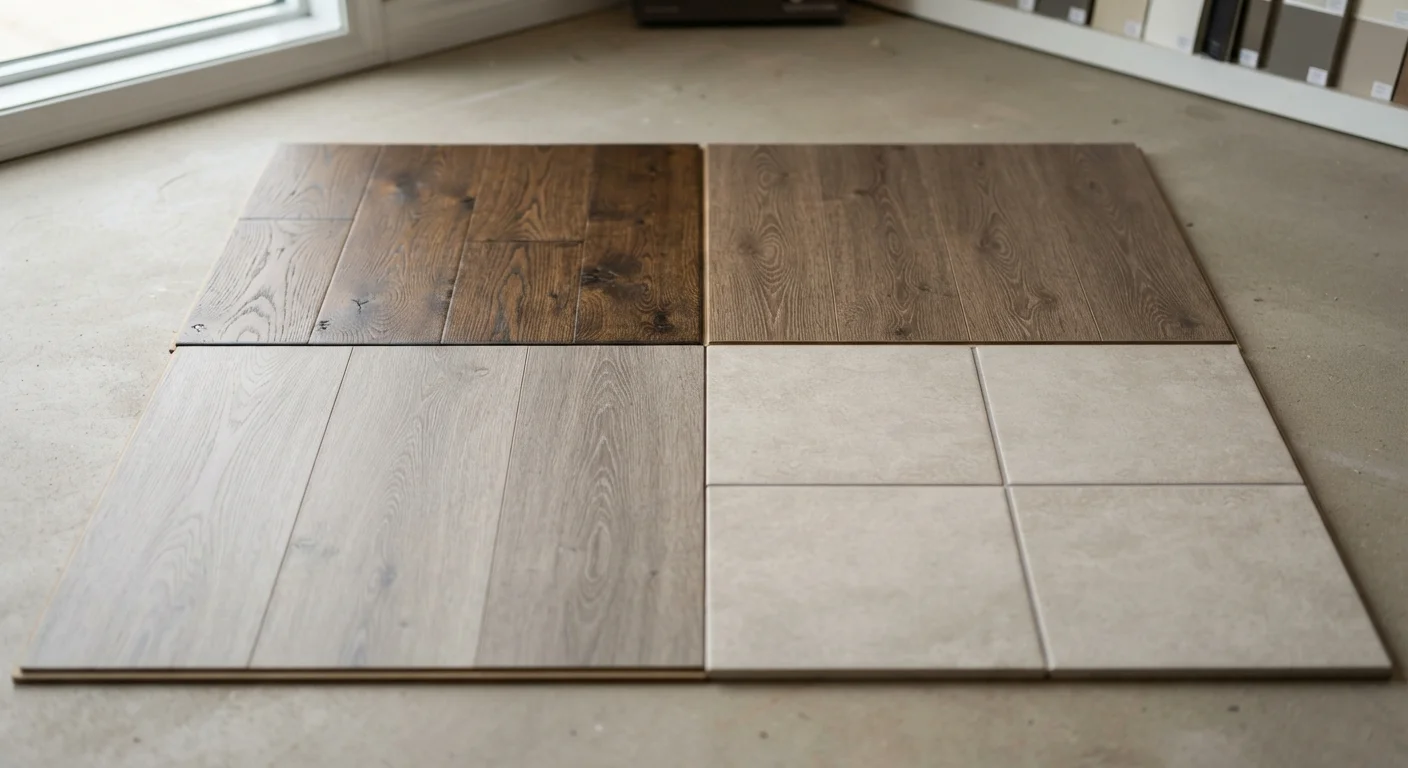
| Hardwood | Laminate | LVP | Tile | |
|---|---|---|---|---|
| Moisture resistance | Low | Low-Moderate | High (waterproof) | Very high |
| Durability / lifespan | 50+ years (refinishable) | 10-25 years | 15-25 years | Lifetime if maintained |
| Typical material cost | $6-$12/sq ft | $1-$4/sq ft | $2-$7/sq ft | $1-$10/sq ft |
| DIY installation ease | Moderate-Difficult | Moderate | Easy-Moderate | Difficult |
| Comfort underfoot | Warm, moderate hardness | Moderate | Warm, resilient | Hard, cold |
| Refinishable | Yes (multiple times) | No | No | Grout resealing only |
| Best room fit | Living rooms, bedrooms | Bedrooms, offices | Kitchens, baths, basements | Baths, kitchens, entryways |
Hardwood: Classic Appeal With Real Limitations
Solid hardwood - typically oak, maple, or hickory - is prized for its natural warmth and the fact that it can be sanded and refinished multiple times over its lifespan. A well-maintained hardwood floor can last 50 years or more. Engineered hardwood, which uses a real wood veneer over a plywood core, offers slightly better moisture tolerance and works over radiant heat systems.
The tradeoffs are real, however. Solid hardwood is sensitive to humidity swings - it expands and contracts seasonally - and it should not be installed in bathrooms, laundry rooms, or below-grade basements. It also sits at the higher end of material costs, typically ranging from roughly $6 to $12 per square foot for materials alone, with professional installation adding substantially to that figure.
Acclimate Hardwood Before Installation
Solid hardwood must be acclimated to your home's indoor temperature and humidity for at least 3-5 days before installation. Skipping this step is one of the most common causes of post-install buckling or gapping. Store planks flat in the room where they'll be installed, not in a garage or utility space with different climate conditions.
Laminate: Budget-Friendly but Not Waterproof
Laminate flooring is a photographic layer bonded to a high-density fiberboard (HDF) core. It can convincingly mimic hardwood, stone, or tile at a fraction of the cost - often $1 to $4 per square foot for materials. Modern laminate with an AC rating of 3 or higher handles moderate residential traffic well.
The core limitation is moisture. Standard laminate swells and warps when exposed to standing water or prolonged humidity. Some newer "water-resistant" laminates handle spills better, but none are truly waterproof at the core. Laminate also cannot be refinished - once the surface layer wears through, replacement is the only option. Stick to dry rooms: bedrooms, home offices, and living areas with limited spill risk.
Luxury Vinyl Plank (LVP): The Versatile All-Rounder
Luxury vinyl plank has surged in popularity because it solves the moisture problem that limits both hardwood and laminate. LVP is made from polyvinyl chloride (PVC) layers, making it 100% waterproof throughout its core - not just surface-resistant. It's comfortable underfoot, warmer than tile, and available in realistic wood and stone looks.
LVP handles basements, bathrooms, kitchens, and high-traffic hallways equally well. Most products click-lock together, making DIY installation accessible for homeowners with basic tools. Material costs typically fall between $2 and $7 per square foot depending on thickness (measured in mils) and wear layer quality. Thicker wear layers (12 mil and above) are advisable for households with pets or heavy use. The main caveat: LVP can be damaged by sharp, heavy objects and may not add the same perceived resale value as solid hardwood in premium markets.
Tile: Unmatched Durability for Wet and High-Heat Zones
Ceramic and porcelain tile remain the standard for bathrooms, kitchens, mudrooms, and entryways - any space where water, grit, or heat is a regular presence. Porcelain, denser than ceramic, is especially resistant to moisture and wear, making it suitable for both indoor and outdoor applications. Tile does not scratch, does not absorb water, and can last the life of the home if the grout is maintained properly.
The downsides are installation complexity and comfort. Tile requires a rigid, level subfloor - typically a cement backer board - and professional installation is often advisable for anything beyond a small, straightforward area. Tile is hard and cold underfoot, which can be uncomfortable in living spaces. Radiant floor heating can offset the cold, but that adds project cost. Grout lines also require periodic sealing to prevent staining and mildew buildup.
Don't Skip the Subfloor Assessment
Tile installation over a weak or flexible subfloor will eventually crack - both the tile and the grout lines. Before tiling, confirm your subfloor meets the deflection requirements for ceramic or porcelain (typically L/360 or better). In older homes, this may require adding a layer of cement backer board or reinforcing the subfloor structure. A licensed contractor or tile setter can assess this before you invest in materials.
Making the Final Call: A Room-by-Room Approach
Think of flooring selection as a process of elimination rather than a single preference. Start with moisture: if the room has plumbing, below-grade humidity, or frequent spills, eliminate hardwood and standard laminate immediately. Then consider traffic: heavy-use areas benefit from LVP's resilience or tile's hardness. Budget comes last - because choosing the wrong material to save money upfront often leads to premature replacement costs.
- Living room / bedroom: Hardwood or LVP; laminate in dry climates on a budget.
- Kitchen: LVP or tile; both handle spills and cleaning well.
- Bathroom: Tile or LVP only; never standard laminate or solid hardwood.
- Basement: LVP is strongly preferred; tile works if subfloor allows.
- Mudroom / entryway: Tile for maximum durability and ease of cleaning.
Always check local building codes if your project involves structural changes to the subfloor, and consult a licensed flooring professional if you're unsure about subfloor suitability or moisture testing before installation.