More Than Just Being Careful
Most drivers think of themselves as careful. But carefulness - reacting when something goes wrong - is only half the equation. Defensive driving is about structuring your behavior so that you rarely need to react in the first place.
The key distinction is proactive versus reactive. A reactive driver brakes hard because a car stops suddenly ahead. A defensive driver noticed that car slowing several seconds earlier and had already eased off the accelerator. The outcome of the first scenario depends on luck; the second depends on skill.
This mindset applies to every driving environment: urban intersections, freeway merges, residential streets, and rural two-lane roads. Conditions change constantly, and defensive drivers treat that variability as a given rather than a surprise. For a closer look at how road conditions alter your required technique, see our guide on driving in rain, fog, and snow.
The 'What If' Mental Habit
One practical way to build a defensive mindset is to ask 'what if?' as you drive: What if that parked car opens its door? What if the truck ahead brakes hard? Running these low-stakes mental scenarios keeps your attention engaged and your responses preloaded - so when something actually happens, your brain isn't starting from zero.
The Four Core Habits
Defensive driving can be broken into four practical behaviors that any driver can adopt:
- Scan far ahead. Most drivers focus on the vehicle directly in front of them. Defensive drivers look 10-15 seconds down the road - far enough to identify slowing traffic, merging vehicles, or debris with time to respond calmly rather than abruptly.
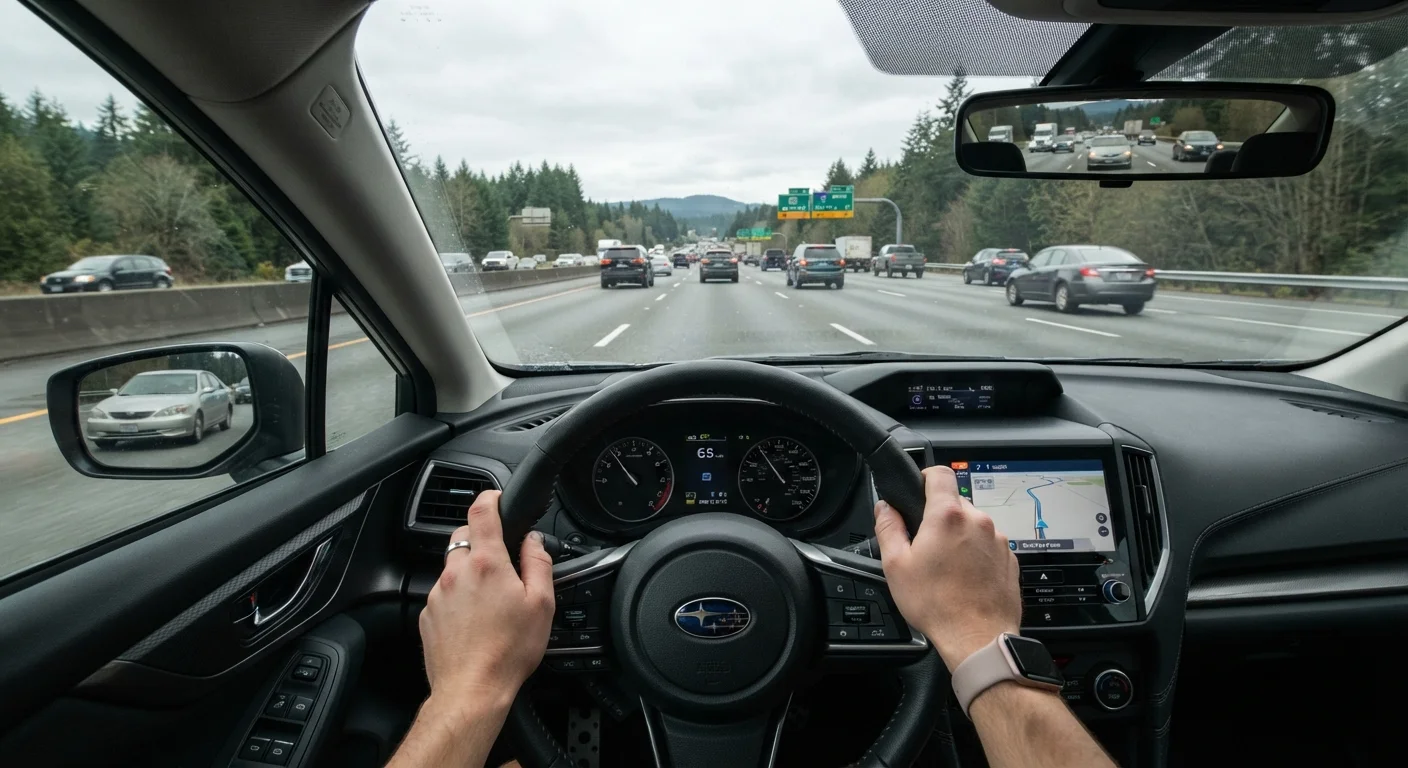
- Maintain a safe following distance. The commonly cited three-second rule - keeping three seconds of gap between you and the car ahead - provides a buffer for reaction time and braking. In rain, snow, or heavy traffic, that gap should grow to four or more seconds.
- Manage your space cushion. Staying visible and predictable means avoiding other drivers' blind spots, signaling early, and not crowding adjacent lanes. A space cushion on all sides gives you options when something unexpected happens.
- Eliminate distractions and impairment. Cognitive load - whether from a phone, an intense conversation, or fatigue - reduces situational awareness faster than most drivers realize. Distraction and impairment are among the most preventable contributors to serious crashes.
~94%
Crashes involving human error or behavior
According to NHTSA research, approximately 94% of serious crashes involve a critical human error as a contributing factor.
3 seconds
Minimum recommended following distance
Traffic safety organizations including the National Safety Council recommend at least a three-second gap under normal driving conditions.
25%
Increase in stopping distance on wet roads
Wet pavement can increase braking distance by roughly 25% or more compared to dry conditions, according to general traffic engineering estimates.
How Technology Fits In
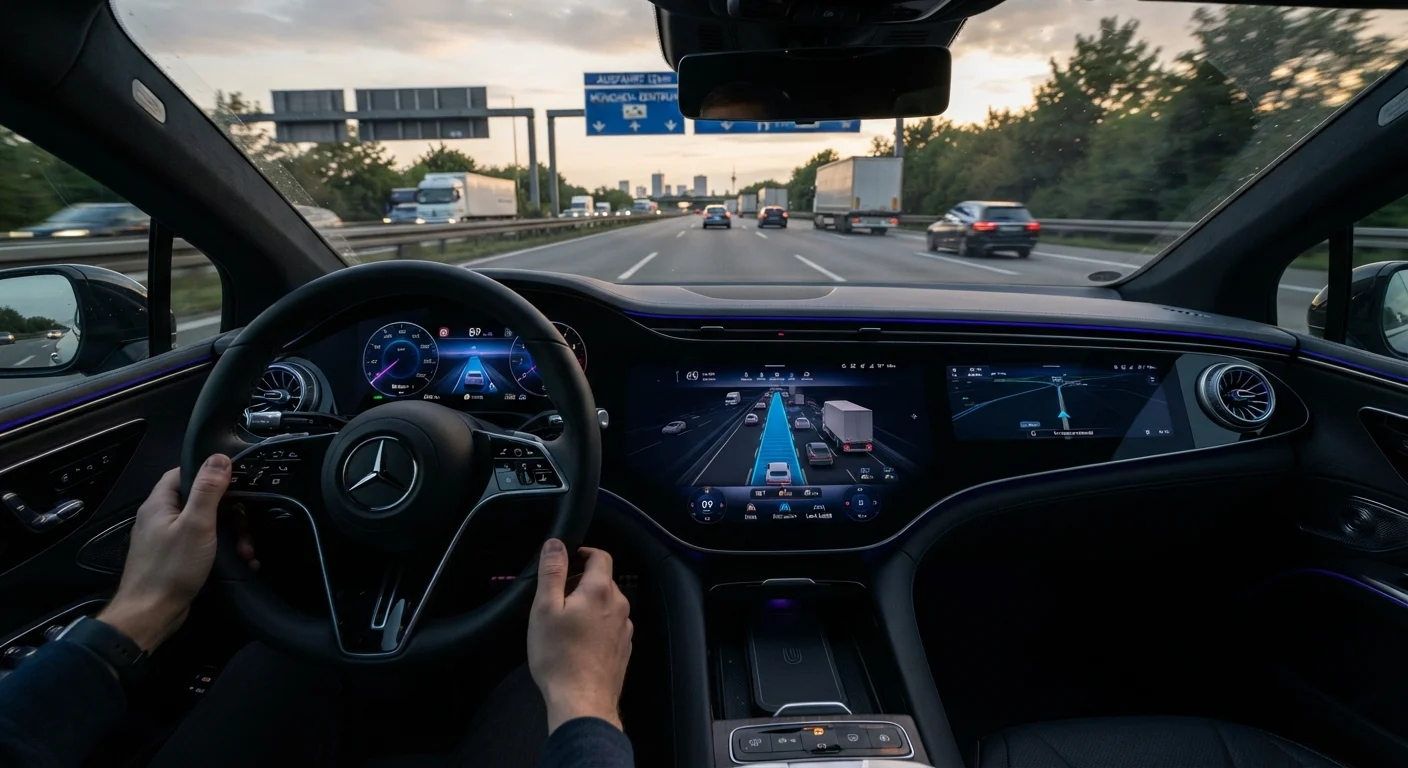
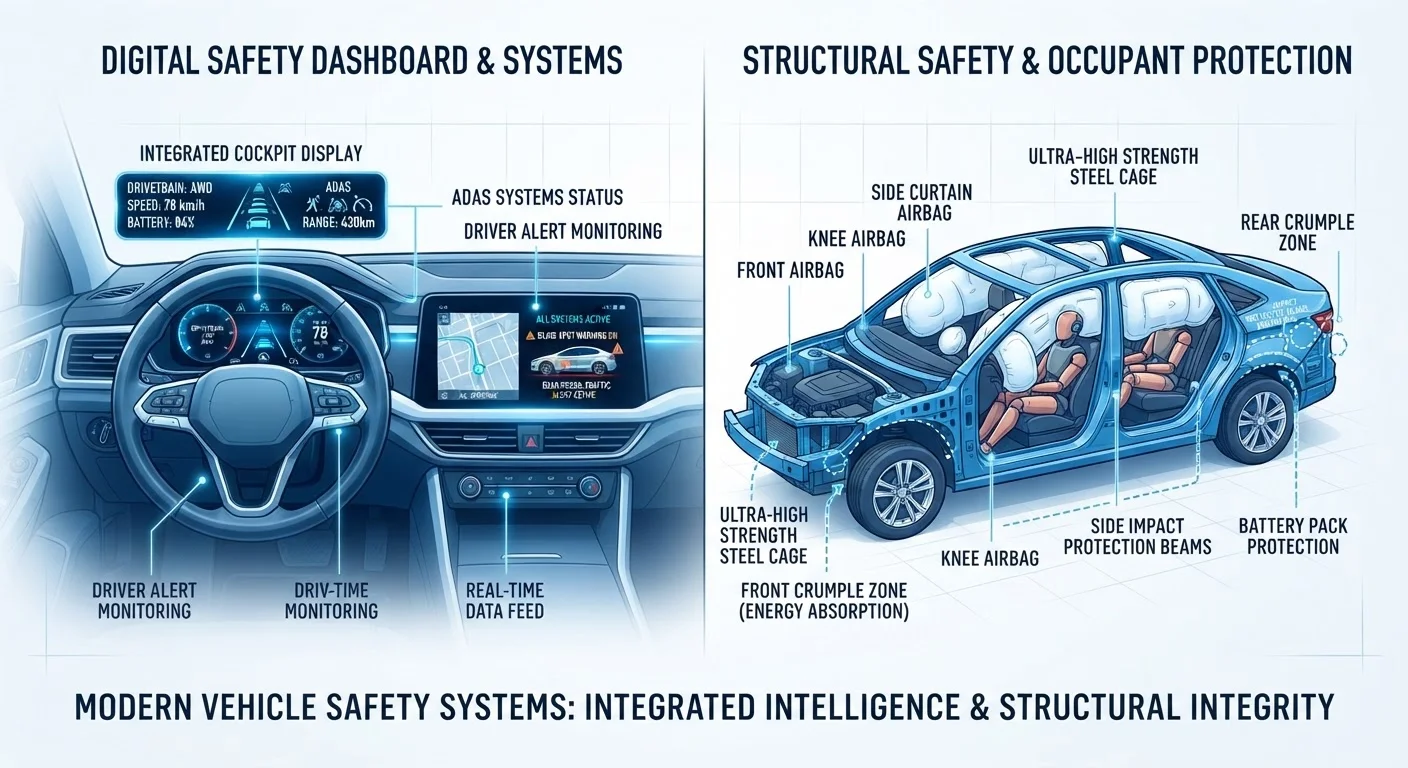
Modern vehicles increasingly come equipped with systems designed to assist drivers: automatic emergency braking, lane-departure warnings, and adaptive cruise control, among others. These tools can meaningfully reduce crash frequency - but they carry a critical caveat.
Driver-assistance systems are built to operate within defined parameters and can fail or misinterpret situations. Relying on technology as a substitute for attention is a documented risk pattern. The safer approach is to treat these systems as a backup layer that works best when paired with defensive habits already in place.
Our primer on adaptive cruise control and autonomous emergency braking explains what each system does and, importantly, what it cannot do. Similarly, understanding active versus passive safety systems helps drivers recognize that crash prevention and crash survivability are two different design goals.
Situational Awareness Is the Foundation
All the habits above share a common root: situational awareness - knowing what is happening around your vehicle at any given moment. This includes the behavior of other drivers, road surface conditions, pedestrian activity, and your own physical and mental state.
Situational awareness degrades when drivers are tired, stressed, or on familiar routes where routine dulls attention. Night driving is a particularly high-risk environment because darkness narrows both vision range and the brain's ability to judge speed and distance accurately. Our article on night driving habits covers evidence-informed techniques specific to that context.
Before any of these habits can take effect, the basics must be right: seat position, mirror alignment, and hand placement all affect how much control you have in a sudden maneuver. Getting those fundamentals right is the logical starting point for any driver serious about safety.
“The goal of defensive driving is not to assume everyone else is a bad driver - it's to stay prepared for the possibility that they might make a mistake, just as you sometimes do.”
— National Safety Council, Nonprofit organization focused on eliminating preventable deaths and injuries
Defensive driving isn't a technique reserved for adverse conditions or high-traffic situations. It's a standard of engagement with the road - one that applies on the clearest day and the most familiar commute. Treating every drive as one that deserves full attention is the simplest summary of what defensive driving actually means.