What Are Driver-Assistance Systems?
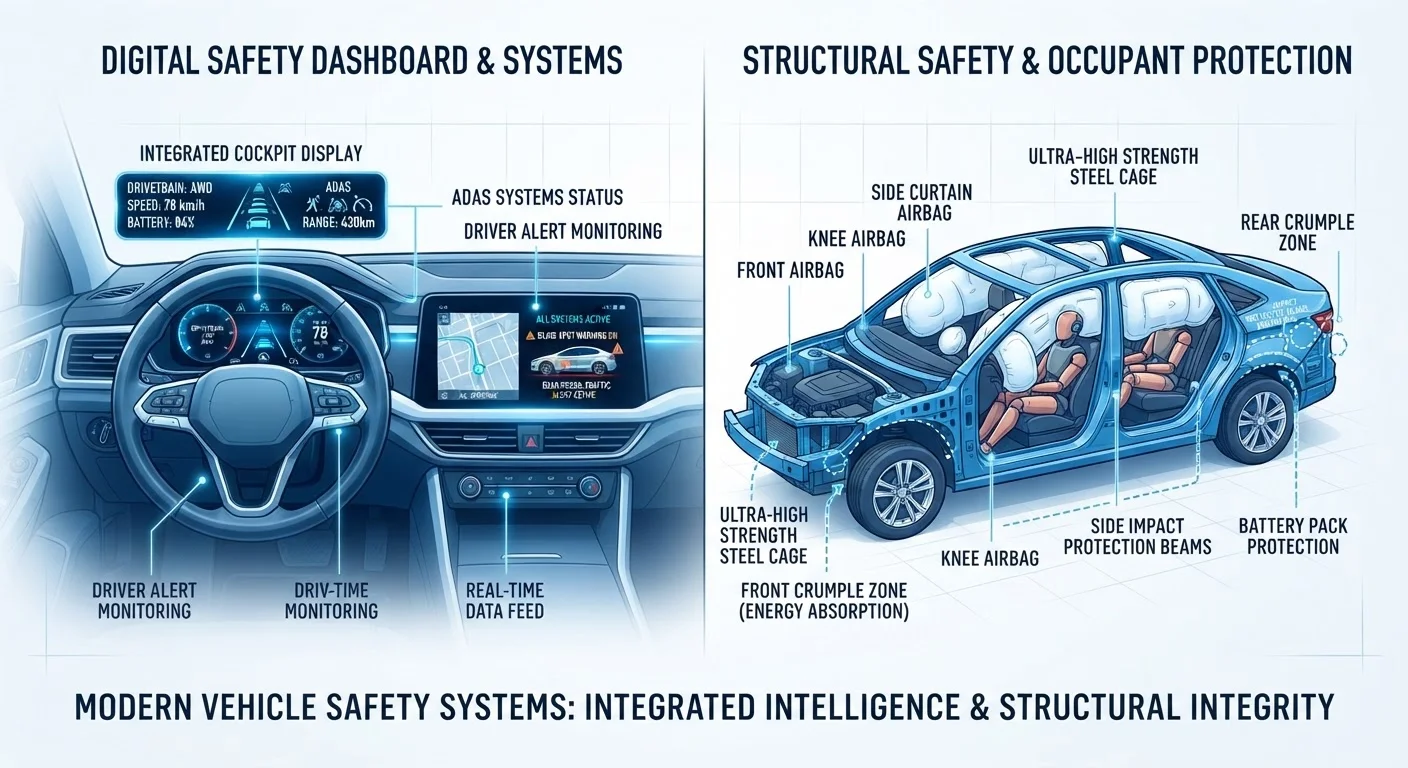
Advanced Driver-Assistance Systems - commonly abbreviated as ADAS - are electronic technologies built into modern vehicles to support the driver in monitoring their environment and responding to hazards. They are neither fully autonomous nor simply passive; they actively intervene in steering, braking, or acceleration under specific conditions.
Three of the most widely deployed systems are Adaptive Cruise Control (ACC), Lane-Keeping Assist (LKA), and Autonomous Emergency Braking (AEB). Together, these form the foundation of the safety technology you'll find on most vehicles produced in recent years. Understanding how each works - and, critically, where each falls short - is part of being a responsible modern driver. See our guide to active and passive safety for broader context on how these systems fit into vehicle safety design.
ADAS
Advanced Driver-Assistance Systems - electronic features built into vehicles that monitor the driving environment and can automatically take action to warn or assist the driver.
Adaptive Cruise Control (ACC)
A cruise control system that uses sensors to maintain a set following distance behind the vehicle ahead, automatically adjusting speed as traffic changes.
Lane-Keeping Assist (LKA)
A system that detects lane markings using a camera and intervenes - via steering input or alerts - if the vehicle begins to drift out of its lane unintentionally.
Autonomous Emergency Braking (AEB)
A system that detects an imminent collision and automatically applies the brakes if the driver does not respond in time, with the goal of reducing crash severity.
SAE Level 2 Automation
A classification indicating that a vehicle can handle both steering and speed simultaneously in limited conditions, but the human driver must remain alert and in control at all times.
Sensor Calibration
The process of precisely aligning or adjusting a vehicle's cameras and radar units so they measure accurately - required after repairs that affect sensor position or angle.
Adaptive Cruise Control Explained
Traditional cruise control holds a fixed speed you set. Adaptive Cruise Control goes further: it uses forward-facing radar, cameras, or a combination of sensors to monitor the vehicle ahead and automatically adjust your speed to maintain a safe following distance.
If traffic slows, ACC reduces your speed. When the road ahead clears, it accelerates back toward your set speed. Many systems allow you to select the following gap - typically expressed in seconds of following time - giving you some control over how conservatively the system behaves.
Stop-and-go ACC, found on more recent vehicles, can bring the car to a complete halt in slow traffic and resume when the vehicle ahead moves. Basic ACC, by contrast, may disengage below a certain speed, requiring you to take manual control. If you're evaluating a vehicle, this distinction matters - consult the car-buying guidance for what to look for when comparing safety features.
Lane-Keeping Assist and Lane Centering
Lane-Keeping Assist (LKA) uses a forward-facing camera to detect painted lane markings. When the system detects the vehicle drifting toward a lane boundary without a turn signal active, it intervenes - either with a gentle steering input, a vibration of the steering wheel, or an audible alert, depending on the variant.
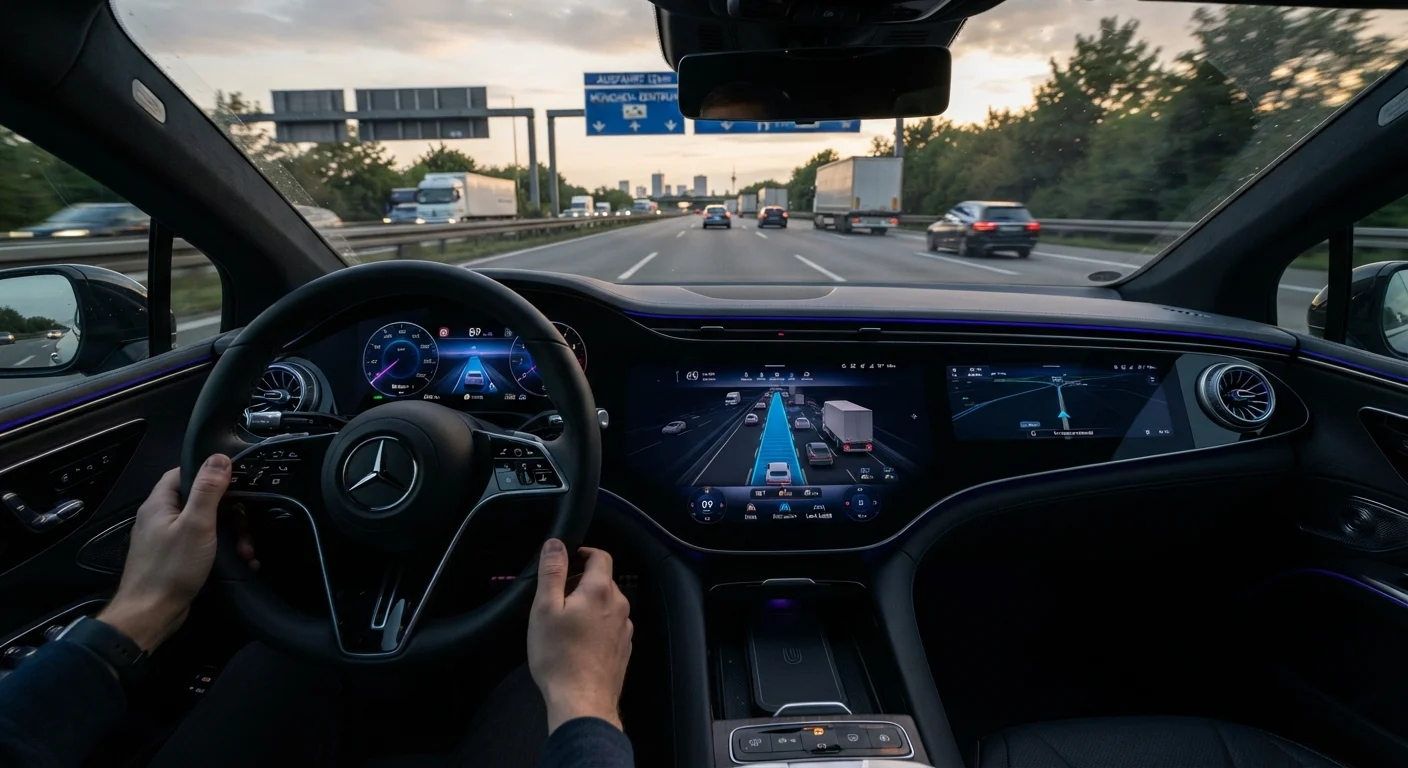
A more advanced version, sometimes called Lane Centering or Lane-Keeping Centering, goes beyond merely preventing drift: it actively steers the vehicle toward the middle of the lane and can maintain that position continuously. This is the feature commonly combined with adaptive cruise control in what manufacturers market as semi-autonomous driving modes.
It's worth noting that these systems perform camera-based lane detection, meaning they depend entirely on visible, well-defined lane markings. Adverse weather conditions such as heavy rain, snow, or fog can impair or fully disable lane-assist functionality - the system will typically warn you when it's no longer able to operate reliably.
Autonomous Emergency Braking
Autonomous Emergency Braking (AEB) is widely considered the most consequential safety technology in current production vehicles. Using radar, cameras, or lidar - or a combination - the system monitors the road ahead for potential collision threats: stationary vehicles, decelerating traffic, pedestrians, and increasingly, cyclists.
When the system calculates that a collision is imminent and the driver has not responded, it first issues a warning. If no corrective action is taken within the available reaction window, the system applies the brakes automatically, reducing speed as much as physics and stopping distance allow.
At low speeds - in parking lots or slow urban traffic - AEB can often prevent a collision entirely. At highway speeds, the physics of stopping distance typically mean the system reduces, rather than eliminates, impact severity. This reduction in impact speed, however, can still meaningfully reduce injury risk. AEB is a complement to - not a replacement for - the attentive braking habits covered in our defensive driving primer.
Test AEB in Your Own Vehicle
Many manufacturers provide controlled demonstration scenarios in their owner resources or at dealership events where you can experience how AEB feels when it activates. Familiarizing yourself with the system's response - the firm, automatic braking sensation - means you're less likely to be startled by it in a real situation. Check your owner's manual for how to simulate or review your specific system's behavior safely.
What These Systems Cannot Do
The single most important thing to understand about ADAS is the boundary of its competence. These systems are classified under SAE Level 1 or Level 2 automation - meaning they assist a human driver, who remains legally and practically responsible for the vehicle at all times.
- ACC cannot predict the behavior of vehicles cutting in from adjacent lanes or react to hazards it cannot detect, such as stationary objects at the edge of its sensor field.
- Lane Assist cannot function without clear lane markings. It may also be confused by road construction zones with temporary or contradictory markings.
- AEB may not detect all hazard types equally - some systems have limited performance detecting cyclists or pedestrians at night, and performance varies significantly between vehicle models and manufacturers.
Sensor degradation is also a genuine concern. Dirt, ice, or damage to a camera or radar unit can reduce or disable a system without immediately obvious indication. Routine maintenance habits, including keeping sensors clean and having them inspected after any front-end work, are directly relevant to ADAS reliability.
Overreliance Is a Documented Safety Risk
Traffic safety researchers have identified 'automation complacency' - where drivers become less attentive precisely because they trust their vehicle's systems - as an emerging concern. ADAS features are designed for an engaged driver who is ready to take over instantly. If you find yourself mentally 'checking out' because the car seems to be handling things, treat that as a warning sign and re-engage your attention.
Using ADAS Safely: Practical Habits
Driver-assistance systems work best when the driver treats them as a support layer - not a substitute for engagement. The following habits help you get genuine safety value from these technologies without falling into the trap of overreliance.
- Read the manual. Every manufacturer implements ADAS differently. Your vehicle's manual explains exactly what your system can and cannot do, under what conditions it will disengage, and how to override it.
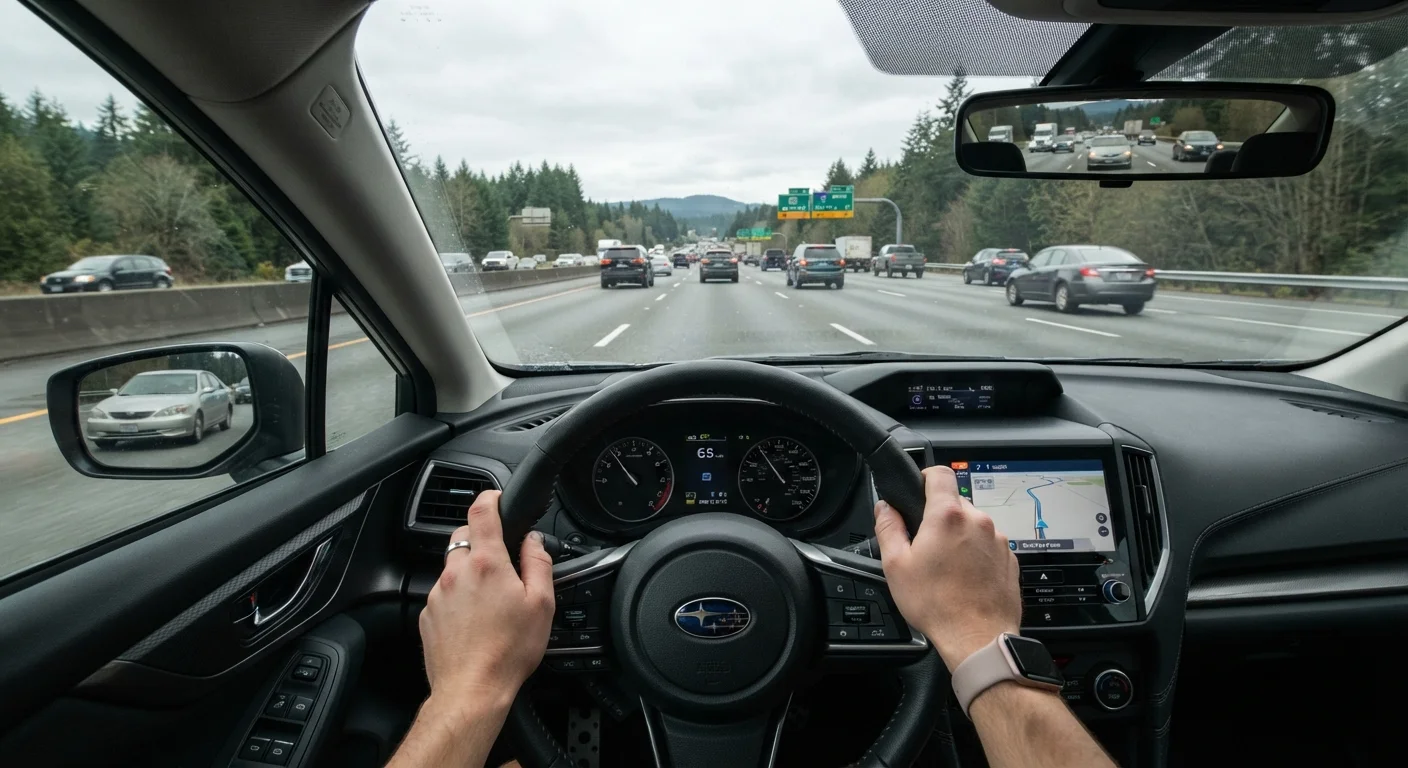
- Stay hands-on and eyes-up. Even with lane centering and ACC active, keep both hands on the wheel and your gaze on the road. Systems can disengage without warning.
- Know your weather limits. In rain, snow, or heavy glare, assume ADAS performance may be degraded. Switch to fully manual control when conditions demand it.
- After repairs, verify calibration. A windshield replacement or front-end repair may require ADAS sensor recalibration by a qualified technician before the systems function correctly again.
- Don't ignore system warnings. When your vehicle alerts you that a system is unavailable, take it seriously. These alerts exist because the system cannot operate reliably in current conditions.
Used correctly, these technologies are genuinely valuable tools. They reduce driver fatigue on long highway drives, provide a safety net during momentary lapses, and - particularly in the case of AEB - have measurable real-world crash-reduction records. They are not, however, a licence to disengage from the act of driving. For foundational habits that complement any vehicle technology, see our safer driving guide.