
What Actually Happens to Your Brain on a Long Drive
When you first pull onto a busy road, your brain is actively processing: merging traffic, speed changes, road signs, and shifting conditions. This engagement keeps your prefrontal cortex - the seat of conscious decision-making - switched on. But as miles accumulate and the scenery flattens out, that stimulation fades.
The brain is remarkably efficient. It recognises repetitive tasks and gradually hands them off to lower-level, more automatic neural processes. On a monotonous highway, steering, speed control, and lane-keeping become so routine that the conscious mind essentially clocks out while the body keeps driving. This is highway hypnosis: the road is being processed, but not by the part of your brain that would respond thoughtfully to an emergency.
Critically, this is not the same as daydreaming or being distracted by a phone. Distracted driving pulls your attention toward something else. Highway hypnosis empties it of active content altogether, leaving a kind of cognitive vacuum where automatic behaviour fills the gap.
“Monotonous driving is not a benign condition. The brain doesn't stay vigilant without stimulation - it finds ways to conserve energy, and that can happen faster than most drivers expect.”
— Dr. David Strayer, Professor of Cognition and Neural Science, University of Utah, and noted researcher in driver attention
The Conditions That Make It Worse
Not all roads are equally risky for highway hypnosis. Three factors consistently amplify the effect:
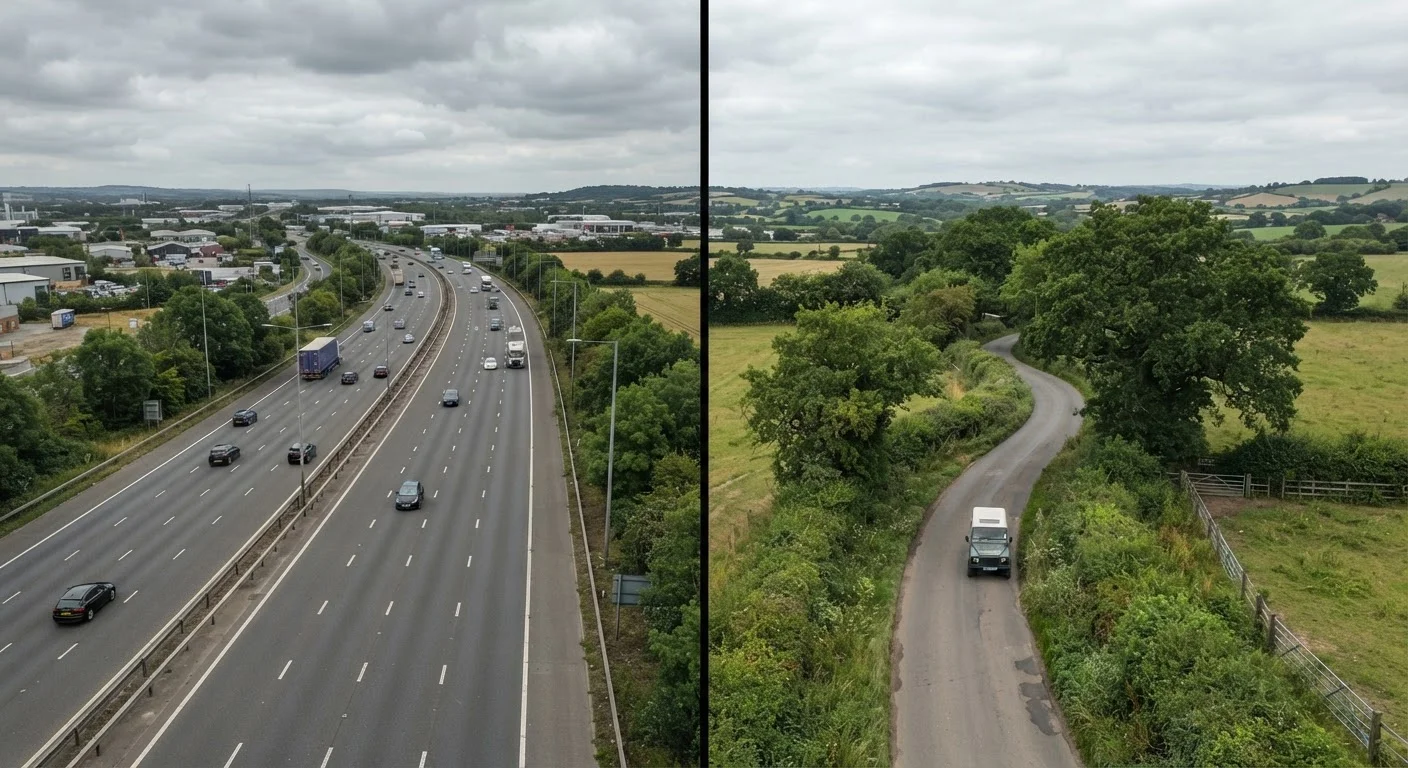
- Visual monotony: Long, straight roads with minimal variation - flat plains, featureless median barriers, unchanging weather - give the brain almost nothing to process. The less visual novelty there is, the faster awareness fades.
- Steady speed: Cruise control is convenient, but it removes one of the few active decisions a highway driver regularly makes. When your foot does nothing and the car holds a constant 65 mph, the physical feedback loop that keeps you engaged is cut.
- Time of day: The early afternoon (roughly 1-3 p.m.) and the pre-dawn hours are peak periods for drowsiness due to natural circadian dips. Highway hypnosis sets in faster during these windows.
Pre-trip sleep quality matters enormously. Arriving at the wheel already fatigued compresses the time it takes to enter a hypnotic state significantly. Think of alertness as a reservoir: highway driving drains it steadily, and you need to start full.
~20%
Fatal crashes linked to drowsy or inattentive driving
The National Highway Traffic Safety Administration (NHTSA) estimates that drowsy driving - which overlaps significantly with highway hypnosis - contributes to roughly 1 in 5 fatal crashes annually in the US.
30 min
Time before monotonous driving reduces alertness
Transport safety researchers have found that alertness levels can begin declining measurably within 30 minutes of sustained, low-stimulation highway driving, particularly in already-fatigued drivers.
2 hrs
Recommended maximum driving interval before a break
Road safety bodies including the AAA Foundation for Traffic Safety recommend taking a minimum 15-minute break at least every two hours on long drives to counter fatigue and inattention.
Recognising the Signs Before It's Too Late
The insidious aspect of highway hypnosis is that it impairs self-awareness while it's happening. By definition, you are not fully conscious of your own reduced consciousness. That's why recognising the early-stage warning signs - before the deeper trance sets in - is so important.
Watch for these indicators:
- You cannot remember the last several miles of road you drove.
- You've missed an exit or a landmark you were looking for.
- Your eyes feel heavy, unfocused, or are blinking more than usual.
- You've drifted within your lane without intending to.
- Reaction to something - a brake light, a lane merge - felt slow or delayed.
Missing exits due to reduced awareness is a distinctly different failure mode from simply misreading a sign. If you want a refresher on sign recognition, road signs you may have forgotten since your test covers the most commonly misread ones.
Practical Strategies to Stay Sharp
No single technique eliminates highway hypnosis, but combining several approaches substantially reduces the risk.
The Two-Hour Rule Is Your Baseline
Plan your route to include a genuine stopping point every two hours - not just a fuel fill-up where you stay in the car. Getting out, walking for a few minutes, and taking in different visual surroundings is enough to reset your alertness meaningfully. Build these stops into your travel time rather than treating them as delays.
Before You Leave
Prioritise sleep the night before any long drive. The National Sleep Foundation notes that adults generally need 7-9 hours; falling significantly short measurably slows reaction time. Avoid starting a long trip immediately after a full workday if you can help it.
During the Drive
- Take structured breaks: Aim for a 15-minute stop every two hours - not just for fuel, but to walk, stretch, and reset your attention system.
- Vary your mental engagement: Switch between music, podcasts, and silence. Engaging audio content requires active listening, which keeps more of your brain involved.
- Adjust your environment: Cool air, good posture, and adequate hydration all support alertness. A warm, reclined, dehydrated driver is primed for hypnosis.
- Use cruise control selectively: On very long flat stretches, periodically disengaging it forces micro-decisions that re-engage attention.
These habits pair well with the broader safety principles covered in our guide to night driving habits - many of which apply equally well to daytime fatigue scenarios.
This article is for general informational purposes only. If you have concerns about medical conditions affecting your alertness or driving ability, consult a qualified healthcare professional.