Why Species Differences Matter in Training
Training any pet is fundamentally an exercise in applied learning science. The core mechanism — behavior followed by a positive consequence is more likely to be repeated — holds across species. What changes dramatically is how each animal perceives rewards, tolerates sessions, processes cues, and signals discomfort. Ignoring these differences is one of the most common reasons training stalls.
Understanding how each species learns is not just about technique. It shapes how quickly you can expect progress, what counts as a meaningful reward, and how you'll know your pet is genuinely engaged rather than merely compliant. For a deeper look at how to tell the difference, see signs your pet is thriving in training.
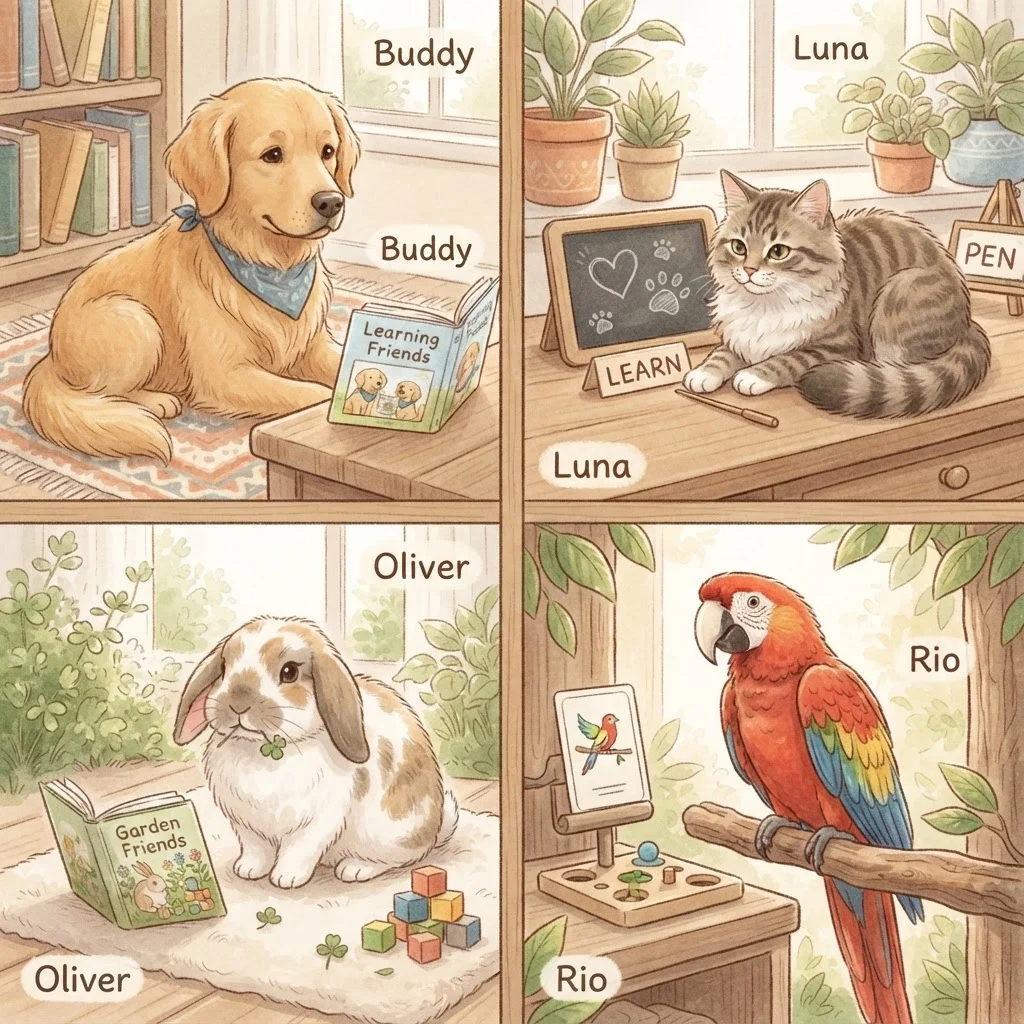
The four species covered here — dogs, cats, rabbits, and birds — are the most commonly kept household pets in the US, and they represent a wide spectrum of social structures, sensory priorities, and evolutionary histories that directly influence how training should be structured.
| Dogs | Cats | Rabbits | Birds | |
|---|---|---|---|---|
| Primary reward motivator | Food + social approval | High-value food only | Small food pieces | Preferred food items |
| Ideal session length | 10–15 minutes | 3–5 minutes | 5–10 minutes | 5–10 minutes |
| Social motivation level | High | Low to moderate | Low | Moderate (varies by species) |
| Sensitivity to aversives | Moderate | High | Very high | Very high |
| Complexity of trainable behaviors | Very high | Moderate | Moderate | High |
| Patience required from trainer | Moderate | High | High | Very high |
Dogs: Social Learners With High Flexibility
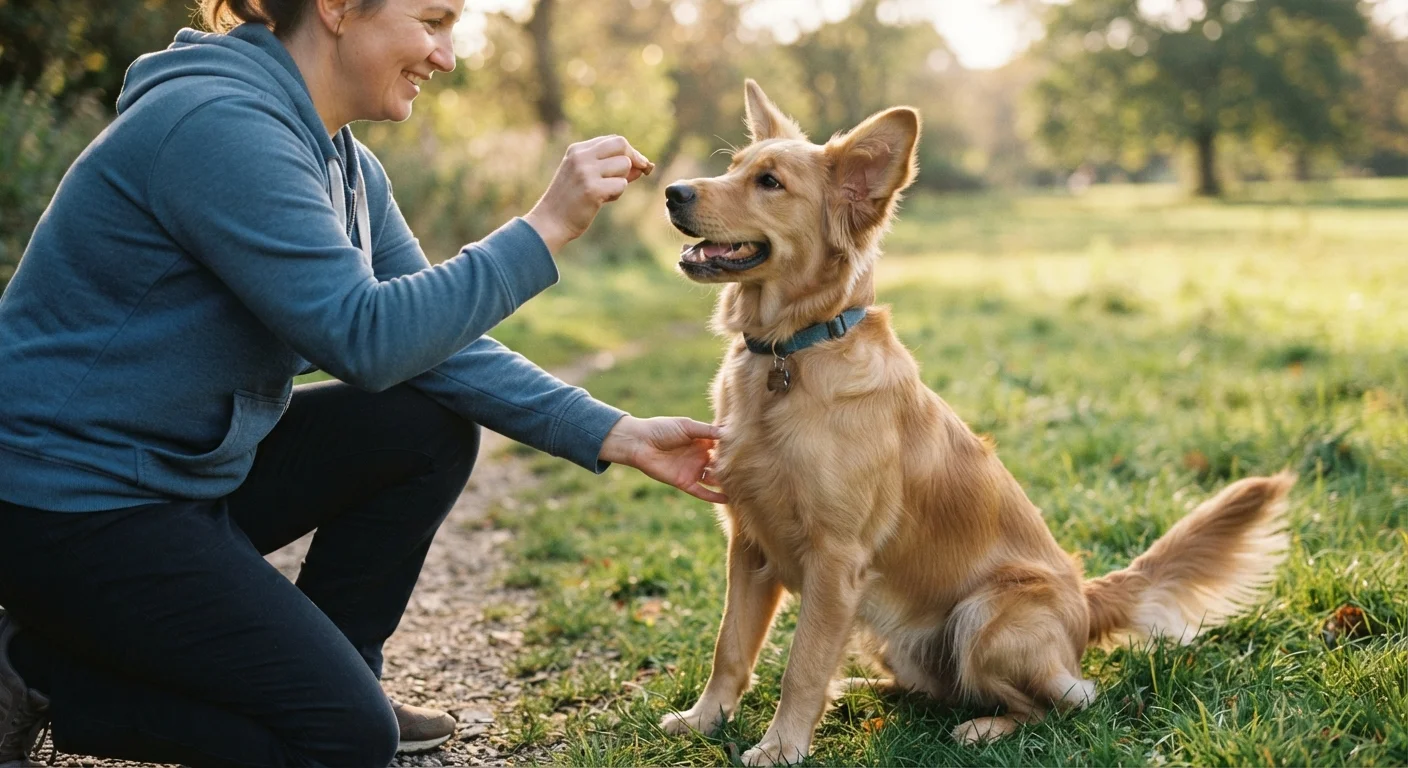
Dogs have co-evolved with humans for thousands of years, and that history shows in their training profile. They are highly attuned to human social cues — eye contact, tone, gesture — and most are strongly motivated by social approval alongside food rewards. This makes them among the most trainable domestic animals across a wide range of tasks and environments.
Sessions can run 10–15 minutes for adult dogs, and many dogs tolerate multiple sessions per day if kept upbeat and reward-rich. Verbal cues, hand signals, and clicker-based marking all work well. For a direct comparison of those marking methods, see clicker training vs. verbal cues.
One caution: dogs are highly sensitive to inconsistency. If household members use different cues or reinforce incompatible behaviors, progress fragments. Dominance-based approaches — now broadly rejected by veterinary behaviorists — can damage trust without improving behavior. The evidence behind that shift is explained in detail in reward-based training vs. dominance theory.
Cats: Independent Learners Who Set the Terms
Cats can and do learn — they simply learn on their own schedule. As solitary hunters by nature, cats are less socially motivated than dogs, which means praise alone rarely drives behavior. High-value food rewards (often something novel or strongly scented) delivered within a second of the target behavior are the most reliable reinforcer.
Sessions should be kept to 3–5 minutes, ideally before meals when motivation is highest. Cats disengage quickly when bored or pressured, and a cat that walks away mid-session is not being stubborn — it's communicating that the session has run its course. Pushing past that point typically sets training back. Many owners abandon cat training before seeing results because of this dynamic; understanding why is covered in why cat training gets abandoned too soon.
Litter box use, recall, targeting, and even basic tricks are all achievable with consistent, low-pressure sessions. Punishment — including raised voices or physical correction — is particularly counterproductive with cats and can induce lasting avoidance of both the trainer and the training space.
End Every Session on a Win
Regardless of species, always finish a training session with a behavior your pet performs reliably and confidently. This keeps the final association with the session positive, making the animal more willing to engage next time. A brief 'easy' cue before ending a session is especially important with cats and birds, who disengage fastest when sessions feel effortful.
Rabbits: Underestimated but Capable
Rabbits are frequently overlooked as training subjects, but they are intelligent, curious animals that respond well to positive reinforcement. Their primary reward currency is food — small pieces of leafy greens or herbs tend to work better than commercial treats. Physical affection is rarely a strong motivator and should not substitute for food rewards in early training.
Because rabbits are prey animals, they startle easily and associate negative experiences quickly and persistently. Any aversive experience during training — including being chased, restrained, or startled — can create lasting fear responses that interfere with future sessions. Keeping the environment calm and predictable is non-negotiable.
Rabbits can learn to come when called, use a litter box reliably, and navigate simple agility setups. Sessions of 5–10 minutes, once or twice daily, work well for most rabbits. Progress is slower than with dogs, but the bond that develops through patient, positive training is real and measurable in how confidently a rabbit approaches and interacts with its owner.
Birds: Vocal and Behavioral Complexity
Birds — particularly parrots, cockatiels, and corvid-adjacent species — are among the cognitively most complex animals kept as pets. Some species can learn to associate words with meanings, solve multi-step problems, and generalize learned behaviors to new contexts. This ceiling makes bird training uniquely rewarding but also uniquely demanding.
Positive reinforcement using preferred food items (species-appropriate; consult an avian veterinarian for guidance) is the standard approach. Target training — teaching a bird to touch a stick with its beak — is an effective starting point that underpins many subsequent behaviors. Sessions should be brief, typically 5–10 minutes, and always ended while the bird is still engaged.
Birds are highly sensitive to the emotional tone of interactions. Frustration, loud voices, or forced handling can produce feather-destructive behaviors and lasting avoidance. Reading body language — feather position, pupil dilation, posture — is essential. Consistency across all people interacting with the bird is critical, making household-wide alignment an important factor. For a practical check on whether your approach is consistent, the pet training consistency audit is a useful tool regardless of species.
This article provides general educational information about animal training and is not a substitute for guidance from a qualified veterinarian or certified animal behaviorist. For concerns about your pet's behavior or health, consult a licensed professional.