
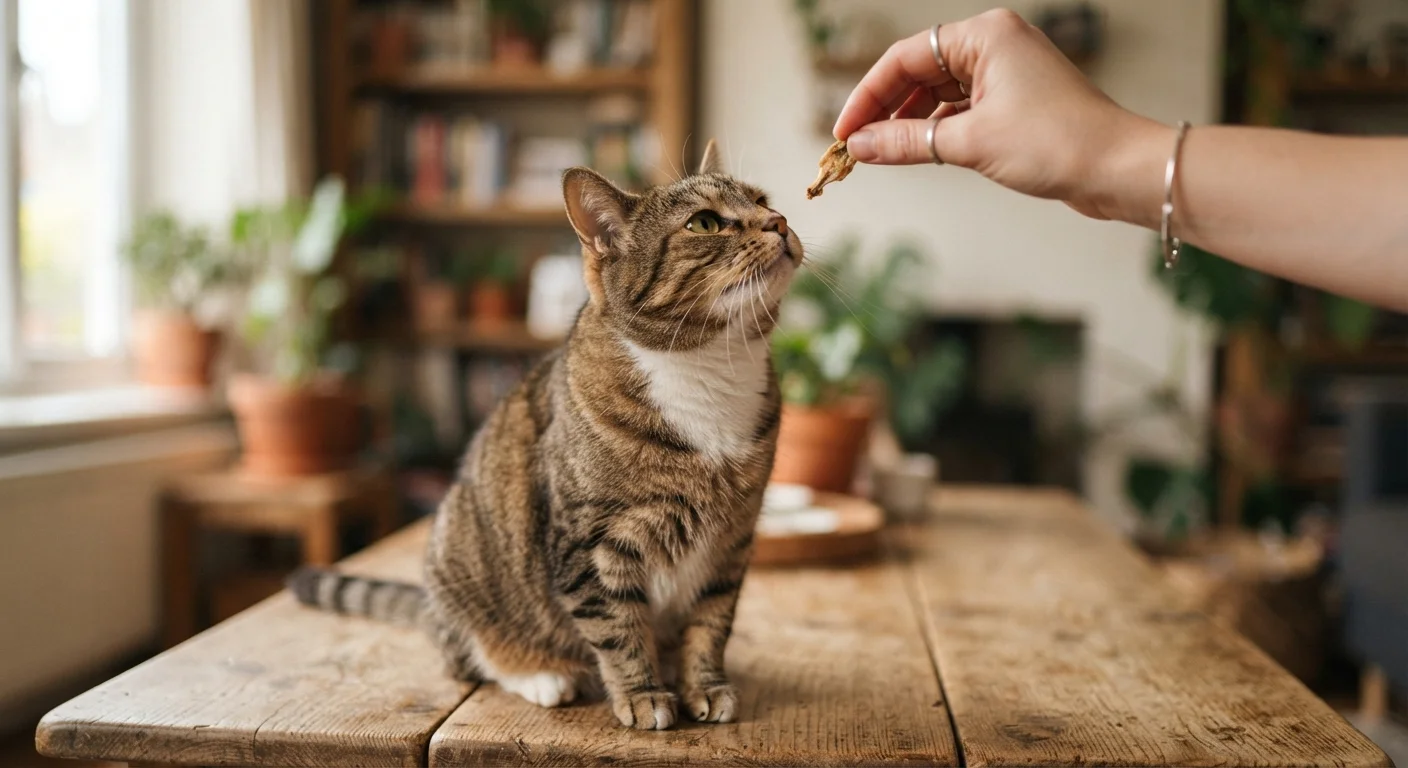
Why Cat Training Has a Reputation for Being Impossible
Cats are widely assumed to be untrainable — too independent, too indifferent, too feline. But that reputation owes more to mismatched expectations and flawed technique than to any inherent stubbornness in the animal. Research in animal behavior consistently shows that cats are capable of associative learning, meaning they can link a specific behavior to a specific outcome just as reliably as dogs can.
The difference lies in motivation. Cats are not socially motivated to please the way many dogs are. They respond to what benefits them — which means training works when it is structured around what the individual cat finds genuinely rewarding. When owners apply dog-centric methods, or simply repeat commands louder and longer, failure is nearly guaranteed. Understanding how cats actually learn is the starting point for any real progress. See how training principles shift across species in our guide to training across different pet species.
The Most Common Mistakes That Stall Progress
The mistakes below are not signs that a cat is untrainable. They are correctable gaps in approach that, once identified, often produce noticeable improvement within days.
Running training sessions that are too long.
Why it happens: Owners often assume more repetition equals faster learning, borrowing the logic of human skill practice.
Rewarding too late after the desired behavior occurs.
Why it happens: Humans naturally pause to process before responding, but cats form associations in a very narrow time window — typically within one to two seconds of the behavior.
Using rewards the cat finds only mildly interesting.
Why it happens: Owners often default to the cat's regular kibble or a generic treat, not realizing that motivation is highly individual and context-dependent.
Inconsistent cues or rules across different people in the household.
Why it happens: Family members often use different words, gestures, or rules for the same behavior without coordinating, which creates confusion for the animal.
Moving to harder behaviors before the foundation is solid.
Why it happens: Progress on early behaviors can feel quick, leading owners to advance too fast before the cat has fully generalized the simpler skill.
If you are unsure whether everyone in your household is reinforcing the same behaviors, the pet training consistency audit is a useful diagnostic tool.
What Happens When You Use Punishment Instead of Redirection
Aversive responses — spraying water, shouting, physical deterrents — are among the most common reasons cat training stalls permanently. From the cat's perspective, punishment rarely communicates what the correct behavior is. It communicates that the owner is unpredictable or threatening, which erodes exactly the trust that training depends on.
Punishment Damages the Training Relationship
Even mild aversive responses — a loud noise, a spray bottle, or a sharp "no" — can cause a cat to associate you, or the training environment, with something unpleasant. Once that association forms, the cat may avoid the situation entirely rather than trying different behaviors. Redirection to an appropriate alternative, paired with positive reinforcement when the cat takes it, is a far more durable strategy.
A cat that has learned to associate training moments with discomfort will begin avoiding interaction altogether. This can look like aloofness or stubbornness, but it is more accurately described as a learned response to an unsafe environment. For a detailed look at what animals actually take from punitive responses, see our explainer on what pets learn from punishment and why it backfires.
Building Momentum Before You Think You Need To
One of the subtler reasons training gets abandoned is that owners wait for a problem behavior before starting. Training introduced reactively — after a cat has already scratched furniture for months or refuses the carrier — faces a much steeper hill than training started proactively as part of everyday interaction.
Short daily sessions of two to three minutes, built around a behavior the cat already performs naturally (like sitting or touching a target), create a positive association with the training process itself. Once that foundation exists, shaping more complex behaviors becomes significantly easier. Knowing how to recognize genuine engagement versus mere compliance helps you calibrate whether sessions are working or need adjustment.
2–5 min
Optimal cat training session length
Animal behavior specialists generally recommend keeping feline training sessions very short to maintain attention and end on a positive note.
1–2 sec
Window for effective reward timing
Behavioral science indicates that the association between a behavior and its consequence is strongest when reinforcement occurs within one to two seconds of the action.
This article provides general educational information about animal behavior and training. It is not a substitute for personalized advice from a qualified veterinary behaviorist or certified animal trainer.