Compliance Isn't the Same as Confidence
Most pet owners measure training success by whether their pet does what's asked. But compliance alone doesn't tell the full story. A pet can sit on cue, walk on a loose leash, or return when called while operating largely out of habit, pressure, or low-level anxiety — not genuine understanding or trust.
Distinguishing between a pet that's simply complying and one that's actively thriving matters for welfare, for the strength of your bond, and for long-term reliability. Pets who engage with training as a rewarding activity are more resilient, more adaptable, and more emotionally secure than those who perform to avoid discomfort.
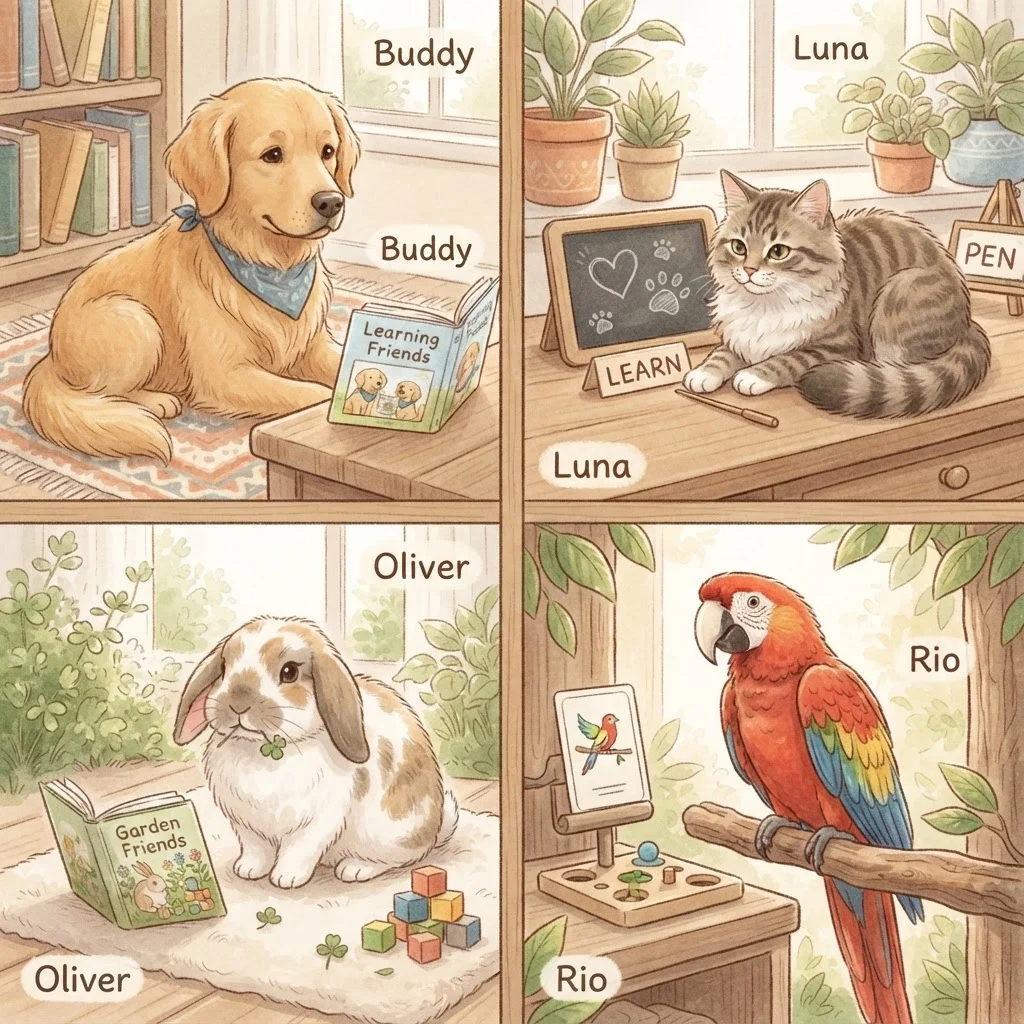
The signs below are grounded in animal learning science and behavioural observation. They apply broadly across species, though dogs are the most commonly referenced example. If you're working with a cat, rabbit, or bird, species-specific training principles shift how some of these cues present — but the underlying logic holds.
Your pet approaches training sessions voluntarily
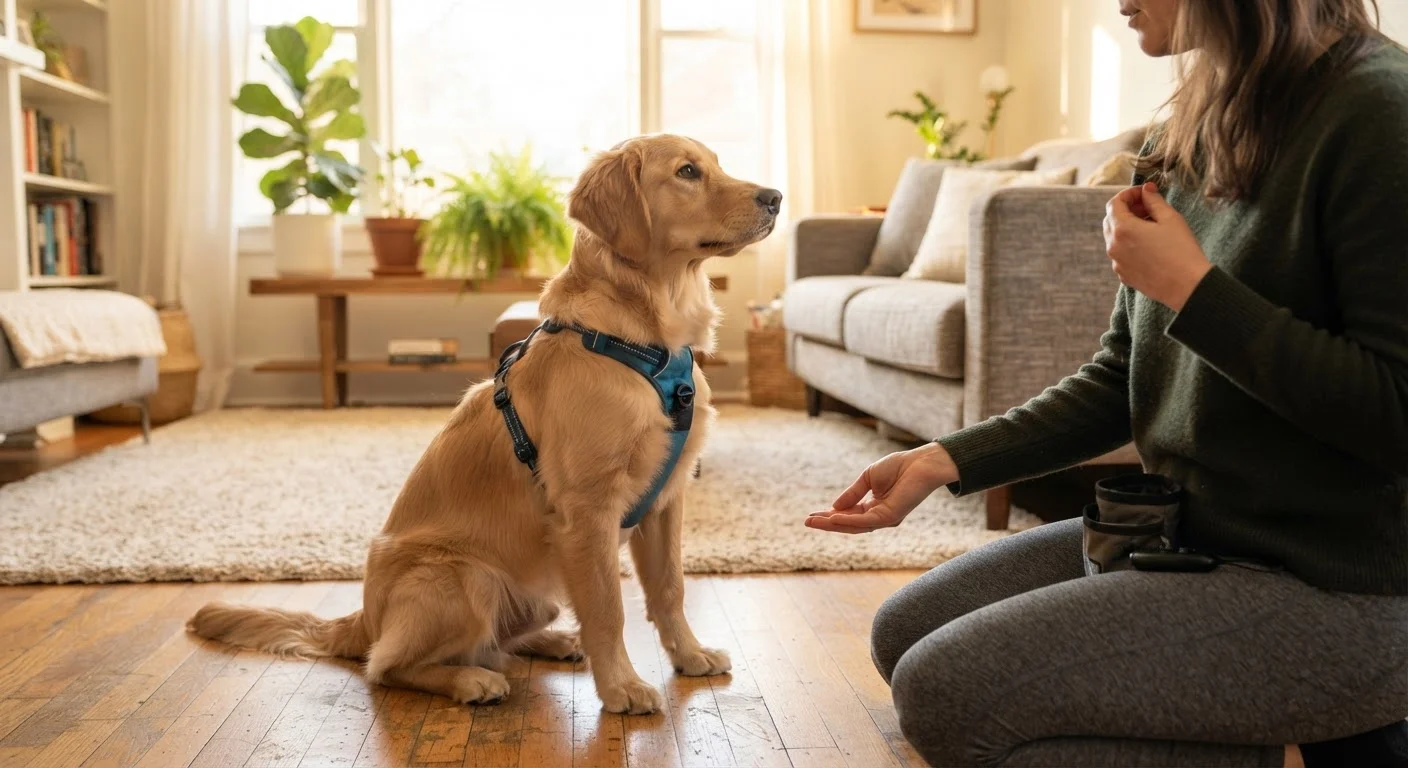
When you pick up a treat pouch, step toward your training space, or give a verbal cue that a session is starting, does your pet move toward you — or away? A pet that orients to you eagerly, offers eye contact, or physically leans in is showing that previous sessions have been reliably rewarding. This approach behaviour is one of the clearest indicators of a positive training association. Avoidance, hiding, or flat affect at the start of a session, on the other hand, suggests the experience has carried some cost — even if the session itself doesn't involve anything overtly aversive.
A pet that moves toward you when training starts has learned that engaging with you pays off.
They offer behaviours unprompted
Pets who understand that their own actions produce outcomes — a concept called operant learning — will often try things without being asked. You might notice your dog sitting automatically when you pause on a walk, or your cat touching a target stick before you've even raised it. This "offering" behaviour signals that your pet has made the connection between their choices and your response, and that they feel safe enough to experiment. It's a sign of cognitive engagement, not just conditioned response.
Offering unprompted behaviours shows your pet understands they have agency in the training exchange.
Mistakes don't cause shutdown or stress
Every pet gets it wrong sometimes. The telling moment is what happens next. A thriving learner who doesn't earn a reward will typically reset quickly — shaking off, reorienting, and trying again. A pet who shuts down, slinks away, shows whale eye (visible whites of the eyes), or becomes hypervigilant after an incorrect attempt is likely operating with some underlying anxiety about getting things wrong. Positive, reinforcement-based training builds error tolerance because mistakes simply mean no reward arrives — they carry no threat. Aversive methods often erode this tolerance, making recovery from errors harder over time.
A pet who resets quickly after mistakes has learned that errors are safe — just unrewarded.
Body language stays soft and loose throughout
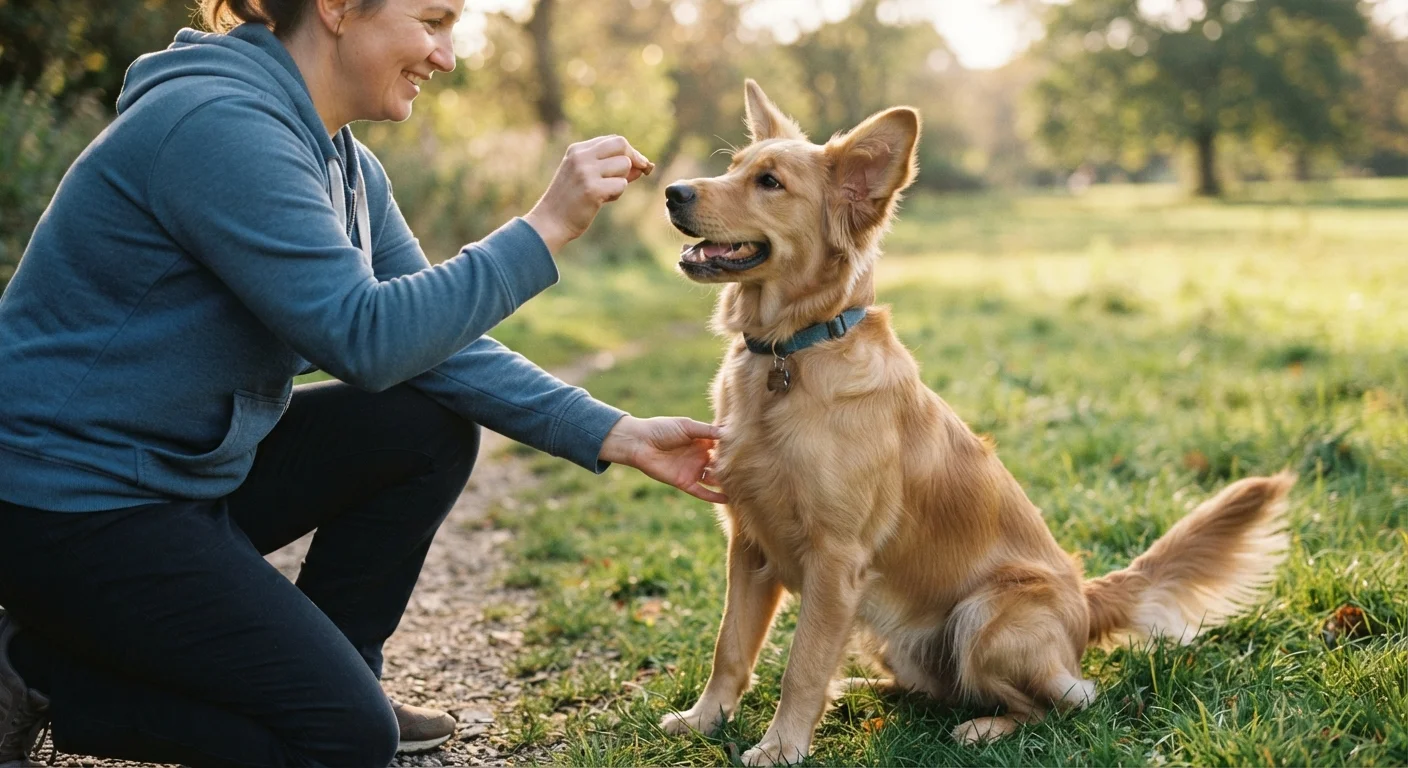
Physical posture during training reveals a lot. A pet who is genuinely comfortable will show relaxed musculature: floppy ears, soft eyes, a loosely wagging tail (in dogs), and an overall sense of ease. Contrast this with the stiff, hyper-attentive stance of a pet who is performing under pressure — tight tail, hard eye, slightly lowered head. Learning to read these signals accurately takes practice. A detailed body language reference for dogs can help you calibrate what you're seeing during sessions.
Soft eyes, loose posture, and a relaxed tail are physical signs your pet feels safe while learning.
They generalise behaviours to new environments
A behaviour that only works in one room, at one time of day, with one person, hasn't fully transferred into genuine understanding — it's context-dependent compliance. When a pet can perform a learned behaviour in a new location, around mild distractions, or with a different family member present, they demonstrate that the concept has been internalised. Generalisation is effortful to build; it requires deliberate practice across varied settings. But once present, it's a strong indicator that your pet has actually learned something, rather than just responding to a very specific cluster of environmental cues.
Generalising a behaviour to new settings shows real understanding, not location-specific habit.
Play emerges naturally between repetitions
If your pet initiates play — a play bow, a pounce toward a toy, a nudge at your hand — between training reps, that's a meaningful signal. Play requires a baseline sense of safety and positive arousal. Pets who are stressed, confused, or shut down don't play. Spontaneous playfulness during or between training bouts suggests your pet finds the session stimulating rather than taxing, and that their overall emotional state is positive. This is especially useful feedback during longer sessions or when introducing new, more challenging material.
Spontaneous play between training reps is a reliable sign your pet is enjoying the process.
What to Do If You're Seeing Mixed Signals
If your pet shows some thriving signs but not others, that's normal — most training relationships are works in progress. A useful starting point is examining your own consistency. Inconsistent cues and mixed household rules are among the most common reasons pets appear disengaged or confused, even when the owner's intentions are good.
It's also worth ruling out physical causes. A pet that's becoming withdrawn, slow to respond, or suddenly disinterested in activities they once enjoyed may be experiencing discomfort. Subtle pain signals are easy to miss and can look a lot like behavioural stubbornness or training regression. When in doubt, a veterinary check-in is always the right call before increasing training intensity.
Keep sessions short and end on success
Most pets benefit from training sessions of five to ten minutes rather than extended blocks. Ending each session with a behaviour your pet performs confidently — even something simple — leaves them on a positive note and builds the association that training is rewarding. This is especially important when introducing new or more complex behaviours.
Building a thriving training relationship is cumulative. Short, positive sessions over weeks and months produce far more durable results than intense correction-heavy approaches. The goal is a pet who chooses to engage with you — and the evidence shows that's very achievable with patience and the right methods.
This article provides general educational information about pet training and behaviour. It is not a substitute for guidance from a certified professional trainer or your veterinarian.