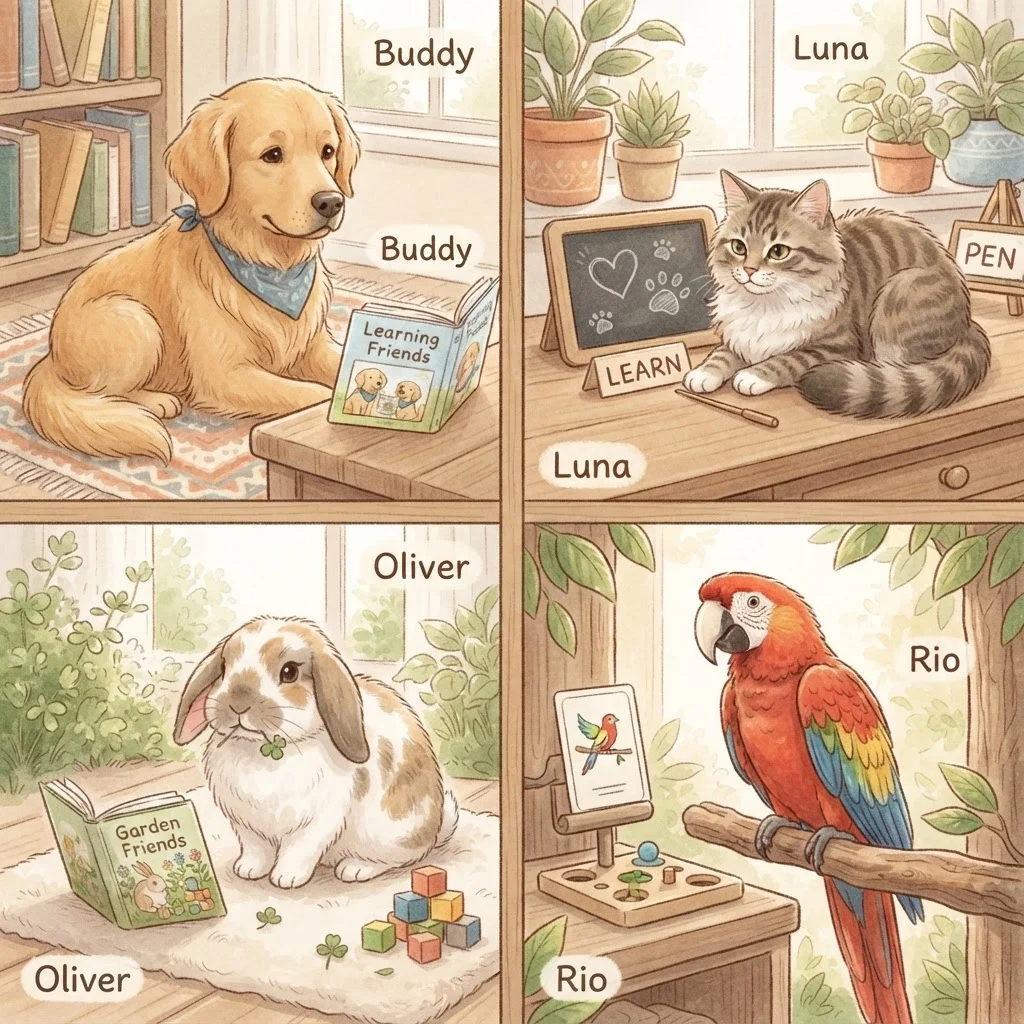
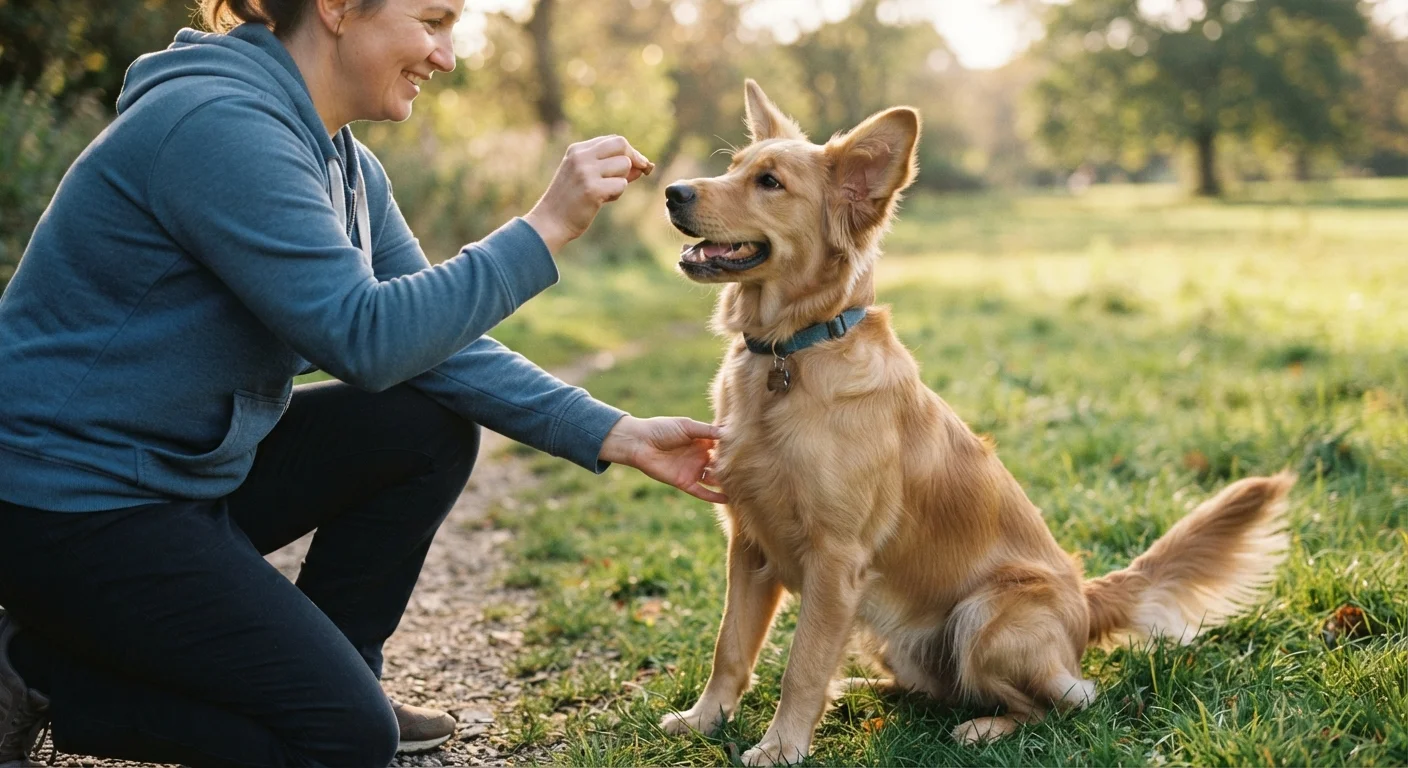
Use this checklist to assess whether your household's training habits are reinforcing good behaviour — or accidentally undermining it.
Key Takeaways
Inconsistent cues from different household members are one of the most common reasons training stalls.
Pets learn through repetition and predictability — even small daily inconsistencies accumulate into confusion.
Rewarding the same behaviour sometimes and ignoring it other times can inadvertently strengthen it or erode it unpredictably.
A household-wide training audit takes less than 30 minutes and can dramatically accelerate progress.
Positive, evidence-based methods work best when every person who interacts with the pet applies them the same way.
Why Consistency Is the Hidden Variable in Pet Training
Most pet owners put genuine effort into training — and still find themselves frustrated when progress plateaus or behaviour regresses. The culprit is rarely the pet. More often, it's subtle inconsistency in how household members apply cues, rewards, and boundaries day to day.
Animal learning research is clear: pets acquire behaviours through patterns of reinforcement. When those patterns are unpredictable — different commands for the same behaviour, rules enforced by one person but not another, rewards given inconsistently — the pet isn't being stubborn. It's doing exactly what its nervous system is designed to do: responding to what the environment actually rewards, not what you intend it to reward.
This audit is designed to surface those gaps. Work through it with everyone in your household who interacts with your pet. For multi-species households, apply it separately to each animal — different species learn differently, and what counts as a mixed signal for a dog may not apply to a rabbit or bird.
Cue Consistency
Confirm that every household member uses exactly the same verbal cue for each trained behaviour — for example, everyone says "sit" rather than a mix of "sit," "sit down," and "settle."Must
Verify that hand signals, if used alongside verbal cues, are performed identically by all family members.Must
Check that cues are given once clearly, not repeated in rapid succession — repeating a cue before the pet responds teaches the pet to wait for the second or third prompt.Must
Ensure cues are delivered in a calm, neutral tone rather than escalating in volume or intensity when the pet is slow to respond.Should
Review whether you're using a marker (a clicker or a consistent word like "yes") to precisely mark the moment correct behaviour occurs, and that all handlers use the same marker. See how clicker and verbal cue methods compare for guidance.Should
Reward Timing and Delivery
Confirm that rewards — treats, praise, or play — are delivered within one to two seconds of the desired behaviour, before the pet moves on to another action.Must
Check that the same behaviours are rewarded every time during the initial learning phase, not intermittently skipped because a reward isn't handy.Must
Audit whether unintended behaviours are being accidentally rewarded — for example, giving attention when a pet jumps up, or offering food to stop unwanted vocalising.Must
Assess whether reward value matches the difficulty of what's being asked — high-distraction environments generally call for higher-value rewards than low-distraction practice at home.Should
Verify that praise is genuine and timely, not delivered after a delay as an afterthought once the pet has already disengaged.Should
Rules and Boundaries
List every household rule for your pet — furniture access, jumping on people, begging at mealtimes — and confirm all household members enforce each rule the same way, every time.Must
Identify any rules that are applied inconsistently based on context (e.g., allowed on the sofa when one person is home but not another) and decide as a household whether to permit or prohibit the behaviour clearly.Must
Check whether guests or frequent visitors understand your pet's rules and are asked to apply them during visits.Should
Ensure that exceptions to rules — such as a special occasion where a behaviour is allowed — are actively managed rather than silently permitted, to avoid sending mixed signals.Nice to have
Session Structure and Frequency
Confirm that training sessions are short and focused — generally two to five minutes for most pets — rather than long and potentially fatiguing.Must
Check that sessions end on a successful repetition rather than a failed attempt, so the pet's last experience of each session is positive.Must
Assess whether training happens at consistent times, so the pet can anticipate engagement rather than being randomly cued throughout the day.Should
Verify that you're building skills in logical steps rather than jumping ahead before a behaviour is reliably established in a low-distraction environment.Should
Review whether all household members are participating in regular sessions or whether training falls to one person, creating skill gaps in how the pet responds to others.Should
Environment and Context
Audit whether your pet is set up to succeed before each session — not over-excited, hungry, or tired — since these states significantly affect a pet's ability to learn and focus.Must
Check that your pet's physical and emotional needs (exercise, mental stimulation, rest) are consistently met, since unmet needs often surface as the behaviours owners most want to train away.Must
Identify any environmental triggers — specific locations, people, or other animals — where your pet consistently struggles, and consider whether these need dedicated desensitisation work rather than more general training.Nice to have
What to Do With Your Audit Results
Once you've worked through the checklist, look for patterns rather than isolated failures. A single person occasionally using the wrong command is minor. A household where three people use four different words for the same behaviour is a meaningful source of confusion that will undermine even well-structured sessions.
When Inconsistency Looks Like a Behaviour Problem
Owners sometimes seek help for behaviours — persistent jumping, ignoring recall, counter-surfing — that are actually being maintained by inconsistent responses from the household. Before concluding a behaviour is difficult to change, rule out mixed signals as the primary driver. A behaviour that gets rewarded even 20% of the time is surprisingly resistant to extinction, so universal consistency across all household members matters more than most owners expect.
Prioritise the must items first — these represent the non-negotiable foundations of consistent training. Then schedule a short household conversation to align on cues, reward timing, and which behaviours are or are not permitted. Write these down and put them somewhere visible, such as on the fridge, until the habits are automatic.
If your audit reveals heavy reliance on correction-based methods, it's worth understanding how those methods land from your pet's perspective. Punishment in training is widely misunderstood, and aversive approaches often create new problems rather than solving existing ones.
For owners whose pet is progressing but whose engagement feels flat or rote, check whether training sessions are genuinely rewarding for your animal. Compliance and genuine engagement look different — learning to read the difference helps you build a real bond, not just obedience. You may also want to consider whether your current format — solo sessions at home, group classes, or one-on-one professional support — is the best fit for your pet's temperament and your goals. Both formats have real benefits and clear limitations.
This article provides general educational information about pet training principles. It is not a substitute for guidance from a qualified animal behaviourist or veterinarian, particularly if your pet displays signs of fear, aggression, or anxiety during training.
Pets & Animals Editorial Team is the collective byline for our editorial team and contributor network. Articles published under this byline or an editorial pen name are researched, written, and reviewed according to our editorial standards for clarity, consistency, and independence before publication.
The content provided on our blog site traverses numerous categories, offering readers valuable and practical information. Readers can use the editorial team’s research and data to gain more insights into their topics of interest. However, they are requested not to treat the articles as conclusive. The website team cannot be held responsible for differences in data or inaccuracies found across other platforms. Please also note that the site might also miss out on various schemes and offers available that the readers may find more beneficial than the ones we cover.