
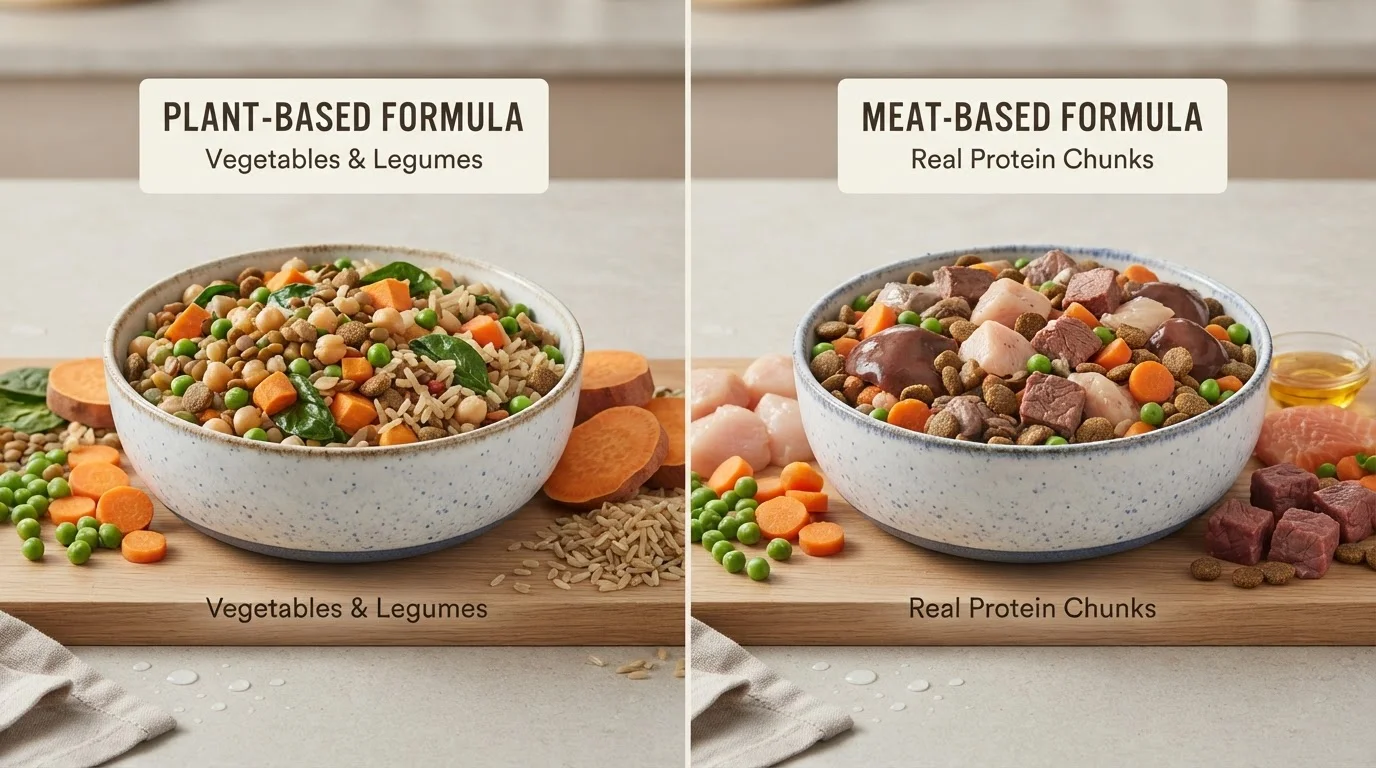
The Core Biology: Why Species Differences Matter
Understanding whether a plant-based or meat-based diet is appropriate for your pet starts with one non-negotiable fact: cats and dogs are biologically different in ways that profoundly affect their nutritional needs.
Cats are obligate carnivores. Their bodies depend on nutrients found almost exclusively in animal tissue. Taurine, arachidonic acid, vitamin A (as retinol), and niacin are among the compounds cats cannot synthesize in adequate quantities from plant precursors. Taurine deficiency in cats, for example, is linked to serious cardiac and vision problems. A plant-based diet cannot reliably meet these needs without synthetic supplementation — and even then, the safety record over a cat's full lifespan is not well established.
Dogs are omnivores. Unlike cats, dogs have evolved alongside humans for thousands of years, developing digestive enzymes — including amylase — that help them process plant starches. This doesn't mean plants are optimal for dogs, but it does mean their bodies have more metabolic flexibility. A carefully formulated plant-based diet may meet a dog's nutritional requirements, particularly when designed with veterinary nutritionist input.
What the Research Actually Shows
The science on plant-based pet diets is still emerging, and it's important to separate preliminary findings from established consensus.
Several studies have examined the health of dogs on plant-based diets. A 2022 study published in PLOS ONE found that dogs fed vegan diets were no less healthy — and in some measures appeared healthier — than those on conventional meat-based diets. However, the study relied on owner-reported health indicators rather than clinical lab data, which limits how strongly conclusions can be drawn.
On the other side, a 2019 U.S. Food and Drug Administration (FDA) investigation identified a potential link between grain-free, legume-heavy diets and dilated cardiomyopathy (DCM) in dogs. While causation was not confirmed, the inquiry highlighted that novel diet formulations — plant-based or otherwise — warrant scrutiny. The grain-free diet debate illustrates how popular trends can outpace the evidence.
For cats, the research case against plant-based diets as a primary feeding approach is considerably stronger, given the well-documented requirement for animal-sourced nutrients. Most veterinary nutrition authorities, including the American College of Veterinary Nutrition, do not recommend plant-based diets for cats.
| Plant-Based Diet | Meat-Based Diet | |
|---|---|---|
| Appropriate for cats | Not recommended; lacks essential nutrients | Well-supported by veterinary consensus |
| Appropriate for dogs | Possible with careful formulation and vet oversight | Broadly supported; strong evidence base |
| Long-term research support | Limited; emerging and mixed findings | Extensive; decades of established data |
| Risk of nutrient gaps | Higher; requires synthetic supplementation | Lower when AAFCO-compliant |
| AAFCO-compliant options available | Yes, but fewer options exist | Yes, widely available |
| Useful for protein allergies | Yes, can serve as a novel protein source | Hydrolyzed protein diets also available |
Nutritional Completeness: Reading Labels the Right Way
Regardless of whether a food is plant-based or meat-based, the most reliable indicator of safety is whether it meets standards set by the Association of American Feed Control Officials (AAFCO). Look for a statement confirming the food is "complete and balanced" for your pet's life stage — this means it has been formulated or tested to meet established nutrient profiles.
Marketing language — "natural," "holistic," "human-grade" — carries no regulated nutritional meaning and tells you nothing about whether a diet is complete. A practical checklist for evaluating pet food can help you look past the packaging to what actually matters.
Ask for Feeding Trial Data
When evaluating any pet food — plant-based or meat-based — ask whether it has passed AAFCO feeding trials rather than simply being formulated to meet nutrient profiles. Feeding trials test how animals actually absorb and use nutrients from the food, which formulation alone cannot confirm. Your veterinarian can help you interpret this information.
If you're considering a plant-based diet for your dog, ask whether the food has undergone AAFCO feeding trials (not just formulation on paper) and whether a board-certified veterinary nutritionist was involved in its development. These are meaningful quality signals.
Making an Informed Decision for Your Pet
There is no universal answer to which diet type is better — context determines appropriateness. A dog with a confirmed meat protein allergy may genuinely benefit from a plant-based alternative. A cat, regardless of the owner's preferences, requires animal-sourced nutrients and should not be placed on a purely plant-based diet without close veterinary supervision and regular monitoring.
Before switching diets, consider requesting bloodwork to establish a baseline and schedule a follow-up several months after any change. Transitioning your pet to a new food gradually also reduces the risk of digestive upset during the adjustment period.
For broader context on your pet's overall health, explore the resources available through Pet Health & Care.
This article is for general informational purposes only and does not constitute veterinary or nutritional advice. Always consult a licensed veterinarian or board-certified veterinary nutritionist before making significant changes to your pet's diet.