
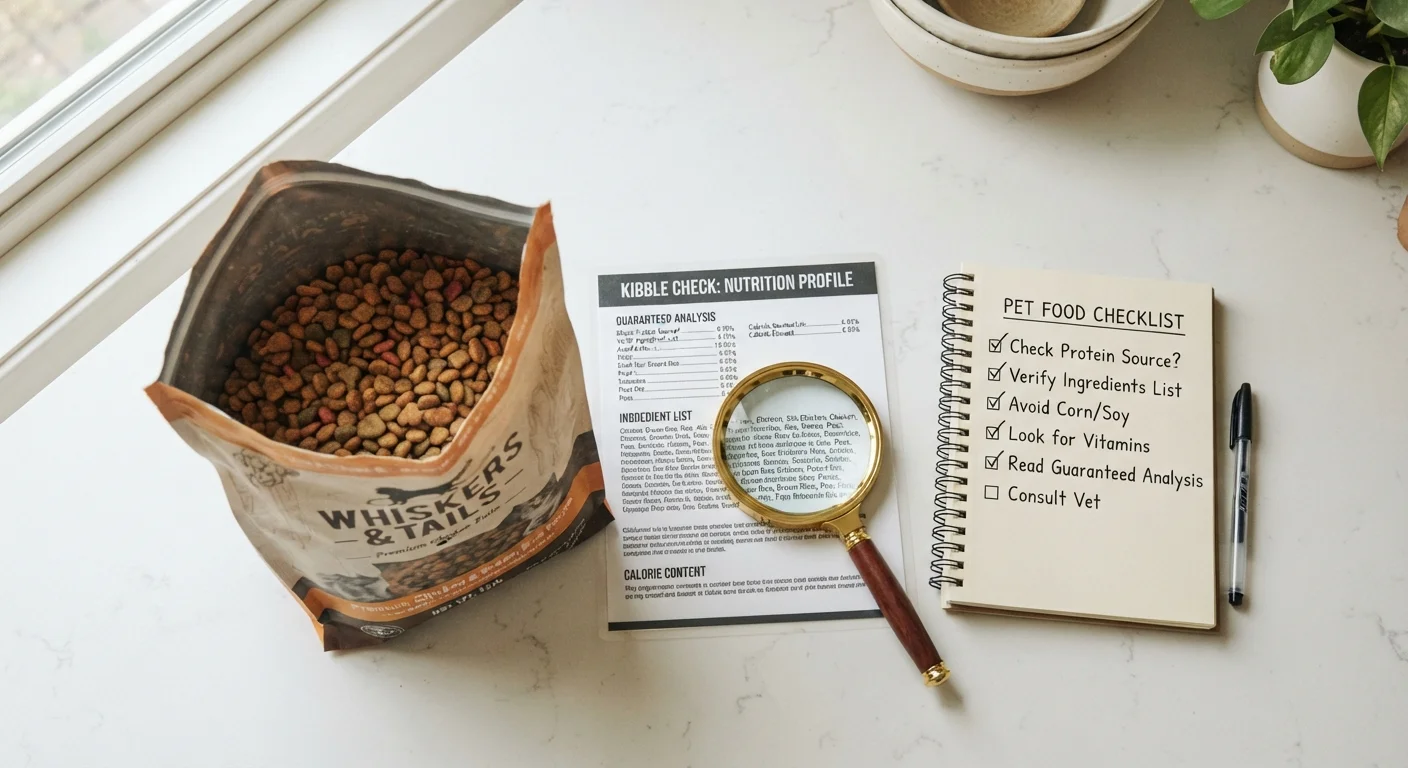
Why Evaluating Pet Food Takes More Than Reading the Front of the Bag
Pet food marketing is sophisticated. Front-of-pack language is designed to appeal to owners, not to communicate nutritional science. Phrases like 'ancestral diet,' 'superfood formula,' and 'protein-rich' are largely unregulated and tell you very little about whether a food actually meets your pet's requirements.
The good news: there is a structured, evidence-grounded way to assess any pet food before it goes in your pet's bowl. This checklist walks you through the key checkpoints — from regulatory compliance and ingredient analysis to manufacturer credibility and how to monitor your pet's response after switching.
Before diving into labels, it helps to have a solid grounding in the fundamentals. Our introduction to pet nutrition covers macronutrients, life-stage needs, and label literacy in accessible terms.
Marketing Terms Are Not Regulatory Guarantees
Words like 'natural,' 'holistic,' 'premium,' and 'human-grade' have limited or no standardized regulatory definitions in pet food labeling. A food bearing these terms is not automatically nutritionally superior or safer. Focus your evaluation on the AAFCO statement, ingredient list, and manufacturer transparency rather than front-of-pack claims.
Grain-Free Does Not Mean Nutritionally Complete
Grain-free diets have been the subject of ongoing FDA investigation into a potential link with dilated cardiomyopathy (DCM) in dogs — though research is still evolving and no definitive causal relationship has been confirmed. If you are considering a grain-free food, discuss the current state of evidence with your veterinarian before making a switch.
Run through this checklist methodically — the grouped format below is designed to be used sequentially, though the most important step is always a conversation with your veterinarian.
Tools You'll Need
Most of these checks require nothing more than the food packaging, an internet connection, and about 20–45 minutes. A few optional tools can make the process more thorough.
FDA Pet Food Recall Database
Use the FDA's publicly searchable database to check a manufacturer's recall history before committing to a new food.
AAFCO Official Website
Reference AAFCO's published standards and definitions to understand nutritional adequacy claims and ingredient terminology.
Veterinary nutritionist directory (ACVN.org)
Find board-certified veterinary nutritionists (DACVNs) who can provide tailored dietary assessments for your pet.
Feeding transition log (notebook or app)
Track your pet's response — stool quality, energy, appetite — during the 7–10 day diet switch for accurate reporting to your vet.
The Evaluation Checklist
Work through each group in order. The must items are non-negotiable quality checks; should items are strongly recommended; nice-to-have items add an extra layer of diligence when time allows.
Label & Regulatory Review
Ingredient List Analysis
Manufacturer Credibility
Nutritional Fit for Your Pet
Transition & Monitoring
Professional Input
If your pet is a senior animal, pay particular attention to the life-stage and health-condition checks — nutritional needs shift meaningfully with age. Our article on how health needs shift in older pets explains what changes and why.
A Note on Homemade and Alternative Diets
Some owners turn to homemade food as a way to avoid commercially processed ingredients. This approach can work, but it comes with significant nutritional complexity. Balancing vitamins, minerals, and amino acids correctly without professional guidance is genuinely difficult — and deficiencies may not be visible for months.
If you are considering cooking for your pet, read our companion piece on nutritional gaps in homemade pet diets before you start. For weight management specifically, diet quality intersects closely with portion control — a topic covered in our article on why pet obesity is a medical issue.
Always Consult Your Vet Before a Major Diet Change
This checklist is a general educational tool and is not a substitute for personalized veterinary advice. Pets with chronic conditions, food allergies, weight concerns, or life-stage transitions have specific needs that require professional assessment. Always involve your veterinarian — and where appropriate, a board-certified veterinary nutritionist — before making significant changes to your pet's diet.
This article provides general educational information about evaluating pet food and is not a substitute for advice from a licensed veterinarian or board-certified veterinary nutritionist. Always consult a qualified professional before making significant changes to your pet's diet, particularly for animals with health conditions.