
Why Homemade Diets Are Harder to Balance Than They Look
Cooking for your pet can feel like a loving, wholesome choice — and the instinct behind it is understandable. But achieving a nutritionally complete diet at home is significantly more complex than it appears. Research published in veterinary nutrition journals has found that the vast majority of home-cooked pet food recipes — including many circulated online and in popular books — fail to meet established nutrient minimums for dogs or cats.
The challenge isn't sourcing fresh ingredients. It's that pets have precise requirements for dozens of nutrients, and the interaction between ingredients, cooking methods, and bioavailability makes balance very difficult to achieve without professional guidance. Before committing to a homemade diet, it helps to understand core pet nutrition concepts so you know what your pet actually needs at each life stage.
Using an online recipe without verifying it meets AAFCO nutrient profiles.
Why it happens: Recipe sites present home-cooked pet food as straightforward, and ingredient lists look balanced to the human eye. Owners assume a recipe with protein, vegetables, and grains is automatically complete.
Omitting or guessing calcium supplementation when feeding boneless meat.
Why it happens: Calcium sources aren't always intuitive — many owners assume a varied diet naturally provides enough, or they add a small amount of dairy without knowing whether it's sufficient.
Rotating ingredients randomly to add variety without recalculating nutrient balance.
Why it happens: Owners reasonably assume that dietary variety is inherently beneficial. What works for human nutrition intuition doesn't translate directly to formulated pet diets.
Assuming cooked meat alone meets all of a cat's amino acid requirements.
Why it happens: Cats are obligate carnivores, so many owners conclude that a meat-heavy diet is automatically appropriate. The effect of cooking on taurine content is rarely considered.
Over-supplementing fat-soluble vitamins in an attempt to be thorough.
Why it happens: Owners aware of deficiency risks sometimes add multiple supplements out of caution, not realizing fat-soluble vitamins accumulate and can reach toxic levels.
The Most Commonly Missed Nutrients
Even well-researched homemade recipes tend to fall short in a predictable cluster of nutrients. Understanding which gaps appear most often can help you ask better questions when working with a veterinary nutritionist.
95%+
Home-cooked recipes failing nutrient minimums
Multiple peer-reviewed studies, including research published in the Journal of Nutritional Science, found that nearly all analyzed home-prepared dog and cat recipes were deficient in at least one essential nutrient.
40+
Essential nutrients dogs and cats require
According to AAFCO guidelines, complete and balanced pet diets must account for over 40 individual nutrients, spanning amino acids, fatty acids, vitamins, and minerals.
Calcium and Phosphorus Imbalance
Muscle meat is naturally high in phosphorus but low in calcium. Without a correctly sized calcium source — typically finely ground bone or a calibrated supplement — the calcium-to-phosphorus ratio can become dangerously skewed, particularly in growing puppies and kittens. Over time, this imbalance can contribute to bone and developmental problems.
Fat-Soluble Vitamins
Vitamins A, D, E, and K are fat-soluble and must come from specific dietary sources in appropriate amounts. Both deficiency and excess can cause harm — vitamin A toxicity from over-relying on liver, for example, is a documented risk. Vitamin D is especially difficult to calibrate because pets cannot synthesize it from sunlight the way humans can.
Zinc and Iodine
These trace minerals are frequently absent from recipes that rely heavily on common protein sources like chicken breast or ground beef without thoughtful supplementation. Zinc deficiency can show up as poor coat quality and immune dysfunction; iodine deficiency affects thyroid function.
Taurine for Cats
Unlike dogs, cats cannot synthesize taurine from other amino acids. Plain cooked meat provides some taurine, but cooking reduces its content — meaning a home-cooked cat diet without deliberate taurine supplementation can lead to serious cardiac and eye complications. Why cats need taurine and what deficiency looks like is worth reading if you feed or plan to feed a cat a home-prepared diet.
Staying Safe: Getting Professional Input
The most effective way to avoid nutritional gaps is to have a recipe formulated by a board-certified veterinary nutritionist (diplomate of the American College of Veterinary Nutrition, or ACVN). Generic recipes — even those attributed to veterinarians — are unlikely to account for your individual pet's age, health status, activity level, or breed-specific needs.
Never Rely on Visual Balance Alone
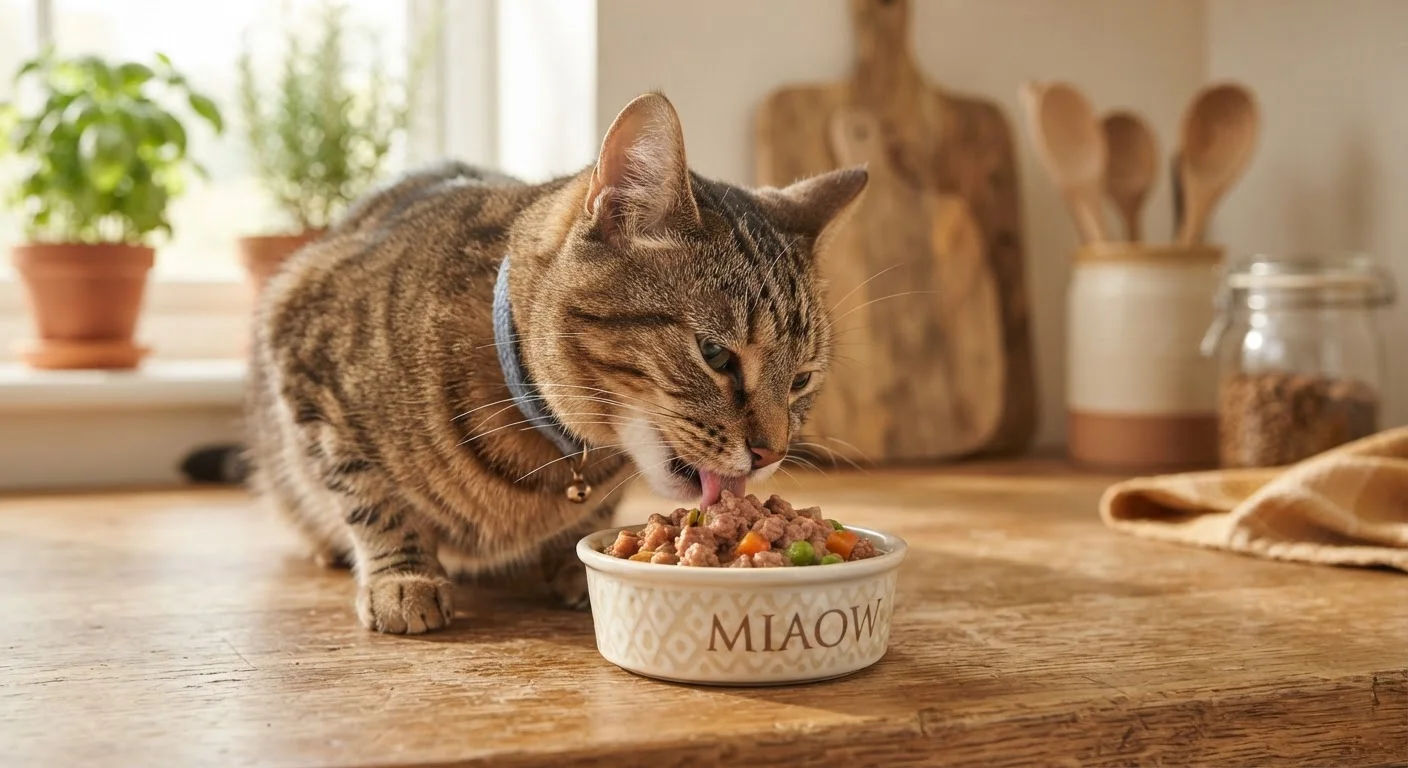
A bowl that looks varied and colorful does not indicate nutritional completeness. Critical nutrients like zinc, iodine, and vitamin D are invisible in food and can be absent even from recipes with high-quality ingredients. Nutritional deficiencies in pets may not produce visible symptoms for weeks or months, making them easy to miss until significant harm has occurred. Always have a formulated recipe verified by a board-certified veterinary nutritionist.
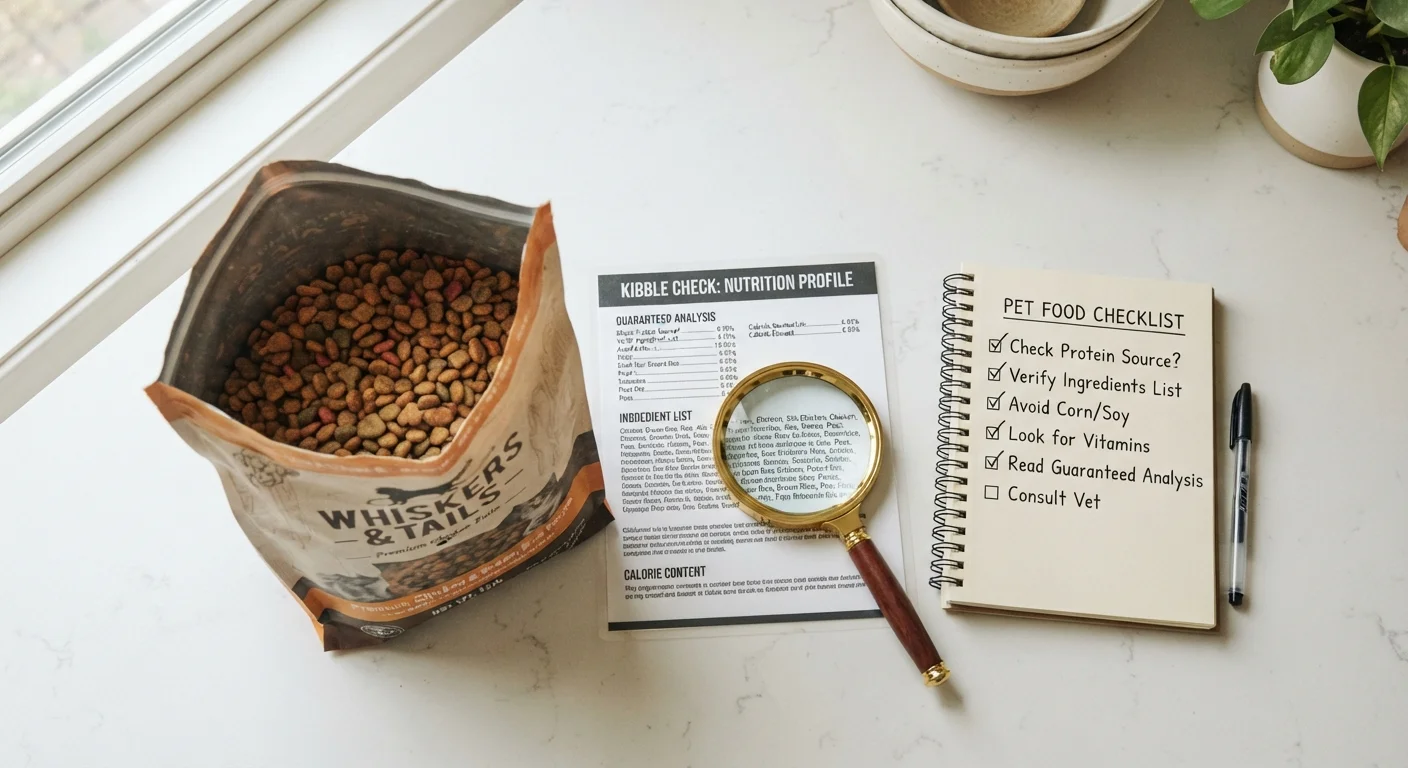
When evaluating any pet diet change, applying the same critical lens you'd use for commercial food helps. The practical checklist for evaluating a new pet food covers what to look for — including professional nutritionist involvement — whether the food is store-bought or home-prepared.
Schedule regular wellness visits with your veterinarian and ask about periodic bloodwork to catch developing deficiencies before they become clinical problems. If a fully homemade diet isn't feasible, a partial home-cooked approach combined with a nutritionally complete commercial base is an option worth discussing with your vet. For a grounded comparison of feeding formats, see dry kibble vs. wet food nutritional trade-offs.
This article is for general informational purposes only and does not constitute veterinary or dietary advice. Always consult a licensed veterinarian or board-certified veterinary nutritionist before making significant changes to your pet's diet.