Why Pet Food Marketing Language Misleads Owners
Walk down any pet food aisle and you'll encounter words designed to reassure: natural, holistic, premium, human-grade, ancestral. They feel meaningful because they borrow authority from contexts where they do mean something — human food regulation, integrative medicine, fine dining. In pet food, most carry no regulatory weight at all.
Understanding which terms have real definitions — and which are pure marketing — is one of the most practical skills a pet owner can develop. The structured information you actually need is on the label itself: the ingredient list, the guaranteed analysis, and the AAFCO nutritional adequacy statement. Our guide on what pet food labels are actually telling you walks through each of those sections in detail.
Price Does Not Equal Nutritional Quality
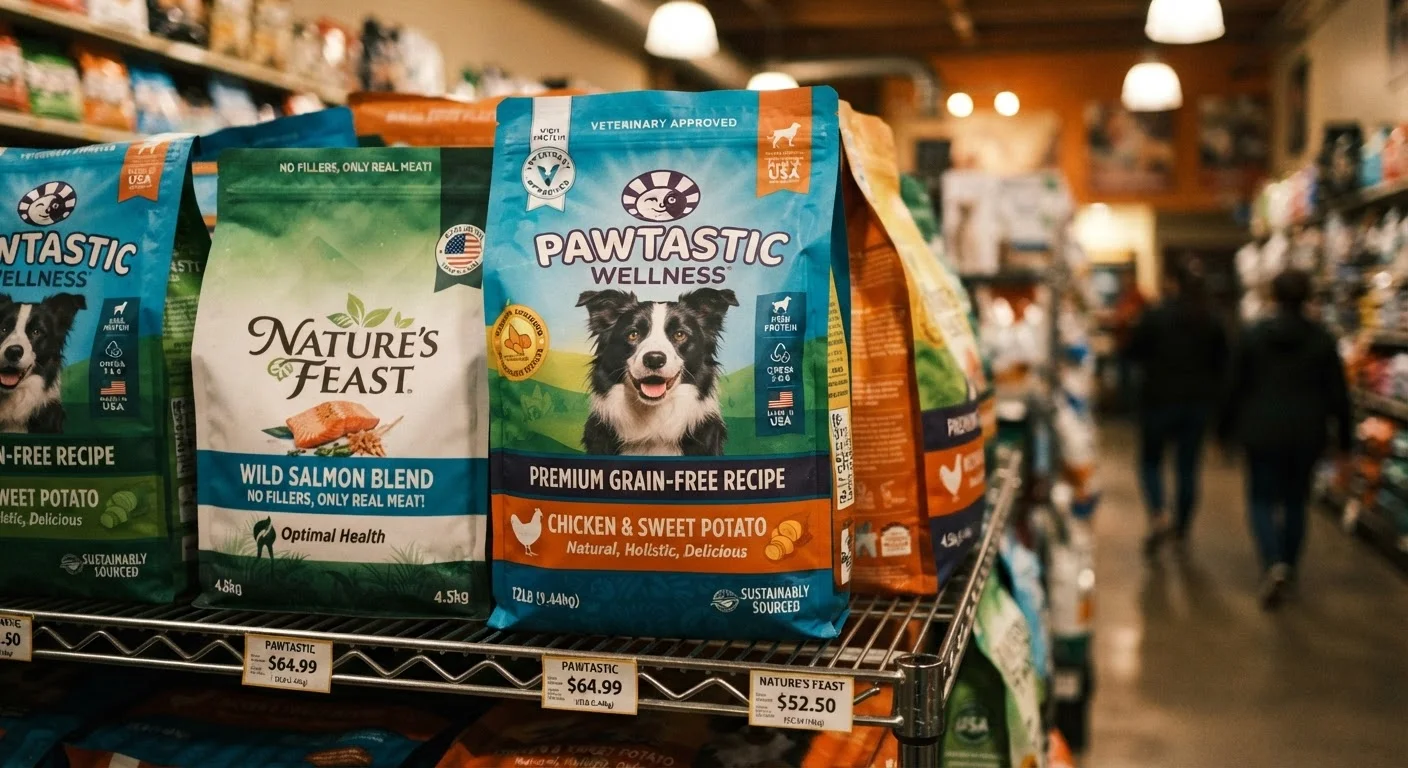
Premium pricing is itself a marketing signal, not a nutritional one. A higher price point does not mean a food has undergone feeding trials, meets your pet's life-stage needs, or was formulated with input from a veterinary nutritionist. Evaluate the label itself — particularly the AAFCO statement and guaranteed analysis — rather than cost or packaging appearance.
Common Mistakes Owners Make When Reading Pet Food Claims
The mistakes below follow a consistent pattern: a marketing term that sounds like a standard gets treated as one. Recognizing that pattern helps you approach new products with the right questions rather than assumptions.
Treating 'natural' as a guarantee of nutritional quality or safety.
Why it happens: The word 'natural' carries strong positive associations, and shoppers reasonably assume it signals a higher standard of ingredients or processing.
Assuming 'holistic' means the food meets a higher or certified nutritional standard.
Why it happens: In human wellness contexts, 'holistic' implies whole-body, integrative care — so pet owners naturally extend that meaning to food.
Believing 'human-grade' means ingredients were sourced or processed to the same standards as food for people.
Why it happens: The term sounds like a concrete, inspectable standard — similar to USDA grades on meat — so it feels trustworthy.
Interpreting a meat-first ingredient list as proof the food is high in animal protein.
Why it happens: Ingredients are listed by pre-cooking weight, and raw meat contains a lot of water. Once cooked, its weight — and its share of the formula — drops significantly.
Paying a premium for 'grain-free' based on the belief it is inherently healthier.
Why it happens: Grain-free diets became popular alongside human low-carb and gluten-free trends, and marketing amplified the idea that grains are harmful filler.
Assuming 'complete and balanced' on the label guarantees the food suits your specific pet's life stage or health needs.
Why it happens: The phrase sounds absolute — if something is complete, what more could be needed?
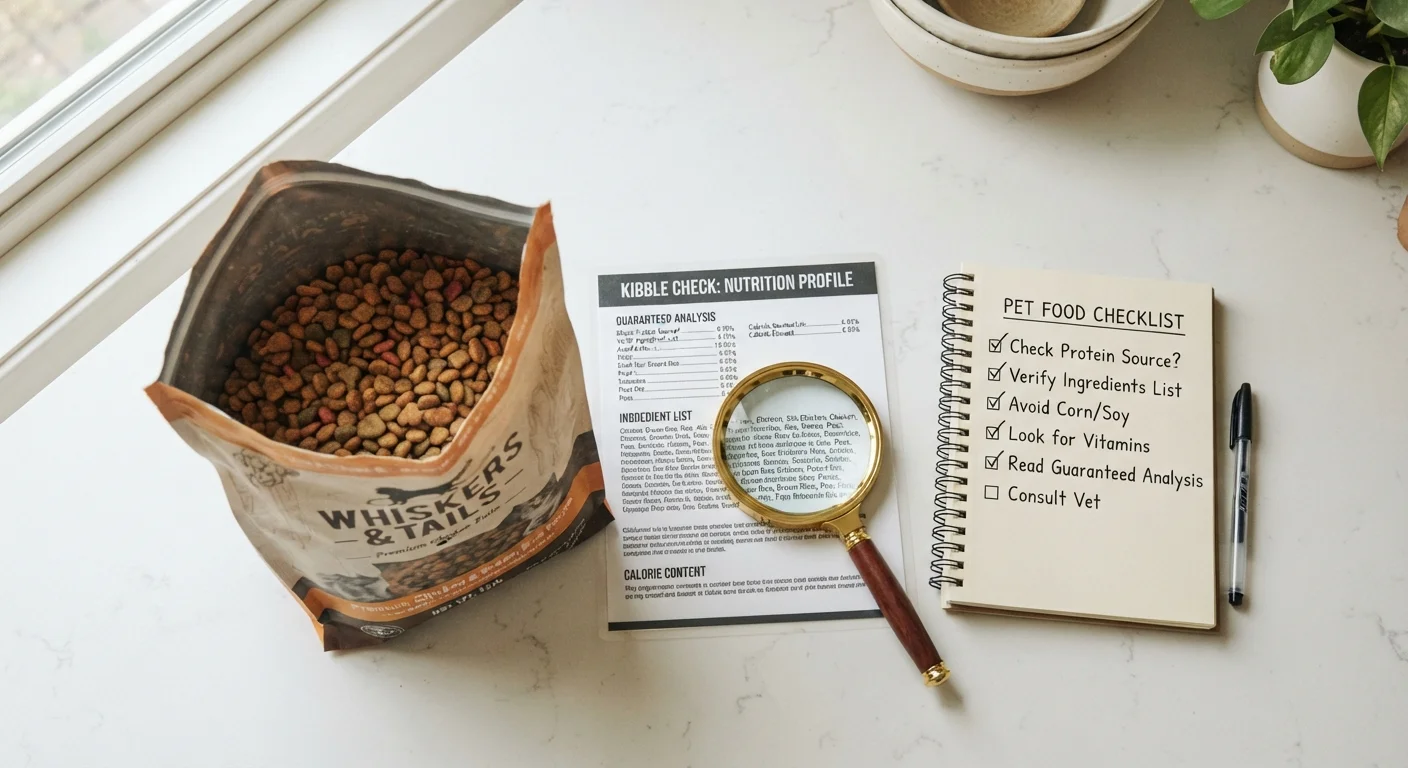
For a broader framework on evaluating any new diet before you commit, see our practical checklist for evaluating a new pet food.
Regulatory Definitions Are Narrower Than You Think
The FDA and AAFCO regulate pet food safety and nutritional adequacy, but many marketing terms on packaging — including 'holistic,' 'premium,' and 'human-grade' — have no standardized regulatory definition. This means a manufacturer can legally use these words without meeting any specific ingredient or processing standard. Don't let appealing language substitute for reading the nutrition panel and AAFCO statement.
What to Look For Instead
Once you set aside unregulated marketing terms, a few concrete signals genuinely matter:
- AAFCO nutritional adequacy statement: Look for wording that confirms the food was formulated to meet AAFCO nutrient profiles or — better still — that it passed a feeding trial. Feeding trials involve real animals eating the food, not just a formula calculation. Our article on AAFCO standards and what 'complete and balanced' really means covers this in depth.
- Named ingredients: Specific named proteins (chicken, salmon, beef) and named meals (chicken meal) are more informative than vague terms like 'meat' or 'poultry by-product meal.'
- Manufacturer transparency: Reputable manufacturers typically publish information about their quality control processes, where ingredients are sourced, and whether a board-certified veterinary nutritionist was involved in formulation.
0
Regulatory definitions for 'holistic' pet food
Neither the FDA nor AAFCO has established any regulatory definition for the term 'holistic' as used on pet food labels.
~70%
Water content in raw chicken by weight
Raw chicken is roughly 65–70% water, which explains why it can top an ingredient list yet contribute less protein to the finished kibble than a meat meal ingredient listed lower.
If your pet has a health condition, is a puppy or kitten, is pregnant, or is a senior, a board-certified veterinary nutritionist (Dipl. ACVN) or your regular veterinarian is the most reliable resource for individualized guidance. General food marketing is never a substitute for that professional relationship.
This article provides general educational information about pet food labeling and is not a substitute for veterinary nutritional advice. Always consult a qualified veterinarian for decisions about your pet's diet, especially if your pet has a health condition.