The Five Required Elements on Every Label
U.S. pet food regulations require every product sold nationally to carry five core pieces of information: the product name, the net quantity of contents, the manufacturer's name and address, the ingredient list, and the guaranteed analysis panel. These elements are mandated by a combination of state feed laws and FDA requirements, giving you a consistent baseline of information regardless of which brand you choose.
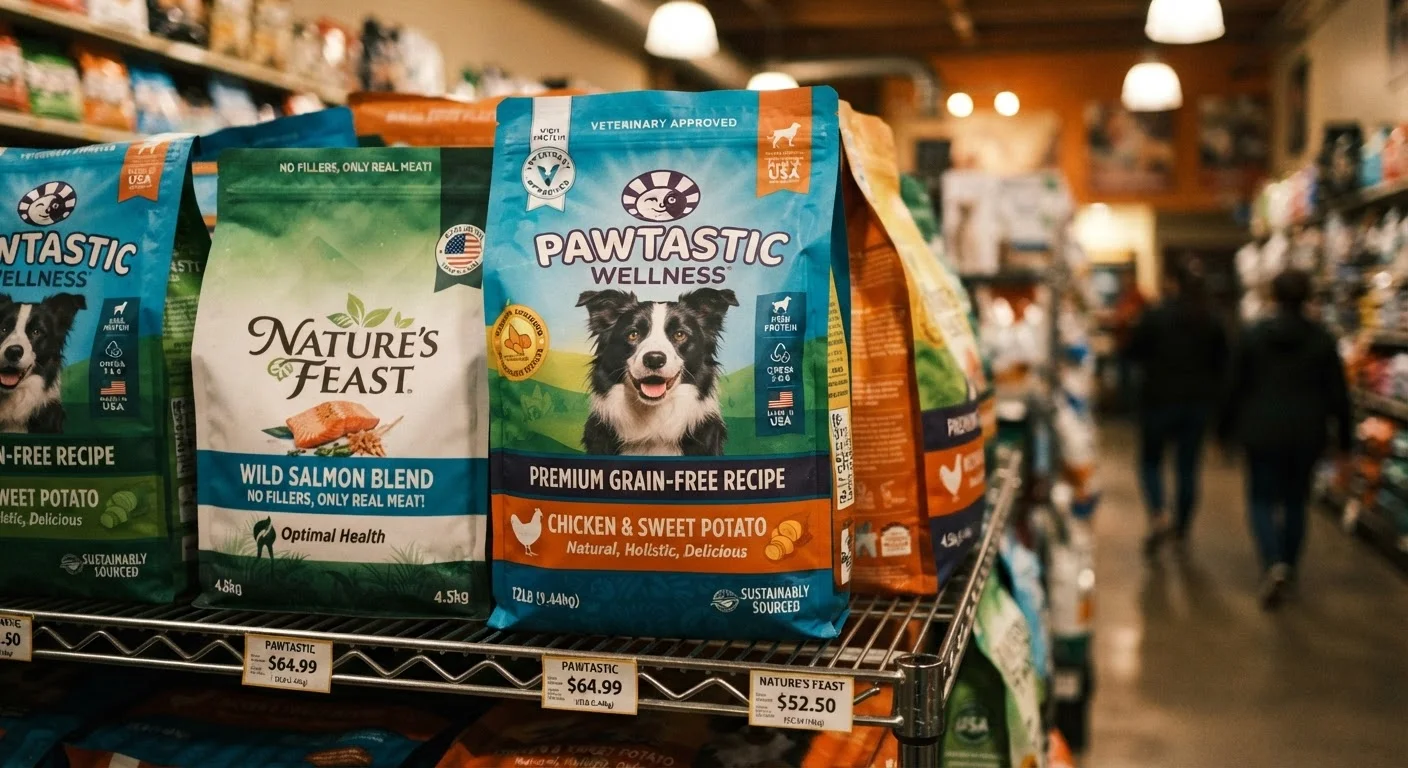
The product name itself carries hidden meaning. AAFCO rules govern how prominently a protein source can be featured. If a food is called "Chicken Formula," chicken must make up at least 25% of the product by weight. If it says "with Chicken," only 3% is required. A food labeled simply "Chicken" must contain 95% chicken on a dry-matter basis — a far stricter standard. These naming conventions apply to both dog and cat foods.
AAFCO Sets Standards — States Enforce Them
AAFCO is a non-governmental advisory body that develops model regulations for pet food labeling. Actual enforcement happens at the state level, meaning requirements can vary slightly depending on where a product is sold. The FDA's Center for Veterinary Medicine provides federal oversight primarily around safety and adulteration, not routine labeling.
How to Read the Ingredient List Accurately
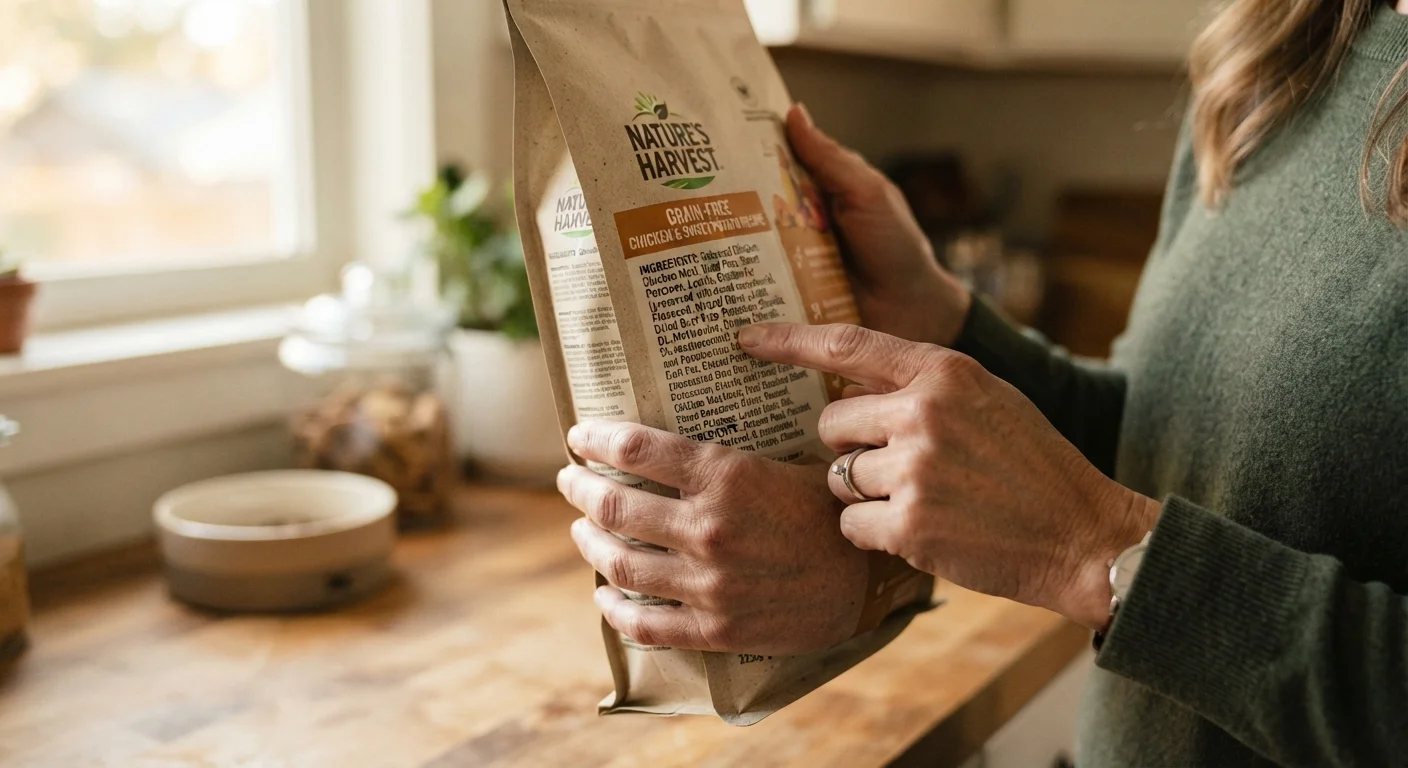
Ingredients are listed in descending order by weight before processing. This sounds straightforward, but moisture content complicates things. Fresh chicken contains roughly 70% water, so it weighs more than dry chicken meal — but after cooking, the actual protein contributed may be similar or even lower. A product listing "chicken meal" third may deliver more protein per serving than one listing "fresh chicken" first.
Ingredient splitting is another tactic worth knowing. If a manufacturer lists "ground corn," "corn gluten meal," and "corn bran" separately, each appears lower on the list than if they were combined — potentially masking corn as a primary ingredient. This doesn't make a food unsafe, but it's useful context for evaluating what dominates the formula. For a focused look at how marketing language distorts these signals, see our piece on marketing claims on pet food that rarely mean what you think.
Check the Manufacturer Contact Information
Every compliant pet food label must include the manufacturer's name, city, state, and ZIP code. Many brands also list a phone number or website. If you have questions about sourcing, processing, or quality-control testing, contacting the manufacturer directly is a legitimate and often underused resource.
Decoding the Guaranteed Analysis Panel
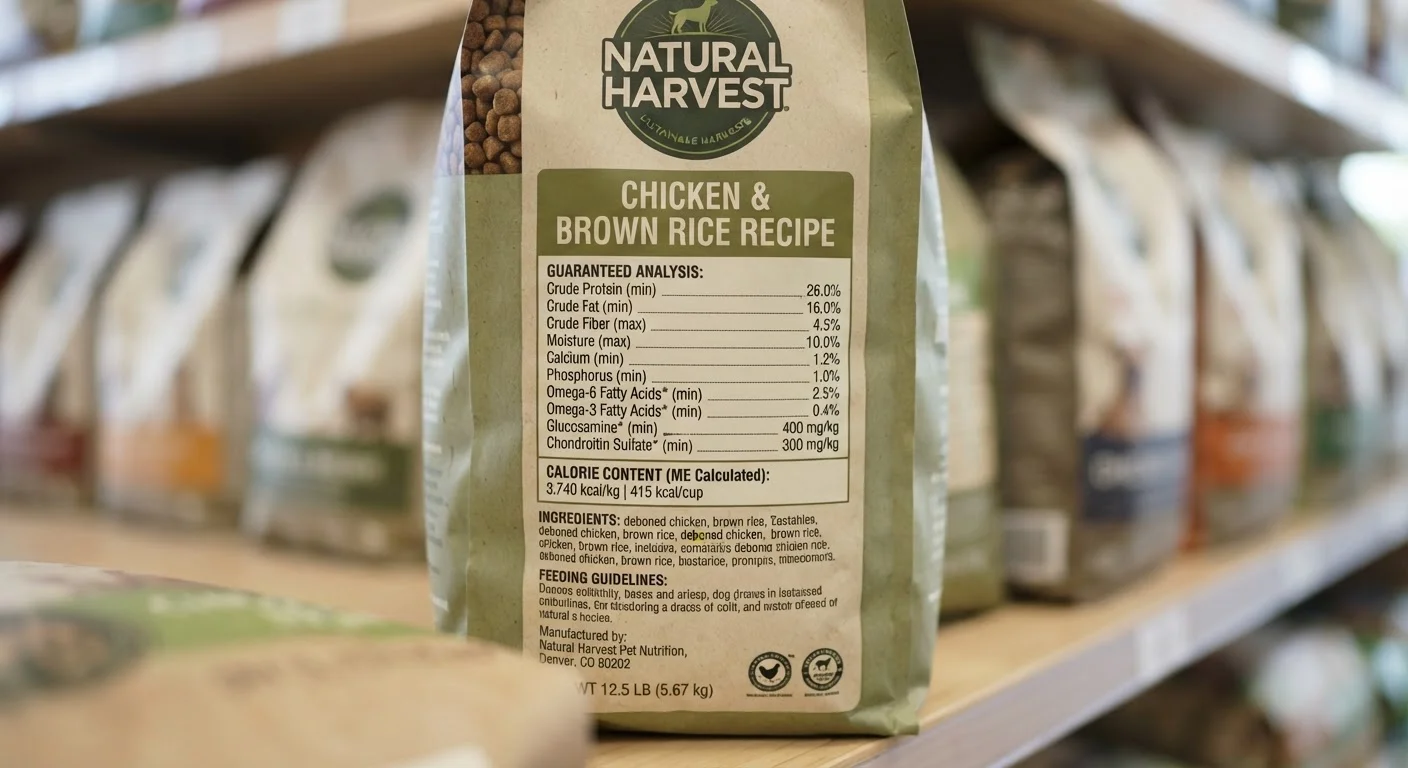
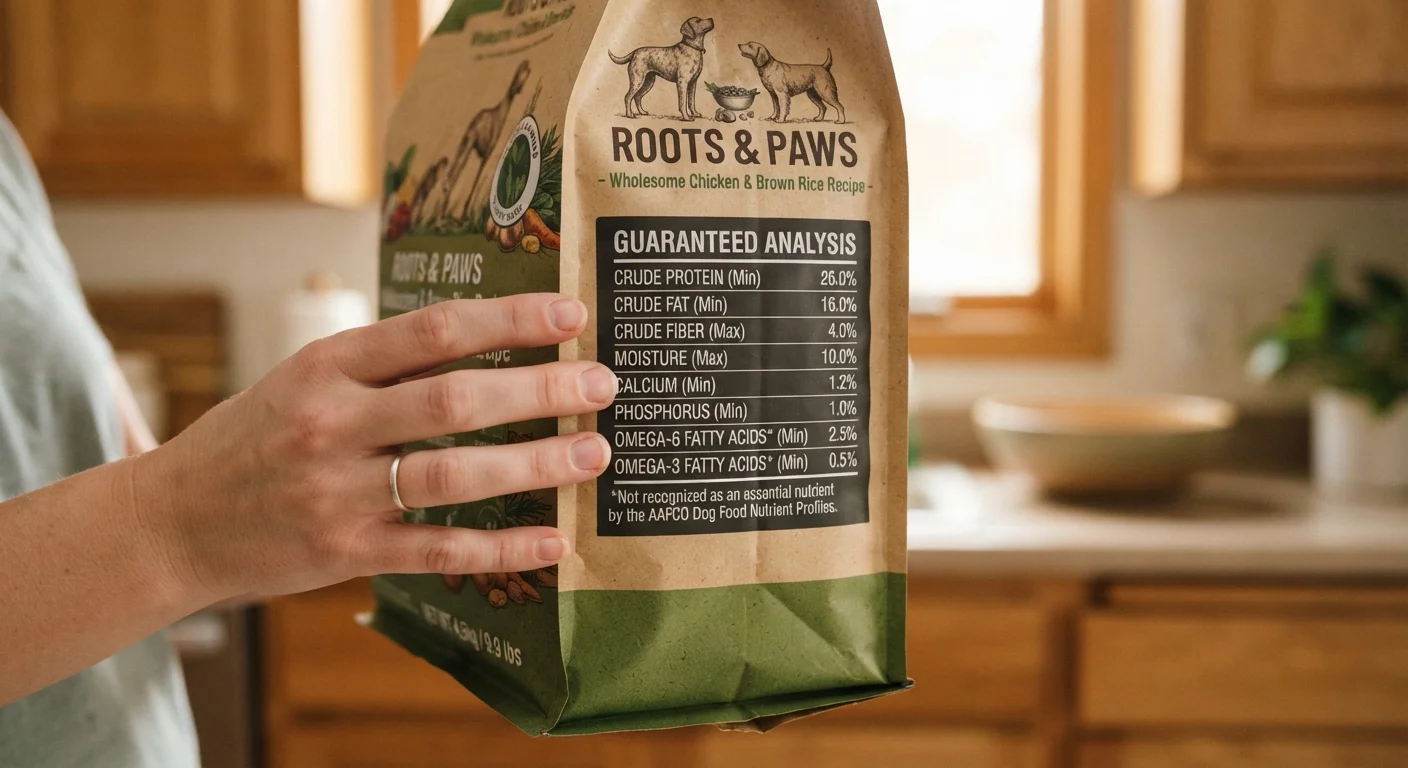
The guaranteed analysis panel lists four values at minimum: crude protein (minimum), crude fat (minimum), crude fiber (maximum), and moisture (maximum). "Crude" refers to the testing method used, not the quality of the nutrient. These figures set regulatory boundaries — they are not precise measurements of the food's actual composition batch by batch.
One practical challenge is comparing wet and dry foods. Because wet foods contain significantly more moisture, their nutrient percentages appear lower on a straight comparison. Converting both to a dry-matter basis — dividing each nutrient percentage by the dry-matter percentage — allows for a fair comparison. Our detailed reading the guaranteed analysis panel walks through these calculations step by step.
95%
Minimum meat content for a single-named product
Under AAFCO's '95% rule,' a product named simply 'Chicken' for dogs or cats must be comprised of at least 95% of that ingredient on a dry-matter basis.
3%
Minimum ingredient content for 'with' claims
AAFCO rules permit 'with Chicken' labeling when chicken makes up as little as 3% of the product by weight, a threshold far lower than most consumers assume.
25%
Minimum for 'Dinner,' 'Formula,' or 'Recipe' names
When a descriptor like 'Dinner,' 'Formula,' 'Platter,' or 'Recipe' accompanies an ingredient name, that ingredient must constitute at least 25% of the product.
The AAFCO Nutritional Adequacy Statement
The nutritional adequacy statement — sometimes called the AAFCO statement — is one of the most important lines on any pet food label. It tells you two things: which life stage the food is designed for (adult maintenance, growth, all life stages, etc.) and how that adequacy was established — either through formulation against AAFCO nutrient profiles or through actual feeding trials.
Feeding-trial-substantiated foods have been tested on live animals, which is a higher bar than formulation alone, though both methods are acceptable under AAFCO guidelines. Foods labeled "for intermittent or supplemental feeding only" are not complete diets and should not be used as a primary food source without veterinary guidance. To understand what AAFCO's profiles actually measure — and what they don't — see our article on understanding AAFCO standards and what 'complete and balanced' really means.
This article is for general informational purposes only and is not a substitute for professional veterinary nutrition advice. Always consult a licensed veterinarian for guidance tailored to your pet's individual health needs.