What the Guaranteed Analysis Panel Actually Is
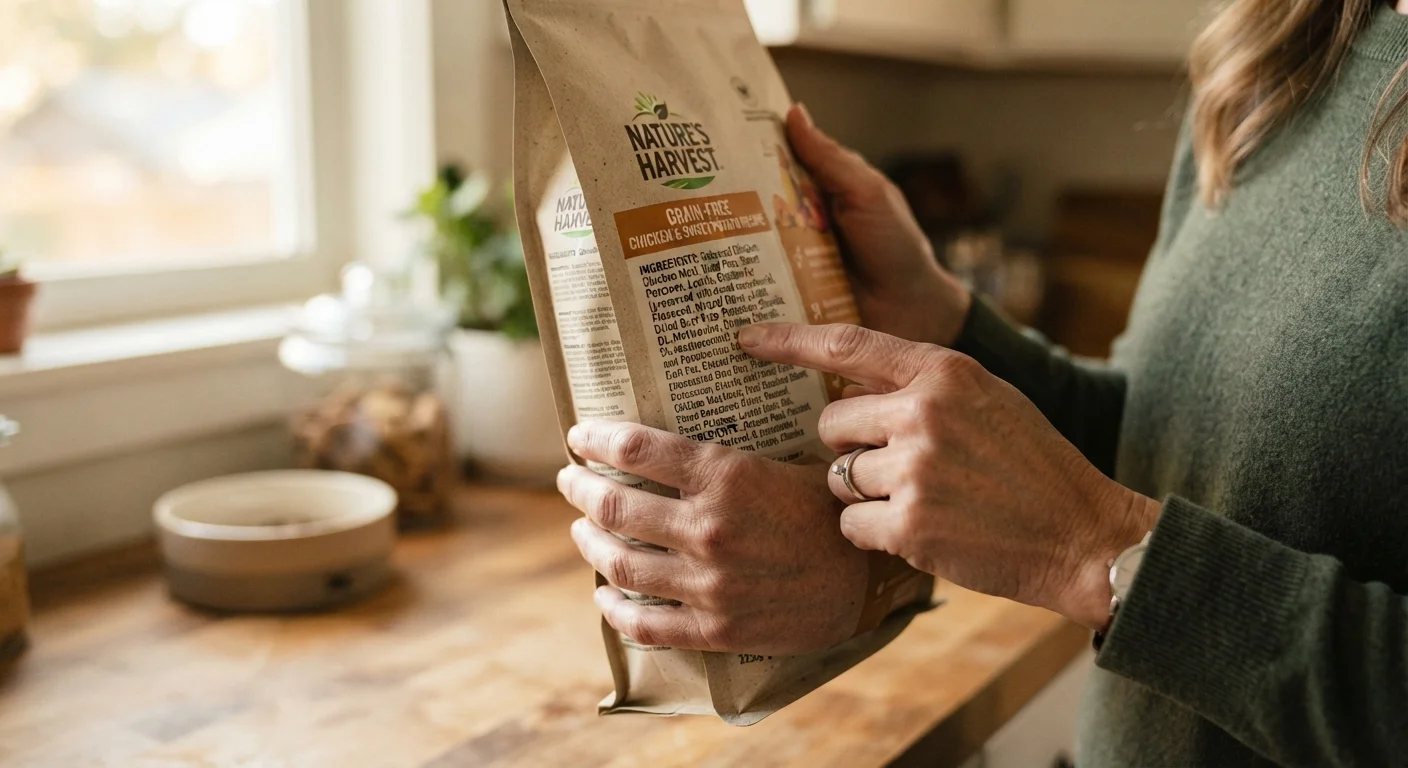
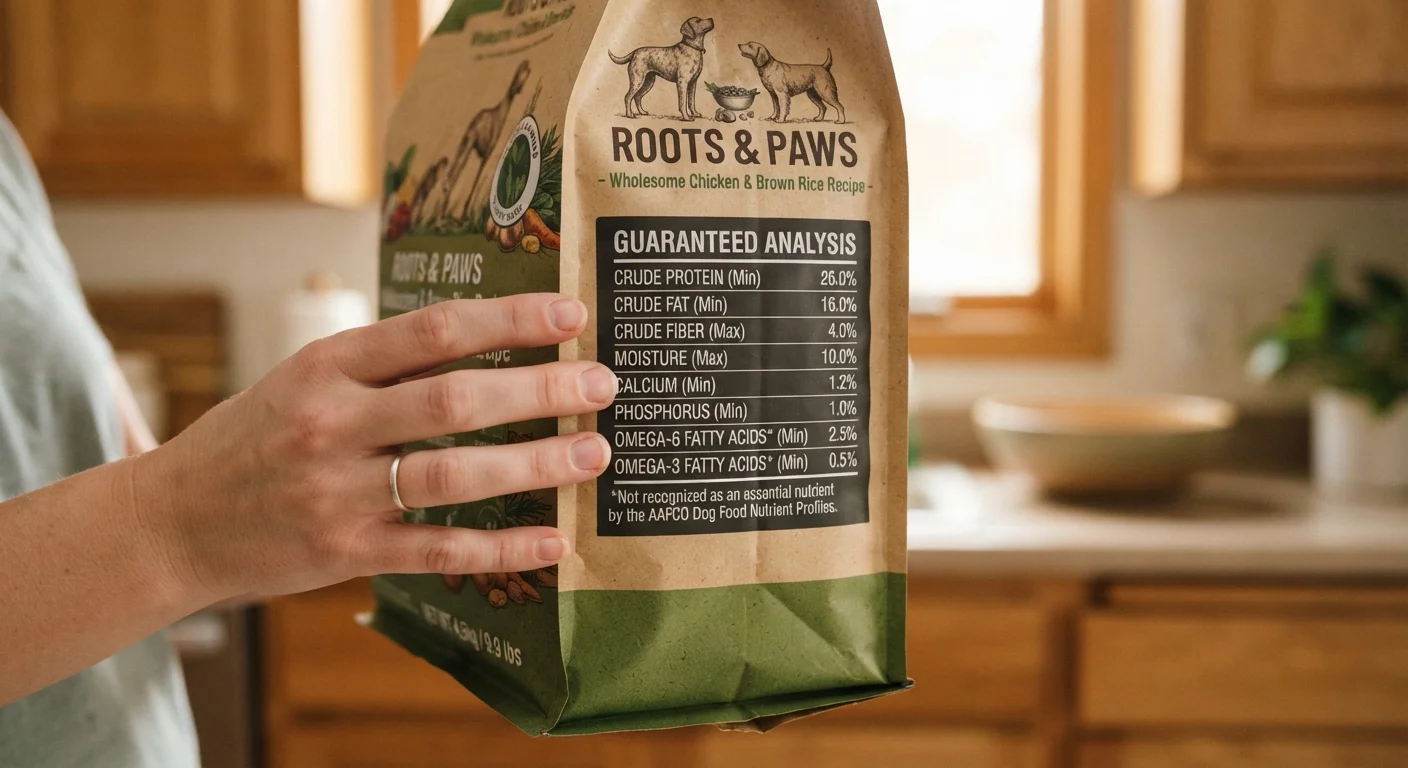
Every commercially sold pet food in the U.S. is required by the Association of American Feed Control Officials (AAFCO) to display a guaranteed analysis (GA) panel — a standardized table listing minimum or maximum percentages for four core nutrients. Think of it as a nutritional snapshot: not a complete picture, but a reliable starting point for comparison.
The panel must include, at minimum:
- Crude protein (minimum %)
- Crude fat (minimum %)
- Crude fiber (maximum %)
- Moisture (maximum %)
Manufacturers may voluntarily list additional nutrients — ash, omega fatty acids, taurine, or specific vitamins — but only those four are federally required. For a broader look at how the GA fits into the full label, see our guide to decoding pet food labels.
| Required GA nutrients | 4 (crude protein, crude fat, crude fiber, moisture) (AAFCO Model Pet Food Regulations) |
| Typical moisture — dry kibble | 8–12% (General industry range) |
| Typical moisture — wet/canned food | 75–85% (General industry range) |
| Protein reported as | Minimum percentage (AAFCO labeling requirement) |
| Fiber reported as | Maximum percentage (AAFCO labeling requirement) |
| Additional optional nutrients | Ash, omega-3s, taurine, vitamins (varies by manufacturer) |
Breaking Down Each Guaranteed Figure
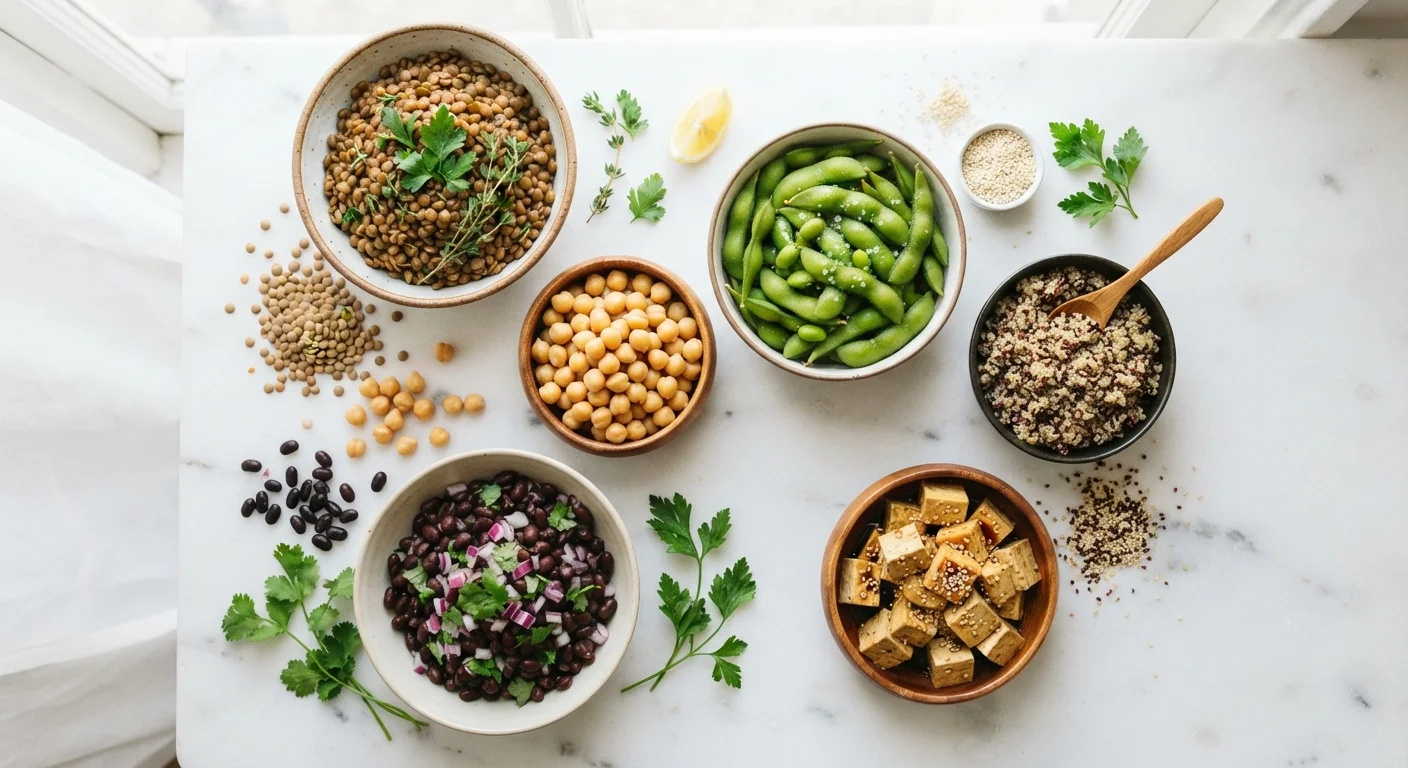
Crude Protein (minimum %) — The word "crude" signals a measurement method, not quality. Crude protein is calculated by measuring total nitrogen in the food, then multiplying by a conversion factor. This means it captures protein from meat, plant sources, and even some non-protein nitrogen compounds. A higher percentage is not automatically better; the source and digestibility matter just as much as the number. For context on plant-based protein sources and how digestibility varies, see this breakdown of plant proteins.
Crude Fat (minimum %) — Fat is essential for energy, cellular function, and fat-soluble vitamins. The minimum figure tells you the floor, not the ceiling — actual fat content may be higher. Dogs and cats have different fat requirements, so consult your veterinarian when assessing whether a food's fat level is appropriate for your pet's life stage or health status.
Crude Fiber (maximum %) — This figure covers indigestible plant material. Unlike protein and fat, fiber is reported as a maximum, which means the actual amount could be lower. Higher fiber can support digestive health but may also dilute caloric density — relevant for pets managing weight or GI conditions.
Moisture (maximum %) — Moisture content is the key that unlocks meaningful comparisons between food types. Wet foods typically run 75–85% moisture; dry kibble typically falls between 8–12%. Without adjusting for moisture, comparing a wet food's 10% protein to a dry food's 28% protein is misleading.
Guaranteed Analysis (GA)
A mandatory panel on U.S. pet food labels listing minimum or maximum percentages of crude protein, crude fat, crude fiber, and moisture. It is a regulatory floor for disclosure, not a full nutritional profile.
Crude Protein
A measurement of total nitrogen in pet food, converted to an estimated protein percentage. It reflects quantity, not quality or digestibility of the protein source.
Crude Fiber
The indigestible carbohydrate fraction of a pet food, reported as a maximum percentage. It includes cellulose and lignin but underestimates total dietary fiber.
Dry Matter Basis (DMB)
A calculation that removes moisture from the equation so nutrients in wet and dry foods can be compared on equal footing. It is the standard method used by veterinary nutritionists.
AAFCO
The Association of American Feed Control Officials, the U.S. body that establishes model regulations and nutritional standards for pet food labeling and formulation.
Moisture Content
The percentage of water in a pet food product, reported as a maximum. It varies widely between food formats and must be accounted for when comparing nutrient percentages across products.
Dry Matter Basis: The Only Fair Comparison
Because moisture varies so dramatically between food formats, nutritionists use dry matter basis (DMB) calculations to make meaningful comparisons. The formula is straightforward:
- Subtract the moisture percentage from 100 to get the dry matter percentage.
- Divide the nutrient percentage by the dry matter percentage.
- Multiply by 100.
Example: A wet food lists 10% crude protein and 78% moisture. Dry matter = 100 − 78 = 22. DMB protein = (10 ÷ 22) × 100 = 45.5%. That same food, compared on a dry matter basis, may be far higher in protein than its label figure implies.
This calculation is also relevant when your veterinarian recommends a food for a specific protein or fat target. The GA panel number alone won't give you an accurate picture without this adjustment.
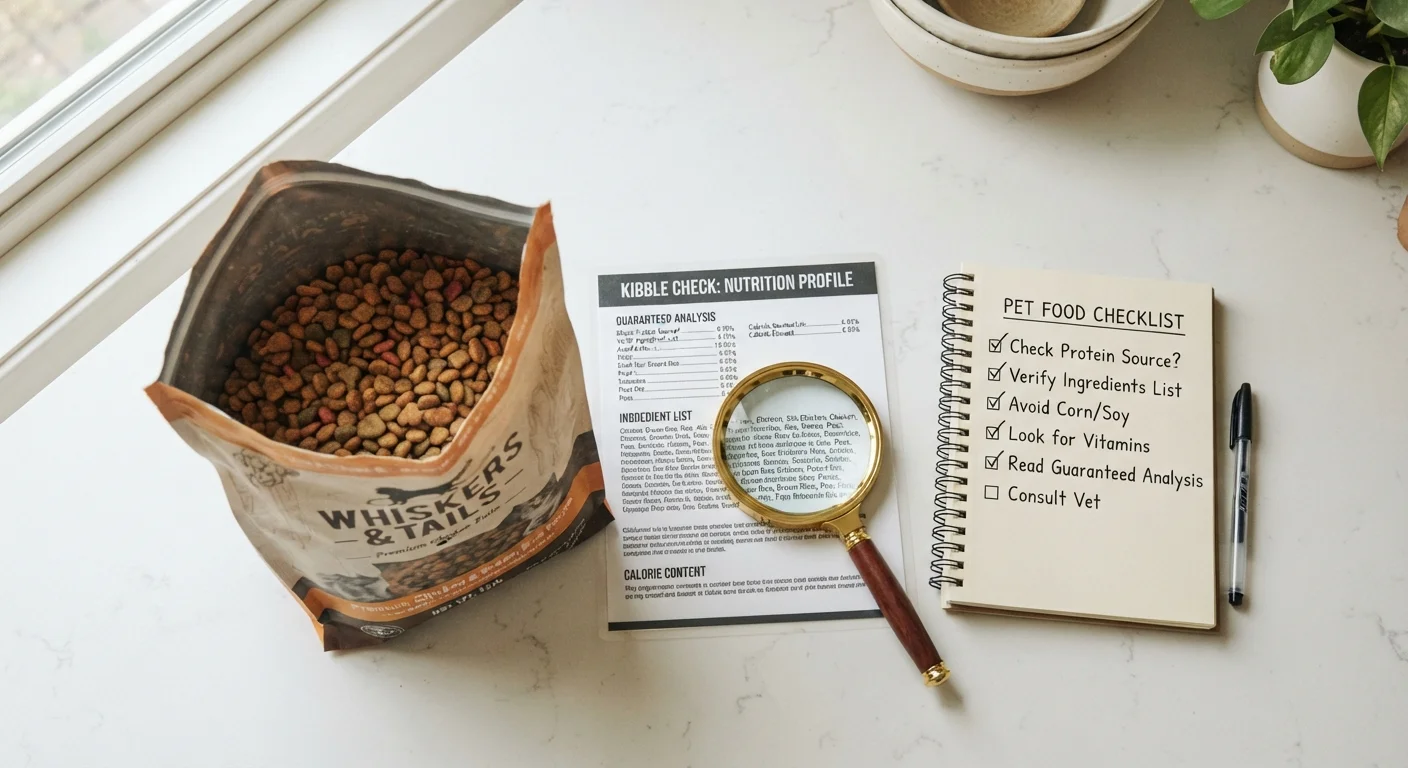
Once you understand the GA panel, the next logical step is a full label evaluation. Our practical checklist for evaluating a new pet food walks through ingredient sourcing, feeding trials, and what to ask your vet.
This article provides general educational information about pet food labeling. It is not a substitute for personalized advice from a licensed veterinarian or board-certified veterinary nutritionist.