
Why Life Stage Nutrition Matters
Dogs are not nutritionally one-size-fits-all animals. A ten-week-old Great Dane puppy has profoundly different dietary requirements than a seven-year-old Beagle managing its weight. Feeding a food that doesn't match your dog's current stage of life can lead to deficiencies, excesses, or long-term health complications — none of which show up overnight, making them easy to miss.
The concept of life-stage feeding is grounded in veterinary nutritional science and endorsed by organizations such as the Association of American Feed Control Officials (AAFCO). Understanding what changes — and why — gives you a framework to cut through marketing language and make genuinely informed choices for your dog. For a solid grounding in the underlying principles, see our core pet nutrition guide.
~56%
US dogs estimated overweight or obese
According to the Association for Pet Obesity Prevention's annual surveys, more than half of US dogs are estimated to be above a healthy weight.
12–24 mo
Age range when puppies reach physical maturity
Small breeds typically mature around 12 months; giant breeds may not reach full skeletal maturity until 18–24 months, affecting how long puppy food is appropriate.
~7 years
Age at which most dogs are considered senior
Veterinary guidelines generally classify dogs as senior around age seven, though the threshold shifts earlier for larger breeds due to accelerated aging.
Feeding Puppies: Fueling Rapid Growth
The first year of a dog's life — or up to two years for giant breeds — is a period of extraordinary physiological change. Muscle, bone, and organ systems are developing simultaneously, and the nutritional demands to support that growth are substantially higher than at any other stage.
Key Nutritional Priorities
- Protein: Higher levels support muscle fiber development. Look for a named animal protein (chicken, beef, salmon) as the first ingredient.
- Calcium and phosphorus: Critical for bone formation, but the ratio matters as much as the quantity. Both excess and deficiency can cause skeletal problems, particularly in large breeds.
- Energy density: Puppies need more calories per pound of body weight than adults, but portion control is still important to avoid overfeeding.
- DHA (docosahexaenoic acid): An omega-3 fatty acid that supports brain and vision development. Many puppy formulas include it from fish oil or egg sources.
Large- and giant-breed puppies have a specific concern: growing too quickly increases the risk of developmental orthopedic disease. Foods formulated for large-breed puppies are designed to moderate growth rate without causing deficiencies — a meaningful distinction from standard puppy food.
For large-breed puppies, verify the food specifically states it is formulated for large-breed growth — not just 'all life stages.' The calcium-to-phosphorus ratio in these formulas is deliberately calibrated to support slower, controlled bone development.
Excess calcium during rapid growth phases in large breeds is associated with developmental orthopedic conditions like osteochondrosis, making breed-size-specific formulation a meaningful distinction.
Use your hands, not just your eyes, to assess your dog's body condition. You should be able to feel the ribs with light pressure but not see them prominently — this hands-on check is more reliable than visual assessment alone, especially in long-coated breeds.
Body condition scoring is the veterinary standard for monitoring healthy weight, and coat thickness can easily obscure whether a dog is overweight or underweight to the naked eye.
During this stage, puppies are also developing behaviors and routines — including around food. Consistent meal times support both digestion and predictability. For context on the broader developmental window, our article on socializing your puppy covers how early experiences shape long-term behavior.
Feeding Adult Dogs: Maintenance and Balance
Once a dog reaches physical maturity — typically around 12 months for small and medium breeds, 18–24 months for large and giant breeds — nutritional needs shift toward maintenance. The goal is no longer supporting growth but sustaining a healthy body weight, coat condition, immune function, and energy level.
What Changes
- Calories: Adult dogs generally need fewer calories per pound than puppies. Overfeeding is one of the most common contributors to canine obesity.
- Protein: Still essential, but at lower levels than puppyhood. High-quality, digestible protein sources remain important.
- Fiber: Supports digestive health and can help dogs feel satisfied between meals.
Activity level, spay/neuter status, and individual metabolism all influence how much food an adult dog actually needs. Feeding guidelines on packaging are starting points, not prescriptions — monitor your dog's body condition score (a hands-on assessment of fat coverage over the ribs) regularly.
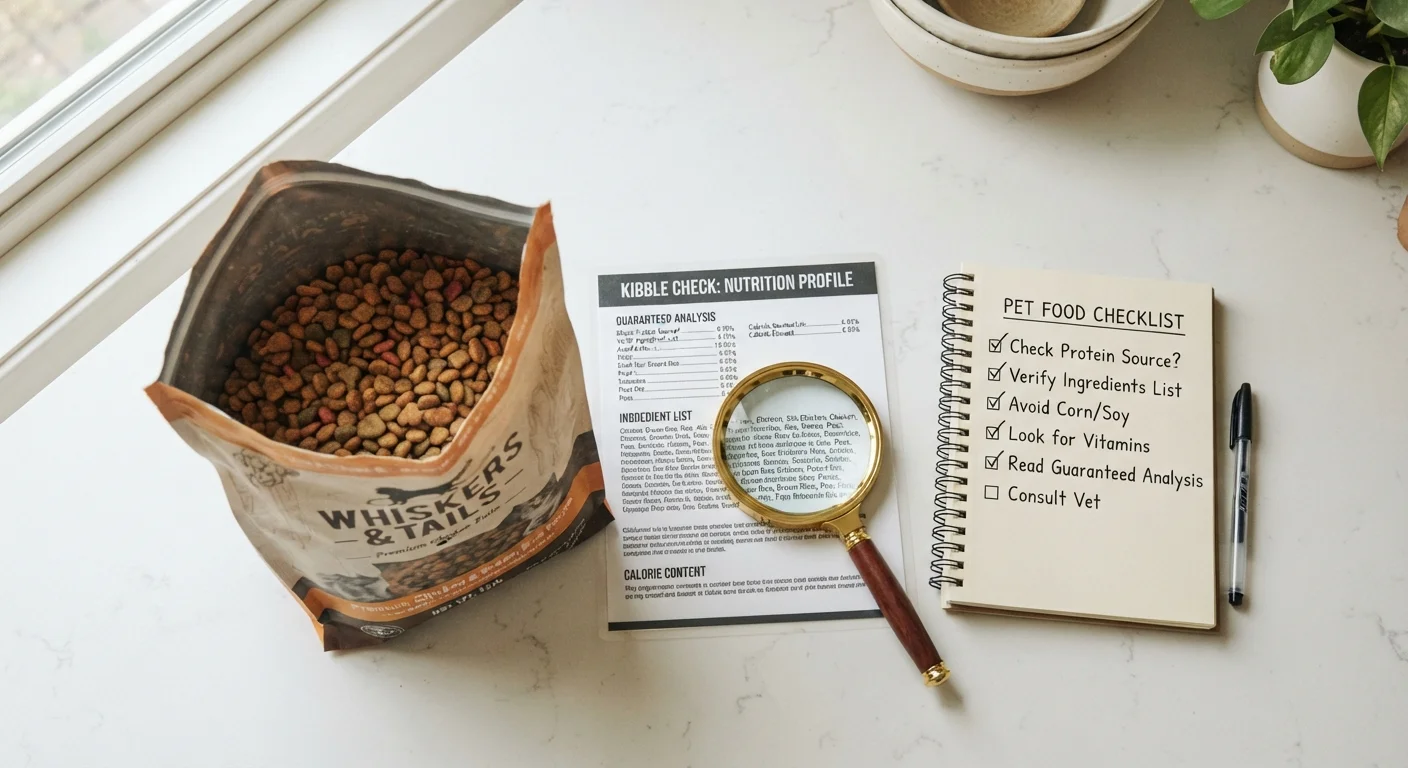
To evaluate whether a particular food is a sound choice for your adult dog, our practical pet food checklist walks through the key factors to examine.
Feeding Senior Dogs: Adapting to an Aging Body
Most veterinarians consider dogs senior at around seven years of age, though this varies considerably by size — larger breeds age faster and may show senior-related changes earlier. An aging body presents a different nutritional challenge: metabolism often slows, muscle mass tends to decrease, and certain organ systems may become less efficient.
Common Adjustments
- Calories: Many senior dogs need fewer calories to avoid weight gain as activity decreases. However, some older dogs actually struggle to maintain weight, particularly those with dental issues or underlying illness.
- Protein: Contrary to an older belief, healthy senior dogs generally do not need lower protein. Current evidence supports maintaining adequate protein to help preserve lean muscle mass. Dogs with specific kidney disease may require protein modification — but this should be guided by a veterinarian, not assumed for all seniors.
- Joint-supporting nutrients: Ingredients such as glucosamine and omega-3 fatty acids are commonly included in senior formulas. Evidence for their benefit varies; discuss expectations with your vet.
- Digestibility: Aging digestive systems may absorb nutrients less efficiently, making food quality and digestibility more important.
For a broader look at how health needs shift in older dogs — including more frequent veterinary screening and monitoring — see our guide on preparing for a senior pet.
How to Read a Life-Stage Label
AAFCO sets nutrient profiles for two life stages: Growth and Reproduction (covering puppies and pregnant or nursing dogs) and Adult Maintenance. Some foods are labeled All Life Stages, which means they meet the higher growth-stage requirements — not always appropriate for adult or senior dogs who don't need those elevated nutrient levels.
"All Life Stages" Doesn't Mean Ideal for All Dogs
A food labeled "All Life Stages" meets the higher nutrient thresholds set for growth and reproduction — which means it may be unnecessarily calorie- or nutrient-dense for healthy adult or senior dogs. This label is not a sign of superior quality; it simply reflects formulation to a different standard. Check the AAFCO statement carefully and discuss with your vet whether this type of food fits your dog's current needs.
Look for the AAFCO nutritional adequacy statement on any food you consider. It tells you:
- Which life stage the food is formulated for.
- Whether that claim was substantiated through feeding trials or formulation alone.
Feeding trials, while not perfect, provide a stronger real-world signal than formulation-only claims. Neither guarantees a food is ideal for your individual dog, but it's a meaningful filter when comparing options. For a detailed walkthrough of label reading and ingredient evaluation, refer to our pet food evaluation checklist.
Transitioning Between Life Stages
Switching from a puppy to an adult formula — or from adult to senior — isn't simply a matter of swapping bags. Abrupt dietary changes are a common cause of gastrointestinal upset in dogs, including loose stools, vomiting, and reduced appetite.
A gradual transition over seven to ten days is the standard recommendation: begin by mixing a small proportion of the new food into the old, then progressively increase the ratio of new food each day. Our detailed guide on switching your pet to a new food covers the full transition plan, including warning signs that the new diet isn't agreeing with your dog.
Life-stage transitions are also good checkpoints to revisit portion sizes, review body condition, and schedule a veterinary conversation about whether your dog's current diet is still appropriate. No article — including this one — substitutes for individualized veterinary guidance, particularly for dogs with health conditions.
This article provides general nutritional information for educational purposes and is not a substitute for veterinary advice. Always consult a licensed veterinarian for guidance specific to your dog's health and dietary needs.