What Uneven Brake Wear Actually Means
When brake pads wear at different rates - across an axle, between inner and outer pads, or side to side - it's rarely coincidence. Brake systems are engineered for balanced, symmetrical friction. When that balance breaks down, something mechanical is almost always responsible.
The most common culprits include seized brake calipers, corroded or sticky caliper slide pins, uneven rotor thickness, and degraded brake hoses that restrict fluid flow to one side. In some cases, driver behavior - such as consistent hard braking from highway speeds - accelerates wear on specific corners of the vehicle.
Understanding the root cause matters because replacing pads without fixing the underlying problem means the new pads will wear unevenly again, often within a fraction of their expected service life. If you've noticed grinding sounds or pulling to one side during braking, this guide to unusual noises can help you connect symptoms to likely sources before your shop visit.
Replacing brake pads without inspecting the caliper hardware.
Why it happens: Drivers and even some quick-lube shops focus on the visible worn component rather than investigating what caused it to wear unevenly.
Assuming uneven wear is normal and delaying action.
Why it happens: Because wear happens gradually, drivers often normalize symptoms like mild pulling or noise until they become severe.
Ignoring a soft or spongy brake pedal alongside uneven wear symptoms.
Why it happens: Drivers may attribute pedal feel changes to normal variation, not recognizing it as a sign of a failing brake hose or caliper issue affecting fluid pressure.
Replacing only the worn side instead of pads in axle pairs.
Why it happens: It seems logical and cost-effective to replace only what's visibly worn, but it creates an imbalance in braking force across the axle.
Neglecting to bed in new brake pads after installation.
Why it happens: The bedding-in process (a series of controlled stops to transfer pad material evenly onto the rotor) is rarely mentioned at service time, so most drivers skip it unknowingly.
How to Spot Uneven Wear Early
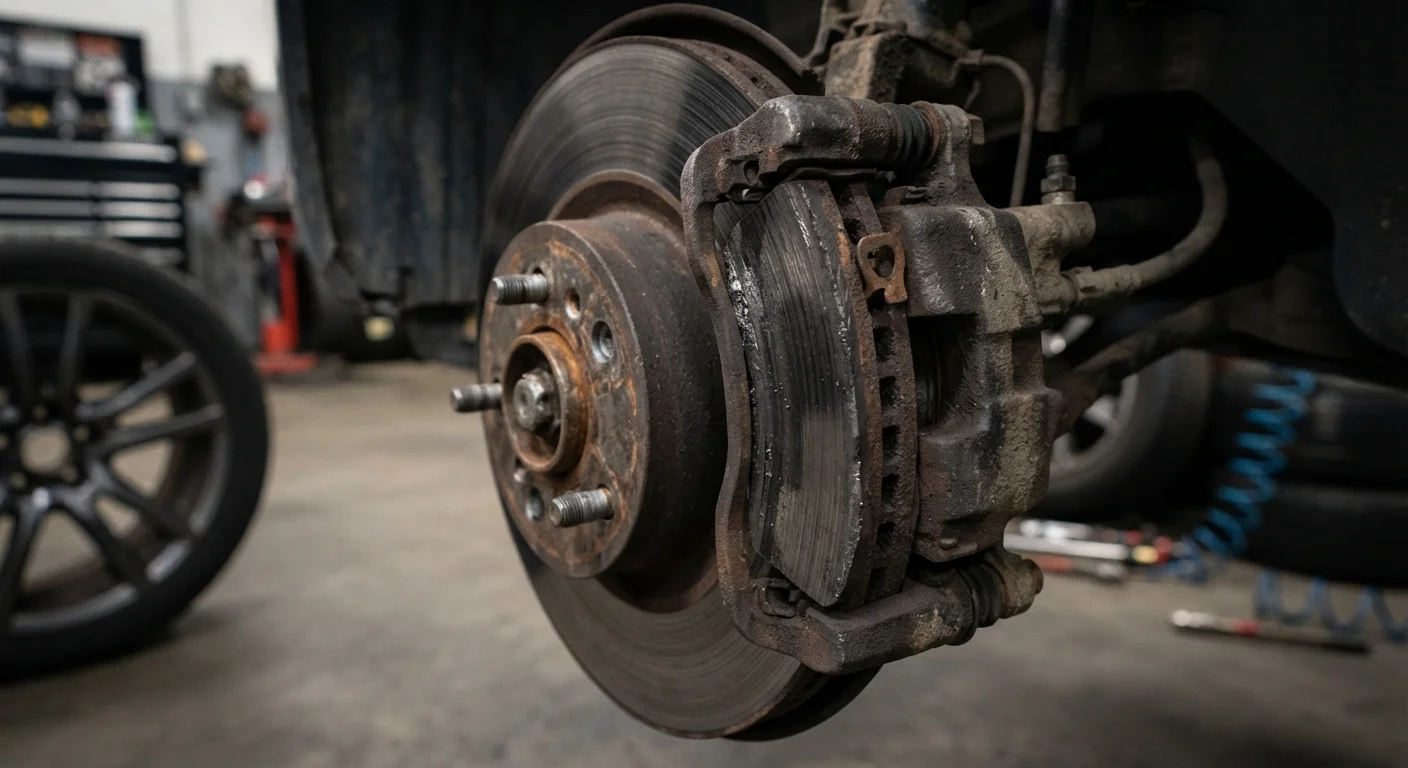
You don't need a lift or special tools to perform a basic visual check. On most vehicles, you can see the brake pad through the wheel spokes. The pad should appear as a thick layer of friction material pressed against the rotor. If it looks paper-thin on one side or dramatically thinner than the other wheel on the same axle, uneven wear is already underway.
~$300-$800
Typical rotor replacement cost per axle
Industry repair data suggests rotor replacement runs significantly higher than pad-only service, illustrating why early detection matters.
25%+
Stopping distance increase with worn pads
Research from automotive safety organizations indicates significantly degraded stopping distances when brake friction material is heavily worn.
Other warning signs include the vehicle pulling noticeably to one side when braking, a pulsating or vibrating brake pedal, or a squealing noise that comes only from one corner. Any of these symptoms warrants a prompt inspection by a qualified mechanic - brakes are a safety-critical system, and diagnosing them accurately requires hands-on assessment.
Wheel alignment issues can also contribute to uneven braking stress on a vehicle. If your steering pulls or your tires are wearing at odd angles, it's worth reviewing the differences between rotation, balancing, and alignment to understand how these services interact.
Brakes Are Safety-Critical - Don't Self-Diagnose Blindly
While visual checks are a useful habit, brake systems involve hydraulic pressure, heat management, and precise tolerances that require professional assessment when something seems wrong. A qualified mechanic has the tools to measure rotor thickness, test caliper function, and identify the true cause of uneven wear. When in doubt, get a professional opinion before continuing to drive.
Mistakes That Make Uneven Wear Worse
Several common errors lead drivers to miss uneven wear, delay repairs, or inadvertently worsen the underlying problem. Recognizing these pitfalls is the first step toward smarter brake maintenance.
Addressing uneven brake wear early almost always costs less than waiting. Worn pads that are left too long begin scoring the rotors - the metal discs the pads clamp against - turning a pad replacement into a more expensive rotor replacement or resurface job. Consistent vehicle care habits, similar to those described in our article on habits that shorten engine life, apply equally to brake system longevity.
Never Drive on Metal-to-Metal Brakes
When brake pads wear completely through, the metal caliper backing plate contacts the rotor directly. This destroys rotors rapidly, produces a loud grinding sound, and severely compromises your ability to stop the vehicle. If you hear metal-on-metal grinding when braking, treat it as an urgent safety issue and have the vehicle inspected by a mechanic before driving it further.