Why Southeast Asia Offers Exceptional Value
Southeast Asia's reputation as a budget traveler's haven isn't marketing mythology — it's rooted in structural economics. The cost of living across most of the region is substantially lower than in North America, Western Europe, or Australia, meaning your travel dollars, pounds, or euros buy significantly more. A sit-down meal at a local restaurant in Vietnam or Thailand might cost $1.50–$4. A clean, air-conditioned guesthouse room in Chiang Mai or Hoi An can run $15–$25 per night. Local bus and train travel between cities is often a fraction of equivalent Western fares.
This isn't just about being cheap — it's about value density. You're not trading quality for cost; you're benefiting from a different economic baseline. The same $50 that covers one restaurant dinner in a major U.S. city can fund an entire day of meals, transport, and a temple entrance fee across much of the region.
For travelers who want to understand how to apply this kind of thinking across destinations, the Budget Travel Tips hub offers a broader toolkit of cost-stretching strategies.
$30–$50
Typical daily budget in USD, mid-tier Southeast Asia
Covers basic private accommodation, street food meals, and local transport in countries such as Vietnam, Thailand, and Cambodia — general estimates based on commonly reported traveler experiences.
10+
Countries spanning the Southeast Asia travel region
The region includes Thailand, Vietnam, Cambodia, Laos, Myanmar, Indonesia, the Philippines, Malaysia, Singapore, Brunei, and Timor-Leste — each with distinct cost profiles.
$1–$4
Typical cost of a street food meal
Street stall and hawker meals across much of mainland Southeast Asia are commonly reported in this range, though prices vary by city, country, and dish.
The Street Food Economy: Culture and Cost Combined
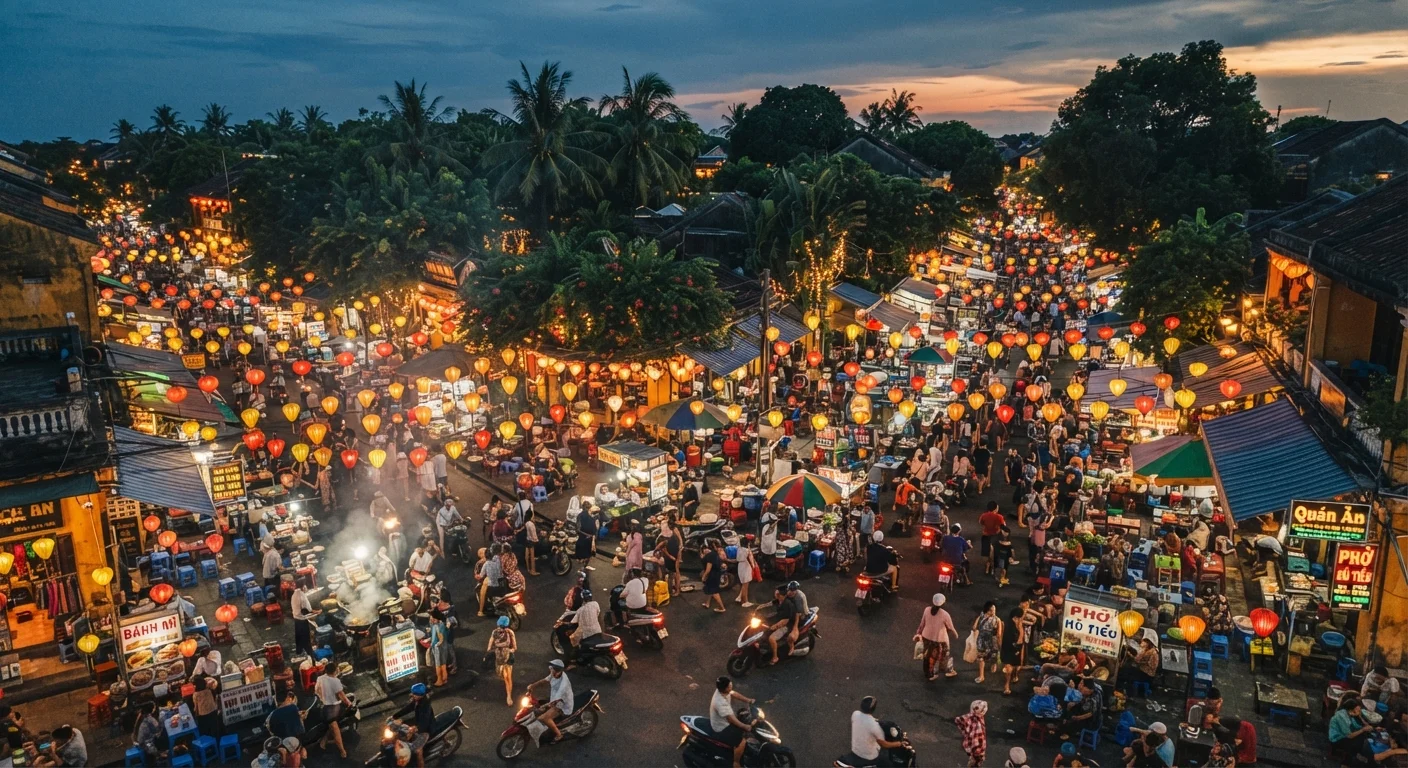
In Southeast Asia, street food isn't a fallback for travelers watching their spending — it's the culinary backbone of daily life. Night markets, hawker stalls, and roadside carts serve dishes that locals eat every day: pad thai, pho, bánh mì, nasi goreng, laksa. These aren't simplified tourist versions; they're the real thing, prepared by cooks who have often spent decades perfecting a single dish.
Eating from street stalls and local markets is one of the most effective ways to keep daily costs low without sacrificing experience. In many cases, it's the opposite of a compromise. The food at a Bangkok night market or a Hanoi street corner frequently matches or exceeds what's served in formal restaurants — at a quarter of the price.
Our guide on eating well on a tight travel budget explores this approach in detail, including how to find trustworthy local spots and navigate food culture abroad without overspending.
Follow Where Locals Eat, Not Where Tourists Go
The most reliable indicator of good, affordable street food is local foot traffic — not proximity to a tourist site. Stalls with a steady queue of local workers or residents at lunchtime are almost always a reliable sign of both quality and fair pricing. Bringing a translation app helps when menus aren't in English.
Cultural Depth Without a Ticket Price
Some of Southeast Asia's most rewarding experiences cost very little or nothing at all. Wandering the old towns of Luang Prabang or Hoi An, watching the alms-giving ceremony at dawn, attending a local temple festival, browsing a floating market — these are encounters with living culture, not curated performances, and many are free or nearly so.
Even paid sites, such as Angkor Wat in Cambodia or Bagan in Myanmar, carry entrance fees that are modest by international tourism standards (though travelers should always check current pricing through official sources, as fees change). The density of temples, ruins, and cultural landmarks across the region means itineraries built around free and low-cost exploration are genuinely rich.
This philosophy of prioritizing depth over paid spectacle is explored further in our article on free and low-cost activities that reveal a destination.
How Southeast Asia Compares to Other Value Regions
Southeast Asia isn't the only region where budget-conscious travelers find strong value. Eastern Europe offers compelling history and architecture at costs well below Western European counterparts, and Central America delivers remarkable biodiversity and cultural variety for travelers based in the Americas. What distinguishes Southeast Asia is the combination of scale, diversity, and infrastructure. The region spans over ten countries — each with distinct cuisines, landscapes, religious traditions, and cost profiles — connected by a well-worn network of budget flights, overnight buses, and ferries that have served backpackers and independent travelers for decades.
That established infrastructure matters practically: budget accommodation options are plentiful, local SIM cards are widely available and inexpensive, and the logistics of moving between countries are relatively well-documented. For first-time long-haul budget travelers, that reduces friction significantly.
Budget Comparisons Are General Estimates
Daily cost figures for Southeast Asia circulate widely in travel media but vary significantly by country, city, season, and individual spending habits. Costs in resort areas, popular islands, and capital cities tend to run considerably higher than regional averages. Use published budget figures as directional guidance, not precise forecasts, and build in a buffer for unexpected expenses.
Planning Smart: Timing, Costs, and Honest Trade-Offs
Traveling Southeast Asia on a limited budget requires honest planning, not just optimism. Costs in major tourist hubs — Bali's Seminyak, Bangkok's Sukhumvit, Siem Reap near Angkor Wat — can be considerably higher than in smaller towns. Moving off the main trail almost always reduces costs and increases the likelihood of less-crowded, more authentic experiences.
Timing also shapes the budget. Peak season (typically December through February across much of mainland Southeast Asia) brings higher accommodation prices and more competition for transport. Traveling during shoulder season — the weeks just before or after peak — can meaningfully reduce costs while still offering favorable conditions. Our guide on shoulder season travel explains this window in practical terms.
Finally, it's worth noting that some costs are genuinely hard to avoid: international flights to the region represent the largest single expense for most North American travelers, and travel insurance (which most advisers recommend carrying) adds to upfront costs. The value proposition of Southeast Asia holds — but it's most accurate when assessed against total trip cost, not just daily in-country spending.
Travel conditions, visa requirements, entry rules, and costs are subject to change. Always verify current requirements through official government and embassy sources before making travel plans.