
How Each Method Actually Works
Both strategies share the same foundation: you make the minimum required payment on every debt each month, then direct any extra money toward one priority target. Where they differ is in how that target is chosen.
Debt Avalanche: You rank your debts by interest rate, highest to lowest. Your extra payments go toward the debt at the top of that list until it's gone, then you redirect those funds to the next-highest rate. Because you're attacking the most expensive debt first, you pay less in total interest over the life of your repayment plan.
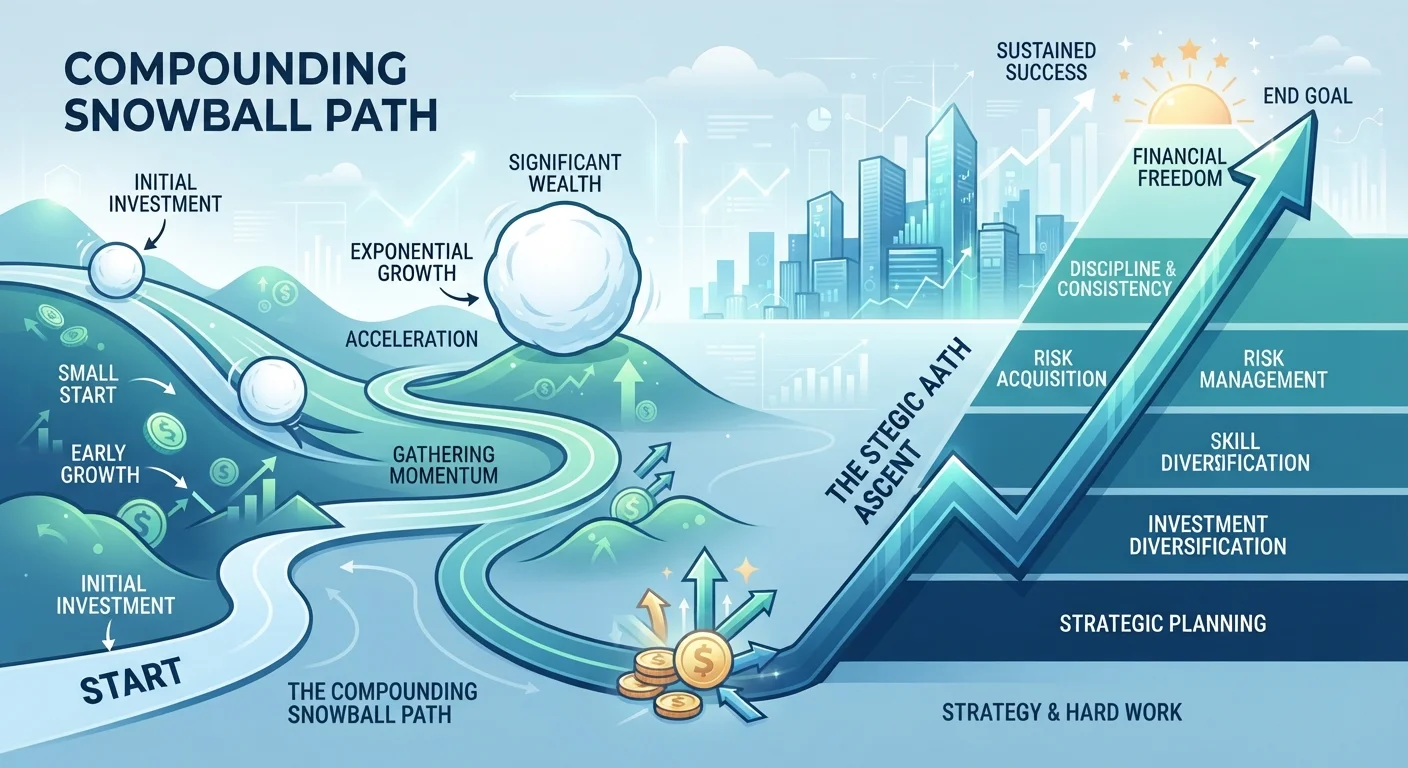
Debt Snowball: You rank your debts by balance, smallest to largest, regardless of interest rate. You throw extra money at the smallest balance until it's paid off, then roll that payment amount into attacking the next smallest. Each eliminated account is a concrete milestone — and that sense of completion is intentional.
If you're new to structuring a repayment plan, the beginner's debt roadmap walks through the setup steps before you choose a method.
| Criterion | Debt Avalanche | Debt Snowball |
|---|---|---|
| Payoff order | Highest interest rate first | Smallest balance first |
| Total interest paid | Lower (mathematically optimal) | Potentially higher |
| Time to first account eliminated | Slower if high-rate debt is large | Faster — quick early wins |
| Motivational structure | Long-term, numbers-driven | Short-term milestones, momentum-driven |
| Best when | Rate differences are large | Many small accounts to clear |
| Risk of abandonment | Higher if progress feels slow | Lower due to frequent payoffs |
The Real Difference: Math vs. Motivation
On paper, the avalanche always wins on cost. If you have a $5,000 credit card at 24% APR and a $1,000 medical bill at 0% interest, paying off the medical bill first under the snowball means you're carrying that 24% balance longer than necessary — and that costs you real money.
But debt repayment isn't a spreadsheet exercise. A 2012 study published in the Journal of Marketing Research found that consumers who focused on paying off individual accounts — rather than reducing aggregate balances — were more likely to eliminate debt entirely. The psychological reward of a zero-balance account appears to sustain effort in ways that pure interest math doesn't.
~$1,000+
Extra interest from suboptimal payoff order
Consumer Financial Protection Bureau examples illustrate how payoff sequence can add hundreds to thousands in avoidable interest on common debt loads.
~34%
Americans carrying credit card debt month to month
According to Federal Reserve survey data, roughly one in three US adults with credit cards carry a balance — making payoff strategy a live issue for millions.
This doesn't mean the snowball is universally superior. If your highest-interest debts also carry large balances, the interest accruing while you clear small accounts can be substantial. A general principle: the more your high-interest debts differ in size from your low-interest debts, the greater the cost of choosing snowball over avalanche.
For a broader view of how repayment fits into overall financial health, see the complete debt and credit guide.
Choosing the Right Method for Your Situation
There's no universal right answer here, and any credible financial educator will tell you the same. Consider these factors honestly:
- Your track record with financial plans: If you've started and abandoned debt payoff plans before, the snowball's early wins may be worth the extra interest cost.
- The spread between your interest rates: If your rates are clustered closely together, the avalanche's mathematical advantage shrinks considerably.
- How many accounts you're juggling: Multiple small accounts can create mental overload; clearing them quickly via snowball simplifies your finances even if it's not optimal on interest.
- Your cash flow stability: The avalanche can feel slow at the start if your highest-rate debt also has a large balance. Make sure you can sustain the plan for months before seeing an account hit zero.
It's also worth being aware of common missteps people make when trying to dig out — the patterns that make debt worse covers pitfalls like pausing minimum payments or raiding emergency funds that can derail either strategy.
And if your debt load is large enough that both methods feel overwhelming, debt consolidation may be worth understanding as a separate option — though it comes with its own trade-offs.
Neither Method Works Without a Budget
Both the avalanche and snowball require a consistent monthly surplus — money left over after essential expenses that can be directed toward debt. Without knowing your actual cash flow, picking a strategy is putting the cart before the horse. Before committing to either method, track your income and expenses for at least one month to identify how much you can realistically allocate. The long-term debt control principles article covers the budgeting habits that make any payoff strategy sustainable.
This article is for general informational and educational purposes only and does not constitute personalized financial advice. Consult a qualified financial professional regarding your specific situation.