
Understanding Credit Fundamentals
Credit is simply the ability to borrow money with a promise to repay it, usually with interest. When you use a credit card, take out a car loan, or carry a mortgage, you're using credit. Lenders report your borrowing and repayment behavior to the three major credit bureaus — Equifax, Experian, and TransUnion — which compile that data into your credit report.
Your credit report is distinct from your credit score. The report is a detailed record of your accounts, balances, payment history, and any public records like bankruptcies. The score is a three-digit number — typically ranging from 300 to 850 — that summarizes your creditworthiness at a glance. Under federal law, you're entitled to a free credit report from each bureau annually at AnnualCreditReport.com. Reviewing yours regularly is one of the simplest protective steps you can take.
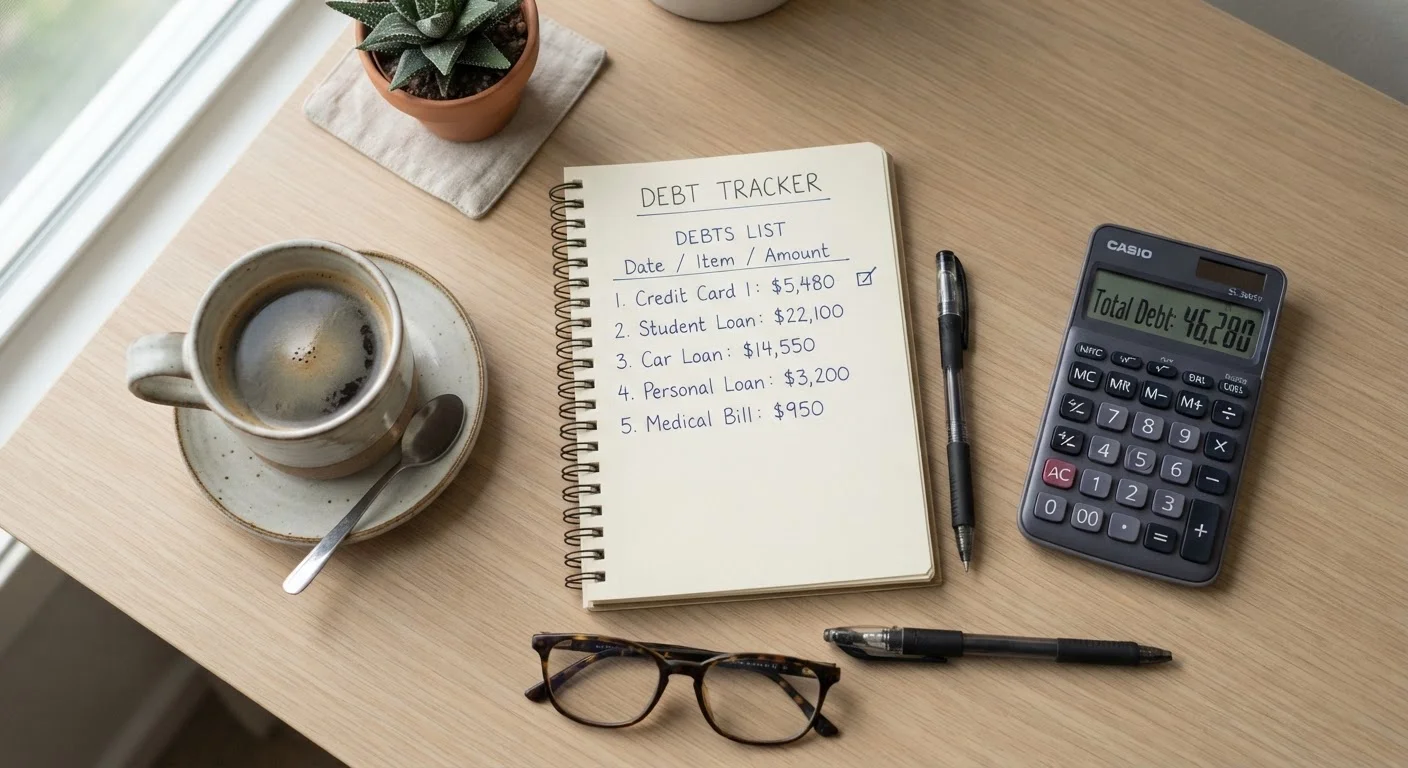
If you're new to managing debt overall, our beginner's roadmap walks through the fundamentals of listing what you owe and building a repayment starting point.
How Your Credit Score Is Calculated
The most widely used scoring model, FICO, breaks your score into five weighted categories:
- Payment history (35%): Whether you pay on time is the single biggest factor.
- Amounts owed (30%): Also called credit utilization — how much of your available credit you're using. Keeping this below 30% is generally advised.
- Length of credit history (15%): Older accounts signal experience with managing credit responsibly.
- Credit mix (10%): Having a variety of account types — revolving credit, installment loans — can help.
- New credit (10%): Applying for multiple new accounts in a short period can temporarily lower your score.
35%
Weight of payment history in FICO score
According to FICO's published scoring model breakdown, on-time payment history is the single largest factor in your credit score.
1 in 5
Americans with a credit report error
A Federal Trade Commission study found that approximately one in five consumers had an error on at least one of their credit reports.
30%
Recommended credit utilization ceiling
Credit experts and major bureaus generally advise keeping your utilization ratio below 30% of your total available credit.
Many assumptions about scoring are simply wrong. For instance, carrying a balance month-to-month does not build credit faster than paying in full — it just costs you interest. Common credit myths like this one can cost real money if you act on them.
Debt Repayment Strategies That Work
Two structured methods have a strong track record for helping people eliminate debt systematically:
The Avalanche Method
Pay minimum amounts on all debts, then direct every extra dollar toward the account with the highest interest rate. Once that's paid off, roll those payments to the next-highest-rate debt. Mathematically, this approach minimizes the total interest you pay over time.
The Snowball Method
Pay minimums on everything, but target the smallest balance first regardless of interest rate. Each paid-off account creates momentum and a psychological win that can sustain motivation. Research has shown that for some people, this behavioral boost leads to better overall completion rates.
Neither method is universally superior — the one you'll actually stick to is the right one. Before choosing, map out your full debt picture: balances, interest rates, and minimum payments. Pairing a repayment plan with a solid budget makes both strategies more effective. Budgeting basics can help you find the extra dollars to put toward debt each month.
Debt Consolidation Isn't Always Simpler
Rolling multiple debts into a single loan can lower your interest rate and simplify payments — but only if you avoid accumulating new balances on the accounts you just paid off. Without a spending plan in place, consolidation can leave you worse off than before. Always address the root spending behavior alongside any consolidation strategy.
Improving Your Credit Score Over Time
Credit improvement is rarely fast, but it is predictable. The actions that move the needle most reliably include:
- Pay every bill on time. Even one missed payment can stay on your report for up to seven years. Set up autopay for at least the minimum due on each account.
- Reduce your credit utilization. If your limit is $5,000 and your balance is $3,000, you're at 60% utilization — a red flag to lenders. Paying down balances or requesting a credit limit increase (without increasing spending) can help.
- Don't close old accounts unnecessarily. Closing an old card reduces both your available credit and the length of your history — two factors that can lower your score.
- Limit hard inquiries. Only apply for new credit when you genuinely need it.
- Dispute errors on your credit report. Inaccurate information is more common than most people expect. Each bureau has a formal dispute process, and errors that lower your score can be corrected.
If you're trying to lower your utilization quickly, ask your card issuer for a credit limit increase rather than opening a new account. A higher limit with the same balance immediately improves your ratio without triggering a new hard inquiry — if the issuer uses a soft pull to evaluate the request.
Credit utilization accounts for 30% of your FICO score, and reducing it is one of the fastest levers available to consumers without waiting months for payment history to accumulate.
Set up calendar reminders to check your credit reports from all three bureaus — staggering them every four months means you're effectively monitoring your file year-round for free.
Each of the three major bureaus maintains its own file, and errors or fraudulent accounts may appear on one but not the others. Rotating checks catch problems earlier.
When to Seek Professional Help
There's no shame in recognizing when debt has grown beyond what you can manage alone. Several types of professional support exist:
- Nonprofit credit counseling: Agencies accredited by the National Foundation for Credit Counseling (NFCC) offer free or low-cost budget reviews and debt management plans (DMPs). A DMP consolidates qualifying debts into a single monthly payment, often at a reduced interest rate negotiated with creditors.
- Debt settlement: Some for-profit companies offer to negotiate lump-sum payoffs for less than you owe. This can severely damage your credit and carry tax consequences — consult a qualified financial professional before pursuing it.
- Bankruptcy: A legal process that can discharge or restructure certain debts. It carries significant long-term credit consequences and should only be considered after consultation with a licensed attorney.
If you're unsure where to start, the Consumer Financial Protection Bureau (CFPB) maintains free resources and a directory of HUD-approved housing counselors for mortgage-related concerns. Whatever path you consider, verify that any professional or agency you work with is properly licensed and accredited.
Building Lasting Financial Habits
Managing debt and credit isn't a one-time fix — it's an ongoing practice. A few habits make the biggest difference over the long run:
- Review your credit reports at least once a year for errors or unfamiliar accounts.
- Build an emergency fund, even a small one, so unexpected expenses don't force you back into high-interest debt. Practical saving strategies can help you start small and grow steadily.
- Treat your debt repayment plan like a bill — non-negotiable each month.
- Celebrate milestones without undermining progress. Paying off an account is genuinely worth acknowledging.
The readers who make the most lasting progress aren't those with the highest incomes — they're the ones who stay consistent. Understanding how credit works, choosing a repayment method that fits your life, and knowing when to ask for help are the pillars that hold everything together.
This article is for general informational and educational purposes only and does not constitute personalized financial, legal, or credit advice. Consult a qualified financial professional for guidance specific to your situation.