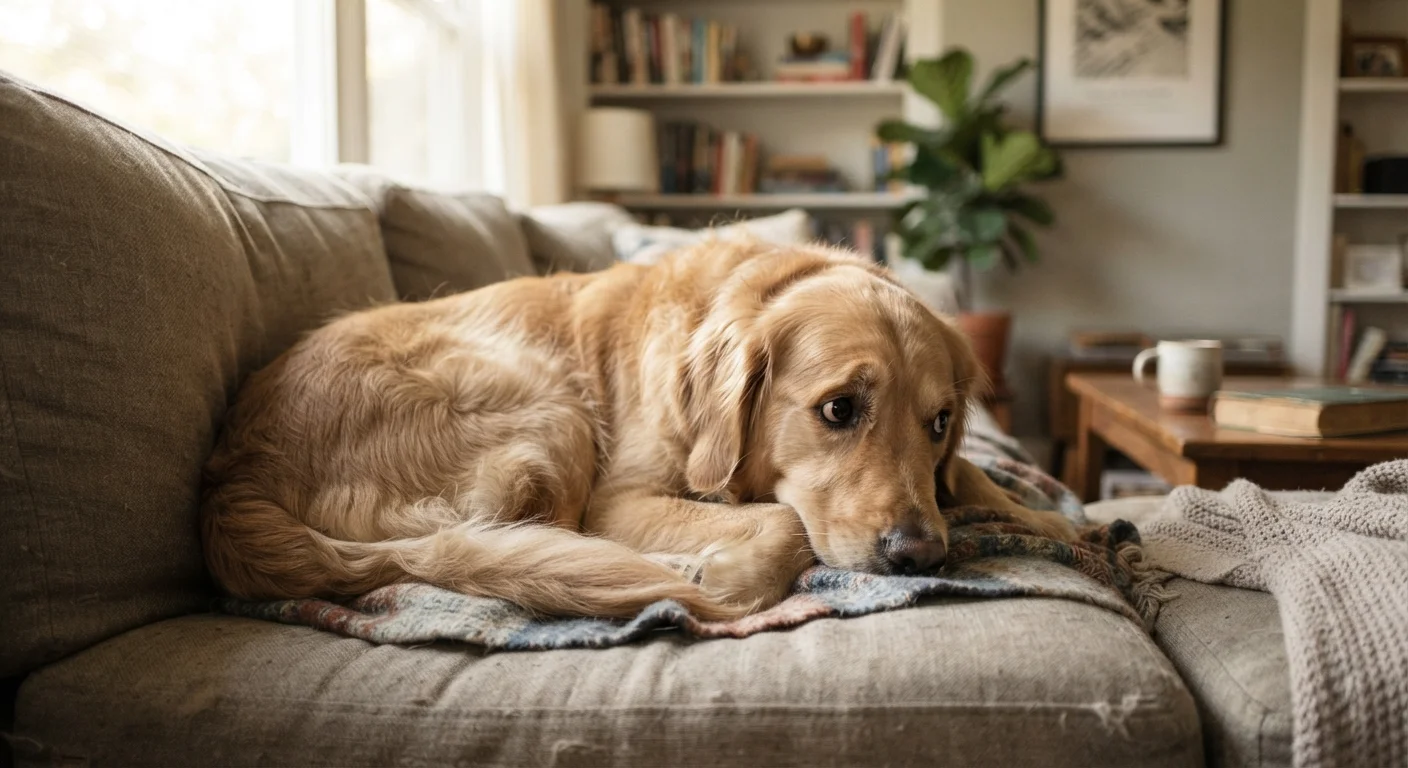
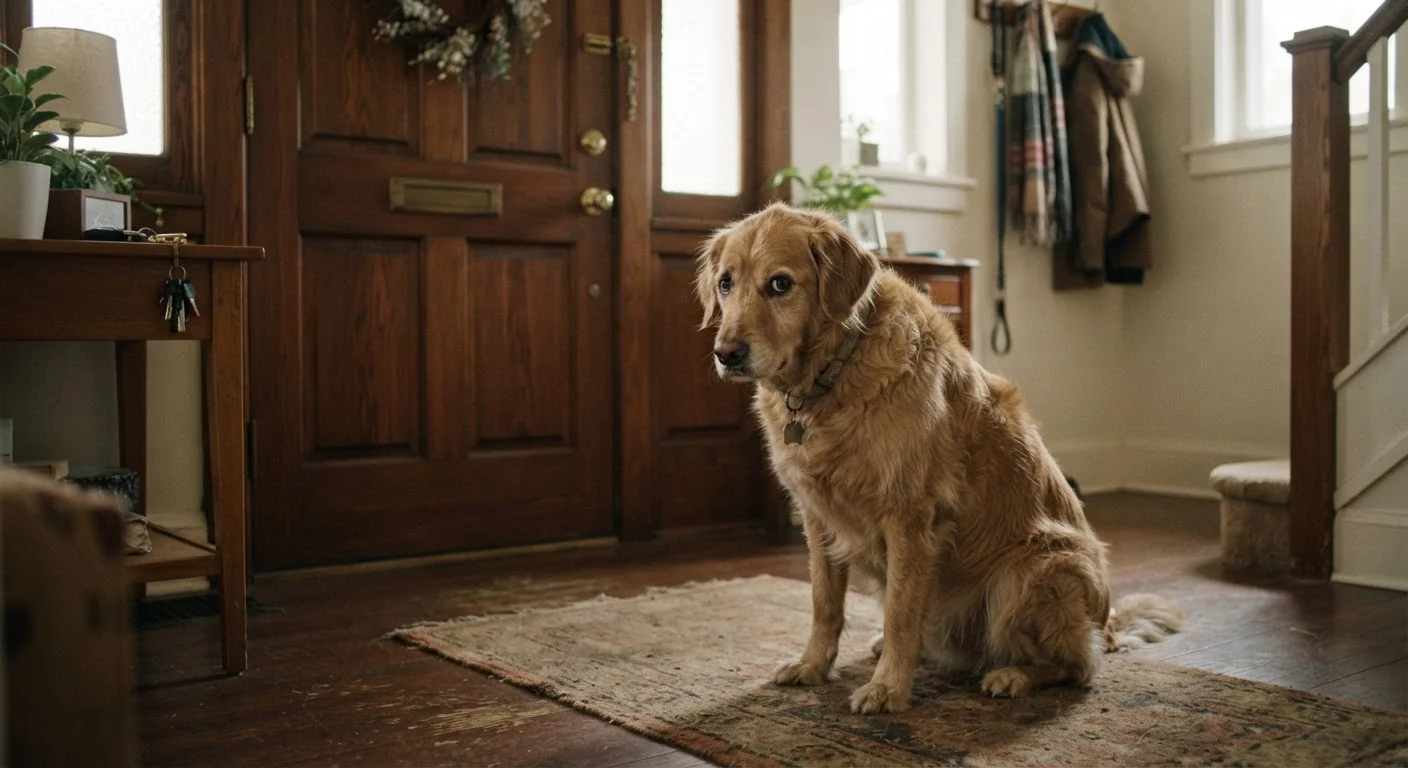
What Is Separation Anxiety in Dogs?
Separation anxiety is a behavioural condition in which a dog experiences significant distress when left alone or separated from the people it has bonded with. Unlike mild restlessness, true separation anxiety involves a physiological stress response — elevated heart rate, elevated cortisol, and visible panic — that the dog cannot simply "calm down" from through willpower alone.
This distinction matters. Dogs displaying separation anxiety are not being defiant or destructive on purpose. They are responding to a genuine emotional state they have not yet learned to regulate. Understanding this framing shapes everything about how owners can most effectively help. To explore how chronic stress of this kind can affect a dog's broader wellbeing, see our guide on how stress affects pet health.
Common Causes and Risk Factors
Separation anxiety does not have a single cause. Veterinary behaviourists generally recognise it as the result of multiple overlapping factors:
- Insufficient early independence: Puppies that are rarely left alone during the socialisation window may not develop the emotional tools to cope with solitude. See our article on socialising your puppy effectively for guidance on that critical period.
- Major life changes: Rehoming, loss of a household member, or a sudden shift in the owner's schedule (such as returning to work after a long period at home) can trigger the condition in previously settled dogs.
- Genetics and breed predisposition: Some breeds have been selectively bred for close human companionship and may be more prone to distress when isolated.
- Prior trauma or neglect: Dogs with a history of abandonment or inconsistent care are at higher risk.
Track Progress With Video, Not Just Memory
Setting up a phone or tablet to record your dog during your absence gives you objective data on when distress starts, how intense it becomes, and whether it is improving over time. Memory is unreliable when it comes to gradual behavioural change, and video evidence helps you calibrate each training session more accurately.
It is worth noting that separation-related behaviours exist on a spectrum. Some dogs show mild distress that resolves within minutes; others escalate continuously throughout an absence. Accurately identifying where on that spectrum your dog sits informs how intensive the intervention needs to be.
Recognising the Signs
The most telling feature of separation anxiety is that signs occur specifically during departures or absences — not throughout the day. Common indicators include:
- Excessive vocalisation (barking, howling, whining) shortly after the owner leaves
- Destructive behaviour concentrated near exits — doors, windows, and entry points
- House-training lapses in an otherwise reliably trained dog
- Pacing, trembling, or excessive salivation
- Frantic greeting behaviour when the owner returns
- Attempts to prevent the owner from leaving (following obsessively, blocking the door)
Video monitoring while away is one of the most reliable ways to confirm whether distress is genuinely separation-related. Because some of these signs — particularly changes in elimination habits or sudden restlessness — can also indicate underlying medical issues, ruling out physical causes with a veterinarian first is advisable. Our guide on signs your pet may be in pain can help you identify when a vet visit is warranted.
Set up a camera to record your dog while you are away before starting any training. Without objective footage, owners often underestimate how quickly — or how severely — distress begins.
Many owners return home to visible damage and assume their dog was distressed the entire time, when video often shows either a much shorter window of anxiety or, conversely, continuous distress that was not suspected. This data directly informs the training plan.
Avoid making departures and arrivals emotionally loaded events. Calm, matter-of-fact leave-takings and low-key returns help communicate to your dog that absences are ordinary, not significant.
Prolonged farewells and excited reunions can inadvertently heighten the contrast between presence and absence, reinforcing the idea that being alone is exceptional or concerning.
Gradual Desensitisation: A Structured Approach
Desensitisation is the process of exposing a dog to departure cues and short absences at an intensity low enough that it does not trigger a stress response, then systematically increasing that duration over time. The core principle: the dog must remain below its anxiety threshold at every step.
Step 1 — Neutralise Departure Cues
Before building up absence duration, identify the pre-departure rituals that already trigger anticipatory anxiety — picking up keys, putting on shoes, or reaching for a coat. Practice these cues dozens of times without actually leaving. The goal is to break the predictive association between the cue and the owner's absence.
Step 2 — Start With Micro-Absences
Begin leaving the dog alone for durations it can handle calmly — sometimes just a few seconds. Return before any sign of distress. Over many sessions, extend duration incrementally. Progress is measured in the dog's emotional state, not the clock. Sessions should never end in distress.
Step 3 — Build a Positive Association With Alone Time
Pairing departure with a food-stuffed puzzle toy or a long-lasting chew can help create a positive emotional association with solitude, provided the dog is calm enough to engage with it. If the dog ignores the food, that itself is a sign the threshold has been exceeded.
Step 4 — Vary the Pattern
Dogs learn to read patterns closely. Varying the duration of absences — rather than always increasing — prevents the dog from anticipating a "maximum" and then panicking when it is exceeded.
Supporting Your Dog's Progress
Desensitisation works alongside a broader lifestyle approach. Several supporting strategies are well-supported by veterinary behavioural guidance:
- Adequate physical and mental exercise before absences reduces baseline arousal and makes calm rest more likely.
- Avoiding punishment for separation-related behaviour — it does not address the underlying emotional state and is likely to worsen anxiety.
- Consistency between household members — all people in the home should follow the same departure and arrival routines to avoid sending mixed signals.
Tracking your dog's responses is genuinely useful. Look for the markers described in our article on signs your pet is thriving in training — engagement, relaxed body language, and voluntary participation are indicators that progress is real, not just surface compliance.
When to Seek Professional Help
Gradual desensitisation is effective for many dogs, but it requires time, consistency, and an ability to keep absences short during the training period — which is not always feasible. Severe cases may benefit from a combination of behaviour modification and veterinary support.
If your dog is injuring itself attempting to escape, cannot settle for even very brief absences, or shows no improvement after several weeks of consistent work, consult your veterinarian. They may refer you to a board-certified veterinary behaviourist (DACVB), who can provide a formal diagnosis and, where appropriate, discuss whether medical support might be indicated as part of a comprehensive treatment plan. Medication, when used, is a tool that supports — not replaces — behaviour modification.
For broader context on your pet's health and care, the Pet Health & Care hub provides vetted guidance across a range of conditions and concerns.
This article is for general informational and educational purposes only. It is not a substitute for professional veterinary advice, diagnosis, or treatment. Always consult a qualified veterinarian or veterinary behaviourist regarding your individual dog's health and behaviour.