Moisture Content: The Most Fundamental Difference
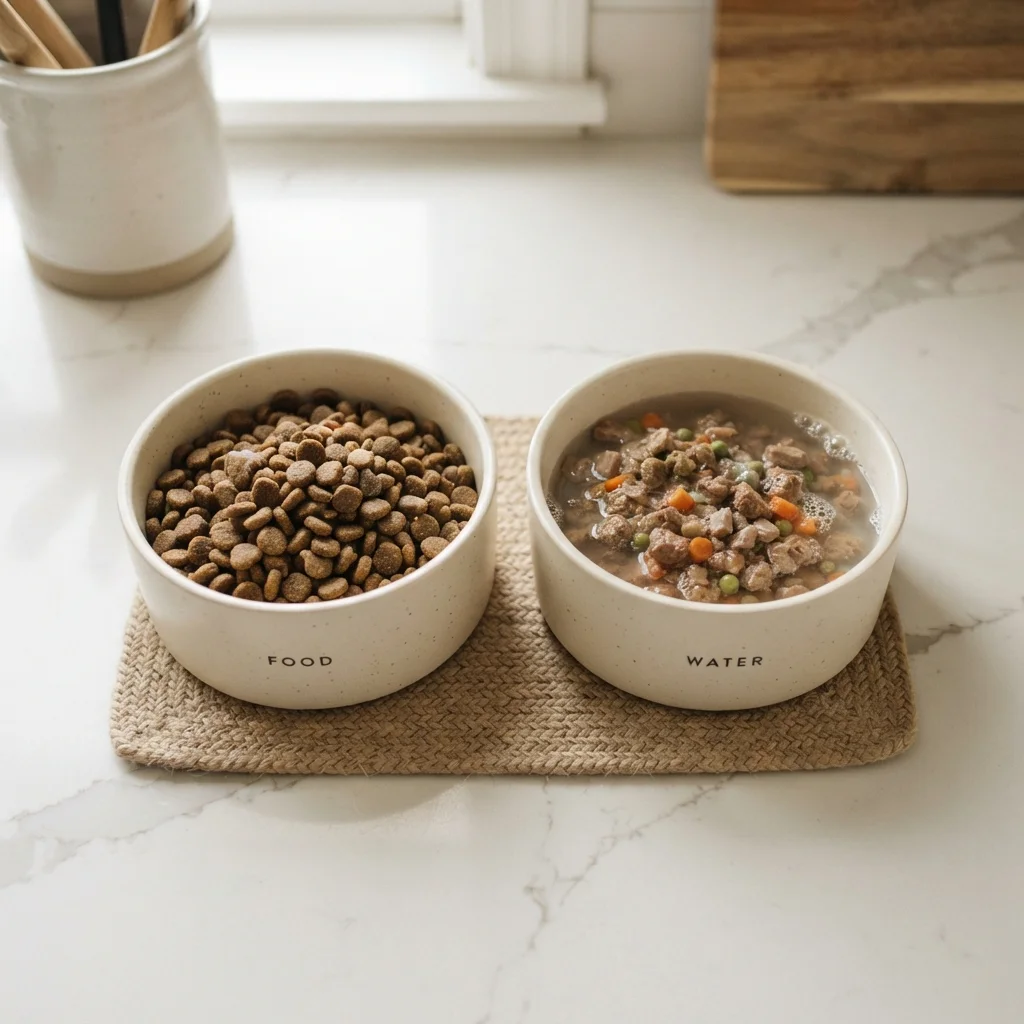
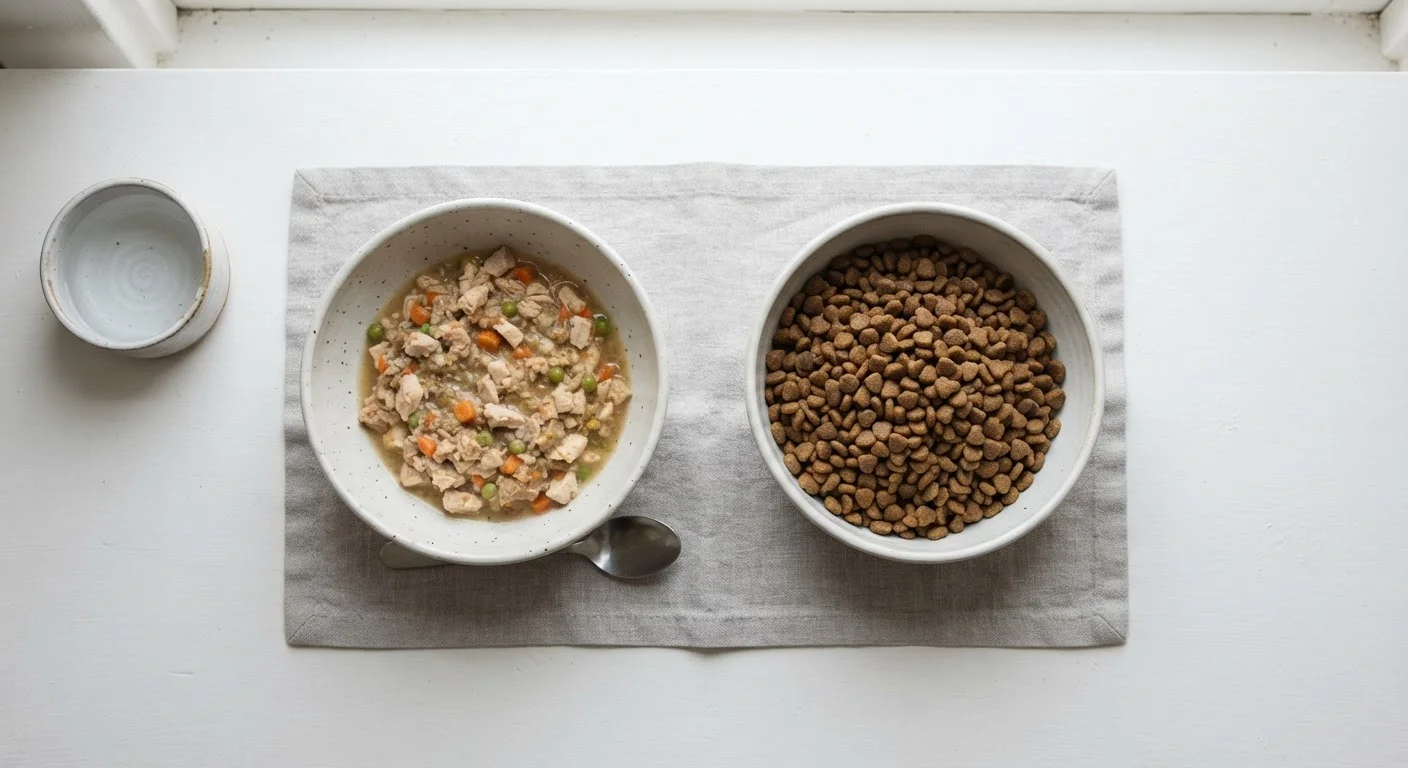
The single biggest nutritional gap between wet and dry pet food is water content. Wet food — including canned and pouched varieties — typically contains 70–80% moisture, while dry kibble generally contains just 8–12%. This distinction matters more than it might seem at first glance.
Because pets absorb much of their daily water through food, the format you choose directly affects their hydration. Cats in particular have a limited thirst drive rooted in their evolutionary history as desert-dwelling hunters who obtained moisture primarily from prey. Feeding a moisture-rich diet can meaningfully support their fluid intake in a way that a water bowl alone sometimes doesn't. For more on how hydration connects to overall nutrition and organ function, see our guide to hydration and nutrition.
Dogs are less moisture-dependent by nature but still benefit from adequate hydration, especially in warmer climates or during periods of activity. Pets with kidney disease, lower urinary tract conditions, or a history of dehydration may have a clinical reason to favor wet food — your veterinarian can advise based on your pet's specific health history.
| Criterion | Wet Pet Food | Dry Pet Food (Kibble) |
|---|---|---|
| Moisture content | 70–80% | 8–12% |
| Calorie density (per gram) | Lower | Higher |
| Palatability | Generally higher aroma and taste appeal | Variable; familiar for most pets |
| Dental benefit | Minimal; can leave residue | Mild mechanical abrasion in some formulas |
| Storage ease | Requires refrigeration after opening | Shelf-stable; easy to store |
| Cost per calorie | Generally higher | Generally lower |
| Best suited for | Cats, seniors, picky eaters, urinary health | Healthy adults, large breeds, multi-pet homes |
Caloric Density, Protein, and Feeding Amounts
Because wet food contains so much water, it is far less calorie-dense per gram than kibble. A single cup of kibble may contain three to four times the calories of the same volume of wet food. This means portion sizes and calorie math work very differently between the two formats — a mistake that's easy to make when switching formats or mixing them.
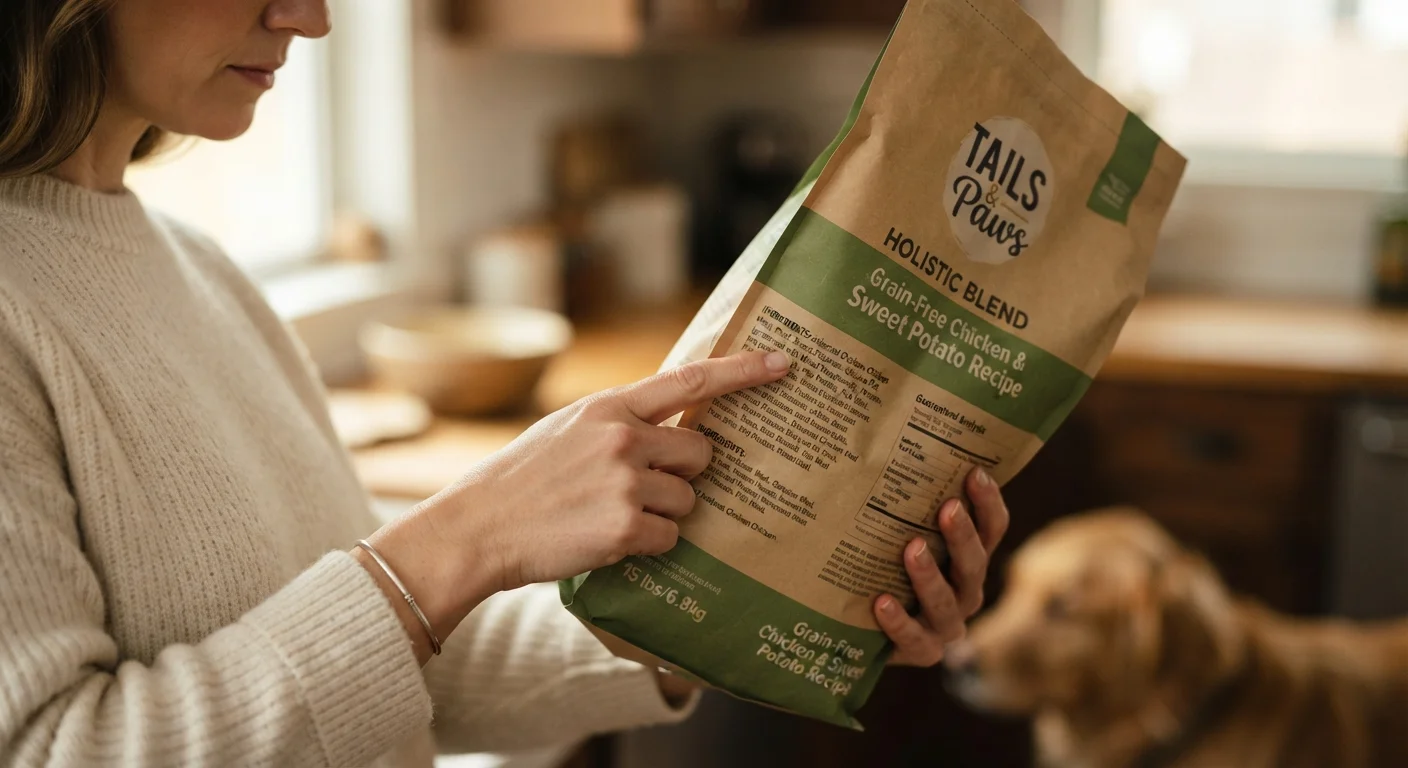
When comparing labels, always evaluate nutrition on a dry matter basis rather than as-fed percentages. The guaranteed analysis panel on a pet food label reflects nutrients including water weight, which can make wet food appear protein-rich when the actual dry matter protein levels are comparable to kibble. The label-reading guide explains how to decode this calculation step by step.
Both formats can provide complete and balanced nutrition when formulated to meet AAFCO (Association of American Feed Control Officials) standards. Neither is inherently higher quality — the ingredient sourcing, formulation, and feeding trial data behind any given product matter more than the format itself. For a deeper look at how wet and dry nutrition stacks up across specific pet types, our article on nutritional trade-offs for dogs and cats explores species-specific considerations.
70–80%
Moisture in typical wet pet food
Compared to 8–12% in dry kibble — a difference that directly affects daily fluid intake, particularly in cats.
3–4×
Calorie density advantage of kibble per gram
Dry kibble is significantly more calorie-dense than wet food of the same volume, making accurate portioning essential to avoid overfeeding.
~50%
Of US cat owners who feed wet food regularly
According to American Pet Products Association survey data, a substantial share of cat owners incorporate wet food as part of their feeding routine.
Dental Health: What the Evidence Actually Suggests
You may have heard that dry food is better for your pet's teeth. The reality is more nuanced. Some kibble is formulated and sized to create mild mechanical scrubbing as a pet chews, and a small number of products carry the Veterinary Oral Health Council (VOHC) seal, indicating they've met specific plaque- and tartar-reduction standards.
However, most standard kibble provides minimal dental benefit. Many pets — especially cats — barely chew kibble at all, swallowing it whole or in large pieces. Wet food, by contrast, leaves more residue on tooth surfaces due to its sticky texture. Neither format replaces the gold standard of dental care: regular tooth brushing with pet-safe toothpaste and periodic professional veterinary dental cleanings.
If dental health is a priority concern, speak with your veterinarian about VOHC-approved products or dental chews, rather than relying on food format alone as your primary strategy.
Practical Considerations: Cost, Storage, and Feeding Logistics
Dry kibble is generally more economical per calorie, easier to store without refrigeration, and simpler to portion accurately with a measuring cup or food scale. These practical advantages make it the dominant choice for many households, particularly those with larger dogs where food volume is significant.
Wet food requires refrigeration after opening and typically has a shorter use window — most opened cans should be used within two to three days. It also costs more per calorie in most cases. That said, some owners successfully use wet food as a meal topper or appetite stimulant alongside a dry food base, which can be a reasonable middle ground.
If you're evaluating a new food — whether wet, dry, or a mix — it's worth running through a structured checklist before committing. Our practical checklist for evaluating new pet food walks through what to look for, from ingredient sourcing to AAFCO statements and feeding trial data.
This article provides general educational information about pet nutrition and is not a substitute for individualized veterinary advice. Always consult a licensed veterinarian before making significant changes to your pet's diet, especially if your pet has a health condition.