
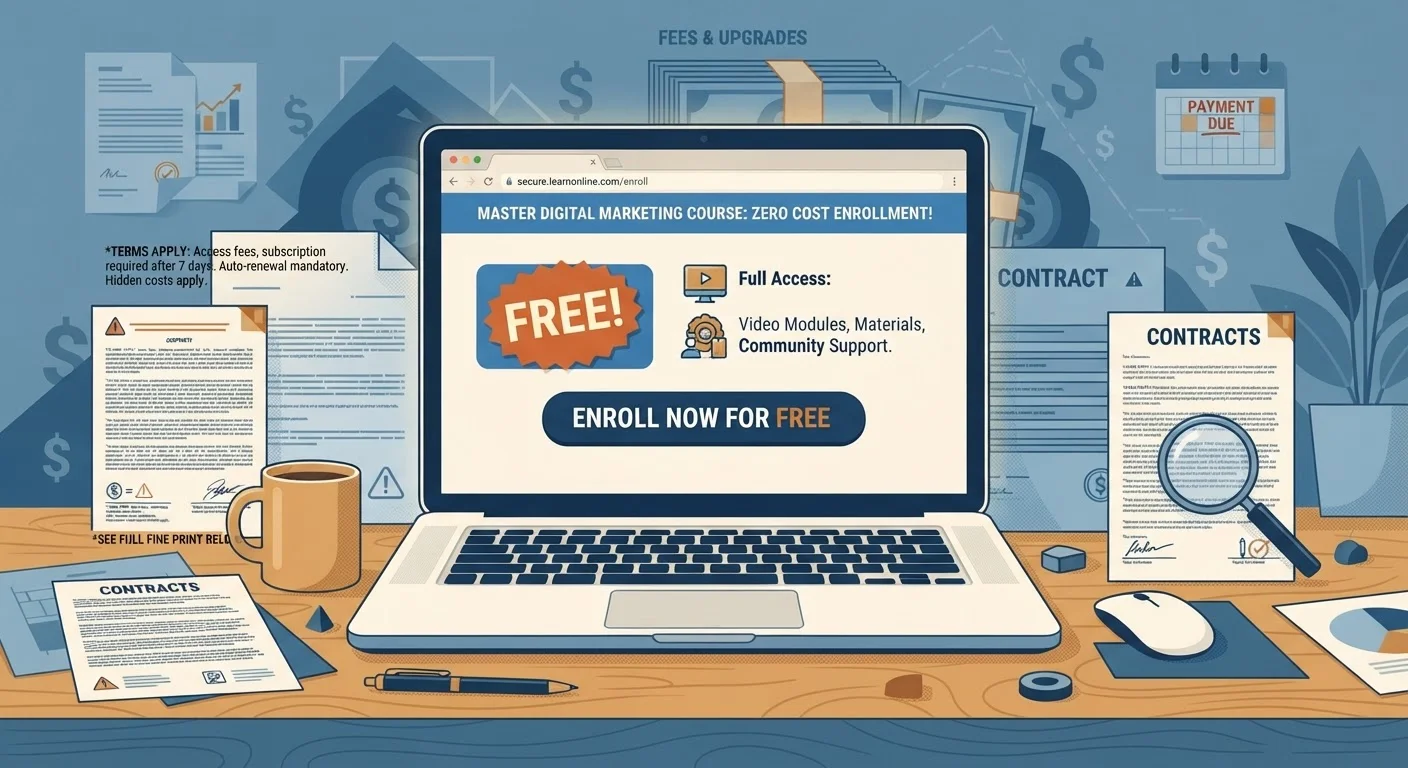
Why 'Free' Deserves a Second Look
The promise of free education has opened doors for millions of learners worldwide. Platforms offering no-cost access to university-level content represent a genuine shift in how people can build skills and knowledge. But the word "free" in online learning rarely tells the whole story.
Hidden costs come in several forms: financial upgrades, time investments, restricted access, and credential limitations. Understanding these trade-offs upfront helps you make an informed decision rather than a frustrated one midway through a course. Whether you're exploring a new career skill or deepening expertise, evaluating a course carefully before committing is always worth the effort.
Below, we address the most common misconceptions learners hold about free online courses - and what the reality actually looks like.
Myth
If a course is listed as free, I can access everything - videos, assignments, and a certificate - at no charge.
Fact
Most platforms offer two tiers: a free audit track with limited access and a paid track that includes graded assignments and certificates.
"Free" on major learning platforms typically means you can watch video lectures without charge. However, graded assignments, instructor feedback, and course completion certificates are almost universally gated behind a paid subscription or one-time fee. Some platforms also restrict access to discussion forums or peer-review activities for audit learners. Before enrolling, check the platform's access breakdown - it's usually listed in a comparison table on the course page.
Myth
A free online course certificate carries the same weight as one I paid for on the same platform.
Fact
Free audit access typically does not result in any certificate; only learners who pay for the verified or full track receive shareable credentials.
Certificates issued by online platforms generally require completion of all graded work and payment of a fee. Audit learners who finish all video content may still receive nothing verifiable. For professional or resume purposes, this distinction matters considerably. If a credential is your goal, confirm the certificate pathway and its cost before investing your time in a course.
Myth
Free courses don't cost me anything because money isn't leaving my account.
Fact
Time is a meaningful cost, and free courses can demand dozens of hours with no structured accountability to keep you on track.
A course listed as requiring four to six hours per week over eight weeks represents 32 to 48 hours of commitment. Unlike paid courses, where sunk-cost motivation can help retention, free courses have higher dropout rates partly because learners underestimate this investment upfront. Opportunity cost is real: hours spent on a course that doesn't fit your goals or learning style are hours unavailable for other pursuits. Treat time as a budget line when evaluating any course.
Myth
Free courses are always self-paced, so I can finish whenever it suits me.
Fact
Some free courses run on fixed schedules with deadlines, and audit access to self-paced versions may still expire after a set window.
Platform models vary significantly. Certain courses operate in cohort-based sessions with submission deadlines; missing them can mean losing access to content. Even self-paced offerings sometimes include an access expiration - commonly 90 to 180 days - after which materials become unavailable unless you pay to extend. If you're a slower or intermittent learner, understanding how different course formats actually fit your schedule is worth doing before committing to any enrollment.
Myth
All the materials I need to complete the course are included for free.
Fact
Some free courses require or strongly recommend paid textbooks, software subscriptions, or supplementary tools not included in the platform fee.
Instructors occasionally assign readings from textbooks that must be purchased separately, or require software that carries its own licensing cost. In technical fields, required tools (design software, data analysis platforms, coding environments) may have free tiers that are insufficient for course exercises. Always review the syllabus or materials list - usually available before enrollment - to identify any ancillary costs before you begin.
What You Can Do to Protect Your Time and Budget
Knowing the myths is only part of the equation. Here are practical steps to make free online learning genuinely work for you.
Watch for Expiring Audit Access
Free audit enrollment on many platforms comes with a time limit, often between 90 and 180 days. If your schedule is unpredictable or you learn at a slower pace, verify whether access expires before you enroll. Losing access to partially completed course materials mid-study is a common and frustrating experience that a quick review of the platform's terms can help you avoid.
- Read the course access details before enrolling. Look specifically for distinctions between "audit" and "full" access. Platforms typically list these differences on the enrollment page.
- Check certificate requirements early. If earning a credential matters for your goals, confirm upfront whether it requires payment and how much.
- Estimate the true time cost. Multiply the listed weekly hours by the course duration. A "free" 10-week course at 5 hours per week is a 50-hour commitment - real and significant.
- Explore alternatives. Formal courses aren't the only way to learn. Less conventional paths like open courseware, documentation, and community forums can deliver strong results without the enrollment complexity.
- Factor learning costs into your budget. If you anticipate upgrading, treat that fee as a planned expense. General budgeting strategies can help you allocate funds for education alongside other priorities.
For a broader view of what online education genuinely delivers - and where it falls short - see our balanced look at online learning's real trade-offs. And if you're still deciding on the right format, understanding self-paced versus instructor-led structures can help you match the format to your actual schedule and learning style.