
Why Formal Courses Aren't the Only Option
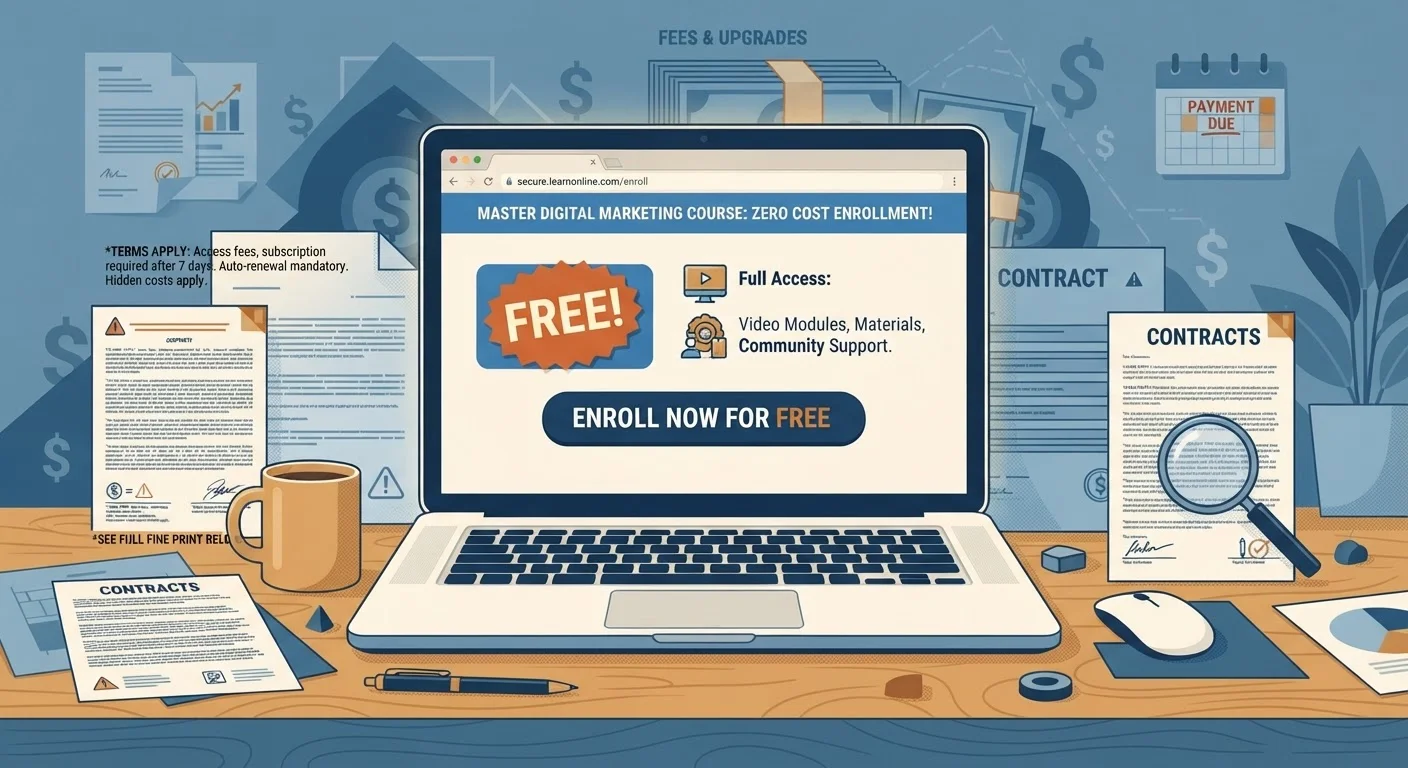
Most conversations about online learning default to the same starting point: find a course, enroll, complete it. But formal courses - even free ones - carry hidden demands. They require scheduled attention, often move at a pace set for the average learner, and can feel unnecessarily broad when you only need to fill one specific gap. For a fuller picture of how those trade-offs work, see our overview of what free courses really cost.
The good news is that the internet has always contained more learning material than any curriculum could organize. The challenge is knowing where to look and how to engage with what you find. The methods below are less obvious than signing up for a course - but for motivated, self-directed learners, they can be just as effective and considerably more flexible.
Read official documentation and technical wikis
For technical subjects - programming languages, software tools, data standards, scientific nomenclature - official documentation is often the most accurate and current resource available. It's written by the people who built or maintain the subject matter, updated when things change, and free. Many learners skip it because it looks dense, but reading documentation methodically, with a small project to test what you learn, builds a deeper understanding than most video courses can provide.
Non-technical fields have equivalents: agency handbooks, legislative text, standards bodies, and professional association guidelines are all forms of primary documentation worth reading directly.
Documentation is written by experts, updated constantly, and costs nothing - a rare combination.
Follow subject-matter podcasts with active note-taking
Podcasts span an enormous range of subjects, from molecular biology to constitutional law to product design. The difference between passive listening and genuine learning is what you do during and after. Pausing to write down an unfamiliar term, looking it up, and connecting it to something you already know turns a commute into a study session. Over weeks, a single well-chosen podcast series can build a solid conceptual framework for an unfamiliar field.
Look for shows hosted by practitioners rather than generalist journalists when depth matters. Episode transcripts, where available, make it easier to review specific passages.
Active note-taking during a podcast transforms passive listening into structured self-study.
Engage seriously with community forums and Q&A threads
Well-maintained forums - across topics like engineering, finance, language learning, cooking technique, and more - contain years of archived problem-solving in a searchable format. Reading not just the accepted answer but the reasoning and counterarguments in a thread teaches you how experts think through problems, not just what conclusions they reach. Asking your own questions, once you've done preliminary research, accelerates learning further by forcing you to articulate exactly where your understanding breaks down.
The quality of forums varies widely. Prioritize communities that are moderated, require sourcing for factual claims, and distinguish between opinion and evidence.
Reading the full thread - not just the top answer - reveals how experts actually reason.
Use open courseware without enrolling
Several universities publish full course materials - syllabi, lecture notes, problem sets, and reading lists - openly online, without requiring enrollment or login. These resources let you borrow the intellectual structure of a university course - the sequencing, the key texts, the problem types - while working at your own pace. You won't receive credit or feedback, but for building genuine knowledge, the materials themselves are the valuable part.
Start with the syllabus or reading list to understand the arc of the subject, then work through the materials in order. Treating it like an informal independent study rather than a casual browse produces much better results.
A university syllabus is a free intellectual roadmap - you don't need to enroll to follow it.
Read academic preprints and published abstracts
Preprint servers in fields like medicine, economics, psychology, and physics make working research papers publicly accessible before or alongside peer review. You don't need to read full papers to benefit: abstracts summarize the question, method, and finding in a few sentences. Reading abstracts regularly across a subject area gives you a live picture of what researchers are currently investigating and debating - context that most courses, written months or years earlier, can't provide.
Treat preprints as works in progress rather than settled conclusions. Peer review exists for a reason, and early findings sometimes change significantly before publication.
Preprint abstracts give you a current snapshot of active research debates that courses often miss.
Annotate primary sources directly
Whether it's a foundational essay, a landmark legal ruling, a classic design brief, or an influential speech, reading primary sources with a pen (or a digital annotation tool) in hand is one of the oldest and most effective learning methods available. Annotation forces you to slow down, question assumptions, and record your own reactions and questions - all of which strengthen comprehension and retention. Many important primary texts are in the public domain and freely available through digital archives and library databases.
This approach pairs well with forum discussions or podcast episodes that analyze the same material, giving you an outside perspective to compare against your own reading.
Annotating a primary source forces engagement that simply reading through rarely achieves.
Putting It All Together
None of these methods requires enrollment, tuition, or a fixed schedule. What they do require is intentionality: deciding in advance what you want to understand, choosing sources that match that goal, and building a lightweight habit of reviewing and applying what you absorb. A short weekly review session - even twenty minutes of re-reading notes from a forum thread or podcast episode - dramatically improves retention compared to passive consumption.
Build a simple learning log
Keep a single document - digital or paper - where you record sources consulted, key terms learned, and open questions from each session. Reviewing it once a week surfaces patterns in what you're absorbing and reveals gaps worth pursuing. This practice costs no extra time and meaningfully improves how much informal learning actually sticks.
If you're still mapping out your broader learning strategy, our comprehensive guide to self-directed online education covers how to set goals, evaluate sources, and build study habits that hold. And if you're weighing these informal approaches against structured formats, matching learning formats to your goals can help you decide when a formal course genuinely makes sense.