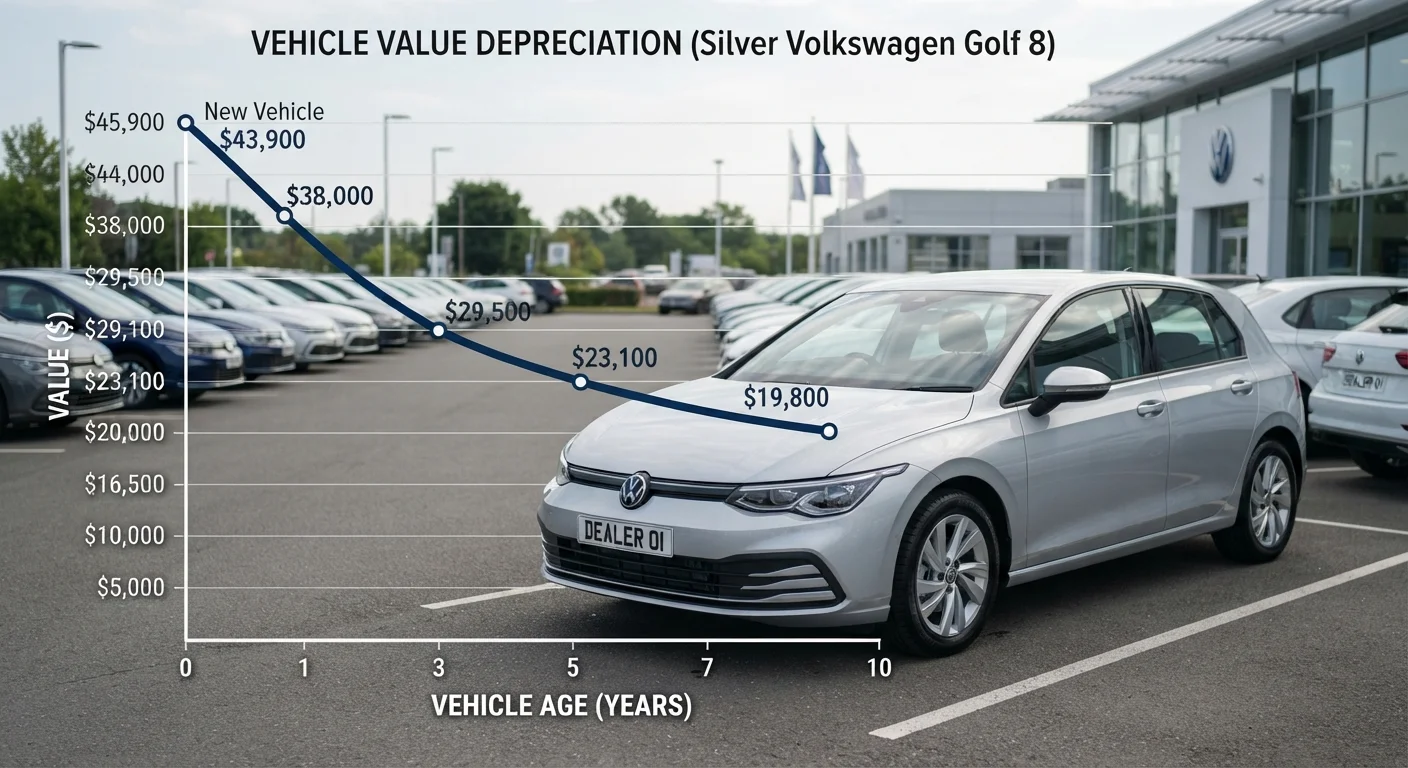

Why Vocabulary Matters at the Dealership
Walking into a dealership unprepared can feel like sitting through a meeting conducted in a foreign language. Terms like money factor, dealer holdback, and cap cost reduction get used casually by finance managers - and a buyer who doesn't recognize them is at a disadvantage. This glossary covers the key terminology you're likely to encounter when purchasing or leasing a vehicle, whether at a franchise dealership or through a private party.
Understanding these terms won't guarantee a perfect deal, but it will help you ask sharper questions and recognize when a number deserves a second look. For a deeper look at how common beliefs about the buying process can work against you, see our Car-Buying Myths That Cost Shoppers Money.
MSRP
Manufacturer's Suggested Retail Price - the sticker price set by the automaker. It is a reference point, not a mandatory selling price, and actual transaction prices regularly fall above or below it.
Invoice Price
The price a dealer pays the manufacturer for a vehicle before factory incentives and holdbacks are applied. Often used as a benchmark in price negotiations, though it does not represent the dealer's final cost.
Dealer Holdback
A manufacturer reimbursement - typically 1-3% of MSRP - paid to the dealer after a vehicle is sold. It allows dealers to sell at or near invoice while still retaining a margin.
Out-the-Door Price
The complete, all-in purchase price including taxes, title, registration, and any applicable dealer fees. This is the number that determines your actual financial obligation.
APR
Annual Percentage Rate - the yearly cost of a loan expressed as a percentage. It includes the interest rate and, in some contexts, associated fees, making it a more complete measure of borrowing cost than the interest rate alone.
Money Factor
The financing rate used in lease calculations, expressed as a small decimal. Multiplying the money factor by 2,400 gives an approximate APR equivalent, useful for comparing lease and loan financing costs.
GAP Insurance
Guaranteed Asset Protection insurance covers the gap between the remaining loan balance and the vehicle's actual cash value if the car is totaled or stolen. It is especially relevant for buyers who put little money down or finance for long terms.
Residual Value
The estimated market value of a leased vehicle at the end of the lease term, set by the lender and expressed as a percentage of MSRP. It is a key driver of monthly lease payment amounts.
Capitalized Cost
The agreed price of a leased vehicle - equivalent to the financed amount in a purchase loan. Reducing the cap cost through negotiation or a down payment lowers the monthly payment.
Doc Fee (Documentation Fee)
A dealer-charged administrative fee for processing purchase paperwork. Amounts vary widely by state and dealership; some states cap the amount dealers may charge.
Trade-In Allowance
The value a dealer credits toward your purchase in exchange for your current vehicle. This figure is separate from the new car's selling price and should be negotiated independently.
Acquisition Fee
A fee charged by the leasing company - not the dealer - to set up a lease contract. It typically ranges from a few hundred dollars to over one thousand dollars and is often rolled into the lease.
Key Terms Explained: Price, Fees, and Financing
The numbers on a car deal move through several layers before becoming your monthly payment. Here's a breakdown of the most consequential terms in each category.
| Terms most likely to affect your payment | APR, cap cost, residual value, money factor |
| Holdback range (typical) | 1-3% of MSRP (General industry practice) |
| Money factor conversion | Multiply by 2,400 to estimate equivalent APR |
| Doc fee variability | Ranges from under $100 to $800+ depending on state (Varies by state regulation) |
| GAP coverage relevance | Most critical in early loan years when depreciation outpaces payoff |
Price-Related Terms
- MSRP (Manufacturer's Suggested Retail Price): The price the manufacturer recommends the vehicle be sold for. It is a starting point, not a fixed rule - actual transaction prices vary above or below it depending on supply and demand.
- Invoice Price: What the dealer paid the manufacturer for the vehicle, before manufacturer incentives and holdbacks. It is not the dealer's true cost, but it is a useful data point when researching a fair offer.
- Dealer Holdback: A percentage of MSRP (typically 1-3%) that the manufacturer reimburses to the dealer after the car sells. Because holdback is paid post-sale, a dealer can technically sell at invoice and still profit.
- Out-the-Door Price: The total amount you'll actually pay, including taxes, title, registration fees, and any dealer fees. Always request this figure in writing before signing.
Financing Terms
- APR (Annual Percentage Rate): The annualized cost of borrowing, expressed as a percentage. A lower APR means less paid in interest over the loan term. Your credit profile strongly influences the rate you're offered - see our Debt & Credit hub for context on how credit scores affect borrowing costs.
- Money Factor: A lease-specific financing rate, expressed as a very small decimal (e.g., 0.00125). Multiply it by 2,400 to convert it to an approximate APR equivalent. This lets you compare lease financing costs to loan rates.
- GAP Insurance (Guaranteed Asset Protection): Covers the difference between what you owe on a loan and what your vehicle is worth if it's totaled or stolen. Because cars depreciate faster than loans are paid down in early years, GAP coverage can prevent significant financial exposure. For more on how depreciation affects your position as a buyer, see our article on car depreciation and what it means for your budget.
Lease-Specific Terms
- Capitalized Cost (Cap Cost): The agreed-upon selling price of the vehicle in a lease - essentially the amount being financed.
- Residual Value: The projected worth of the vehicle at lease end, expressed as a percentage of MSRP. A higher residual value generally results in lower monthly payments. Learn more in our plain-language breakdown of how lease numbers work.
- Cap Cost Reduction: A down payment applied to a lease that reduces the capitalized cost. It lowers monthly payments but does not build equity.
- Acquisition Fee: A fee charged by the lender (not the dealer) to originate a lease, typically ranging from a few hundred to over a thousand dollars.