Why Ground Transportation Deserves a Line in Your Budget
Most travelers obsess over flights and hotels, then treat ground transportation as an afterthought. That approach can be costly. In major U.S. and international cities, getting around can easily add $30–$80 per day per person if you default to ride-shares without a plan. If you've already worked through your overall spending in a guide like building a realistic travel budget, your ground transport costs deserve the same scrutiny.
The right mode depends on your destination's infrastructure, your itinerary's geography, the size of your travel party, and how much you value time versus money. Here's what each option actually delivers.
Rail Transit: Reliable, Predictable, and Often Underused
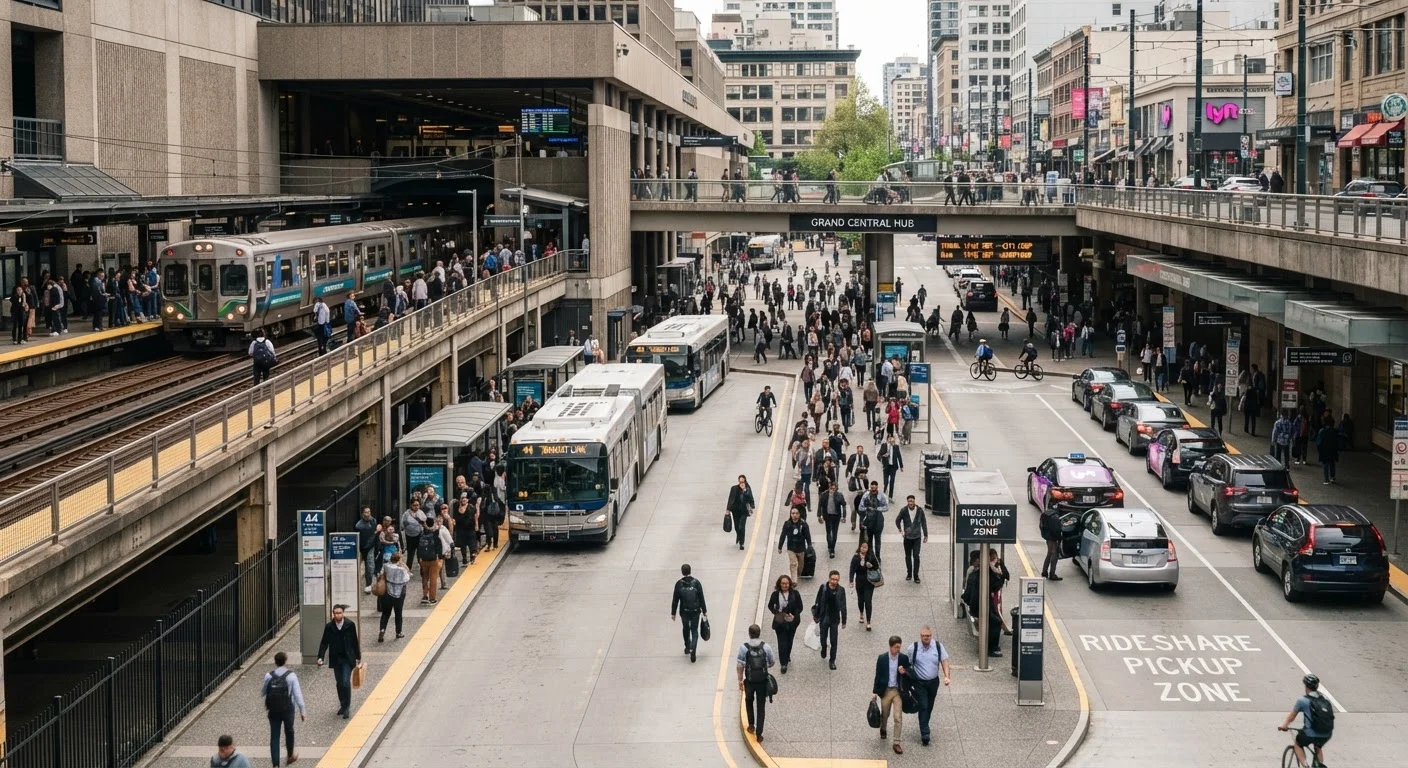
In cities with well-developed metro or commuter rail systems — think New York, Chicago, Washington D.C., Boston, and many major European cities — rail is frequently the most time-efficient and cost-stable option. Fixed fares eliminate the pricing anxiety that comes with ride-shares, and dedicated rail corridors bypass surface traffic entirely.
A single-ride metro fare in most large U.S. cities ranges from roughly $2.50 to $3.50. Multi-day unlimited passes, where available, can drop that effective per-ride cost dramatically if you plan to move around frequently. Rail is also physically accessible in most modern systems, with elevators and ramps at major stations, though coverage varies widely.
The limitation is reach. Rail networks serve high-density corridors well but often leave neighborhoods off the main lines underserved. If your hotel or key destination sits outside a transit corridor, you'll need to combine rail with another mode for that last stretch.
Check for Transit Passes Before You Arrive
Many cities offer visitor transit passes — one-, three-, or seven-day unlimited-ride cards purchasable at airport kiosks or online before departure. If you're planning a busy itinerary, do the math: a $30 unlimited pass beats paying per-ride fares within a day or two of normal use. Look for the transit authority's official website for your destination to find current pass options and pricing.
Public Buses: The Most Affordable Option with a Learning Curve
City buses are routinely the cheapest way to get from point A to point B, with fares often at or below metro prices — and in some cities, integrated so a single pass covers both. The trade-off is time and route complexity. Buses share lanes with traffic, which means travel times are harder to predict, and figuring out which route to take in an unfamiliar city takes a bit of homework.
Tools like Google Maps, Citymapper, and Transit App have reduced this friction considerably. Downloading your destination's transit map before arrival and identifying two or three key routes for your planned stops is a 20-minute exercise that pays off across an entire trip.
For travelers keeping a close eye on spending — including those weighing accommodation trade-offs covered in our guide to budget stays — buses are the obvious way to hold transport costs near zero on low-activity days.
| Rail Transit | Public Bus | Ride-Share | |
|---|---|---|---|
| Typical cost (per trip) | $2.50–$3.50 | $1.75–$3.00 | $8–$25+ (variable) |
| Price predictability | High — fixed fares | High — fixed fares | Low — surge pricing applies |
| Door-to-door convenience | Low — station-to-station | Medium — stop-to-stop | High — pickup/dropoff anywhere |
| Route coverage | Limited to rail corridors | Broad but variable | Near-universal with cell service |
| Speed in traffic | Fast — dedicated tracks | Slow — shares road lanes | Variable — traffic dependent |
| Best for group travel | Good if near stations | Good if route works | Strong — shared fare advantage |
| Learning curve for newcomers | Low — clear route maps | Medium — route research needed | None — app-based navigation |
Ride-Shares: Convenient but Contextual
Ride-share apps (services that connect riders with drivers via smartphone) have become a default for many travelers, and the convenience case is real: door-to-door pickup, no route research, works almost anywhere with cell coverage. But the cost case is weaker than it appears.
Base fares are manageable. The problem is surge pricing — algorithmically driven fare multipliers that can double or triple costs during rush hour, bad weather, major events, or late-night hours. A $14 airport run can become a $38 ride on a busy Friday evening. Budget travelers who rely on ride-shares as their primary mode can easily spend two to three times what rail or bus would have cost over the course of a multi-day trip.
Where ride-shares genuinely earn their place: late-night travel when transit has stopped running, trips with multiple large bags, routes that transit serves poorly, and — crucially — group travel. As explored in solo vs. group travel trade-offs, splitting a $20 ride-share four ways makes it cheaper per person than individual transit fares in many cases.
Building a Mixed-Mode Strategy That Works for Your Trip
The most cost-effective approach for most destinations isn't picking one mode and sticking with it — it's matching the mode to the trip segment. Use rail for airport connections and cross-city corridors where service is frequent and reliable. Use buses for neighborhood-level movement during the day. Reserve ride-shares for situations where the convenience genuinely justifies the premium: late arrivals, heavy luggage, or locations transit doesn't serve well.
Before you travel, spend 15 minutes on your destination's transit authority website or a transit app to identify whether a day pass or multi-day pass makes financial sense given your itinerary. Factor ground transport into your overall trip budget from the start — it's a line item in any honest end-to-end travel planning framework, not an afterthought.
Also worth checking: whether your credit card offers ride-share credits or transit benefits. These don't change the underlying strategy but can offset costs when you do use premium options.