What a Credit Report Actually Is
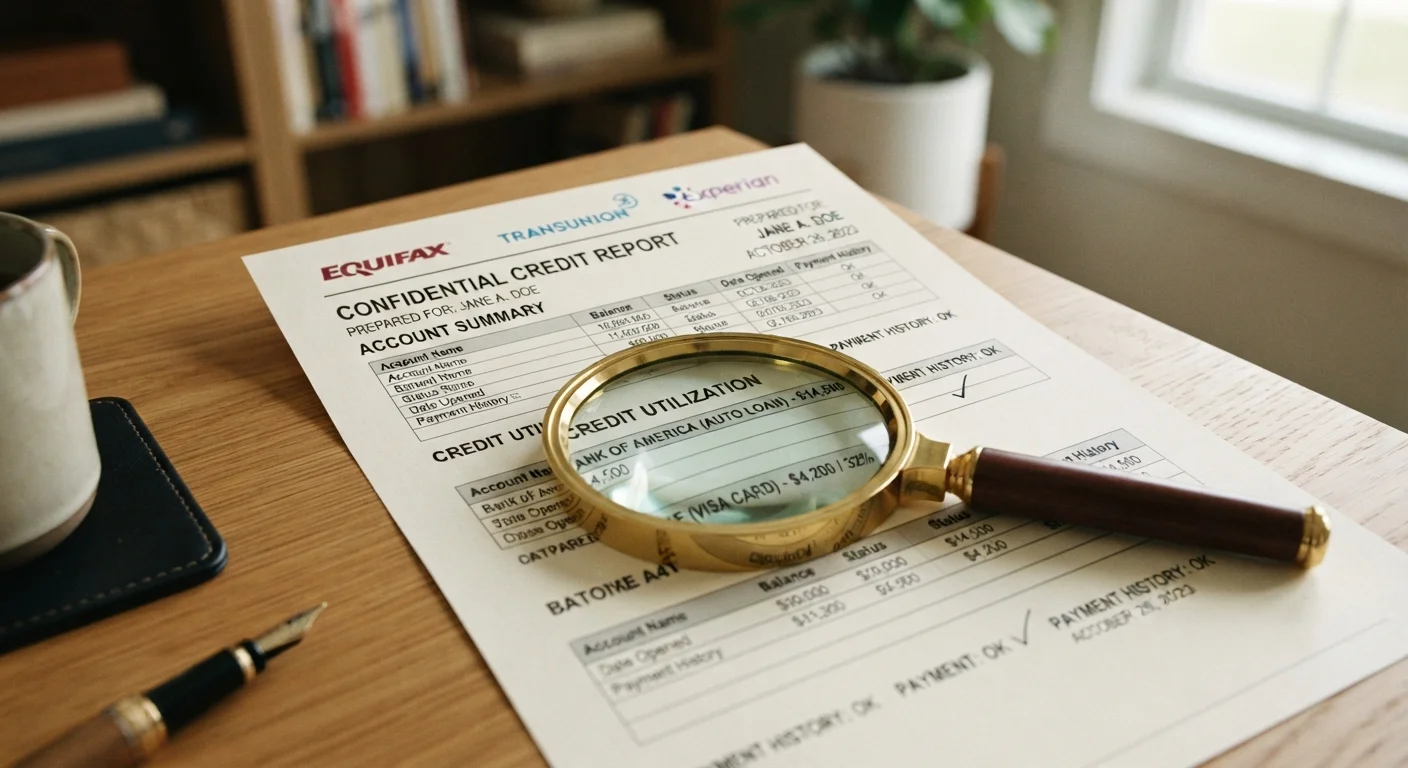
Your credit report is a detailed record of how you've managed borrowed money over time. It's compiled by three major credit bureaus — Equifax, Experian, and TransUnion — and used by lenders, landlords, and sometimes employers to assess your financial reliability. You're entitled to a free report from each bureau at AnnualCreditReport.com.
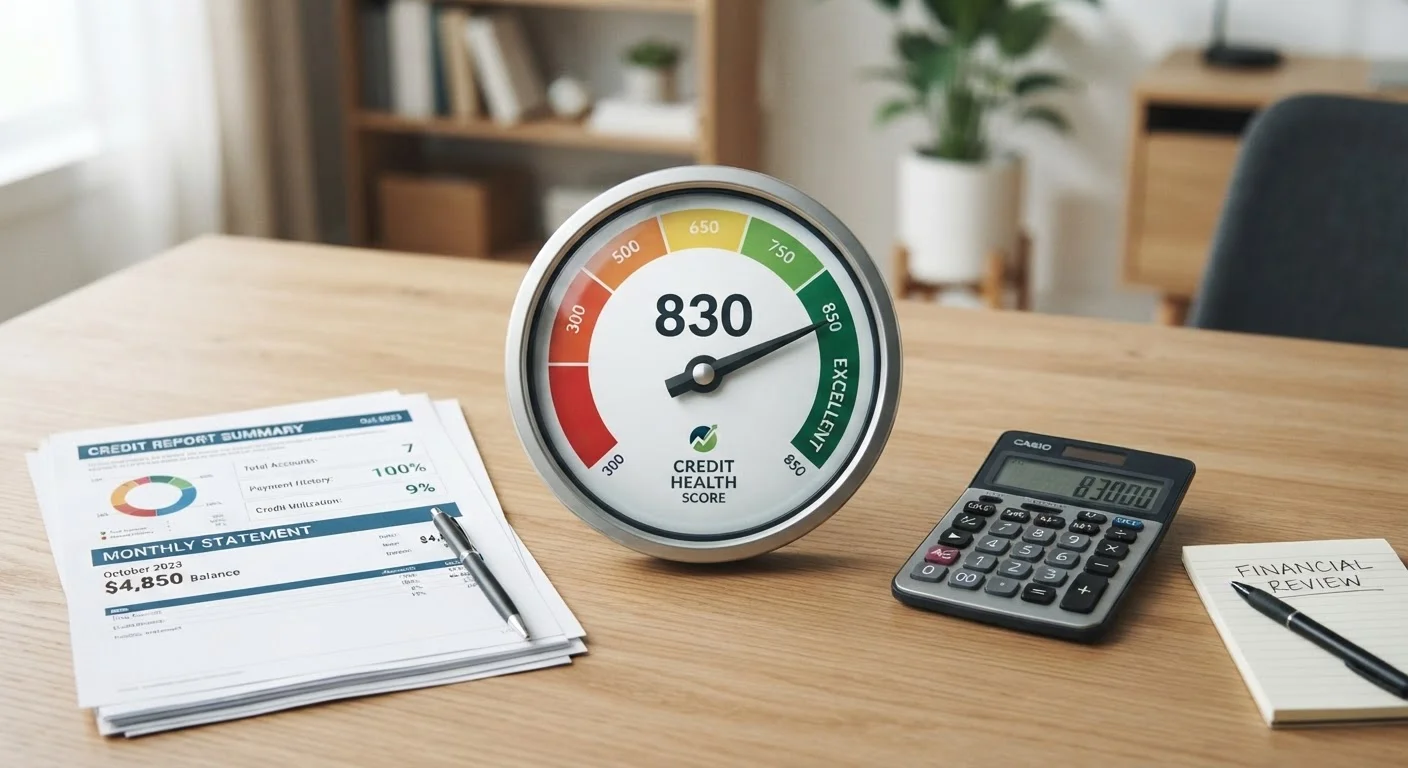
Understanding what's inside matters. A number on a scoring model tells lenders little without the underlying data that generated it. If you want to understand how that number works, see our plain-language breakdown of credit scores. This guide focuses on the report itself — what each section contains and what it signals.
| Number of Major Credit Bureaus | 3 (Equifax, Experian, TransUnion) (Consumer Financial Protection Bureau (CFPB)) |
| Free Reports Available Per Year | 3 (one per bureau) via AnnualCreditReport.com (Fair Credit Reporting Act (FCRA)) |
| How Long Late Payments Stay on Report | Up to 7 years (Fair Credit Reporting Act (FCRA)) |
| How Long Chapter 7 Bankruptcy Stays on Report | Up to 10 years (Fair Credit Reporting Act (FCRA)) |
| How Long Hard Inquiries Remain | Up to 2 years (Consumer Financial Protection Bureau (CFPB)) |
| Right to Dispute Inaccurate Information | Free, guaranteed by federal law (Fair Credit Reporting Act (FCRA)) |
Section by Section: What You'll Find
Most credit reports are divided into four core areas. Here's what each one contains:
Personal Information
This section lists your name (including variations), current and past addresses, date of birth, Social Security number (partially masked), and employers on record. This data doesn't affect your score, but inaccuracies here — like an unfamiliar address — can be an early sign of identity theft. Review it carefully.
Account History (Trade Lines)
This is the largest and most score-relevant section. Each credit account — credit cards, auto loans, mortgages, student loans — appears as a separate trade line. For each account you'll typically see: the creditor's name, account type, date opened, credit limit or loan amount, current balance, payment history month by month, and account status (open, closed, in collections). Lenders focus heavily on payment history and credit utilization here. Late payments are flagged and can remain on your report for up to seven years.
Inquiries
Every time a lender checks your credit with your permission, a hard inquiry is recorded. These occur when you apply for credit and can modestly lower your score for a short period. A soft inquiry — from background checks, pre-approval offers, or your own review — does not affect your score. Hard inquiries generally remain on your report for two years. Multiple hard inquiries for the same loan type (mortgage or auto) within a short window are often treated as a single inquiry by scoring models.
Public Records and Collections
Bankruptcies are the primary public record still reported on credit files. Chapter 7 bankruptcies can remain for up to ten years; Chapter 13 for seven. Collection accounts — debts sold to a collection agency after non-payment — also appear here and can significantly impact your score. If you find unfamiliar or incorrect entries in any section, you have the legal right to dispute them. Our guide to disputing credit report errors walks through the formal process step by step.
Trade Line
An individual credit account entry on your credit report. Each loan or credit card you've held appears as its own trade line with details like balance, limit, and payment history.
Hard Inquiry
A credit check initiated when you apply for new credit, recorded on your report and visible to lenders. Hard inquiries can have a small, temporary negative effect on your credit score.
Soft Inquiry
A credit check that does not affect your score, such as when you check your own report or a lender pre-screens you for an offer. Only you can see soft inquiries on your report.
Credit Utilization
The percentage of your available revolving credit (like credit card limits) that you're currently using. High utilization ratios are generally associated with lower credit scores.
Collection Account
A delinquent debt that a creditor has sold or assigned to a collection agency after the borrower failed to pay. Collection accounts are reported on your credit file and can remain for up to seven years.
Charge-Off
When a creditor writes off a debt as a loss after extended non-payment — typically 180 days. A charge-off doesn't erase the debt; the borrower still owes it, and it remains on the credit report.
Reading Your Report Without Getting Overwhelmed
First-time readers often find credit reports dense. A practical approach: go section by section, compare your report across all three bureaus (they don't always contain identical information), and flag anything you don't recognize. Not every error hurts your score, but some do — and federal law gives you the right to correct inaccurate information at no cost.
Think of reading a credit report like reading any other detailed record — similar in spirit to interpreting a vehicle history report: individual entries only make sense when you understand the categories they belong to. For a broader strategy covering debt repayment and long-term credit health, the complete guide to managing debt and credit is a useful next step.
This article provides general financial education and is not personalized financial or legal advice. For guidance specific to your situation, consult a qualified financial professional.