Why Dogs Jump Up in the First Place
Jumping up is one of the most instinctive greeting behaviours in dogs. Puppies jump toward their mother's face to solicit food and attention, and that impulse carries into adulthood. When your dog launches at you the moment you walk through the door, they're not being dominant or defiant — they're saying hello in the most natural way they know.
The behaviour persists largely because it works. If a jumping dog receives any response — even a sharp "No!" or a push away — they've successfully gained your attention. From the dog's perspective, an animated reaction is better than being ignored. This is why scolding or physically pushing a dog down often makes jumping worse over time rather than better.
Excitement, under-stimulation, and inconsistent responses from different people all amplify the problem. Understanding this root cause shifts the focus from correcting a "bad" dog to teaching a dog who simply hasn't yet learned what we want from them. That mindset is the foundation of effective training — and it tends to strengthen the human-dog bond considerably. For more on what genuine training engagement looks like, see Signs Your Pet Is Thriving in Training — Not Just Complying.
What You'll Need Before You Start
No specialised equipment is required, but a few things will make the process smoother and more consistent.
What you will need
High-value training treats
Used to reward four-paws-on-the-floor and 'sit' behaviour immediately after it occurs.
Treat pouch or pocket
Keeps rewards immediately accessible so you can mark and reward within one to two seconds of the desired behaviour.
Leash (for visitor practice)
Allows controlled greetings with guests, preventing your dog from rushing forward before they've learned the alternative behaviour.
Step-by-Step: Redirecting the Jumping Behaviour
Follow these steps each time your dog attempts to jump. Repetition and consistency across every interaction — not just formal training sessions — are what produce lasting change.
Remove all attention when jumping begins
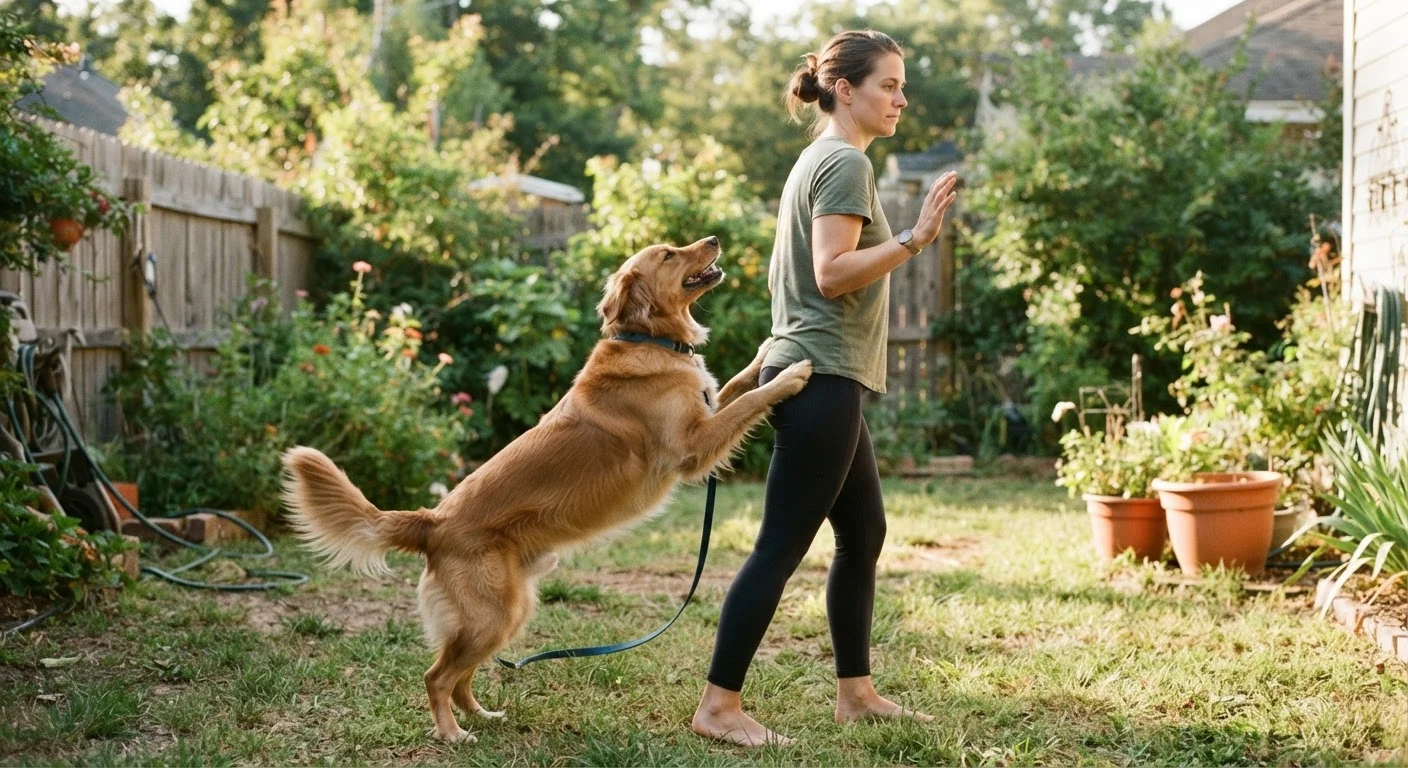
The moment your dog's front paws leave the ground, turn your body away completely — cross your arms, avert your gaze, and say nothing. This is called negative punishment (removing what the dog wants: your attention). Do not push the dog away, make eye contact, or say "No" — all of these are forms of attention and can reinforce the behaviour.
Wait for four paws on the floor
Stay turned away until all four of your dog's paws are on the ground. This may take several seconds, especially at first. The moment all paws are down — even briefly — turn back toward your dog in a calm, neutral way. Do not immediately rush to praise, which can trigger renewed excitement and jumping.
Cue a 'sit' and reward immediately
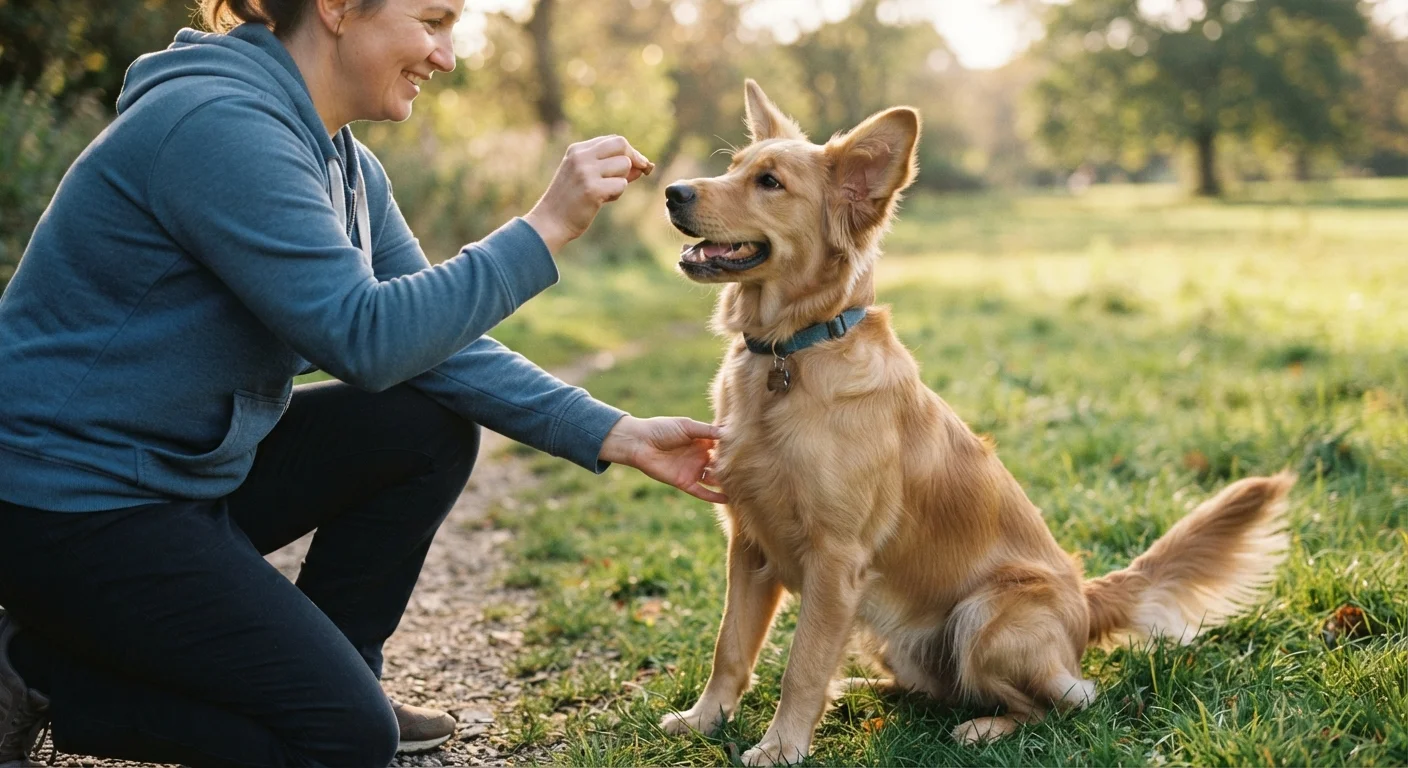
Once your dog is settled with four paws down, cue a 'sit.' When they sit, mark the behaviour with a calm 'yes' or a click if you use a clicker, then deliver a treat promptly. This teaches your dog that sitting — not jumping — is what produces the reward. Over time, many dogs begin offering a sit automatically as their default greeting behaviour.
Practice greetings in short, deliberate sessions
Set aside five to ten minutes a few times a day to practise arrivals. Walk in, apply the protocol, reward the sit, then leave and re-enter. Short, frequent repetitions beat long sessions. As your dog improves, enlist a family member or friend to act as the greeter so the behaviour generalises beyond just you.
Gradually introduce higher-distraction scenarios
Once your dog reliably sits for calm, familiar greeters, begin practising in more exciting contexts: after a walk, when you return home after a longer absence, or when a new visitor arrives. Use the leash to manage the environment and prevent the dog from practising the jumping behaviour while they're still learning. Gradually fade out the leash as reliability improves.
Track Progress to Stay Motivated
Keep a simple tally of how many times your dog jumps versus sits during greetings over a week. Seeing the ratio shift is motivating for owners and helps identify whether a particular context — such as visitors or post-walk arrivals — needs extra practice. Consistent training, paired with appropriate nutrition and enrichment, supports overall wellbeing; see our guide on feeding your dog through every life stage for the full picture.
Common Mistakes That Slow Progress
Even well-intentioned owners can accidentally undermine their own training. The most frequent pitfall is inconsistency: allowing jumping when you're in casual clothes but correcting it when dressed for work sends a confusing signal. Dogs generalise poorly to subtle human cues like clothing or mood, so the rule needs to be the same every time.
A second common error is asking for too much too soon. If your dog is highly aroused — just back from a walk, or excited by a visitor — their capacity to respond to cues drops sharply. Practice the 'sit' greeting when your dog is calm first, then gradually introduce more stimulating scenarios.
Finally, make sure everyone in the household is on board. One person who lets the dog jump as a sign of affection can undo weeks of consistent work by others. A brief family conversation about the approach is worth the few minutes it takes.
This article is for general informational and educational purposes only. For concerns about your dog's behaviour that may be rooted in anxiety, fear, or aggression, consult a certified professional dog trainer or veterinary behaviourist.