Why everyday life is a classroom in disguise
Children are remarkably capable learners outside formal instruction - and the home environment is full of untapped teaching moments. From estimating quantities while baking to debating the best route on a walk, daily life constantly presents opportunities to practise maths, language, and reasoning in contexts that feel meaningful rather than arbitrary.
This matters because motivation and relevance are powerful drivers of learning. When a child understands why a skill is useful - because it helps them bake a cake or plan a day out - they are more likely to engage deeply and retain what they encounter. This approach complements, rather than replaces, formal schooling, and it works alongside the habits explored in building consistent study habits.
Learning doesn't require a curriculum
None of the activities listed here need to follow a formal lesson plan to be effective. Educational research suggests that incidental, conversation-based learning during daily routines can be just as developmentally valuable as structured instruction - particularly for young children. The key ingredient is an engaged adult who asks questions and invites participation rather than simply performing the task alone.
The activities below are not exhaustive; they are a starting point. Each one can be scaled up or down depending on a child's age and current skill level, and none requires advance preparation or specialist materials.
Six everyday activities that quietly build real skills
Grocery shopping for maths in action
A trip to the grocery store is one of the most naturally maths-rich environments children encounter. Comparing unit prices, estimating totals, counting change, and staying within a budget all call on number sense, mental arithmetic, and reasoning - skills that classroom worksheets can struggle to make feel relevant.
Ask children to round prices to the nearest dollar and keep a running estimate of the cart total. Older children can calculate percentage discounts or figure out how many units of a product are needed for a recipe. These tasks shift maths from an abstract exercise into a practical tool - and research in educational psychology consistently finds that contextualised learning aids retention.
A grocery run turns unit prices and mental arithmetic into genuinely useful, memorable skills.
Cooking and baking to explore measurement and science
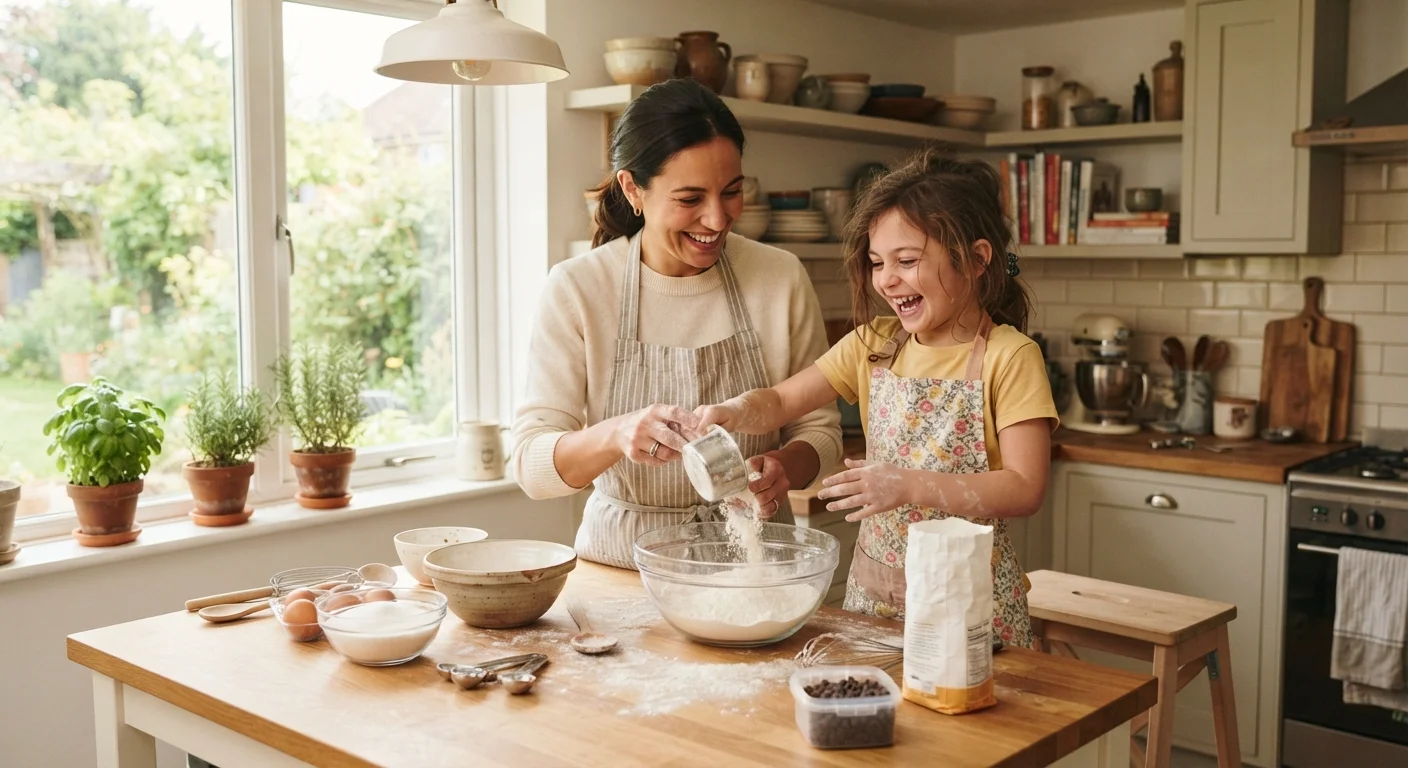
Recipes are structured, sequential texts that children must read, interpret, and follow precisely - making cooking a surprisingly effective literacy and comprehension exercise. Beyond reading, measuring cups and spoons introduce fractions in a hands-on way: halving a recipe requires real division, not symbol manipulation.
There is also a natural science dimension. Observing why bread rises, what heat does to an egg, or how sugar dissolves opens conversations about chemistry and physical change at an age-appropriate level. Younger children can focus on simple mixing and measuring; older ones can explore what happens when you substitute ingredients and discuss why results differ.
Halving a recipe teaches fractions more concretely than most worksheets ever can.
Gardening to build patience, observation, and biology
Growing even a small herb pot on a windowsill gives children a slow-moving, tangible science experiment. They observe germination, learn to distinguish between plants that need more or less water, and develop an understanding of life cycles that maps directly onto primary and middle school science curricula.
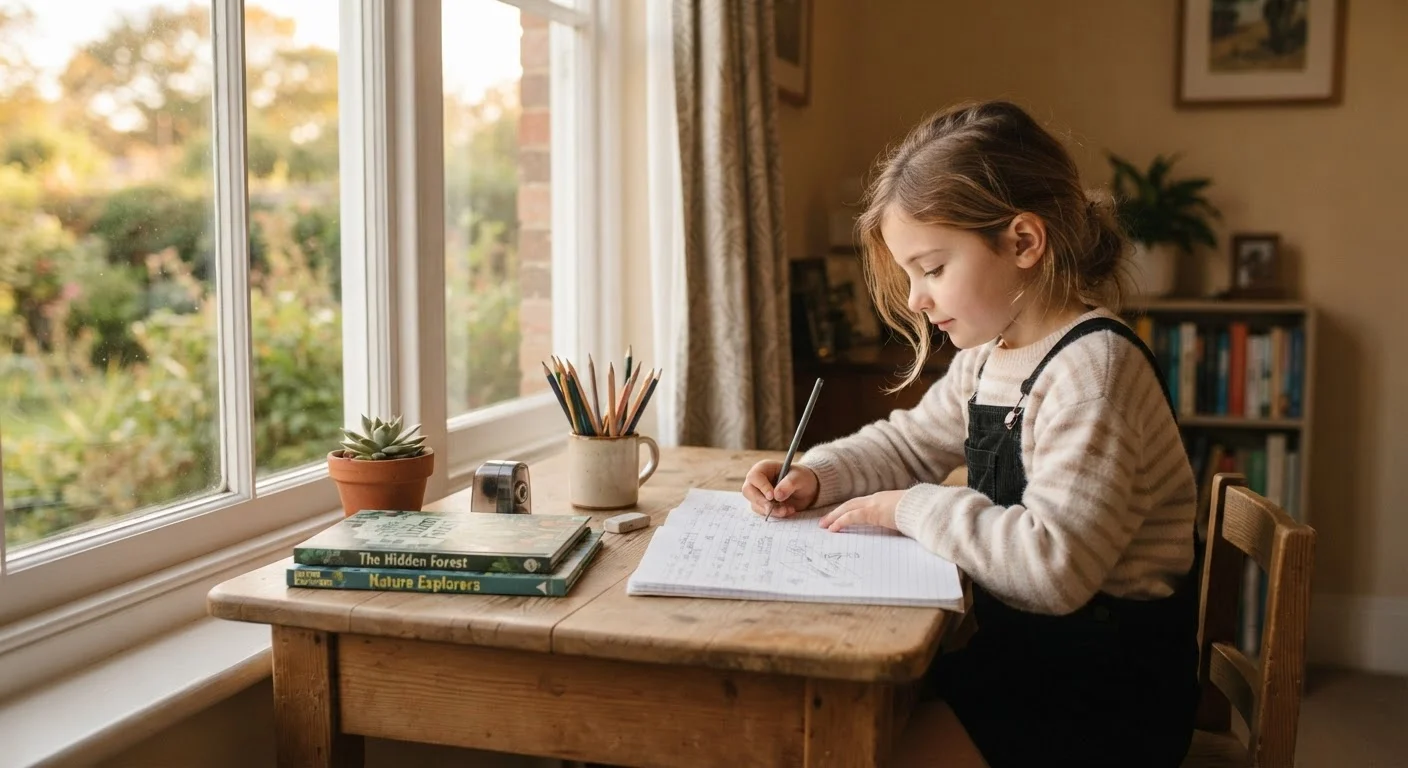
Equally valuable is what gardening teaches about patience and process. Children who tend a plant over weeks experience a direct connection between consistent effort and visible outcome - a lesson with clear relevance to study habits and longer-term academic goals. Keeping a simple garden journal encourages writing practice and scientific observation at the same time.
Tending a plant over weeks teaches cause-and-effect reasoning that textbooks rarely replicate.
Planning a family trip for geography and budgeting
Involving children in even the planning stages of a family outing or vacation introduces geography, time management, and basic financial reasoning simultaneously. Reading a map (physical or digital), identifying distances, and comparing travel times are geography and numeracy tasks. Discussing how to allocate a fixed budget across meals, transport, and activities mirrors exactly the kind of proportional thinking that financial literacy depends on.
For more on connecting everyday money conversations to broader financial understanding, the budgeting basics hub offers clear, general guidance parents can draw from. Letting children draft an itinerary also builds written communication skills and logical sequencing.
Planning a trip on a fixed budget teaches proportional thinking in a genuinely motivating context.
Reading aloud and storytelling to expand vocabulary
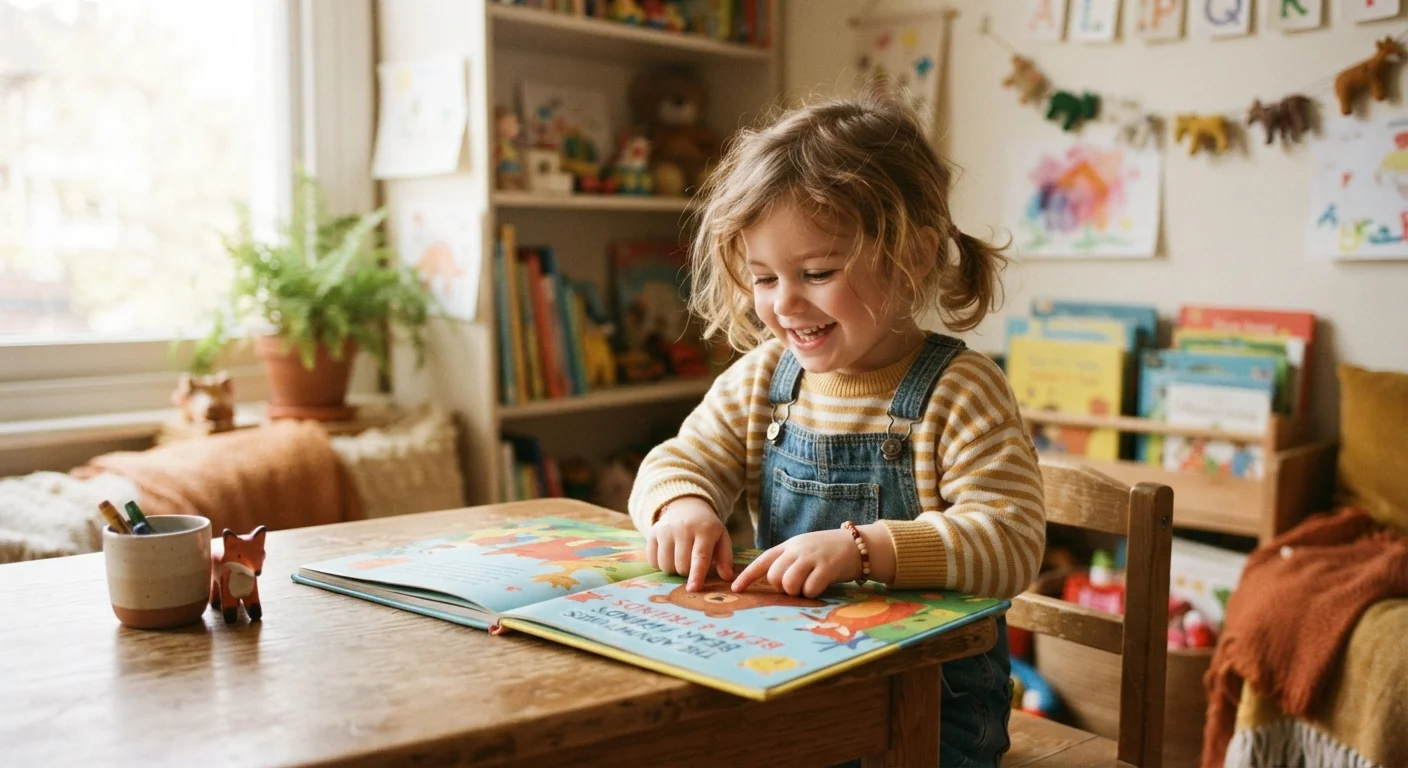
Reading with children - not just to them - remains one of the most consistently supported strategies for language development. When a child reads a passage aloud and a parent asks open-ended questions about character motivation, plot logic, or what might happen next, comprehension deepens and vocabulary grows organically through context rather than rote memorisation.
Storytelling works in both directions. Asking children to narrate their day, invent a story, or retell a film they watched builds oral fluency, sequencing, and descriptive language. For a clearer picture of what reading skills look like at different ages, reading milestones by age provides a useful developmental framework.
Open-ended questions during shared reading deepen comprehension far beyond silent reading alone.
Household repairs and DIY for problem-solving and measurement
Age-appropriate involvement in small household tasks - tightening a loose hinge, measuring furniture before rearranging a room, or assembling flat-pack shelving - teaches spatial reasoning, measurement, and systematic problem-solving. Children learn to read instructions carefully, to check their work, and to adjust when an approach does not succeed.
These are precisely the skills that educators describe as executive function: planning, monitoring progress, and adapting strategies. Framing practical tasks as collaborative rather than adult-only removes the implicit message that learning only happens at a desk. For related approaches to building critical thinking in everyday contexts, see teaching critical thinking.
Measuring and assembling real objects builds spatial reasoning and systematic thinking naturally.
Keep the conversation going naturally
You don't need to announce that an activity is 'educational' - that framing can make children self-conscious or resistant. Instead, ask genuine questions: 'How many do you think we need?' or 'Why do you think that happened?' Curiosity-driven conversation is the engine of informal learning, and it costs nothing to start.
Bringing it all together
The thread connecting all of these activities is active participation. A child who watches an adult cook learns far less than one who measures, stirs, and asks questions. The adult's role is less about teaching and more about narrating, questioning, and inviting involvement - which is also what makes balancing structured and child-led learning such a relevant consideration for families.
If you want to share what you observe at home with your child's teacher - or understand how to connect informal learning to classroom goals - getting more from parent-teacher conversations offers practical guidance for that dialogue. The most effective learning environments are those where home and school reinforce each other - and everyday activities are a low-effort, high-impact way to make that connection real.